
Prescient is an adjective meaning showing knowledge or awareness of events before they happen. To use prescient in a sentence, attach it to the remark, warning or work that later proves right: “The report gave a prescient warning about the shortage.” It describes foresight and insight, not magic, and it is almost always applied with hindsight.
Prescient at a glance
- Prescient is an adjective; its adverb is presciently and its noun is prescience.
- It means showing foresight about what will happen, whether in a person, a remark or a work.
- The usual nouns after it are warning, remark, analysis, decision and prediction.
- The word belongs to formal, journalistic and academic writing rather than casual talk.
- The commonest error is using prescient for a lucky guess or a routine, accurate forecast.
What prescient actually means
Prescient is an adjective describing someone or something that shows awareness of events before they happen, and the emphasis falls on insight rather than prediction machinery. The Cambridge entry for prescient records the foresight sense. It is not the language of clairvoyant claims, because prescient credits judgement about trends and consequences rather than any supernatural power.
| Use | Plain meaning | Example sentence |
|---|---|---|
| Foresighted | Showing awareness of what will happen | Her prescient warning saved the team weeks of work. |
| Ahead of its time | Describing a work or decision later proved right | The novel’s prescient view of remote work reads oddly now. |
One limitation belongs here. A statement is rarely called prescient before the event it predicts, so the word depends on hindsight and on the prediction coming true. It is also a judgement about quality: an accurate routine forecast, such as tomorrow’s tide, is not prescient, because foresight was never in doubt, and a correct guess is not prescient merely because it was right.
How do you use prescient in a sentence?
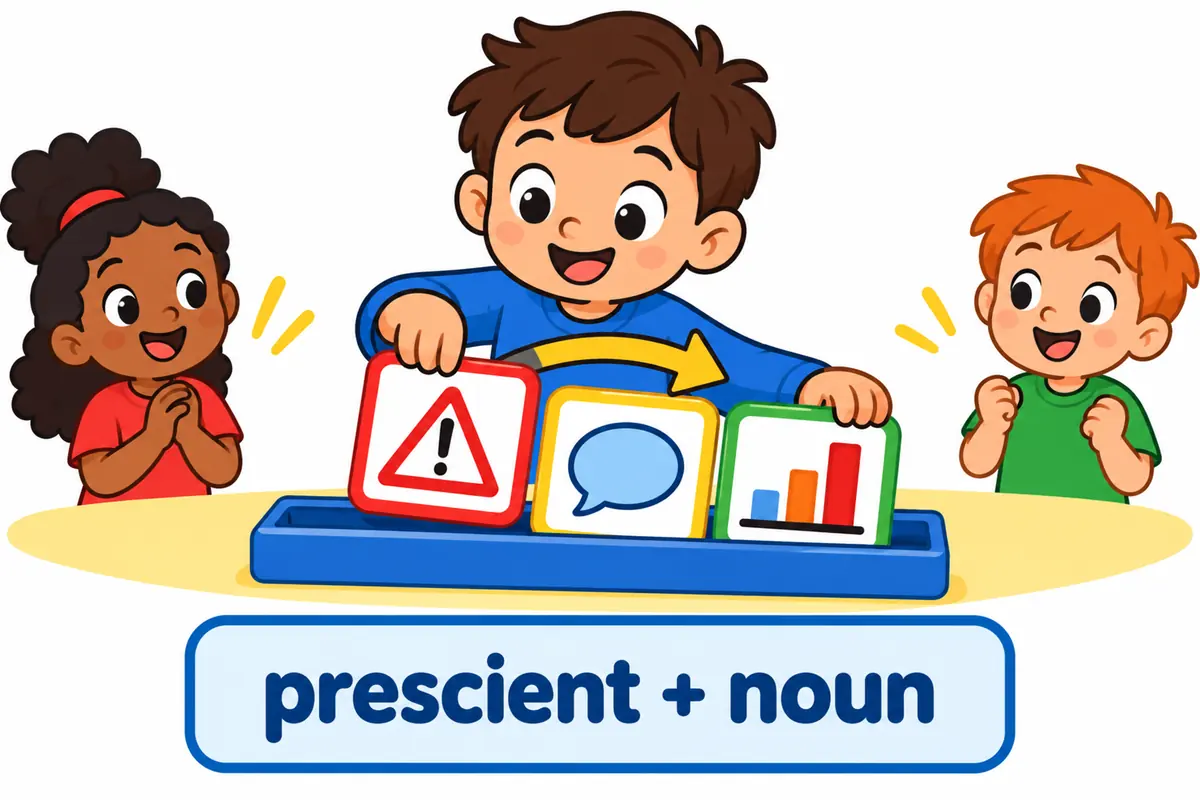
Prescient usually sits before the noun it judges or after the verb be, and it takes about when the topic follows. The adverb presciently attaches to verbs of warning, noting or observing, which is where the word does most of its work in reporting. Where the subject is a method rather than a person, forecasting a trend names the routine act that prescient then judges as unusually sharp.
| Pattern | Example | What it signals |
|---|---|---|
| prescient + noun | The prescient warning reached the board in March. | The most common form, before warning, remark or analysis. |
| be + prescient | The warning was prescient. | States the judgement plainly after a linking verb. |
| prescient + about | She was prescient about the downturn. | Names the topic the foresight concerned. |
| prescient + in + gerund | He was prescient in warning of the shortage. | Puts the foresight inside a specific act. |
| presciently + verb | She presciently noted the risk in her first report. | The adverb, used with verbs of saying or noting. |
The noun form changes the preposition: you are prescient about something, but you show prescience in doing something. Mixing the two is the error that most often marks a learner in otherwise fluent writing.
Prescient across registers: example sentences
Prescient keeps one meaning as it moves between registers. The nine sentences below shift from a classroom to a science desk, and each names what the foresight turned out to be.
| Context | Example sentence | Why this works |
|---|---|---|
| Classroom | The teacher’s prescient reminder about the muddy field saved everyone’s shoes. | A small, concrete prediction makes the word easy to feel. |
| Workplace email | Her prescient note about the supplier arrived a week before the delay. | The timing detail proves the foresight without boasting. |
| News report | Analysts called the 2008 warning prescient only after the crash. | Shows that the label is granted with hindsight. |
| Sports writing | The coach’s prescient switch to a younger defence decided the final. | A decision, not a forecast, can still be prescient. |
| Science writing | An insightful and prescient paper anticipated the effect decades early. | Pairs the word with a work that outran its field. |
| Literary criticism | Critics now treat the novel’s prescient climate scenes as its core. | Applies the adjective to imaginative writing. |
| Politics | The leaked memo proved prescient about the coalition’s collapse. | A document as the subject keeps the claim impersonal. |
| Conversation | You were prescient about the traffic; we should have left earlier. | The be plus about pattern is the one that survives in speech. |
| Academic prose | The researcher was prescient in flagging the sample’s limits. | The in plus gerund pattern suits formal writing. |
Only the conversation example uses the second person, which is the clearest sign of where the word normally lives: reporting, criticism and formal analysis rather than small talk.
Is prescient the same as prophetic?
Prescient and prophetic both point to knowledge of the future, and they come from different worlds. prophetic warnings carry a claim of inspired or divine utterance, while prescient claims only sharp judgement about trends and consequences. That is why a scientist can be prescient but rarely prophetic, and a prophet is prophetic whether or not the forecast is precise.
| Attribute | prescient | prophetic |
|---|---|---|
| Source of the insight | Judgement, analysis, foresight | Inspiration or divine revelation |
| Typical thing described | A warning, analysis, decision or work | A message, vision or figure |
| Register | Formal, journalistic, academic | Religious and literary |
| Tone | Measured praise for insight | Weighty, sometimes awe-struck |
| Needs the event first | Usually, for the label to be earned | Not necessarily |
Verdict: choose prescient for sharp foresight that later events confirm, prophetic for a message understood as inspired, and visionary when the emphasis is on a bold plan for the future rather than a specific forecast.
Word forms and grammar of prescient
Prescient inflects through its adverb and its noun, and it has no comparative form. The related adjective farsighted overlaps with it but stresses careful long-range planning, while visionary stresses imaginative ambition. The table also lists the inventable forms that writers should avoid.
| Form | Part of speech | Example |
|---|---|---|
| prescient | adjective | The warning was prescient. |
| presciently | adverb | She presciently questioned the forecast. |
| prescience | noun | His prescience about the shortage was striking. |
| prescientness | non-standard noun | Prefer: prescience. |
| prescientic | non-standard adjective | Prefer: prescient. |
Only the adjective, adverb and noun are Standard; the invented synonyms above appear in drafts when a writer reaches for variety and finds none. The safest course is to repeat prescient rather than to coin a form from it.
Common mistakes with prescient
- Incorrect:
He showed great prescient.Correct: He showed great prescience. Rule: The adjective cannot follow an article; use the noun. - Incorrect:
She was prescient of the crash.Correct: She was prescient about the crash. Rule: The adjective takes about; the noun takes of. - Incorrect:
She spoke prescient at the meeting.Correct: She spoke presciently at the meeting. Rule: An adverb, not the adjective, modifies a verb. - Incorrect:
The weather forecast was prescient.Better: The weather forecast was accurate. Rule: Routine prediction is not foresight, so prescient overclaims. - Incorrect:
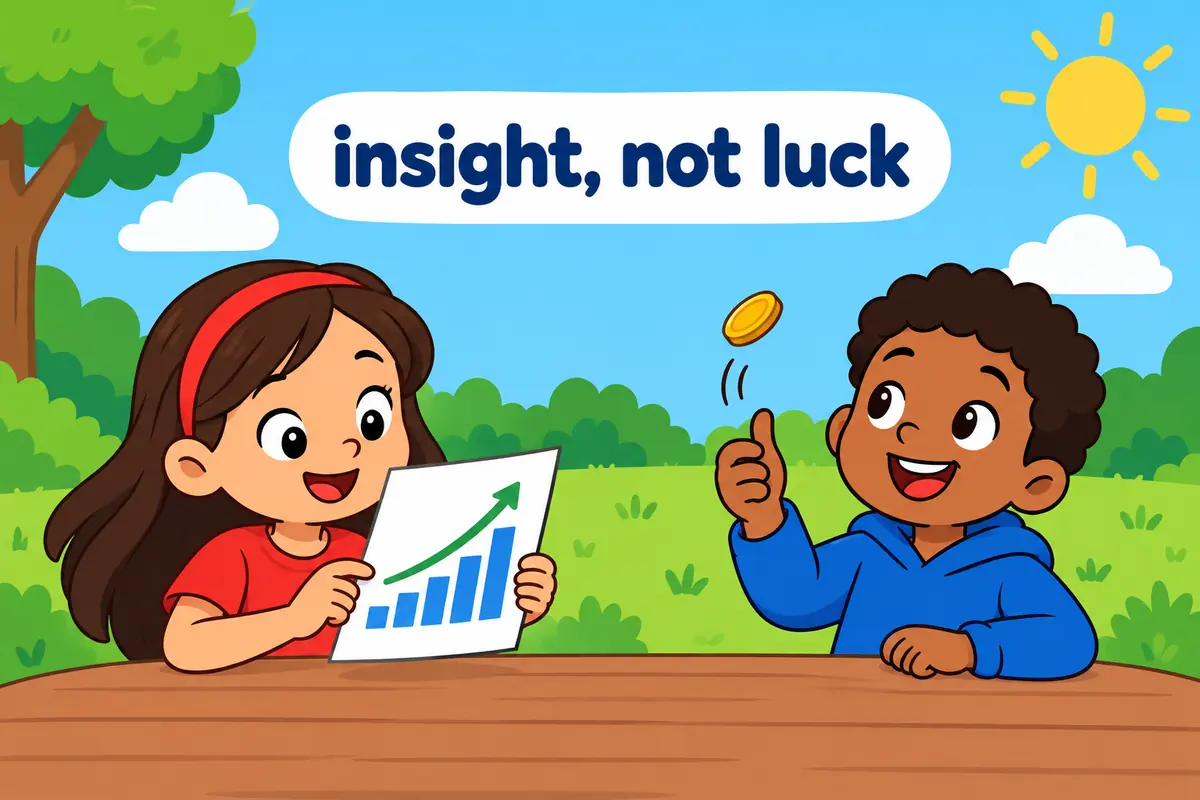
He was prescient, winning the coin toss twice.Correct: He was lucky, winning the coin toss twice. Rule: Chance is not insight, so prescient does not apply.
Practice using prescient
Work through the six items, then read the reasoning rather than only the answer, because the reason is the part that transfers to your own writing.
- Fill the gap: The analyst’s ______ warning about the shortfall arrived months early.
- Choose the better word: The message claimed divine inspiration, so (prescient / prophetic) fits best.
- Correct the error: She was prescient of the change in policy.
- Build a sentence: use prescient in about a researcher noticing a gap early.
- Spot the register: which fits a formal review — The study now looks prescient, or The study totally called it?
- Rewrite with the adverb: She was prescient when she flagged the risk. Use presciently.
Answers
- prescient — the adjective sits before the noun warning.
- prophetic — a claim of divine inspiration belongs to prophetic, not prescient.
- She was prescient about the change in policy. — the adjective takes about.
- Model answer: The researcher was prescient in flagging the sample’s limits. The in plus gerund pattern names the act.
- The study now looks prescient — a formal review keeps a measured tone.
- She presciently flagged the risk. — the adverb modifies the verb flagged.
The bottom line
Use prescient in a sentence when a remark, warning, decision or work shows real foresight that later events confirm, and keep the label for insight rather than routine accuracy. The two details that decide most sentences are hindsight and register: the word is usually earned after the event, and it belongs to formal and journalistic writing. For a claim of inspiration, prophetic is the right word instead.
Frequently asked questions about prescient
Is prescient a compliment?
Yes, prescient is almost always praise. It credits the person or work with seeing a trend or consequence early, and the judgement is earned when events confirm it. The word can sound slightly grand in casual talk, so an informal speaker might say she saw it coming instead.
Can prescient describe a person?
It can. A person may be prescient about a market, or prescient in warning of a risk, though the label usually attaches to the specific remark or decision rather than to the whole character. Saying someone is simply prescient sounds like a general verdict that few people could sustain.
What is the adverb form of prescient?
The adverb is presciently, as in she presciently noted the risk. It attaches to verbs of saying, noting or warning, which is where foresight becomes visible in a sentence. The noun is prescience, used with of or about, and the invented form prescientness is not standard.
How is prescient different from lucky?
Prescient credits insight into a trend, while lucky credits chance. A correct guess about a coin toss is lucky but not prescient, because no foresight was involved. The test is whether the person reasoned from evidence and conditions, which is what makes the foresight, rather than the outcome, the point.
Prescient describes apparent foreknowledge or insight into what will happen. Use prescient in a sentence by making the situation clear: “Her prescient warning anticipated the supply problem.” The examples below distinguish its grammatical role and related expressions so you can choose a form that communicates your intended meaning accurately in context.
Key facts at a glance
- Prescient is an adjective.
- describes apparent foreknowledge or insight into what will happen.
- Shows apparent foreknowledge.
- Context and word choice determine the intended meaning.
What does prescient mean?
Prescient describes apparent foreknowledge or insight into what will happen. Merriam-Webster: prescient provides the reference meaning. Prescient is often used retrospectively when an earlier observation matches later events. It is stronger than simply thoughtful or well informed. A prediction may be prescient about one outcome without making the speaker reliably correct about everything. Identify the earlier statement and later development that support the description.
Prescient in a sentence: practical examples
- Her prescient warning anticipated the supply problem.
- The essay seemed prescient after the later events.
- A prescient observation identified the emerging difficulty.
- His forecast was confident but not especially prescient.
- The reviewer praised the novel’s prescient theme.
- The earlier advice proved prescient in one important respect.
Compare the examples by identifying the subject, the word’s grammatical role, and the surrounding detail that establishes its meaning. Change the concrete details when writing your own sentence, while keeping the grammatical pattern intact.

How do the main patterns and related words differ?
| Choice or pattern | Meaning or use | Example |
|---|---|---|
| Prescient | Shows apparent foreknowledge | A prescient warning anticipated the shortage. |
| Informed | Based on relevant knowledge | An informed estimate used the available data. |
| Confident | Expressed with certainty | A confident prediction can still be wrong. |
Prescient is an adjective. Prescience is the related noun, while presciently is an adverb. “A prescient warning” modifies a noun; “The warning was prescient” follows a linking verb.
How do you avoid the common usage errors?
Do not call a prediction prescient merely because it is confident. Compare the prediction with what actually happened, and avoid selecting only successful predictions while ignoring contrary ones. The word can describe perceived foresight without establishing supernatural knowledge.
- Identify the meaning your sentence needs.
- Choose the grammatical form for that role.
- Add a concrete action, object, or context.
- Check that the related word would not communicate a different claim.

Putting the examples into practice
Use prescient in a sentence with attention to meaning, context, and grammatical role. Choose an example that matches the idea you want to express, then replace its details with accurate information about your own subject.
Frequently asked questions
Does prescient imply a supernatural ability?
Not necessarily. Prescient can describe an observation or warning that appears to anticipate later events. Ordinary foresight, insight, or a fortunate prediction may produce that impression. Explain the comparison between the earlier statement and the later outcome instead of assuming the adjective establishes a supernatural source of knowledge.
Can a statement be called prescient later?
Yes. Prescient is often applied retrospectively after events make an earlier observation appear insightful. Name the earlier observation and the later development so the reader can assess the connection. A general compliment without that comparison gives less evidence for the claim that the statement anticipated what would happen.
What is the noun related to prescient?
Prescience is the related noun. “Her prescience impressed the team” names the quality, while “Her warning was prescient” uses the adjective. The meanings are linked, but the forms have different grammatical jobs. Choose the one that fits the structure and explain what future development the observation seemed to anticipate.
Is every correct prediction prescient?
A correct prediction may be described as prescient, but the word often emphasizes notable insight or anticipation rather than ordinary accuracy alone. Consider how specific the prediction was and what evidence supported it. Avoid treating one successful forecast as proof that a person’s other forecasts were equally reliable or insightful.
Have you ever read a sentence that seemed to predict the future with eerie accuracy? This ability to foresee events before they happen is known as being “prescient.”
Being prescient means having a profound intuition or foresight that allows one to anticipate or predict future events with remarkable accuracy. It is as if the individual possesses a sixth sense that gives them a unique advantage in foreseeing outcomes before they unfold.
7 Examples Of Prescient Used In a Sentence For Kids
- The prescient owl knew when it would rain.
- My grandma’s prescient advice always helps me.
- The prescient cat can predict the future.
- Tigers have prescient instincts to protect themselves.
- The magic mirror showed a prescient image.
- The prescient rabbit knew where to find food.
- The prescient monkey knew which tree would have the most bananas.
14 Sentences with Prescient Examples
- Prescient decisions can help college students plan their academic and career paths effectively.
- College students can benefit from developing a prescient outlook to navigate the challenges of the job market.
- Creating a prescient study schedule can ensure better time management and improved academic performance.
- It is essential for college students to possess a prescient understanding of industry trends for future career success.
- Developing a prescient mindset can aid college students in making informed choices about their elective courses.
- A prescient approach to networking can open up new opportunities for college students in their chosen fields.
- College students must strive to be prescient in identifying potential internship opportunities.
- Utilizing prescient financial planning can help college students effectively manage their expenses and savings.
- Employers often value prescient decision-making skills when recruiting college students for entry-level positions.
- Building a prescient portfolio of academic projects can showcase a student’s skills and interests to potential employers.
- College students can cultivate a prescient awareness of global issues through participation in international exchange programs.
- Adopting a prescient approach to goal-setting can empower college students to achieve their ambitions.
- Developing a prescient understanding of emerging technologies can give college students a competitive edge in the tech industry.
- Utilizing prescient research techniques can help college students produce innovative and insightful projects for their coursework.
How To Use Prescient in Sentences?
To use the word Prescient in a sentence, consider incorporating it in a context that highlights foresight or a sense of knowing something before it happens. For example, “Her prescient decision to invest in technology stocks before the market boom proved to be incredibly profitable.”
When crafting a sentence with Prescient, remember that it pertains to having knowledge of events before they actually occur. You can showcase this word in your writing by describing someone’s ability to anticipate future developments accurately. For instance, “The author’s prescient depiction of fictional worlds often mirrors real-world events that unfold years later.”
Additionally, using Prescient in a sentence can add a sophisticated touch to your language. It is essential to ensure that the sentence flows smoothly and unambiguously communicates the concept of foresight. An example could be, “The CEO’s prescient vision for the company’s expansion led to global success.”
By practicing the inclusion of Prescient in varied contexts and sentence structures, you can enhance your vocabulary and communication skills. Remember to adapt the sentence to the tone and purpose of your writing to effectively convey the meaning of the word to your audience.
Conclusion
In conclusion, the examples of prescient sentences demonstrate a remarkable ability to foresee or predict future events with accuracy. These sentences convey a sense of foresight and intuition that can be found in writing, speeches, or everyday conversations where individuals have an eerily accurate perception of what is to come. The use of prescient sentences can add depth and intrigue to literature, enhance the impact of a message, and captivate audiences with their anticipation of what is yet to unfold.
Whether found in literature, historical quotes, or personal anecdotes, prescient sentences serve as powerful reminders of the human ability to anticipate and understand the future. They showcase the potential for individuals to tap into their intuition and insights, offering a glimpse into what may lie ahead with profound accuracy and foresight.


