
Psychology in a Sentence: Quick Answer
Psychology in a sentence refers either to the scientific study of the mind and behavior or, in a narrower context, to a person’s or group’s characteristic way of thinking and acting. Use psychology as a noun: “She studies psychology,” or “The book explores the psychology of decision-making.”
- Part of speech: noun.
- For the academic subject: psychology is normally uncountable: “He studies psychology.”
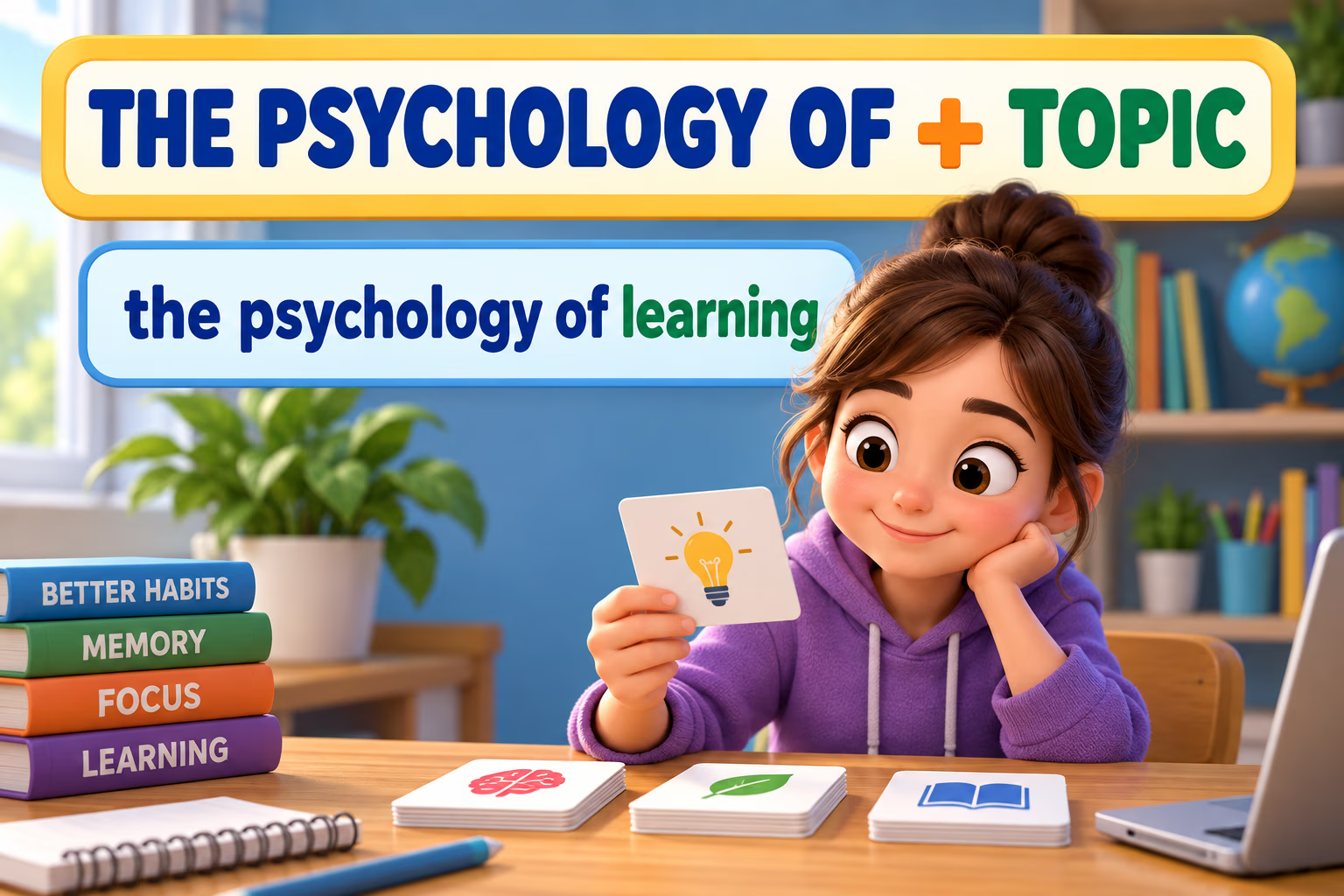
- For a particular topic: use “the psychology of + noun”: “the psychology of learning.”
- Related words: psychological is an adjective; a psychologist is a person who studies the mind and behavior.
What Does Psychology Mean?
Psychology most often names the scientific study of how the mind works and how it relates to behavior. The Cambridge Dictionary also records a related sense: the influence of a particular person’s character on their behavior. The American Psychological Association describes psychology as a diverse, science-grounded discipline that includes research as well as applications in everyday and professional settings.
That range matters in a sentence. Psychology can refer to a university subject, a research field, or the way people think and behave in a particular situation. It is not limited to therapy or mental illness: researchers may study memory, learning, perception, decision-making, relationships, or behavior in groups.
How Do You Use Psychology in a Sentence?
Choose the pattern that matches the meaning. For the field of study, use study psychology, a course in psychology, or an adjective before it, such as social psychology. To name a topic or setting, use the psychology of that subject.
| Sentence pattern | Example | What it means |
|---|---|---|
| study / teach / research psychology | “Nadia plans to study psychology at university.” | The academic subject or research field. |
| a course / degree / book in psychology | “He borrowed a book in psychology from the library.” | A course, qualification, or resource about the subject. |
| adjective + psychology | “The class introduced social psychology.” | A branch or area of the field. |
| the psychology of + topic | “The article explains the psychology of habit formation.” | How minds and behavior relate to a named topic. |
| the psychology behind + choice or action | “The study examined the psychology behind the group’s decision.” | The thoughts, motives, or influences relevant to a decision. |
Is psychology countable or uncountable?
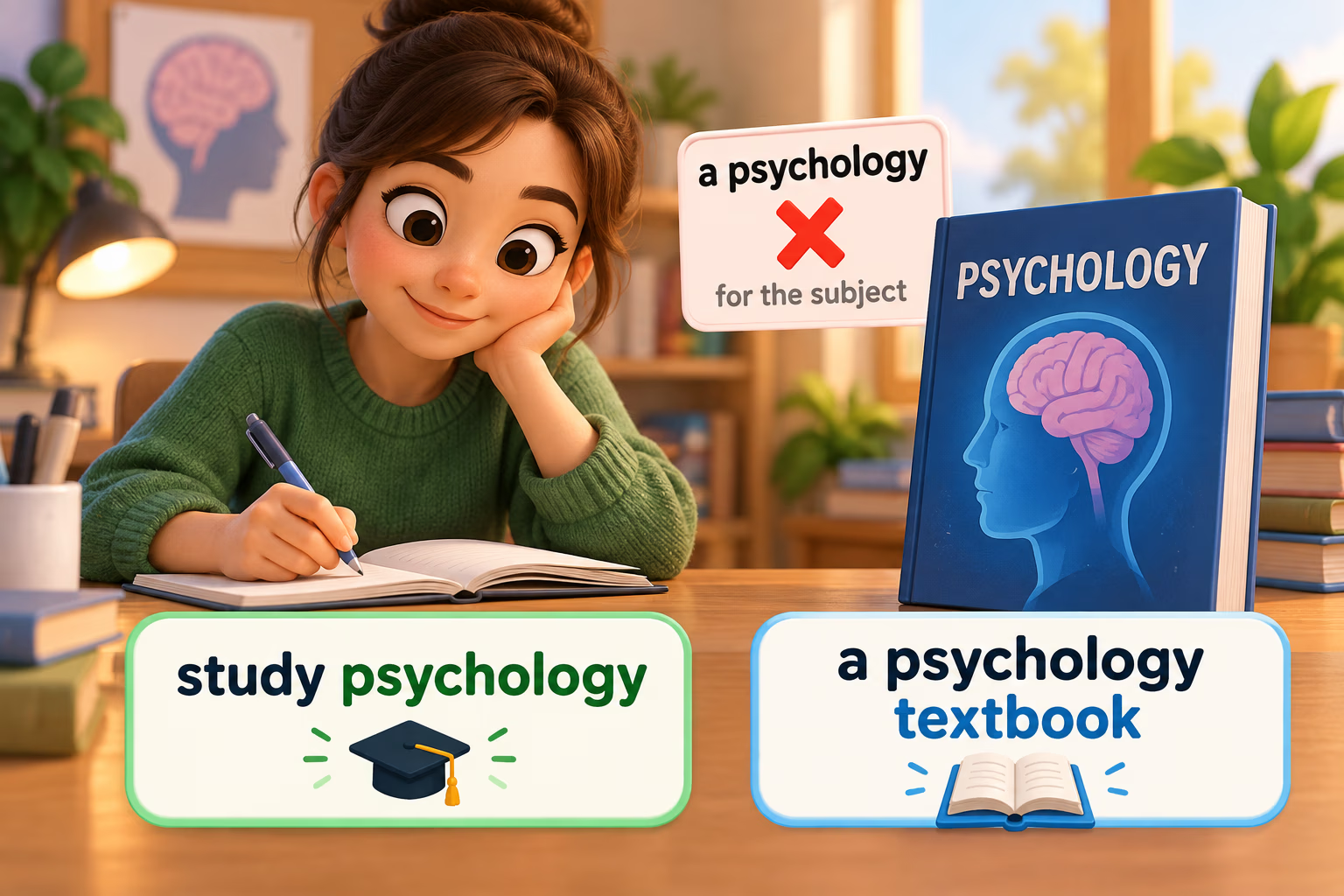
When psychology means the academic subject, it is generally uncountable, so write “She studies psychology,” not “She studies a psychology.” Cambridge lists the noun as uncountable in this meaning, while its grammar guide explains that uncountable nouns do not take a or an as a single item. Use a countable noun after the article when you mean a resource: “a psychology course,” “a psychology textbook,” or “a psychology article.”
English also uses psychology in a narrower singular sense for a characteristic way of thinking or for the mental influences in a particular area. Oxford gives examples such as “the psychology of” a person or group. In that use, the surrounding phrase makes the intended sense clear: “The novel explores the psychology of its narrator.”
Psychology, Psychological, Psychologist, and Psychiatry
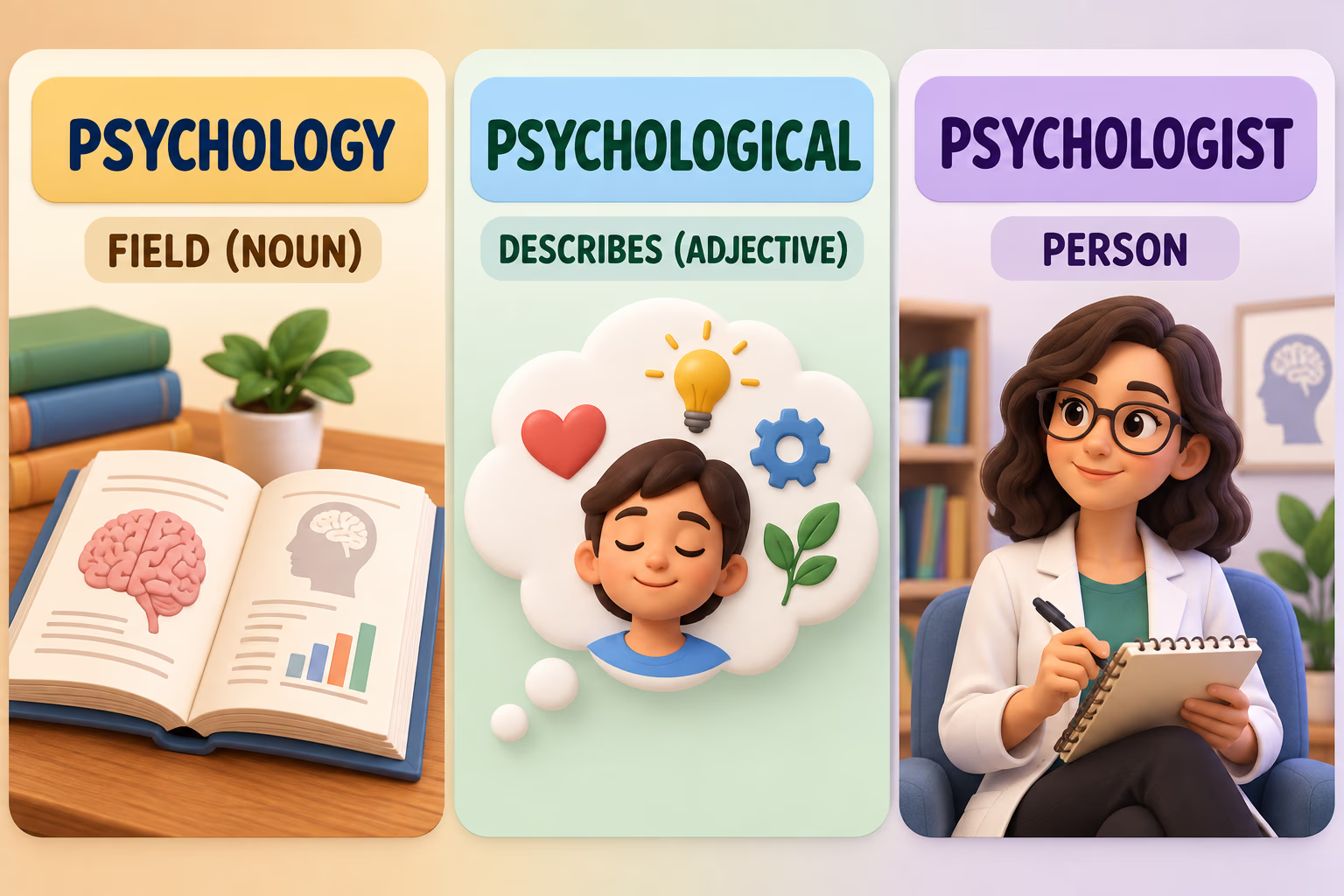
These related words do different jobs in a sentence. Psychology names a field or a way of thinking; psychological describes something related to the mind and feelings; and a psychologist is a person who studies the mind, emotions, and behavior.
| Word | Part of speech | Example |
|---|---|---|
| psychology | noun | “Psychology examines how people learn.” |
| psychological | adjective | “The report discussed psychological factors in decision-making.” |
| psychologist | noun for a person | “A psychologist led the research interview.” |
| psychiatry | medical specialty | “The article compares psychology with psychiatry.” |
Cambridge Dictionary defines psychological as an adjective and psychologist as a noun for someone who studies the mind, emotions, and behavior. The American Psychiatric Association describes psychiatry as a branch of medicine focused on diagnosing, treating, and preventing mental, emotional, and behavioral disorders. Psychology and psychiatry can overlap in mental-health care, but the words name different fields; professional roles and requirements vary by jurisdiction.
More Examples of Psychology in a Sentence
These examples show the academic-subject sense and the “psychology of” pattern in everyday contexts.
- “A course in psychology introduced the students to memory and perception.”
- “The researcher used psychology to frame questions about how people learn.”
- “Social psychology examines how social settings can relate to people’s thoughts and behavior.”
- “The documentary explores the psychology of decision-making under uncertainty.”
- “Her psychology textbook includes examples from education and work.”
- “The novel focuses on the psychology of its main character.”
- “A psychologist discussed the research findings with the class.”
- “The report described psychological influences without treating them as the only cause.”
Frequently Asked Questions
Can psychology be used as a subject in a sentence?
Yes. Psychology is a noun and can name a school or university subject: “I am taking psychology this semester.” It is usually uncountable when it means the field, so say “study psychology” or “a course in psychology.”
What does “the psychology of” mean?
“The psychology of” introduces a person, group, activity, or topic whose thoughts and behavior are being discussed. For example, “the psychology of teamwork” names mental and social influences relevant to teamwork; it does not claim that one explanation fits every team.
Is “psychological” the same as “psychology”?
No. Psychology is a noun for the field or, in some contexts, a way of thinking. Psychological is an adjective: “psychological research,” “psychological effects,” or “psychological factors.”
Is psychology the same as psychiatry?
No. Psychology is a broad discipline concerned with the mind and behavior, including research and applied work. Psychiatry is a medical specialty focused on mental, emotional, and behavioral disorders. The fields can overlap, but they are not interchangeable terms.
Conclusion: Use Psychology Clearly
To use psychology in a sentence, first decide whether you mean the academic subject or a particular way of thinking. Use the uncountable noun for the field (“She studies psychology”) and “the psychology of” to name a topic (“the psychology of learning”). Choose psychological for an adjective and psychologist for a person.
Note on the preserved examples: The original article text that follows is retained exactly as published. Its examples are sentence models, not evidence that studying psychology guarantees better communication, self-control, stress management, or academic performance. The references to college students in India are illustrative scenarios, not country-level findings.

7 Examples Of Psychology Used In a Sentence For Kids
- Psychology is the study of how our minds work.
- We can learn about our feelings and emotions through psychology.
- Psychology helps us understand why people act the way they do.
- Studying psychology can make us better at communicating with others.
- Learning about psychology can help us control our thoughts and behaviors.
- Psychology teaches us about the brain and how it affects our actions.
- Psychology is an interesting subject that can help us learn more about ourselves.
14 Sentences with Psychology Examples
Psychology is the study of the mind and behavior, making it a valuable subject for college students in India.
Understanding psychology can help students improve their communication skills, which is crucial for success in group projects and presentations.
Students taking psychology courses can learn about mental health issues and develop empathy towards others who may be struggling.
By studying psychology, college students in India can gain insights into their own thoughts, emotions, and behaviors.
Learning about psychology can also help students manage stress and anxiety more effectively during their college years.
Psychology courses can provide valuable knowledge about how people think and make decisions, which can be useful in various fields of study.
College students can use psychology principles to enhance their study habits and improve their academic performance.
Understanding psychology can help students navigate social relationships and develop stronger interpersonal skills.
By studying psychology, college students in India can explore different career paths in fields such as counseling, human resources, and research.
Psychology research can help students better understand human behavior and motivations, which can be applied to real-world scenarios.
Learning about psychology can foster a greater sense of self-awareness and personal growth among college students.
College students studying psychology can gain a deeper understanding of mental health disorders and how they can affect individuals and communities.
Psychology courses can teach students valuable skills in critical thinking, problem-solving, and research methodology.
By exploring different psychology theories and concepts, college students in India can develop a more nuanced understanding of human behavior.
How To Use Psychology in Sentences?
Psychology is the study of the mind and behavior. When using the word Psychology in a sentence, it is important to consider its meaning and use it correctly. For example, you could say, “I am interested in psychology and how the mind works.”
When incorporating Psychology into a sentence, it is crucial to understand the context. You can use psychology to discuss topics such as emotions, behavior, cognition, and mental processes. For instance, you could say, “Her background in psychology helped her understand the motivations behind his actions.”
To effectively use Psychology in a sentence, consider the following tips:
- Understand the meaning of Psychology and how it relates to the mind and behavior.
- Use psychology in context with topics related to emotions, behavior, cognition, and mental processes.
- Ensure your sentence is clear and concise when incorporating Psychology.
By following these tips, you can confidently use Psychology in a sentence and accurately convey your thoughts about the mind and behavior.
Conclusion In conclusion, understanding the human mind and behavior is at the core of psychology. Through studying psychological principles and theories, researchers have been able to unravel the complexities of cognition, emotions, and behavior. Many sentences with the keyword “psychology” illustrate the wide range of topics within the field, from cognitive processes to mental health disorders. Psychology plays a critical role in various aspects of everyday life, including education, business, and healthcare. By delving into the intricacies of the human psyche, psychologists can provide valuable insights into why we think, feel, and act the way we do. Ultimately, the study of psychology offers a fascinating glimpse into the inner workings of the human mind and continues to shape our understanding of ourselves and the world around us.

