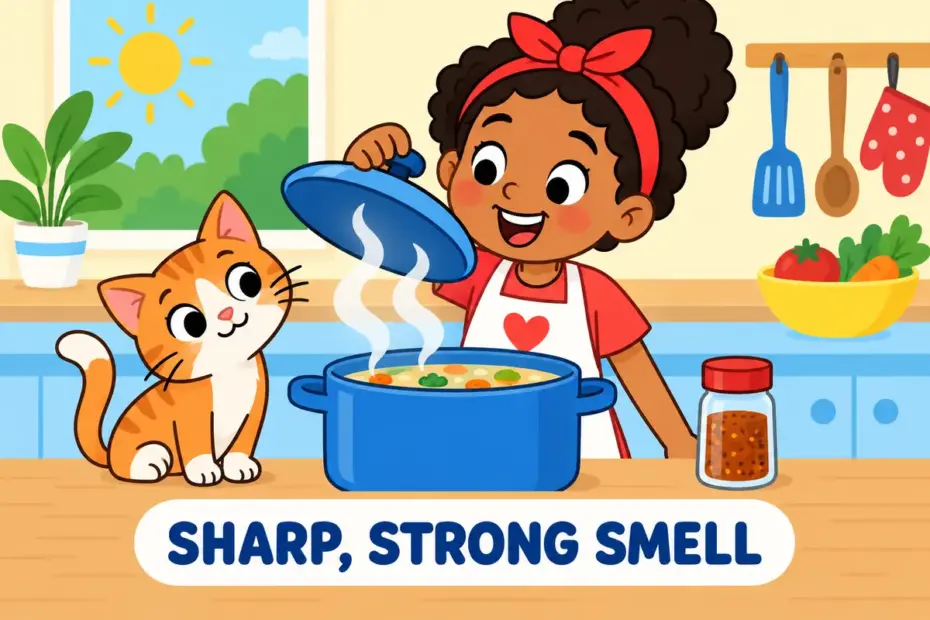
Pungent is an adjective meaning having a strong, sharp smell or taste that fills the air. To use pungent in a sentence, put it before the noun it describes or after a linking verb: “The kitchen was pungent with garlic.” The word also describes sharp, biting remarks.
Pungent at a glance
- Pungent is an adjective; the adverb is pungently and the noun is pungency.
- It means a strong, sharp smell or taste, or a sharply critical remark.
- It usually describes food, air, smoke or writing, not people’s voices.
- Common collocations are pungent smell, pungent aroma, pungent with smoke and pungent remarks.
- The commonest error is confusing pungent with piquant, which means pleasantly sharp.
What does pungent mean?
Pungent is an adjective meaning having a strong, sharp smell or taste that is hard to ignore. The Cambridge entry for pungent records both the physical sense and the figurative sense of sharply critical remarks. The overlap word acrid is stronger and usually unpleasant, describing smoke that stings the throat, while pungent can describe a smell that is strong yet welcome.
| Sense | Plain meaning | Example sentence |
|---|---|---|
| Strong smell | A sharp odour that fills the air | The pungent smell of vinegar filled the room. |
| Sharp taste | An intense flavour that stings the tongue | The aged cheese was pungent and salty. |
| Biting remark | Sharply critical language | Her pungent review upset the director. |
Pungent is not automatically negative. A herb, a cheese or a wine can be pungent in a good way, and food writers use the word as praise. It is the wrong choice for a merely unpleasant smell that makes people ill, where acrid or foul fit better, and it never describes volume or brightness.
How do you use pungent in a sentence?
Pungent sits before a noun or after a linking verb, and it commonly partners with a small set of nouns. Five patterns cover most sentences.
| Pattern | Example | What it signals |
|---|---|---|
| pungent + smell or taste noun | a pungent smell of onions | The most common physical pattern. |
| pungent with + noun | The air was pungent with smoke. | Names the source of the smell. |
| pungent + figurative noun | a pungent remark | Moves from smell to criticism. |
| so pungent that + clause | The sauce was so pungent that eyes watered. | Shows intensity and effect. |
| less or more + pungent | a milder, less pungent vinegar | Compares strength. |
Writers reach for penetrating when a smell seems to get everywhere, and for pungent when they want to praise intensity. For a bright, appetising sourness, tangy is the better choice, because it carries no hint of harshness.
Pungent in a sentence: examples across contexts
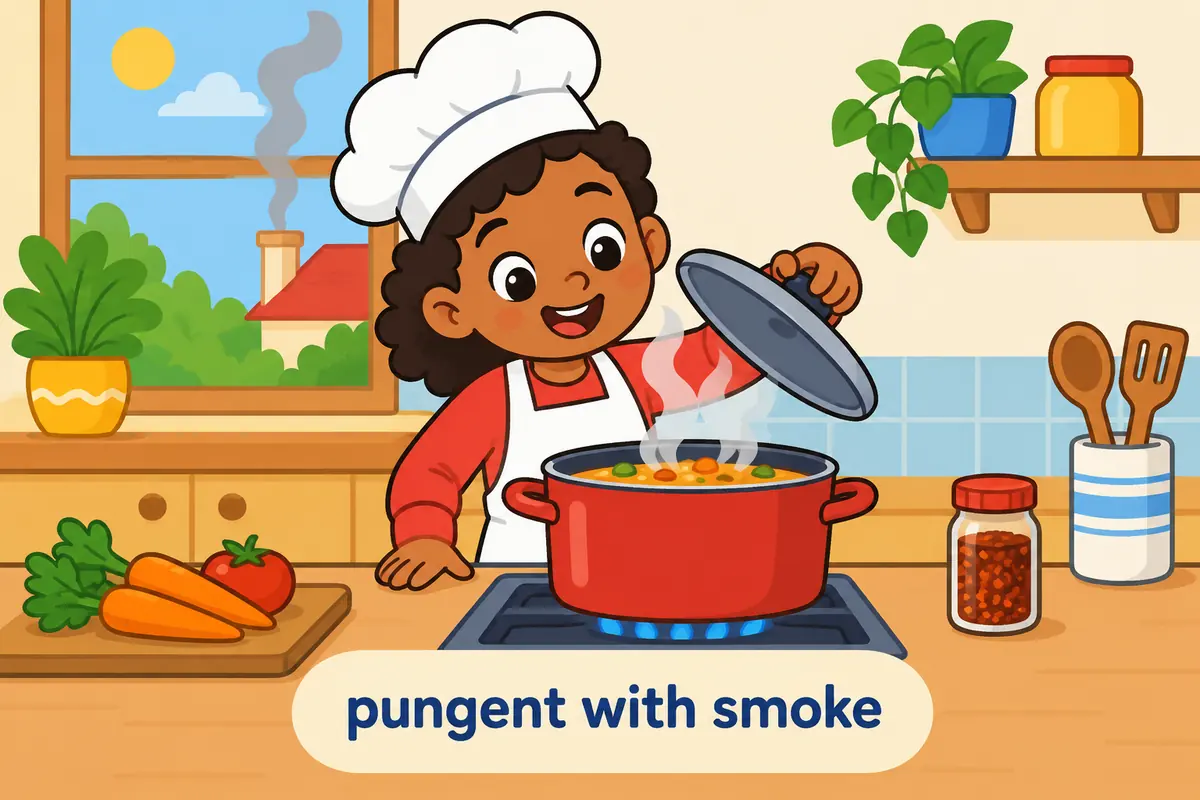
The nine sentences below move from a kitchen to a book review, and each one shows whether the sharpness is pleasant or not.
| Context | Example sentence | Why this works |
|---|---|---|
| Kitchen | The pungent aroma of onions drew everyone to the kitchen. | Physical sense, used approvingly. |
| Chemistry lab | A pungent smell warned the class to open a window. | Links sharpness to caution. |
| Market | Ripe cheese stood in pungent rows at the stall. | Taste sense with vivid detail. |
| Wine writing | The wine was pungent with herbs and warm spice. | Uses pungent as praise. |
| Restaurant review | The broth tasted pungent, salty and deep. | Pairs taste with texture words. |
| News report | Residents complained of a pungent smell from the drain. | Reports a public nuisance. |
| Book review | The critic’s pungent prose spared nobody. | Uses the figurative sense. |
| Gardening | Rosemary releases a pungent scent when crushed. | A pleasant everyday example. |
| Conversation | That sauce is too pungent for me. | Simple spoken use. |
The book review is the sentence learners find surprising: pungent can describe language, where it means sharply critical rather than smelly.
Pungent vs piquant
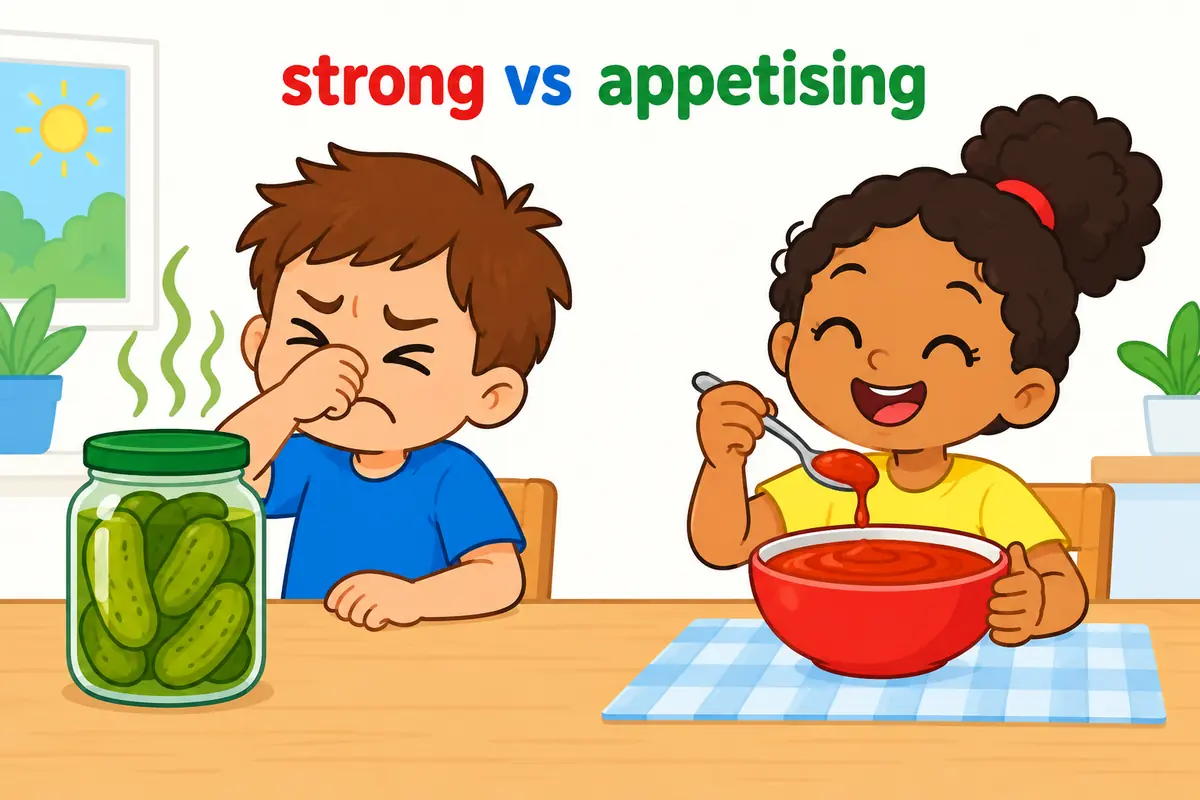
Pungent and piquant share a sense of sharpness, and they are not interchangeable. Piquant means pleasantly sharp or spicy in a way that stimulates appetite; pungent simply means strong and penetrating, and it can be pleasant or not.
| Attribute | pungent | piquant |
|---|---|---|
| Core sense | Strong, sharp, penetrating | Pleasantly sharp and appetising |
| Typical subject | smell, taste, words | sauce, salsa, wit |
| Always pleasant? | No | Usually yes |
| Intensity | High | Moderate |
| Common partner | smell, aroma, remark | flavour, sauce, wit |
Verdict: use piquant for a sharpness that makes food appealing and pungent for a strong sharpness, pleasant or not.
Word forms and grammar of pungent
Pungent inflects by comparison, and its noun is easy to build wrongly. The table lists the real forms and marks the non-standard one.
| Form | Part of speech | Example |
|---|---|---|
| pungent | adjective | a pungent herb |
| pungently | adverb | The spice smelled pungently of cloves. |
| pungency | noun | the pungency of fresh ginger |
| pungent smell | noun phrase | a pungent smell of paint |
| more pungent | comparative | a more pungent variety |
| pungentness | non-standard noun | Incorrect: the pungentness. Use pungency. |
The noun is pungency, not pungentness, and it names the quality itself, as in the pungency of the cheese.
Common mistakes with pungent
- Incorrect:
The soup was pungent of garlic.Correct: The soup was pungent with garlic. Rule: Use with, not of, to name the source of a smell or taste. - Incorrect:
I heard a pungent noise.Correct: I caught a pungent smell. Rule: Pungent describes smell, taste or sharp words, not sound. - Incorrect:
The salsa was pungent and tasty.Correct: The salsa was piquant and tasty. Rule: Piquant is the word for pleasant sharpness in food. - Incorrect:
She gave a pungent of criticism.Correct: She gave a pungent piece of criticism. Rule: Pungent is an adjective and cannot stand where a noun belongs.
Practice using pungent
Work through the six items, then check the reasoning as well as the answer.
- Fill the gap: The room was ______ with the smell of fresh paint.
- Choose the better word: The lime salsa was (pungent / piquant) and delicious.
- Correct the error: The cheese was pungent of blue mould.
- Build a sentence: use a pungent smell about a rubbish bin on a hot day.
- Spot the register: which suits a restaurant review — the air was pungent with spices, or the air stank?
- Rewrite with the noun: The ginger was so strong that it cleared my head. Use pungency.
Answers
- pungent — the adjective follows was and takes with.
- piquant — the salsa is pleasant, so the appetising word fits.
- The cheese was pungent with blue mould — replace of with with.
- Model answer: A pungent smell rose from the bin in the midday heat.
- The air was pungent with spices — a review prefers the precise, vivid adjective over the blunt verb.
- The pungency of the ginger cleared my head — the noun names the quality that did the work.
The bottom line
Use pungent in a sentence for a smell or taste that is strong and sharp, or for criticism that bites, and place it before the noun or after a linking verb. Two nuances decide most sentences: pungent can be praise, so it is not a synonym for acrid or foul, and its sharpness describes the senses and language, never sound. A weaker option is sharp, which covers many kinds of intensity.
Frequently asked questions about pungent
Is pungent positive or negative?
Pungent is neutral in itself and can be either. Food and drink writers use it positively for a cheese, herb or wine with a bold, sharp character. It turns negative when the smell is unwanted or overpowering. If you want to make the unpleasantness explicit, acrid or foul is clearer.
What is the noun form of pungent?
The noun is pungency, meaning the quality of being sharp and strong. Pungentness is not standard English. Use pungency for the abstract quality, as in the pungency of fresh ginger, and keep the adjective pungent when you are describing a specific smell, taste or remark.
Does pungent mean rotten?
No. Pungent means strong and sharp, not decayed. A rotten smell is usually described as foul or putrid, which are strongly negative. Pungent can describe something fresh and pleasant, such as crushed herbs, so it is a mistake to treat the two words as interchangeable.
Can pungent describe writing?
Yes. In reviews and essays, pungent means sharply critical or pointed, as in a pungent remark or pungent prose. The figurative sense grew from the physical one: the words sting in the same way a strong smell does. It still carries that edge rather than meaning simply clever or witty.
Have you ever come across a word that describes a strong, sharp smell or taste? If so, you might have encountered the term “pungent.” This adjective is used to convey intense and often unpleasant sensations that can stimulate your senses.
When a smell or taste is described as pungent, it typically suggests a strong, penetrating quality that can evoke a reaction from those experiencing it. Whether it’s the sharp tang of garlic or the acrid bite of vinegar, a pungent sensation is unmistakable and leaves a lasting impression on the senses.
7 Examples Of Pungent Used In a Sentence For Kids
- Pungent smell of spices can make you sneeze.
- The pungent taste of lemon is sour.
- Be careful, the pungent chili can be very spicy.
- The pungent scent of onions can make you cry.
- A pungent odor can come from stinky shoes.
- The pungent cheese has a strong smell.
- The pungent perfume can be too strong for some people.
14 Sentences with Pungent Examples
- The pungent smell of the chemistry laboratory made my eyes water.
- She added too much pungent spice to the curry, making it nearly inedible.
- The pungent aroma of freshly brewed coffee filled the lecture hall.
- The garbage bin in the hostel had a pungent odor that needed to be addressed.
- As I entered the crowded canteen, the pungent smell of fried food hit me.
- The strong and pungent smell of incense filled the room during the meditation session.
- After leaving the gym, I noticed a pungent smell emanating from my gym bag.
- The pungent taste of the spicy street food lingered in my mouth for hours.
- The pungent scent of the cleaning chemicals in the dormitory made my head spin.
- The pungent smell of paint in the art studio overwhelmed my senses.
- The pungent aroma of the roadside vendor’s snacks enticed hungry students passing by.
- The damp and pungent smell of the library books made me nostalgic for late-night study sessions.
- The musty and pungent odor of the old hostel room needed to be aired out.
- The pungent smell of the durian fruit caused a mix of curiosity and repulsion among the college students.
How To Use Pungent in Sentences?
To use the word Pungent in a sentence, follow these simple steps:
-
Understand the meaning: Pungent is used to describe a strong, sharp, or acrid smell or taste. It can refer to something spicy, bitter, or sour that may be overpowering to the senses.
-
Choose the right context: When using Pungent, think about a situation where you want to convey a strong or intense smell or taste. This could be related to food, smells, or any sensory experience that leaves a powerful impression.
-
Construct your sentence: When constructing a sentence with Pungent, make sure to include a descriptive word that emphasizes the intensity of the smell or taste. For example, “The pungent aroma of the blue cheese filled the room” or “The curry had a pungent flavor that lingered on my taste buds.”
-
Practice using it: To get more comfortable with using Pungent in a sentence, try incorporating it into your everyday conversations or writing. This will help you become more familiar with how to use it effectively.
-
Experiment with different contexts: Feel free to explore different ways to use Pungent in various contexts to enhance your vocabulary and communication skills.
Remember, practice makes perfect! Keep using Pungent in your sentences to become more confident and proficient in expressing yourself effectively.
Conclusion
In summary, sentences with pungent descriptions evoke strong sensory reactions by using vivid and sharp language to convey intense flavors, smells, or emotions. These sentences often leave a lasting impression on the reader due to their powerful and memorable qualities. Through the use of pungent language, writers can effectively engage the audience and create a more immersive reading experience by painting a clear and evocative picture.
Whether describing a pungent odor, a pungent taste, or a pungent feeling, the use of such language adds depth and intensity to the writing, making it more engaging and impactful. By incorporating pungent sentences, writers can enhance the overall tone and atmosphere of their work, leaving a lasting impression on the audience and effectively communicating their intended message.


