Put aside means to save something for later, to reserve it for a purpose, or to stop letting it affect a decision. To use put aside in a sentence, name what is kept and why: put aside the rent money, or put your doubts aside. The object may sit on either side of the particle.
Put aside at a glance
- Put aside is a phrasal verb made from put plus the particle aside.
- It separates, so both put aside some money and put some money aside are correct.
- Its three common senses are save for later, reserve for a use, and set a feeling to one side.
- The usual objects are money, time, a plan, or a feeling such as pride or a difference.
- It suits neutral writing, from a household budget to a committee minute.
- The commonest error is confusing it with put away, which means tidy into a proper place.
What does put aside mean?
Put aside is a phrasal verb meaning to save something for a future need, to reserve it for a particular purpose, or to ignore a feeling or disagreement so that it stops blocking progress. The Cambridge entry for put aside groups the saving and the disregarding senses under one verb, and context decides which is meant.
| Sense | Plain meaning | Example sentence |
|---|---|---|
| Save for later | Keep money or supplies for a future need | They put aside a little each month for repairs. |
| Reserve for a use | Set time or a resource apart for a task | The tutor put aside an hour for the mock interview. |
| Disregard a feeling | Stop letting pride or anger steer a decision | The sisters put aside their quarrel for the wedding. |
| Discard lightly | Reject an idea or an old item without ceremony | He put aside the first draft and started again. |
One limitation is worth stating. Put aside suggests a temporary move, so it is weaker than discard when something is meant to be gone for good, and weaker than cancel when a plan is meant to end. If an item is going back in its proper place, put away is better.
How do you use put aside in a sentence?
Across and aside are both particles, so the verb splits around its object and a pronoun must sit in the middle: put it aside, never put aside it. The patterns below cover the money, time and feeling uses, and the passive is common in minutes and reports.
| Pattern | Example | What it signals |
|---|---|---|
| put aside + money | She puts aside fifty pounds a month. | A regular saving habit rather than a one-off gift. |
| put + object + aside | He put the letter aside and answered the phone. | The separated form; standard whenever the object is short. |
| put aside + time | The panel put aside a full afternoon for evidence. | A block of time reserved for a serious purpose. |
| put aside + differences | The delegates put aside their differences. | A fixed phrase meaning to stop letting a quarrel block agreement. |
| be put aside | The scheme was put aside until funds were found. | Passive; the plan waits rather than dies. |
When the aim is regular saving for a named goal, save money each month is the plainer choice, and when a seat or a room is being kept for someone, reserve a table is more precise than put aside. Where a choice is delayed by the calendar rather than saved for a purpose, postpone a decision is exact, and to brush aside a complaint is to dismiss it quickly, which is stronger than putting it aside. The separate particle in put down a bag simply means to set a load on the ground.
Put aside in a sentence: examples across contexts
The verb keeps one shape while moving from a kitchen table to a council chamber. Each of the nine sentences below names what is saved or set down, so the sense is never in doubt.
| Context | Example sentence | Why this works |
|---|---|---|
| Family budget | We put aside twenty pounds a week for the winter fuel bill. | A named future cost shows the saving sense at once. |
| Workplace email | The team put aside Friday morning to review the figures. | Time is the reserved resource, which suits planning language. |
| News report | Both sides put aside years of distrust to sign the deal. | The fixed differences phrase reads naturally in reporting. |
| Legal writing | The tribunal put aside the earlier ruling and heard the case again. | Uses the disregard sense in a formal register. |
| Project planning | We have put aside a contingency of ten percent. | A reserved buffer is a standard risk-planning move. |
| Academic prose | The study put aside minor anomalies and tested the main trend. | Sets a temporary limit on what is considered. |
| Everyday conversation | Put your phone aside for a moment and listen. | The separated form with a short object is the speech pattern. |
| Charity appeal | Please put aside what you can for the food bank. | Direct address keeps the saving sense warm rather than formal. |
| Sports writing | The captain put aside his injury to lead the final. | A feeling set down for a purpose shows the disregard sense. |
Only the conversational example uses a pronoun, which is where the middle position becomes obligatory.
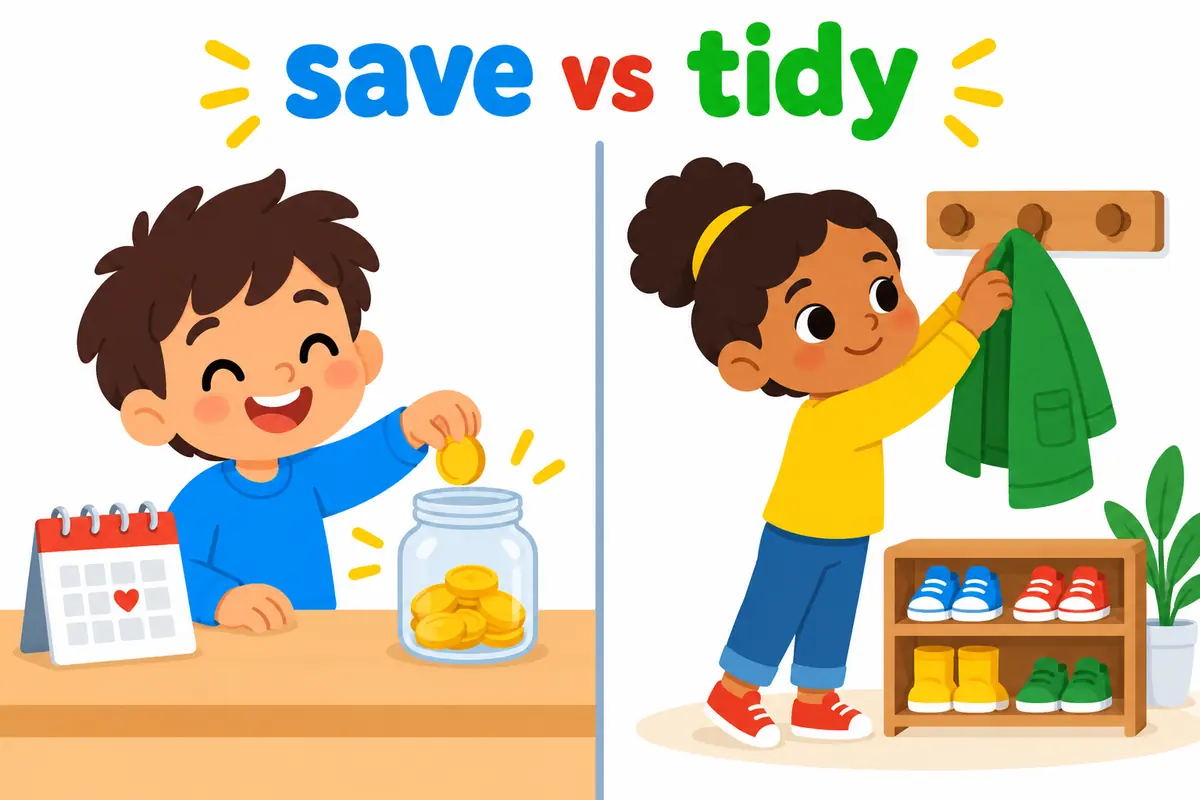
Put aside vs put away
Put aside and put away a coat share the verb put but describe different intentions. One sets something apart for later; the other returns it to its proper place.
| Attribute | put aside | put away |
|---|---|---|
| Core job | Keep something for a future use | Tidy something into its place |
| Typical object | Money, time, a doubt, a plan | Clothes, tools, toys, dishes |
| Duration | Kept back until needed | Stored out of sight |
| Emotional tone | Considered and deliberate | Routine and practical |
| Common phrase | put aside a rainy-day fund | put away the shopping |
Verdict: choose put aside when something is kept for later, and put away when it merely goes back where it belongs. Putting a complaint aside is not the same as ignore a warning, because the first keeps it in view while the second dismisses it.
Word forms and grammar of put aside
Put is irregular only in appearance, since the base, past and past participle are all put. The particle aside never changes, and the verb has no special noun form of its own.
| Form | Part of speech | Example |
|---|---|---|
| put aside | phrasal verb, base form | I put aside a little every payday. |
| puts aside | phrasal verb, third person singular | She puts aside an hour for marking. |
| put aside | phrasal verb, past and past participle | They put aside their doubts and voted yes. |
| putting aside | phrasal verb, present participle | Putting aside the cost, the plan is sound. |
| aside | particle | The word aside never takes an -s. |
| putted | non-standard for this verb | Never write they putted aside the money. |
The one apparent trap is the past tense: it stays putted aside is wrong, because put is unchanged in the past.
Common mistakes with put aside
- Incorrect:
Please put aside it for tomorrow.Correct: Please put it aside for tomorrow. Rule: A pronoun object must sit between put and aside. - Incorrect:
She putted aside some money.Correct: She put aside some money. Rule: The past tense of put is put, never putted. - Incorrect:
He put aside the toys in the cupboard.Correct: He put the toys away in the cupboard. Rule: Tidying into a place is put away, not put aside. - Incorrect:
They put aside to end the project.Correct: They decided to end the project. Rule: Put aside takes a noun object, not an infinitive of purpose. - Incorrect:
I put aside that the report was late.Correct: I disregarded the fact that the report was late. Rule: Use disregard before a that-clause, not put aside.
Practice using put aside
Work through the six items, then check the reasoning rather than only the key.
- Fill the gap: We ______ a little money each month for the school trip.
- Choose the better word: After the meeting, she (put aside / put away) her notes in the drawer.
- Correct the error: He put aside it until the weekend.
- Build a sentence: use put aside differences about two neighbours sharing a path.
- Spot the register: which belongs in a committee minute – the board put aside the proposal pending funds, or we just parked it for now?
- Rewrite with the object separate: They put aside an hour for questions. Move the object after the particle.
Answers
- put aside – the money is saved for a named future need.
- put away – she is tidying notes into a drawer, not saving them for a purpose.
- He put it aside until the weekend – a pronoun must sit between the parts.
- Model answer: The two neighbours put aside their differences to repair the shared path.
- The board put aside the proposal pending funds – a minute avoids slang such as parked it.
- They put an hour aside for questions – the separated form is standard with a short object.
The bottom line
Use put aside in a sentence when something is kept for later, reserved for a task or set down so it stops blocking a decision. Two details settle most sentences: the particle separates, so a pronoun goes between the parts as in put it aside, and the sense is temporary, which is why put away is wrong when the item merely goes back where it belongs.
Frequently asked questions about put aside
What is the difference between put aside and set aside?
The two are close synonyms, and both separate around their object. Put aside is the more common in everyday speech, while set aside appears more often in formal and legal writing, as in the court set aside the order. Meaning and grammar are otherwise the same.
Can you say put aside it?
No. When the object is a pronoun, it must sit between put and aside, giving put it aside. The joined order put aside it is ungrammatical, and the same rule applies to put them aside. Only full nouns may follow the whole phrase.
Does put aside mean the same as cancel?
No. Put aside means to postpone or keep for later, so the thing can return. Cancel means to end something for good. A project put aside may restart when money appears, but a cancelled project will not. If you mean an ending, choose cancel.
Is put aside separable in the passive?
Yes. The passive keeps the phrase intact: the plan was put aside until spring. The object of the passive becomes the subject, so nothing sits between the two parts. Active sentences still allow the split, as in they put the plan aside.
Have you ever heard someone mention “put aside” in a conversation and wondered what it means? In simplest terms, to put aside something is to set it apart or to save it for later use or consideration.
When we put aside something, we intentionally separate it from our immediate focus or attention. This action can range from physically setting aside an object to mentally disregarding a thought or emotion for a later time.
7 Examples Of Put Aside Used In a Sentence For Kids
- Put aside your toys when it’s time to clean up.
- Can you put aside your crayons after you finish coloring?
- Let’s put aside our snacks before we start the game.
- Remember to put aside your books before you go out to play.
- It’s important to put aside your shoes before entering the house.
- We should all put aside our differences and be friends.
- Don’t forget to put aside your plate when you finish eating.
14 Sentences with Put Aside Examples
- Put aside some time each day for meditation and relaxation to help manage stress.
- Before going out with friends, it’s important to put aside enough money for your share of the expenses.
- Remember to put aside your distractions while studying to maintain focus.
- Make sure to put aside any negative thoughts or emotions before attending a lecture to stay engaged.
- It’s necessary to put aside any disagreements with group members when working on a project together.
- Always put aside a portion of your allowance for unexpected expenses.
- Put aside time to attend extracurricular activities and networking events to enhance your college experience.
- Before buying new gadgets or clothes, it’s wise to put aside a budget and stick to it.
- Remember to put aside some time for exercise and physical activity to maintain a healthy lifestyle.
- Don’t forget to put aside a separate folder for important documents and assignments to stay organized.
- When feeling overwhelmed, it’s beneficial to put aside your worries and focus on one task at a time.
- It’s essential to put aside any preconceived notions before attending a debate or discussion to keep an open mind.
- Make it a habit to put aside a few minutes each day for self-reflection and goal setting.
- Before starting a new semester, put aside some time to set academic and personal goals for yourself.
How To Use Put Aside in Sentences?
Put Aside means to save or reserve something for later use or consideration. Here is how you can use it in a sentence:
- Example 1: “I need to put aside some money each month for my vacation next year.”
- Example 2: “Let’s put aside our differences and work together towards a common goal.”
- Example 3: “Please put aside these documents for review at the next meeting.”
When using Put Aside, ensure that the context is clear and that the action of setting something aside is conveyed. It is often used to indicate setting something apart for a specific purpose or saving it for future use.
Remember that put aside is a verb phrase, and it can be modified with adverbs or used in different tenses depending on the context of the sentence. Make sure to use it appropriately within the sentence structure.
Practice using put aside in various sentences to become more familiar with its usage. Experiment with different scenarios and contexts to understand how to incorporate it effectively.
In summary, put aside is a versatile phrase that can be used in various situations to indicate setting something apart or saving it for later use. By practicing and incorporating it into your vocabulary, you will become more comfortable using it in your everyday communication.
Conclusion
In conclusion, the concept of “putting aside” refers to setting something aside or disregarding it temporarily. This can be seen in various contexts, such as prioritizing tasks by putting less important ones aside, or overcoming differences by putting personal biases aside. By consciously choosing to put aside distractions or prejudices, individuals can focus on what truly matters and work towards common goals more effectively.
When individuals “put aside” their differences and work towards a common understanding, it promotes cooperation and unity. By setting aside personal grievances or biases, people can foster better relationships and achieve mutual understanding. Overall, the ability to put aside distractions, biases, or conflicts is crucial for achieving harmony, cooperation, and progress in various aspects of life.


