Quill in a Sentence: Meanings and Clear Examples
Use quill in a sentence for a feather pen, the shaft of a feather, or a porcupine’s spine. “The writer dipped the quill into ink” refers to a pen. “The porcupine’s quills stood out against its fur” refers to spines, so context determines which meaning readers understand.
Key facts at a glance
- Quill can mean a pen made from a feather.
- Quill can also name the shaft of a feather.
- A porcupine’s spines are called quills.
- The regular plural of quill is quills.
- Quill pen is useful when the writing-tool meaning needs to be explicit.
What does quill mean in context?
Quill has several meanings, so a sentence should indicate the object being described. The American Heritage Dictionary entry records feather shafts, feather pens, and animal spines, along with specialized technical senses. The common writing and animal meanings are the most useful starting points for learners.
Compare “She picked up the quill” with “She dipped the quill into an inkwell.” The first sentence leaves the object’s use open; the second identifies a writing scene. A few specific words can establish meaning more effectively than a long definition added afterward.
Quill in a sentence: examples by meaning
| Meaning | Original example | Helpful clue |
|---|---|---|
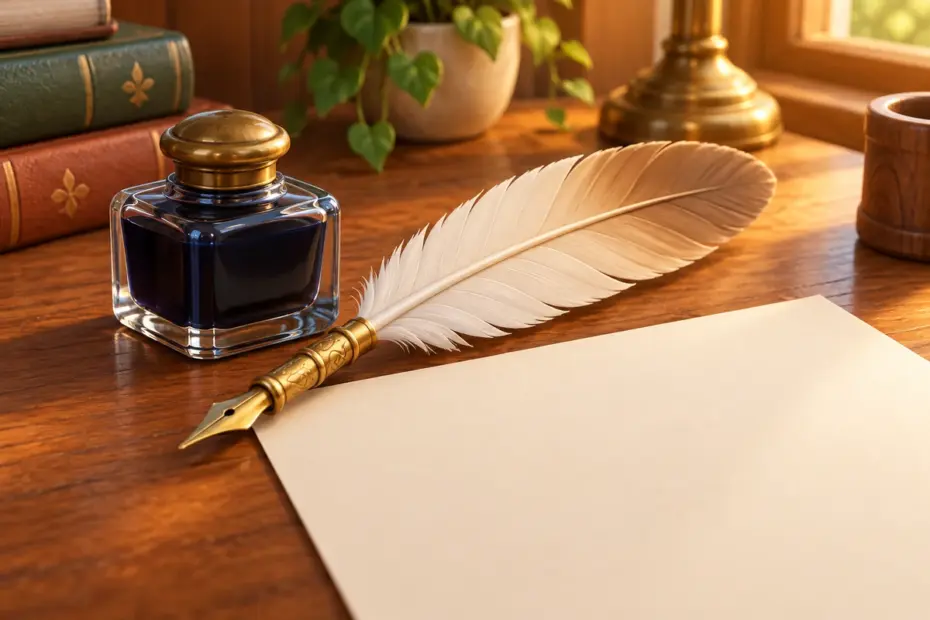
| Feather pen | The novelist dipped her quill into the ink. | Ink and writing |
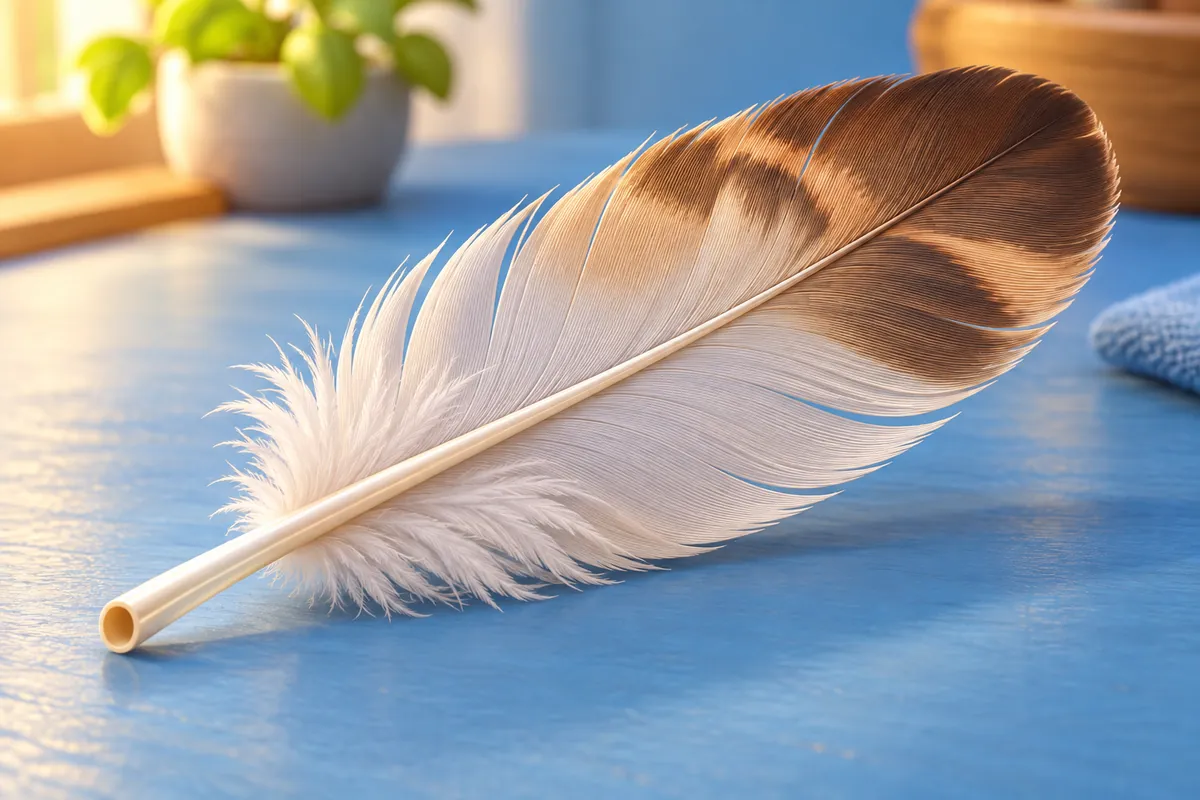
| Feather shaft | The pale quill ran through the center of the feather. | Center and feather |
| Animal spine | The porcupine’s quills looked sharp in the sunlight. | Porcupine and sharp |
| Named writing tool | The museum displayed a quill pen beside an inkwell. | Quill pen and inkwell |
Use a quill for one object and quills for more than one. “A quill rested beside the letter” describes one pen. “Three quills lay in the drawer” describes several. An animal sentence often uses the plural because the sentence describes a group of spines.

How can you write natural feather-pen examples?
Place the quill in a clear writing scene. Verbs such as dipped, held, lifted, wrote, and scratched help connect the object to an action. “The clerk lifted the quill before signing the ledger” describes a specific moment rather than simply listing an old-fashioned item.
- The poet wrote the first line with a quill.
- A drop of ink fell from the quill onto the page.
- She placed the quill beside the folded letter.
- The actor carried a quill as part of the costume.
- The illustrator sketched a quill pen for the book cover.
- We saw a quill and an inkwell in the museum display.
These are vocabulary examples rather than claims about a specific historical document. If you describe an actual author, signature, or event, check which tool was used instead of assuming every old manuscript was written with a feather pen.
For a school exercise, one clear action is enough: “The writer dipped a quill in ink.” For a descriptive scene, add a sound, location, or consequence: “The quill scratched across the page while the room remained quiet.” The additional detail should develop the scene rather than repeat the meaning.
Animal and feather examples without confusion
Use porcupine or feather when the sentence needs to distinguish another meaning from the pen. “The porcupine’s quills were visible through its fur” makes the animal sense clear. “The feather’s quill was hollow” directs the reader to part of a feather rather than a finished writing tool.
Possessives matter. “The porcupine’s quills” identifies the quills belonging to one porcupine; “the porcupines’ quills” identifies those belonging to several. The apostrophe follows the singular animal name in the first pattern and the plural animal name in the second.
Keep the example focused on observed appearance or location unless you have a reliable source for additional animal behavior. “The guide pointed out the porcupine’s quills” illustrates vocabulary without inventing a claim about what the animal can do with them.
Quill and feather overlap in some contexts, but they are not interchangeable everywhere. “The writer dipped the feather into ink” does not identify a prepared writing implement as clearly as “quill pen.” Likewise, a porcupine’s quill is not a bird feather.
Common grammar patterns and writing mistakes
Use an article or another determiner with a singular countable noun: a quill, the quill, her quill, or this quill. “She bought quill” sounds incomplete in ordinary prose; “She bought a quill” supplies the expected structure. The plural can stand without an article when used generally: “Quills can be displayed in a museum.”
- Choose the intended meaning before writing the sentence.
- Select singular quill or plural quills.
- Add a noun or action that identifies the context.
- Use an article or possessive when the singular noun needs one.
- Check that a descriptive detail is relevant and accurate.
Do not turn quill into an everyday verb meaning write. “She quilled the letter” is an unclear substitute for “She wrote the letter with a quill.” Dictionary verb uses are associated with other activities, so the familiar noun phrase is the better choice for a basic writing example.
Frequently asked questions
Is quill pronounced like quilt?
Quill and quilt begin with the same sound, but quilt ends with an additional t. The words also name different objects: “The quill rested on the desk” describes a pen or another quill-shaped object, while “The quilt covered the bed” describes bedding. The final letter changes both pronunciation and meaning.
Can quill be the subject of a sentence?
Yes. “The quill slipped from her hand” places quill in the subject position. “She lifted the quill” places it after the verb as the object. Both structures are natural. Choose the subject form when the sentence focuses on the object itself and the object form when it focuses on someone’s action.
What is a good sentence with quills for children?
“The porcupine has sharp quills” is a clear sentence for children because the animal name identifies the meaning. For a writing-tool example, use “The old desk held two quills and an inkwell.” Keep the surrounding vocabulary familiar so the learner can focus on the new noun and its plural form.
When should I write quill pen instead of quill?
Write quill pen when readers might confuse the writing tool with a feather shaft or an animal spine. “The curator displayed a quill pen” identifies the object directly. Once the scene establishes writing, ink, or an inkwell, the shorter form quill usually communicates the same meaning without unnecessary repetition.
Conclusion
To use quill in a sentence, choose the intended meaning first, then add a context clue that makes that meaning clear. Match the grammar and spelling to the example rather than relying on the sound of the word alone.
Have you ever wondered how to craft a stunning sentence using a quill? A quill is a writing tool made from a bird feather that has been used for centuries to create beautiful and intricate writing.
Using a quill to write can add a touch of elegance and nostalgia to your words. Whether you fancy calligraphy or simply want to experience the traditional feel of writing with a quill, mastering this art can elevate your writing skills to new heights.
7 Examples Of Quill Used In a Sentence For Kids
- The quill is used to write letters.
- The quill is made from a feather.
- The quill is very soft and delicate.
- The quill comes from a bird.
- We can draw with a quill.
- The quill is like a pen.
- The quill has a pointed tip.
14 Sentences with Quill Examples
- Quill is an essential tool for writing exams in traditional Indian universities.
- Many students prefer using a quill instead of a ballpoint pen for assignments.
- The sound of a quill scratching against paper can be quite soothing during late-night study sessions.
- Indian literature enthusiasts often appreciate the elegance of writing with a quill.
- History majors may enjoy the historical significance of using a quill to write essays.
- Students in art school may use a quill for calligraphy projects.
- The intricate design of a quill can make writing feel like a form of art.
- Exchanging a quill as a gift between friends symbolizes wisdom and knowledge.
- Quills are known for their durability, making them a reliable writing tool for college students.
- Writing with a quill can enhance the storytelling aspect of essays or creative writing pieces.
- College debates often require participants to make points using a quill and parchment.
- The versatility of a quill allows students to experiment with different writing styles.
- Indian folklore sometimes portrays mythical creatures holding enchanted quills for writing prophecies.
- Environmental science students may debate the sustainability of using traditional quills versus modern pens.
How To Use Quill in Sentences?
Quill is a versatile word that can be used in various contexts. To use quill in a sentence, simply follow these steps:
-
Identify the main idea: Before using quill in a sentence, think about the main idea or message you want to convey. This will help you use quill effectively in your sentence.
-
Choose the right context: Quill is commonly associated with writing or literary activities. Ensure that quill fits the context of your sentence to avoid confusion.
-
Construct your sentence: Once you have the main idea and context in mind, construct your sentence around quill. You can use quill as a noun to refer to a writing instrument made from a bird’s feather, or as a verb to describe the act of writing.
-
Example sentences:
- Noun: “The author penned his novel using a quill.”
- Verb: “She carefully quilled her thoughts onto the parchment.”
- Check your sentence: After using quill in a sentence, make sure it flows well and conveys your intended meaning clearly. You can also ask someone to review your sentence to ensure it makes sense.
By following these steps, you can effectively use quill in a sentence with confidence and clarity. Happy writing!
Conclusion
In conclusion, the art of writing with quills involves using feathers as a tool to create beautiful and intricate sentences. These sentences with quill possess a unique charm and elegance, harkening back to centuries past when writing was a meticulous craft. The delicate strokes and flowing script produced by a quill pen add a touch of sophistication to any piece of writing.
Despite the modern advancements in writing technology, the tradition of crafting sentences with quills continues to capture the imagination of many. Whether used for calligraphy, historical reenactments, or simply as a decorative touch, sentences written with quill pens offer a glimpse into a bygone era while showcasing the enduring appeal of this timeless writing instrument.


