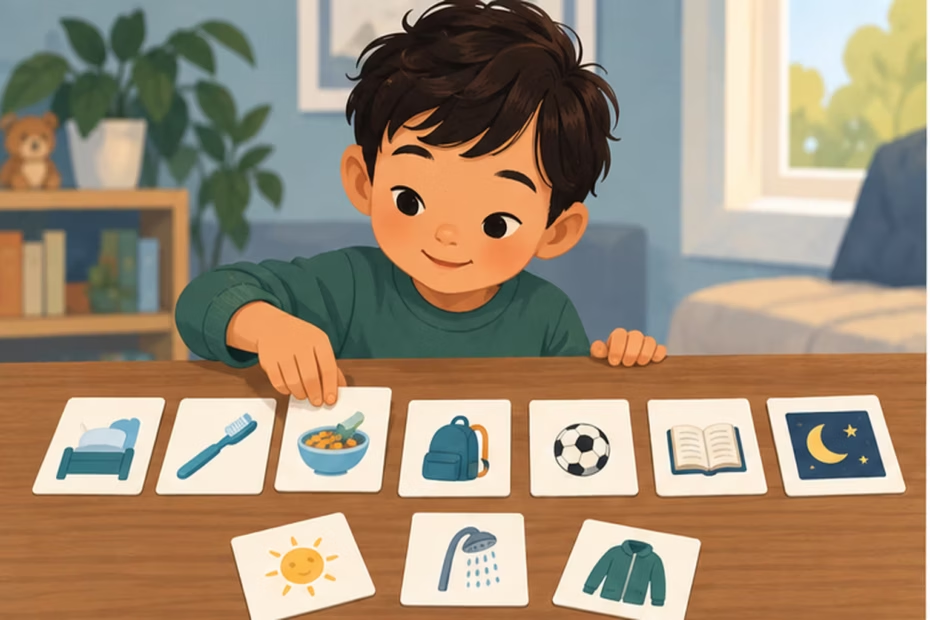
Quick definition: A sequence is a set of related things in a particular order, or the order in which they occur. The word also works as a verb meaning to arrange items in an order. Cambridge lists both noun and verb uses, and Oxford gives examples of sequences of events, actions, and numbers. This guide shows the grammar, explains how sequence differs from related words, and gives examples across everyday, school, and work settings.
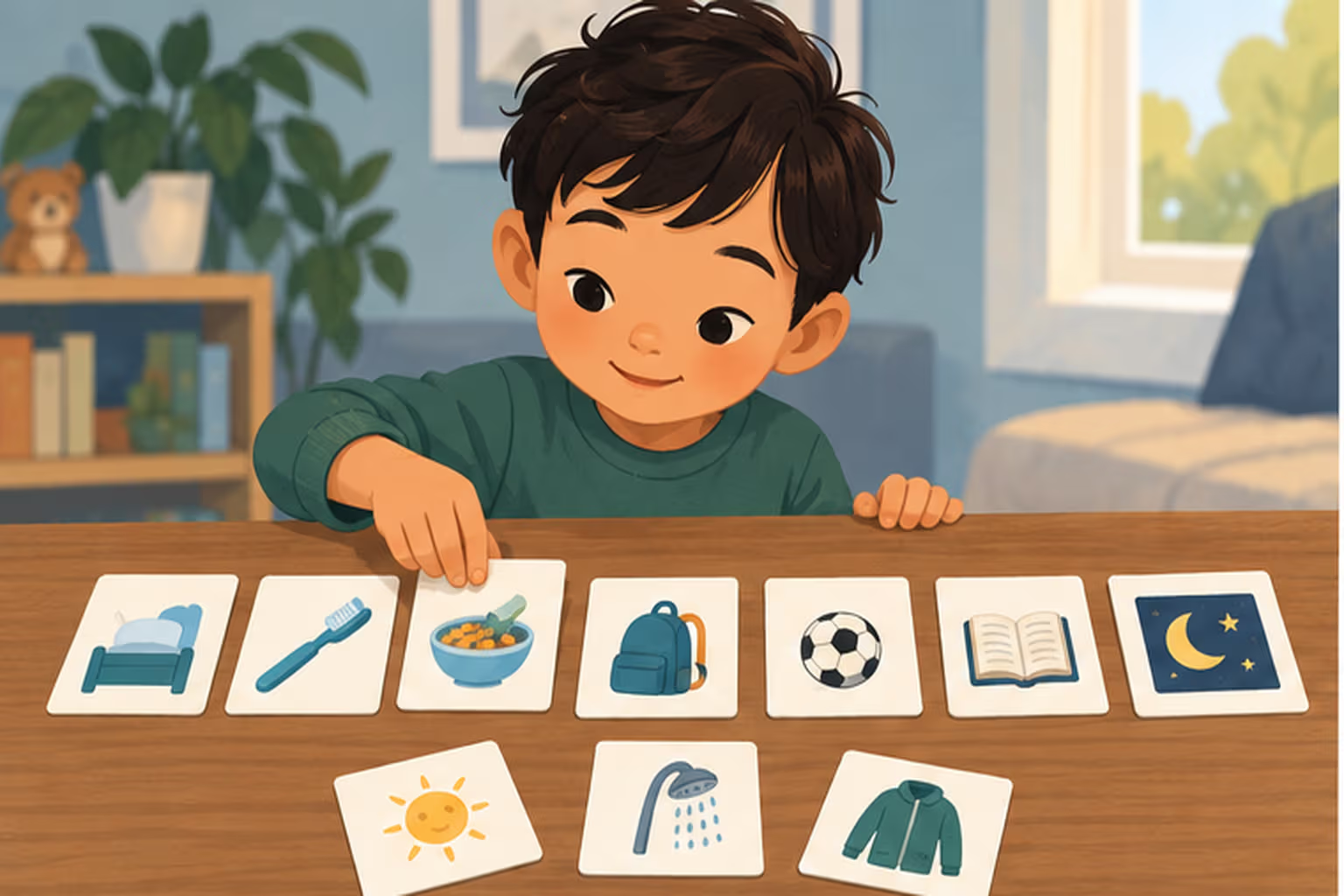
How to Use “Sequence” as a Noun
As a noun, sequence can mean an ordered set—“a sequence of events”—or the order itself—“the pages are in sequence.” It is often countable when you mean one particular series (“two sequences of numbers”), and it can describe order more generally (“sequence matters here”). Common patterns include:
- a sequence of events, steps, numbers, images, or instructions;
- in sequence or out of sequence to say whether something follows the intended order;
- the correct/logical/chronological sequence to identify what kind of order is meant;
- a sequence leading to a result, when the events or actions form a connected progression.
Examples: “The witness described the sequence of events,” “Please number the pages in sequence,” and “The lesson introduces the ideas in a logical sequence.” Oxford’s noun entry includes the patterns sequence of, in sequence, and out of sequence.
How to Use “Sequence” as a Verb
Sequence can also take an object: a person sequences or arranges items in a chosen order. For example, “The teacher sequenced the activities from easiest to hardest,” or “Sequence these photographs by date.” Cambridge’s dictionary entry lists this transitive verb use. In everyday directions, the noun is often more natural: “Put the steps in order.” Choose the verb when you want to emphasize the deliberate act of arranging them.
Sequence in Different Contexts
Time and stories
- The diary entries reveal the sequence of events that led to the family’s move.
- In the story, the final scene comes before the opening sequence.
- She retold the conversation in chronological sequence, starting with the first call.

Instructions and routines
- Follow the sequence of steps on the setup sheet before turning on the device.
- The coach sequenced the warm-up activities so that the group could build gradually.
- First rinse the rice, next add water, and finally cover the pot; the transition words mark the cooking sequence.
Numbers and learning
- The sequence 2, 4, 6, 8 follows a simple rule: add two each time.
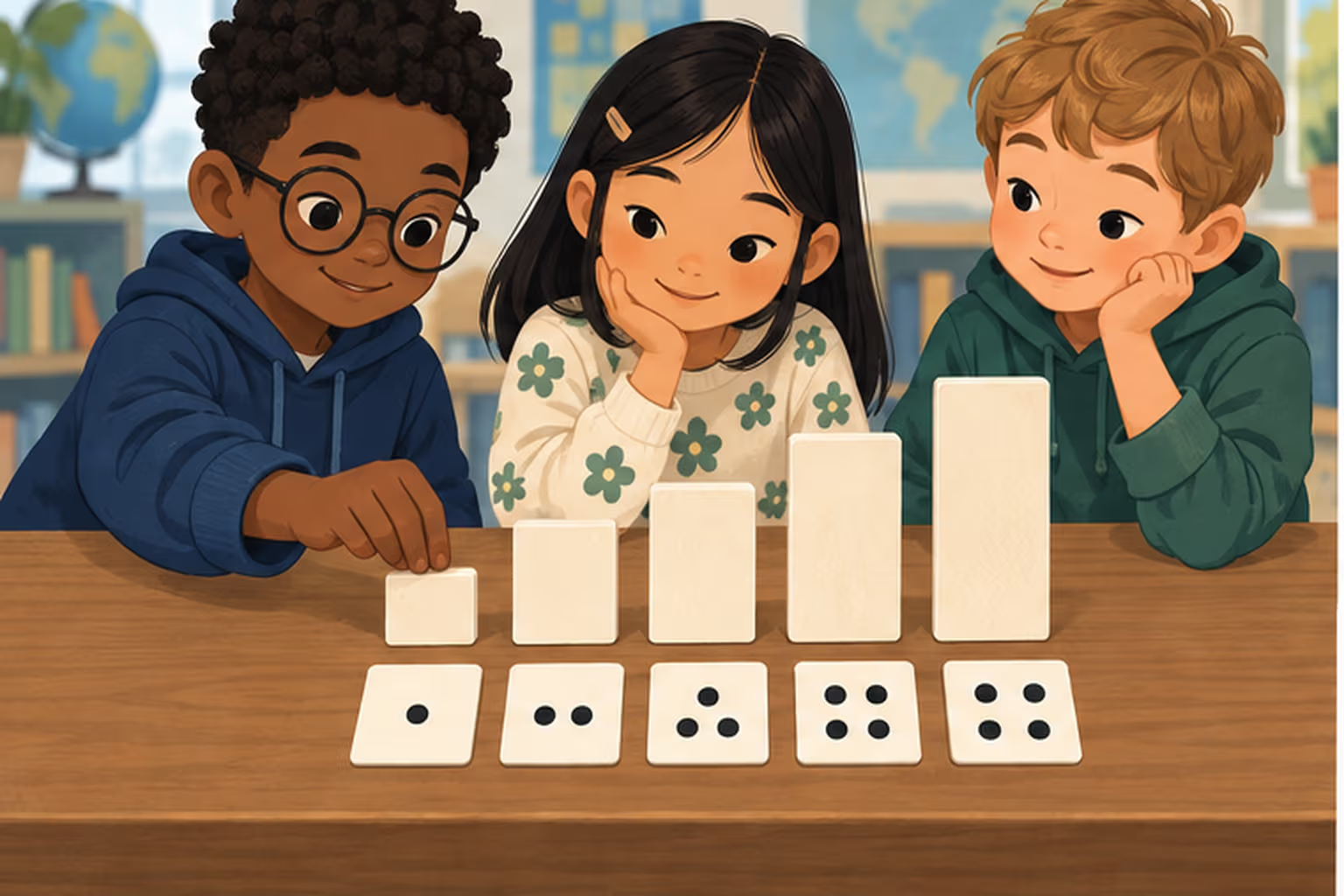
- The teacher asked students to sequence the number cards from smallest to largest.
- For the experiment, record observations in sequence rather than relying on memory later.
Work and media
- The editor moved the paragraphs into a clearer sequence before publishing the guide.
- The film’s opening sequence introduces the setting before the main story begins.
- Sequence the training sessions so that new staff learn the basics before using advanced tools.
Sequence, Order, Series, and Pattern
These terms overlap, but their emphasis differs. Order is the broad arrangement of things. A sequence often presents related items or events one after another in a particular order. A series emphasizes connected items, installments, or events; the order may or may not be central. A pattern is a repeated or recognizable arrangement. For example, 2, 4, 6, 8 is a number sequence, while “add two each time” is its pattern.
Words such as first, next, then, and finally signal order to readers. They help explain a sequence, but they do not replace the noun in every sentence. “The sequence was clear” names the ordered set; “First we mixed the flour” marks one step within it.
Simple Examples for Children
- Put the story pictures in sequence: beginning, middle, and end.
- The numbers 1, 2, 3, 4 make a counting sequence.
- Sequence the blocks from shortest to tallest.
- Wash your hands, dry them, and then eat: those steps make a sequence.
A quick check is to ask: “What comes first, and what follows?” If the sentence names the ordered set or the act of arranging it, sequence may fit. If you only mean that two things are connected, another word such as series may be clearer.

Frequently Asked Questions
Is “sequence” a noun or a verb?
It can be both. As a noun, it names an ordered series or its order. As a verb, it means to arrange things in a particular order.
Is “sequence” countable?
It is countable when referring to a particular ordered set (“a sequence of events,” “several number sequences”). It can also refer more generally to order (“the sequence of the steps matters”).
What is a simple synonym for “sequence”?
Order is a close alternative when you mean arrangement; series can fit a connected set of items. They are not interchangeable in every context, so choose the word that expresses whether order or connection matters most.
Source note: The original examples and usage section below are preserved exactly as published. The added guide clarifies noun and verb forms and supplies fresh examples across several contexts.
Do you ever find yourself struggling to put your thoughts in order? Understanding the concept of “sequence” is essential in organizing information in a logical and structured manner. In its simplest form, a sequence refers to the specific order in which things happen or are arranged.
Sequences help us make sense of things by providing a clear, step-by-step progression of events or elements. Learning to effectively use sequences can improve the clarity and coherence of your writing, making your ideas easier to follow and comprehend.
7 Examples Of Sequence Used In a Sentence For Kids
- First, we need to put the ingredients in sequence.
- Let’s put the numbers in the correct sequence.
- Can you line up the blocks in a sequence?
- We will learn about the alphabet sequence today.
- Please arrange the pictures in the right sequence.
- We sorted the colors in a rainbow sequence.
- Remember to follow the steps in sequence when doing your homework.
14 Sentences with Sequence Examples
- Sequence the steps to solve the differential equation provided in the assignment.
- Make sure to sequence the chapters in your notes according to the syllabus for easy reference.
- Sequence the events in the correct order to diagram the process flow of the algorithm.
- Set up a sequence of study sessions leading up to the final exams to cover all topics effectively.
- Organize the data in a logical sequence when writing your research paper.
- Create a sequence of study breaks to prevent burnout during long study sessions.
- Use the correct sequence of formulas to derive the solution to the mathematical problem.
- Follow the proper sequence of procedures when conducting experiments in the laboratory.
- It is important to follow the correct sequence of steps while performing a chemical reaction.
- Establish a sequence for completing assignments to avoid last-minute submissions.
- Practice writing code in the correct sequence to ensure smooth execution of the program.
- Arrange your study materials in a specific sequence based on priority and urgency.
- Maintain the proper sequence of citations in your research paper to avoid plagiarism.
- Create a logical sequence of arguments in your essay to make your point effectively.
How To Use Sequence in Sentences?
Sequence is a term used to describe the order in which things happen or are placed. When using Sequence in a sentence, it is important to consider the flow of events or ideas.
To use Sequence in a sentence, start by identifying the series of events or steps that you want to describe. Make sure that each part of the Sequence is clear and logical to the reader.
For example, “First, I woke up, then I brushed my teeth, and finally, I had breakfast.” In this sentence, the word “First” signals the beginning of the Sequence, followed by “then” to show the next step, and “finally” to conclude the Sequence.
Another way to use Sequence in a sentence is to indicate the order of importance or priority. For instance, “In order to succeed, you must first set your goals, second create a plan, and third take action.” In this sentence, the Sequence shows the order of steps needed to achieve success.
In summary, when using Sequence in a sentence, make sure to clearly outline the order of events, steps, or ideas. Use transition words like “First,” “then,” “finally,” “next,” or “second” to help organize the Sequence effectively.
Conclusion
In writing, sentences with sequence are used to convey a clear progression of events or ideas. By structuring sentences in a logical sequence, readers can easily follow the flow of information presented. With the use of transitional words and phrases, such as “first,” “next,” “then,” and “finally,” the writer can guide the reader through a series of steps or developments.
Sequences in sentences help create cohesion and coherence, making the text more organized and easy to comprehend. Whether describing a process, recounting events in a story, or presenting a list of items, sentences with sequence play a crucial role in effective communication by providing a smooth and orderly presentation of information.


