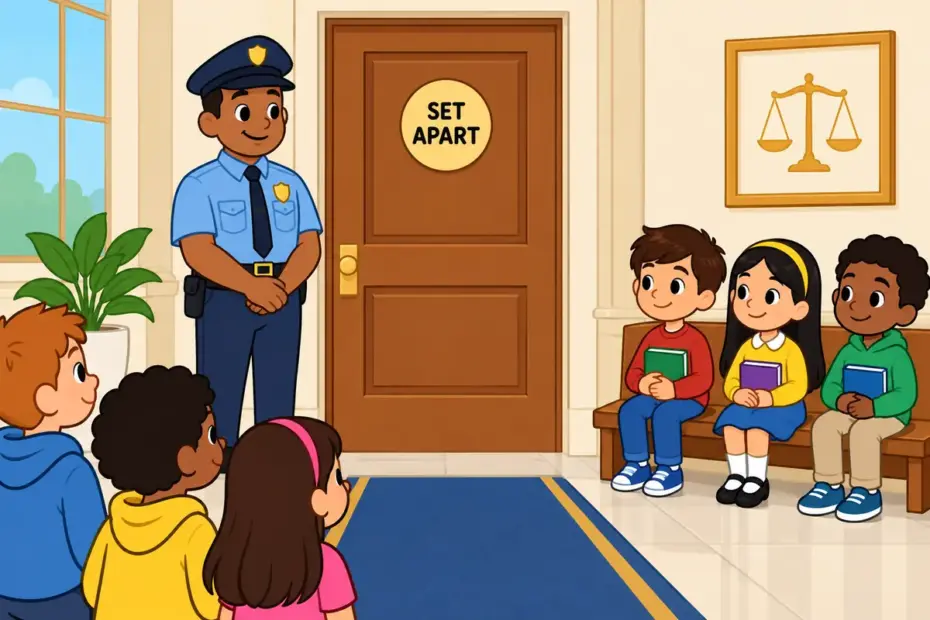
Sequester means to set someone or something apart from others, or to take legal control of property. To use sequester in a sentence, name what is separated and who does it: “The judge sequestered the jury.” The verb is transitive, and its senses stretch from isolating people to seizing funds and storing carbon.
Sequester at a glance
- Sequester is a transitive verb; its forms are sequesters, sequestered and sequestering.
- Its main senses are isolating people, seizing property and setting something apart for storage.
- The noun sequestration usually names the legal seizure or the carbon-storage sense.
- Common contexts are courts, law, government budgets and environmental science.
- The commonest error is confusing sequester with sequestrate, its near twin in legal writing.
What does sequester mean?
Sequester is a transitive verb meaning to set a person or thing apart from general contact, or to take legal control of something for a time. The Cambridge entry for sequester records the isolation sense, and the other senses grow from it: a court sets property aside from its owner, and a forest sets carbon aside from the air.
| Sense | Plain meaning | Example sentence |
|---|---|---|
| Isolate | Keep a group apart from outside contact | The judge sequestered the jury for the trial. |
| Seize legally | Take temporary control of property or funds | The court sequestered the company accounts. |
| Set apart for storage | Remove and store a substance such as carbon | Forests sequester carbon as they grow. |
| Withdraw | Separate oneself from the world | She sequestered herself to finish the book. |
One limitation is worth stating clearly. Sequester is not a grand word for hide. It always implies an authority or a deliberate setting apart, so a lost key is not sequestered. In everyday speech, isolate a problem or quarantine a patient will be clearer, and sequester can sound inflated. The word also carries no suggestion that the separated thing is in danger, which is why it fits a jury, a bank account and a forest alike.
How do you use sequester in a sentence?
Because the verb is transitive, every pattern supplies an object, and the reflexive pattern supplies its own. Four shapes cover almost every real sentence.
| Pattern | Example | What it signals |
|---|---|---|
| sequester + group of people | The judge sequestered the jury. | The isolation sense; a group is kept from contact. |
| sequester + assets or funds | Regulators sequestered the funds. | The legal seizure sense, common in finance reporting. |
| sequester + carbon or gas | Soil can sequester carbon for centuries. | The storage sense, standard in climate science. |
| sequester oneself | He sequestered himself in the study. | Voluntary withdrawal; the reflexive pronoun is required. |
The passive is common when the authority is obvious: the jury was sequestered, the accounts were sequestered. Note that the reflexive use changes the meaning from official separation to personal retreat, and dropping the pronoun turns a private choice into a grammatical error.
Writers sometimes reach for sequester when they simply mean reserve, especially for seats or time, but reserve is the safer verb for something you plan to use later. Sequester always suggests an outside decision or a deliberate withdrawal.
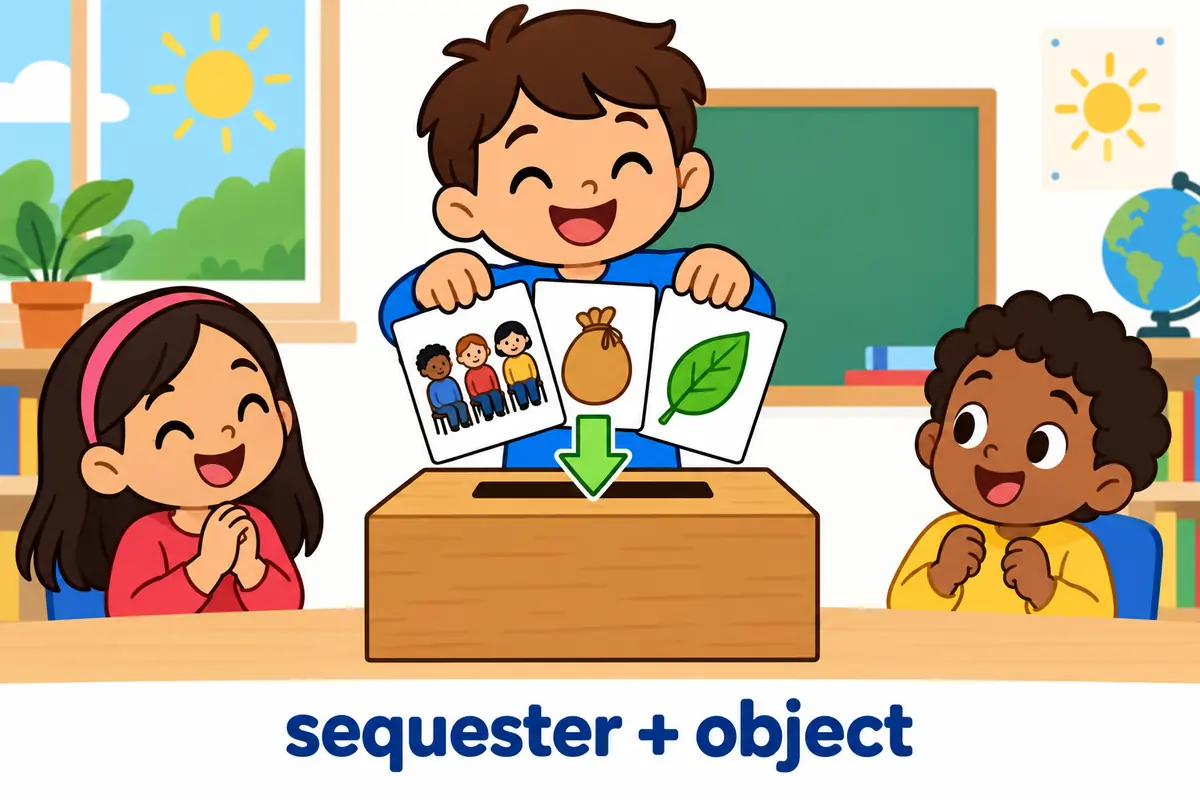
Sequester in a sentence: examples across contexts
The verb keeps its sense of setting apart while the setting changes. These twelve sentences move from a classroom to a climate report, and each one names who or what is being separated.
| Context | Example sentence | Why this works |
|---|---|---|
| Classroom | The teacher sequestered the noisy group in the reading corner. | A harmless separation shows the core sense. |
| Court reporting | The judge sequestered the jury until the verdict was reached. | The classic legal use, with a time phrase. |
| News report | Investigators sequestered the records for review. | The seizure sense applied to documents. |
| Finance writing | The regulator sequestered the insurer's reserves. | Shows the formal financial sense in a report. |
| Government budget | Automatic cuts sequestered billions from the programme. | The verb becomes a budget term for setting money aside. |
| Climate science | Wetland soils sequester carbon faster than dry ones. | Uses the storage sense with a comparison. |
| Environmental policy | The scheme pays farmers who sequester carbon in hedgerows. | Links the verb to an incentive. |
| Medical writing | Staff sequestered the ward during the outbreak. | Careful separation in a health setting. |
| Biography | She sequestered herself for a year to write. | The reflexive pattern shows voluntary retreat. |
| Property law | The trustee sequestered the estate pending the hearing. | A precise legal use with a time phrase. |
| Sports report | The squad was sequestered before the final. | Passive form suits a controlled training camp. |
| Conversation | He sequestered the good chairs for his own guests. | An everyday, faintly humorous use of setting aside. |
Only the last example stretches the word into ordinary speech, and it does so for comic effect. In formal writing the object is usually people, money, records or carbon. A near neighbour, to confiscate property, stresses permanent removal, while sequester stresses setting something aside for a time. Police who impound a vehicle hold it in a pound, which is another form of controlled separation. In budget writing, the bare noun sequestration has become shorthand for automatic cuts that take effect when no deal is reached.
Sequester vs seclude
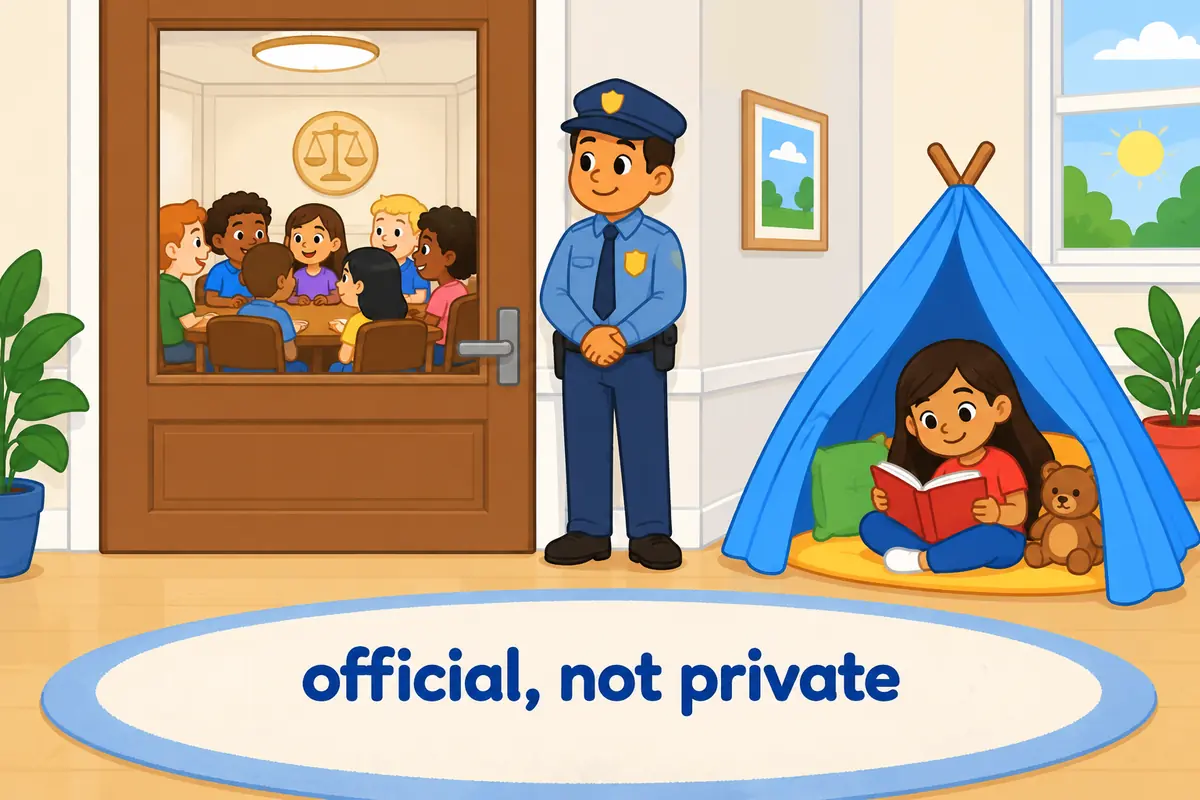
Sequester and seclude both describe keeping people apart, and the difference is who decides and how official the separation is.
| Attribute | sequester | seclude |
|---|---|---|
| Who decides | An authority, or the person by choice with oneself | Often the person, and it suggests privacy |
| Typical object | A jury, funds, records, carbon | A person or a place |
| Duration | Temporary, tied to a trial or review | Open-ended |
| Implication | Controlled separation | Quiet withdrawal from others |
| Register | Legal, financial and scientific | Literary and everyday |
Verdict: use sequester when a body orders the separation or when property and carbon are involved, and use seclude when someone quietly keeps to themselves in a private place.
Word forms and grammar of sequester
The family includes a close legal relative, sequestrate, which is why writers mix them up. The table keeps the forms apart and shows which one carries which sense. Note that the noun sequestration is far more common in headlines than the participle sequestering.
| Form | Part of speech | Example |
|---|---|---|
| sequester | verb, base form | Courts may sequester a jury in a high-profile case. |
| sequesters | verb, third person singular | The trust sequesters disputed funds. |
| sequestered | verb, past and past participle | The accounts were sequestered last week. |
| sequestering | verb, present participle | Sequestering carbon is now a policy goal. |
| sequestration | noun | Budget sequestration cut the grant in half. |
| sequestrate | verb, legal relative | A court may sequestrate an estate in some jurisdictions. |
Common mistakes with sequester
- Incorrect:
The jury sequestered during the trial.Correct: The jury was sequestered during the trial. Rule: The verb is transitive, so it needs an object or the passive. - Incorrect:
She sequestered in a quiet cabin.Correct: She sequestered herself in a quiet cabin. Rule: The voluntary sense is reflexive and needs the pronoun. - Incorrect:
The court sequestered of the funds.Correct: The court sequestered the funds. Rule: The verb takes a direct object and never the preposition of. - Incorrect:
They sequestered the files away in a vault.Correct: They sequestered the files in a vault. Rule: Sequester already carries the idea of setting aside, so away is redundant. - Incorrect:
The judge sequestrated the jury.Correct: The judge sequestered the jury. Rule: Use sequester for juries and carbon; sequestrate belongs to formal property law. - Incorrect:
He sequestered the keys in his pocket.Correct: He put the keys in his pocket. Rule: Sequester implies authority or deliberate setting apart, not simple placement.
Practice using sequester
Work through the eight items, then read the reasons rather than only the answers.
- Fill the gap: The judge ______ the jury until the verdict came in.
- Choose the better word: The court moved to (sequester / confiscate) the disputed funds for six months.
- Correct the error: The documents sequestered in a locked room.
- Build a sentence: use sequester carbon about a new woodland.
- Spot the register: which belongs in a legal memo — the trustee sequestered the estate, or the trustee grabbed the estate?
- Rewrite with the reflexive: He shut himself away to study. Use sequester.
- Fill the gap: The disputed funds were ______ while the audit ran.
- Choose the better word: The newspaper did not (sequester / impound) the seized ledger but photographed it.
Answers
- sequestered — the past form reports a completed legal action with the jury as object.
- sequester — the funds are set aside temporarily, while confiscate would suggest permanent removal.
- The documents were sequestered in a locked room — the transitive verb needs the passive here.
- Model answer: The new woodland will sequester carbon as the trees mature.
- the trustee sequestered the estate — a memo keeps formal verbs and avoids grabbed.
- He sequestered himself to study — the reflexive pronoun signals voluntary withdrawal.
- sequestered — the passive keeps the audit as the reason and names the funds as the object.
- impound — police hold physical items, while sequester sets property aside by order.
The bottom line
Use sequester in a sentence when an authority sets people, property or carbon apart from ordinary contact, and keep the object in place because the verb is transitive. Two details decide most sentences: the reflexive form sequester oneself means voluntary retreat, and the noun sequestration carries the legal and climate senses. When nothing official is involved, isolate or seclude is the plainer choice.
Frequently asked questions about sequester
What part of speech is sequester?
Sequester is a transitive verb, so it always takes an object or appears in the passive. Its inflections are sequesters, sequestered and sequestering, and the related noun is sequestration. Because the verb is transitive, a sentence such as the jury sequestered is incomplete and needs either an object or the passive was sequestered.
What does it mean to sequester a jury?
To sequester a jury is to keep its members together and away from outside contact while they hear a case and reach a verdict. The aim is to prevent influence from news reports or the public. The arrangement is temporary and lasts only until the trial ends, and the judge orders it.
Is sequester the same as quarantine?
No. Quarantine is a medical measure that confines people who may carry disease, while sequester is a general setting apart by an authority. A jury can be sequestered and a ward quarantined, and only the second is about infection. Sequester also covers property and carbon, where quarantine has no use at all.
What is sequestration?
Sequestration is the noun form, and it has two common senses. In law and government it means setting funds or property aside, as in budget sequestration. In environmental science it means capturing and storing a substance such as carbon. Both senses keep the idea of something removed from normal circulation for a period.