Serendipity means the luck of finding something valuable while looking for something else. To use serendipity in a sentence, pair it with chance, discovery or a happy accident: “By pure serendipity, the chemist noticed the mould.” The noun names the event, not the person, and it stays uncountable.
Serendipity at a glance
- Serendipity is an uncountable noun for a lucky, unplanned discovery.
- It usually appears in by serendipity or in a moment of serendipity.
- Its adjective is serendipitous and its adverb is serendipitously.
- The noun belongs to writing about science, travel, business and everyday good fortune.
- The commonest error is using it for any coincidence, including an unlucky one.
What does serendipity mean?
Serendipity is an uncountable noun meaning the good luck of finding something useful or pleasant without intending to. The Cambridge entry for serendipity ties the word to happy discoveries, a discovery that no plan produced, which is why it needs a good outcome: a chance meeting that helps you is serendipity, a chance meeting that ruins your day is not.
| Sense | Plain meaning | Example sentence |
|---|---|---|
| Lucky discovery | Finding something valuable by accident | By serendipity, the team found the vaccine while testing a rival compound. |
| Fortunate encounter | Meeting the right person unwittingly | Their serendipity was meeting at a delayed gate. |
| Happy accident | An unplanned but welcome outcome | The recipe was a piece of pure serendipity. |
One limitation is worth stating plainly. Serendipity is not a synonym for coincidence, because coincidence is neutral while serendipity is always fortunate. The word also describes the event, not the person, so it is odd to call somebody a serendipity; use the adjective serendipitous for a lucky find or meeting.
How do you use serendipity in a sentence?
As an abstract noun, serendipity nearly always travels with a small set of prepositions and amount phrases. Pair serendipity with chance, because the find depends on it, and the collocations below follow naturally.
| Pattern | Example | What it signals |
|---|---|---|
| by + serendipity | By serendipity, she found the missing letter in an archive box. | The lucky accident as the means. |
| a moment / stroke of + serendipity | A stroke of serendipity introduced them to their investor. | A single fortunate instant. |
| pure / sheer + serendipity | Pure serendipity put the two researchers side by side. | Emphasises that nothing was planned. |
| serendipity leads to / brings | Serendipity led the chef to a cheaper, fresher market. | The discovery producing a result. |
| a product of + serendipity | The discovery was a product of serendipity, not of a grant. | Crediting chance over design. |

Serendipity in a sentence: examples across contexts
Serendipity appears wherever an unplanned find changes the outcome, from a school library to a research lab. The nine sentences below keep the noun abstract while naming the lucky discovery in each case.
| Context | Example sentence | Why this works |
|---|---|---|
| Classroom | By serendipity, the class found its missing model behind the easel. | Keeps the discovery small and concrete. |
| Research lab | Serendipity turned a failed experiment into a new antibiotic. | Shows the classic scientific case. |
| Business writing | The merger was a product of serendipity rather than of strategy. | Contrasts chance with planning. |
| Travel writing | A missed train became a moment of serendipity in a hill town. | Turns a mishap into a welcome discovery. |
| News report | Serendipity led the reporter to the ledger that broke the story. | Credits an accidental find for the scoop. |
| Conversation | It was pure serendipity that we took the same lift. | Uses the emphatic adjective in speech. |
| Academic writing | Historians rarely record the serendipity behind an archive find. | Treats serendipity as a subject of study. |
| Career advice | Her internship came from serendipity more than from a plan. | Links luck to a professional opening. |
| Everyday note | Serendipity brought the two friends back to the same street. | Applies the noun to a reunion. |
Each sentence keeps serendipity as the cause and names the good result, which is the pattern that keeps the word precise.
Serendipity vs a fluke
A fluke and serendipity both involve luck, and they are not the same idea. A fluke is a surprising success that could easily not have happened; serendipity is the discovery itself, and it usually involves finding something you were not seeking.
| Attribute | serendipity | a fluke |
|---|---|---|
| Core idea | An accidental, welcome discovery | A one-off lucky result |
| Countability | Uncountable | Countable: a fluke, two flukes |
| Typical context | Science, travel, careers | Sport, wins, escapes |
| Requires a search | Usually: you were looking for something else | No search is implied |
| Tone | Warm, slightly literary | Plain, often sceptical |
Verdict: choose serendipity when someone finds something valuable by accident, and fluke when an unlikely result simply lands. Serendipity sits close to fortune, but fortune need not involve finding anything. For the neutral event behind both, coincidence names the timing without judging whether it was welcome.
Word forms and grammar of serendipity
Serendipity has a full family of forms, and the adjective does most of the practical work. The table also flags the forms learners invent but that no dictionary keeps.
| Form | Part of speech | Example |
|---|---|---|
| serendipity | noun, uncountable | The whole project was built on serendipity. |
| serendipitous | adjective | A serendipitous meeting changed her career. |
| serendipitously | adverb | They met serendipitously on a night train. |
| serendipitist | noun, rare | The essay called him a lucky serendipitist. |
| serendipitize | non-standard verb | Write to find by chance, not serendipitize. |
The adjective serendipitous is handy when you need to describe the find itself rather than the luck.
Common mistakes with serendipity
- Incorrect:
It was a serendipity that it rained on our parade.Correct: It was a piece of serendipity that the rain missed our parade. Rule: Serendipity is uncountable and must describe something welcome. - Incorrect:
He is such a serendipity.Correct: He is such a serendipitous friend to have met. Rule: Serendipity is an event, not a personal trait; use the adjective for people. - Incorrect:
The car crash was serendipity.Correct: The car crash was a coincidence. Rule: Serendipity is always fortunate, so it cannot describe harm. - Incorrect:
I serendipitied into the job.Correct: I found the job by serendipity. Rule: There is no standard verb form; use the phrase by serendipity. - Incorrect:
We met by serendipity accident.Correct: We met by serendipity. Rule: The noun already contains the idea of accident, so accident is redundant.
Practice using serendipity
Work through the six items, then read the reasoning so the collocation sticks.
- Fill the gap: By ______, the volunteer found the family recipe in a donated cookbook.
- Choose the better word: Losing the final was (serendipity / a fluke) for the underdog side.
- Correct the error: The storm was a real serendipity for the sailors.
- Build a sentence: use a stroke of serendipity about finding a mentor.
- Spot the register: which fits a research paper — serendipity shaped the trial, or we got super lucky?
- Rewrite with the adjective: We found the cave by serendipity. Use serendipitous.
Answers
- serendipity — by plus the uncountable noun states the lucky means.
- a fluke — the result was lucky but nothing was discovered, which suits fluke.
- The storm was a piece of bad timing, not serendipity — serendipity is always welcome.
- Model answer: Finding a patient mentor was a stroke of serendipity for the young designer.
- Serendipity shaped the trial — formal writing keeps the noun and avoids slang.
- The cave was a serendipitous find — the adjective describes the discovery itself.
The bottom line
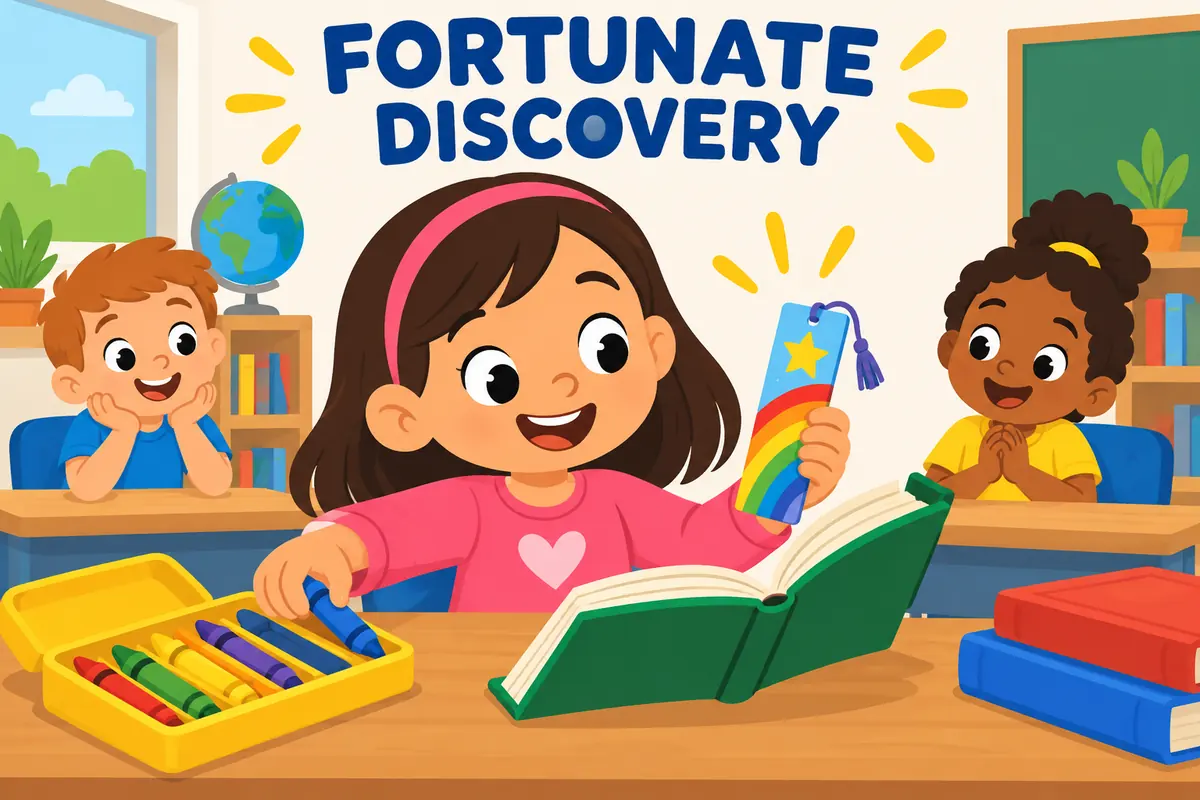
Use serendipity in a sentence for an accidental find that turns out well, and keep the noun uncountable. Two nuances decide most sentences: serendipity is always fortunate, so it cannot describe an unlucky coincidence, and it names the discovery rather than the person, which is why the adjective serendipitous does that job instead. The word suits science, travel and career stories especially well.
Frequently asked questions about serendipity
Is serendipity always a countable noun?
No. Serendipity is uncountable in standard use, so you write a lot of serendipity, not three serendipities. When you need to count separate lucky moments, use a countable frame such as a stroke of serendipity or an instance of serendipity. Treating the word as countable is the usual learner slip.
Does serendipity need a happy ending?
Yes. The word carries a favourable outcome, which is what separates it from coincidence. An accident that harms someone is not serendipity, however unlikely it was. If a discovery is welcome and came about by chance, serendipity fits; if the result is neutral or bad, call it a coincidence or an accident.
What preposition usually follows serendipity?
By is the commonest preposition, as in we met by serendipity. The noun also follows of in an amount phrase, as in a stroke of serendipity, and it can end a phrase with through, as in it happened through sheer serendipity. The preposition to does not normally follow the noun, so avoid phrases like serendipity to me.
Can serendipity be used as a verb?
No standard verb form exists in current dictionaries, so serendipitize and serendipitied are best avoided. When you need a verb, use the phrase find by serendipity, or switch to the adverb and write that they met serendipitously. The adjective serendipitous is the safest derived form for a description rather than an action.
What Does “Serendipity” Mean?
Serendipity is the occurrence of a fortunate or valuable discovery by chance, especially when someone was looking for something else—or was not searching for that result at all. Chance creates the unexpected opening; attention and insight help a person recognize why the discovery matters. The word names the discovery or quality of the event, not simply a lucky outcome.
For example, finding a useful reference while browsing for an unrelated book may be serendipity. Winning a prize through a random draw is good luck, but it is not necessarily serendipity if nothing unexpected is discovered. In everyday use the boundary can be flexible, so a short explanation often makes the intended sense clear.

Serendipity in a Sentence: Examples
- Unexpected find: “While researching train schedules, Lena found a book about the town’s history by serendipity.”
- Chance meeting: “Their meeting at the station was serendipity: they discovered they were both seeking a partner for the same project.”
- Research: “A pattern noticed during a routine test led to a serendipitous discovery.”
- Everyday life: “It was serendipity that the café’s last table was beside an old friend.”
- Writing: “The author found the perfect ending through a moment of serendipity while rereading her notes.”
- Travel: “A missed turn brought them to a quiet garden they would never have found otherwise.”
- Discovery with insight: “The observation seemed accidental at first, but careful follow-up turned it into serendipity.”
These sentences make the fortunate discovery or connection visible. If the sentence only says “It was serendipity,” readers may not know what happened or why the coincidence was meaningful.

Serendipity and Luck: What Is the Difference?
Luck is a broad term for events shaped by chance, whether the result is helpful, harmful, or neutral. Serendipity usually highlights an unexpected and fortunate discovery. It also carries an element of recognition: someone notices an opportunity, connection, or result that was not the original goal.
Compare these examples: “He was lucky to catch the early bus” describes a favorable outcome. “While waiting for the bus, he met the editor who was looking for a local history writer” describes serendipity because an unplanned meeting led to a useful connection. Luck and serendipity can overlap, but they emphasize different parts of the story.
How to Use the Noun and Related Adjective
Serendipity is a noun: “The discovery was pure serendipity,” or “By serendipity, the two researchers found the same archive.” The related adjective is serendipitous: “a serendipitous encounter” or “a serendipitous discovery.” In formal writing, avoid calling any convenient event serendipity if the sentence does not include an unexpected discovery or connection.
Use the word in a way that does not erase the work behind a discovery. A chance observation may begin the process, while reading, experimentation, discussion, and further testing establish what it means. Serendipity can describe how a question or lead appeared; it does not by itself prove a claim or explain the result.

Where the Word Came From
Horace Walpole used serendipity in a 1754 letter, explaining that he had formed it from the tale The Three Princes of Serendip. The heroes of the story make discoveries of things they were not seeking. “Serendip” was an old name associated with Sri Lanka. The etymology captures the idea of finding something unexpectedly, though modern usage is not limited to the story’s exact details.
Quick Writing Checklist
- State what was found. Name the object, idea, person, or connection.
- Show why it mattered. A discovery feels fortunate because it was useful, welcome, or revealing.
- Keep chance in the story. If the outcome was planned from the start, “success” or “good planning” may be clearer.
- Credit follow-up work. Serendipity can prompt a discovery, but evidence and reasoning support conclusions.
- Choose the right form. Use the noun serendipity or adjective serendipitous.
Frequently Asked Questions
Does serendipity mean the same thing as coincidence?
Not quite. A coincidence is an unexpected occurrence of events together; serendipity usually emphasizes a fortunate or valuable discovery that comes from such an event.
Can serendipity happen during research?
Yes. A researcher may notice an unexpected result while pursuing a different question. The observation can be serendipitous, but it still needs careful investigation before it supports a conclusion.
What is the adjective form of serendipity?
Serendipitous is the adjective: “a serendipitous discovery.” Serendipity is the noun: “The discovery was serendipity.”
Dictionary and Etymology References
- Oxford Advanced Learner’s Dictionary: serendipity
- Dictionary.com: serendipity and its origin
- Online Etymology Dictionary: Horace Walpole’s 1754 coinage
Have you ever experienced a moment of pure luck and unexpected discovery? That’s the essence of serendipity. This term refers to the happy coincidence of finding something valuable or pleasant when you weren’t even looking for it.
Often described as a fortunate accident or pleasant surprise, serendipity can lead to interesting opportunities and enrich our lives in unexpected ways. It’s all about being open to the possibilities that come our way, even if they weren’t part of our original plans.
7 Examples Of Serendipity Used In a Sentence For Kids
- Serendipity is finding something wonderful by chance.
- Sometimes serendipity brings us happy surprises.
- We can create our own serendipity by being open to new experiences.
- Let’s go on an adventure and see what serendipity we find!
- Serendipity is like a little magic in our lives.
- When we least expect it, serendipity can make us smile.
- Let’s embrace serendipity and enjoy the unexpected joy it brings!

14 Sentences with Serendipity Examples
- Serendipity struck when I found the perfect study group in the library.
- I stumbled upon the best internship opportunity through sheer serendipity.
- It was pure serendipity that I ran into my professor while revising for exams at the coffee shop.
- Serendipity led me to discover a hidden gem of a book in the university library.
- By serendipity, I found a mentor who has been guiding me through my college journey.
- Serendipity played a role in me landing a part-time job at my favorite cafe.
- Through serendipity, I was able to secure a scholarship for my higher studies.
- Serendipity brought me to a life-changing workshop that expanded my career horizons.
- I met my best friend at college purely by serendipity.
- Serendipity led me to a research project that aligned perfectly with my interests.
- By serendipity, I discovered a new passion for a subject I never thought I would enjoy.
- I found the perfect study spot overlooking the campus garden by sheer serendipity.
- Serendipity guided me to the perfect online course that complemented my college curriculum.
- I stumbled upon a useful app that helped me organize my study schedule by serendipity.

How To Use Serendipity in Sentences?
Serendipity is a beautiful word used to describe an unexpected and delightful discovery or experience. When serendipity occurs, it means that something wonderful has happened by chance, without any planning or intention.
To use serendipity in a sentence, simply follow these steps:
- Identify a moment or experience where something unexpected and fortunate occurred.
- Introduce the context of the situation to provide clarity to the reader.
- Insert the word serendipity at the appropriate place in the sentence.

For example:
– “While strolling through the park, I stumbled upon a rare, first-edition book at a flea market. It was a moment of pure serendipity.”
– “Meeting my long-lost friend from high school at the airport was a delightful instance of serendipity.”
– “As I turned down a new street, I found the perfect coffee shop I had been searching for all along. It was like serendipity guiding me to it.”
By incorporating serendipity into your sentences, you can beautifully express moments of luck, joy, and unexpected discoveries. It adds a touch of magic and wonder to your storytelling, making your writing more engaging and vivid.
Conclusion
In conclusion, serendipity refers to unexpected and fortunate discoveries or events that occur by chance. It often involves happy accidents or pleasant surprises that lead to valuable outcomes. Examples of serendipity can be found in many aspects of life, from chance encounters with people who become important in our lives to unintentional discoveries that revolutionize scientific fields.
The beauty of serendipity lies in its ability to bring unexpected joy and benefits into our lives, often when we least expect it. Embracing the concept of serendipity can lead to a more optimistic and flexible outlook, allowing us to appreciate the positive outcomes that can arise from unexpected situations. So it’s important to remain open to the possibilities that serendipity presents, as we never know when a stroke of luck or a fortuitous event might change our lives for the better.