
Serene means calm, peaceful and untroubled, and it most often describes a place, a face or a stretch of weather. To use serene in a sentence, put it before the noun it describes: “The lake lay serene beneath the pines.” The adjective rarely takes the comparative, so writers say more serene rather than serener.
Serene at a glance
- Serene is an adjective; its adverb is serenely and its noun is serenity.
- Serene usually sits immediately before the noun it describes, as in a serene garden.
- It describes calm that looks untroubled, so it suits landscapes, faces and skies.
- The usual collocations are serene face, serene atmosphere, serene landscape and serene smile.
- The commonest error is using serene for people who are merely quiet; serene implies settled calm.
What does serene mean?
Serene is an adjective meaning calm, peaceful and free from disturbance. The Cambridge entry for serene records the sense of a place or person that looks untroubled, and almost every sentence uses one of two shades: a scene that is still and clear, or a manner that stays composed under pressure. A noisy room can be quiet, but only an untroubled one is peaceful.
| Sense | Plain meaning | Example sentence |
|---|---|---|
| Weather and landscape | Still, clear and untroubled | The sea was serene at dawn. |
| Face and manner | Calm and composed | Her serene smile steadied the room. |
| Atmosphere or mood | Peacefully quiet | A serene hush settled over the hall. |
One limitation matters. Serene is not a synonym for sleepy or dull: it praises calm that looks deliberate, not an absence of activity. Describing a busy office as serene misreads the word, because the calm must be visible and settled. For a street that is merely quiet, plain quiet is the safer choice.
How do you use serene in a sentence?
Serene works as an attributive adjective, so it sits just before the noun: a serene morning. It can also follow linking verbs such as look, seem, remain and stay, which is how you describe a face or a mood without claiming it is permanent.
| Pattern | Example | What it signals |
|---|---|---|
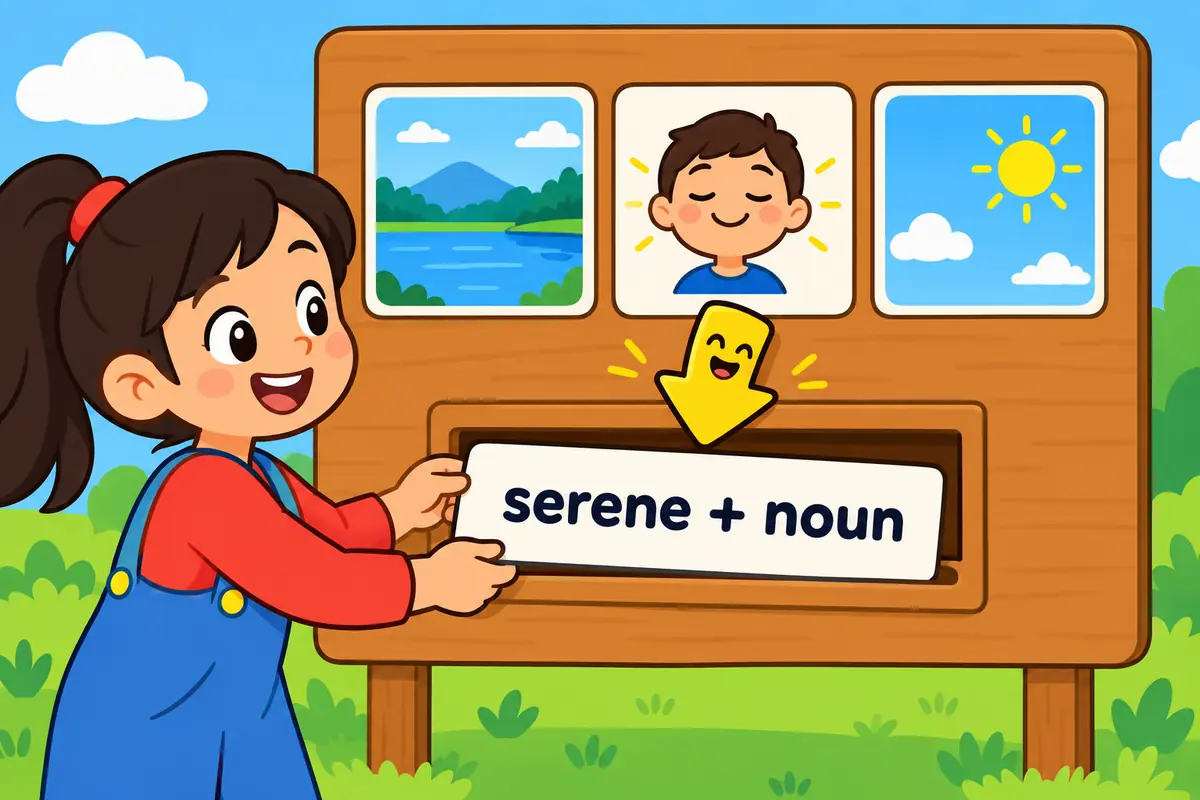
| serene + noun | She walked into a serene garden. | The commonest pattern; calm belongs to the noun. |
| look or seem + serene | He looked serene despite the noise. | Reports a visible manner, not a fixed trait. |
| remain or stay + serene | The surface stayed serene all afternoon. | Calm that holds through time or disturbance. |
| so serene that + clause | The bay was so serene that nobody spoke. | Shows the effect the calm has on people. |
| more or most serene | Dawn is the most serene hour here. | The comparative and superlative; serener is avoided. |
Comparatives are where learners slip. Where tranquil stresses stillness, serene sounds softer and more visual, so choose it when the calm is something a reader could photograph.
Serene in a sentence: examples across contexts
Serene changes its surroundings more than its meaning. The nine sentences below keep the same adjective while moving from a weather report to a diary, and each one gives the calm something visible to rest on. A a placid surface is one common image.
| Context | Example sentence | Why this works |
|---|---|---|
| Weather report | Dawn broke serene over the harbour, with barely a ripple on the water. | Pairs a time marker with a clear visual calm. |
| Travel writing | We rowed across a serene lake while the mountains held their reflection. | The still water proves the calm to the reader. |
| Workplace email | The retreat gave the team a serene morning to plan without interruptions. | Applies the calm to time as well as to place. |
| News report | Residents described a serene village that changed after the bypass opened. | Contrasts the old calm with a later disturbance. |
| Classroom | The teacher asked for a serene face and a quiet voice during the test. | Treats calm as something a pupil can show. |
| Poetry | A serene moon climbed above the sleeping town. | Lets the adjective carry the mood in one image. |
| Sports commentary | He stayed serene as the final seconds ticked away. | Ties composure to visible pressure. |
| Conversation | Everything felt serene until the dog knocked over the paint. | Uses a change of event to define the calm. |
| Academic prose | The author treats the garden as a serene counterpoint to city noise. | Sets the word against an explicit opposite. |
Serene vs calm
Serene overlaps with calm and composed and is interchangeable with it in only some sentences. Calm is the broader, plainer word; serene adds the look of being untroubled and is more often used of scenes than of reactions.
| Attribute | serene | calm |
|---|---|---|
| Core meaning | Peaceful and untroubled | Free from strong feeling or movement |
| Best subject | Scenes, faces and skies | People, situations and reactions |
| Strength | Softer and more visual | Broader and plainer |
| Typical collocations | serene lake, serene smile | keep calm, calm down |
| Comparative | more serene | calmer |
| Register | Reflective and literary | Neutral and everyday |
Verdict: choose calm for a person who has stopped panicking, and serene for a scene or face that looks untroubled from the outside.
Word forms and grammar of serene
Serene inflects only through its comparative, and its adverb serenely is the form learners most often forget. The table also lists the invented form to avoid.
| Form | Part of speech | Example |
|---|---|---|
| serene | adjective | A serene morning followed the storm. |
| serenely | adverb | She answered serenely and sat down. |
| serenity | noun | The garden had an air of serenity. |
| serener | non-standard comparative | Use more serene instead of serener. |
Common mistakes with serene
- Incorrect:
The office was serene, so everyone was bored.Correct: The office was quiet, so everyone was bored. Rule: Serene praises settled calm, not dullness. - Incorrect:
She sang serene.Correct: She sang serenely. Rule: A verb needs the adverb, not the adjective. - Incorrect:
The sea was more serener than yesterday.Correct: The sea was more serene than yesterday. Rule: More already marks the comparative, so serener is a double one. - Incorrect:
He is a serenity person.Correct: He is a serene person. Rule: The noun serenity cannot sit before another noun as a modifier. - Incorrect:
The crying baby looked serene.Correct: The baby slept serenely at last. Rule: Serene describes visible calm, not a child in distress.
Practice using serene
Work through the six items, then read the reasoning rather than only the answer.
- Fill the gap: The garden was ______ in the early light, with no wind at all.
- Choose the better word: After the argument, her voice stayed (serene / sleepy).
- Correct the error: The lake looked serenity at sunrise.
- Build a sentence: use serene with a noun about a quiet classroom before an exam.
- Spot the register: which belongs in a travel brochure – the bay was serene at dusk, or the bay was chill and we just sat there?
- Rewrite with the adverb: Her face was serene as she spoke. Use serenely instead.
Answers
- serene – the windless light is the visible calm the adjective describes.
- serene – a steady voice shows untroubled calm; sleepy would mean tired.
- The lake looked serene at sunrise – a linking verb takes the adjective, not the noun.
- Model answer: A serene classroom helped the pupils settle before the exam.
- The bay was serene at dusk – a brochure keeps the reflective adjective and drops the slang.
- She spoke serenely as she stood up – the adverb describes how she spoke.
The bottom line
Use serene in a sentence to describe calm that looks untroubled, and attach it to something a reader can see: a lake, a face, a morning. The two details that decide most sentences are that serene is attributive, so it sits before its noun or after a linking verb, and that it praises settled calm rather than mere quiet. When a person has simply stopped panicking, the opposite, agitated, is the truer contrast, and calm is the plainer choice.
Frequently asked questions about serene
Is serene a positive word?
Serene is positive in almost every context, because it praises calm that looks settled rather than forced. A serene garden, face or voice is presented as pleasant and untroubled, so the adjective flatters what it describes. The only time it can mislead is when a writer uses it for something merely dull or inactive.
What is the noun form of serene?
The noun is serenity, as in the serenity of the empty chapel. Sereneness exists but is rare and sounds clumsy, so most writers reach for serenity instead. Remember that serenity is the state, while serene is the quality, so a person can carry an air of serenity without being called serenity.
Can you say more serene?
Yes, more serene is standard, and most serene is the superlative. The one-word forms serener and serenest are avoided in modern writing even though they follow the usual pattern, because the adjective is long and slightly formal. In practice, more serene appears far more often than any single-word comparative.
Is serene stronger than calm?
Serene is not exactly stronger, but it is narrower and more atmospheric. Calm can describe anyone who has stopped being upset, while serene usually suggests a visible, lasting quiet in a scene or a face. A calm driver may still be tense inside, but a serene one looks untroubled all the way through.
Have you ever come across a serene setting that immediately put your mind at ease? Serene describes a peaceful, tranquil environment that promotes feelings of calmness and relaxation.
This word is often used to portray a scene, atmosphere, or even a person’s demeanor that exudes a sense of tranquility. In essence, when something is serene, it invokes a sense of harmony and quiet beauty.
7 Examples Of Serene Used In a Sentence For Kids
- The serene lake sparkled in the sunlight.
- The garden was so serene with colorful flowers.
- The serene sky was full of twinkling stars at night.
- I love to sit by the serene river and listen to the birds.
- The forest was peaceful and serene with tall trees.
- The serene beach was perfect for building sandcastles.
- Our school garden is a serene place to read and relax.
14 Sentences with Serene Examples
- Serene study spots on campus can help improve focus and productivity.
- Taking a quiet walk in the park can provide a much-needed serene break from college stress.
- Early morning yoga sessions can help college students start their day feeling serene.
- Finding a serene spot in the library can be the perfect place to dive into your studies.
- Meditation apps can help college students achieve a serene state of mind during hectic times.
- Spending the weekend in a serene hill station can be a great escape from city life.
- A serene study playlist can help create a calming atmosphere while working on assignments.
- Weekend hikes in nature can provide a serene break from the hustle and bustle of college life.
- Establishing a serene bedtime routine can improve sleep quality for college students.
- Online guided meditation sessions can help college students achieve a serene mental state.
- Creating a serene study environment at home can help improve academic performance.
- Early morning bike rides can offer a serene start to a busy day of college classes.
- Setting aside time for a serene bubble bath can be a relaxing way to unwind after a long day of lectures.
- Joining a yoga class on campus can help college students find inner peace and a serene state of mind.
How To Use Serene in Sentences?
Serene is used to describe someone or something that is calm, peaceful, and tranquil. When incorporating serene into a sentence, it is important to consider the context in which the word is being used. For example, “The serene lake glistened in the sunlight,” suggests a sense of calmness and peacefulness about the lake.
To use serene effectively in a sentence, consider the subject or situation that you are describing. Think about how serene can enhance your description and create a vivid image for the reader. For instance, “The serene garden provided a quiet escape from the bustling city life,” sets the scene and conveys a sense of tranquility.
Remember that serene is an adjective, so it is typically paired with a noun to provide more information about it. Make sure the sentence structure is correct and that serene is placed appropriately to convey the desired meaning.
In summary, when using serene in a sentence, focus on creating a peaceful and calm atmosphere through your description. Consider the context, choose an appropriate noun to pair with serene, and ensure that the sentence flows smoothly. With practice, you will be able to effectively incorporate serene into your writing to evoke feelings of tranquility and peacefulness.
Conclusion
In conclusion, the adjective “serene” is used to describe a state or environment that is peaceful, calm, and tranquil. Sentences incorporating this word evoke a sense of deep relaxation and a lack of disturbance or agitation. For instance, “As she sat by the lake, she felt a serene calmness wash over her, the rippling waters reflecting the golden hues of the setting sun” captures the essence of a peaceful and serene moment.
Furthermore, sentences featuring the word “serene” often paint a vivid picture of stillness and beauty, emphasizing the quiet beauty of nature or a tranquil atmosphere. These sentences help convey a sense of inner peace and contentment, allowing readers to immerse themselves in the tranquil and harmonious scenes described.


