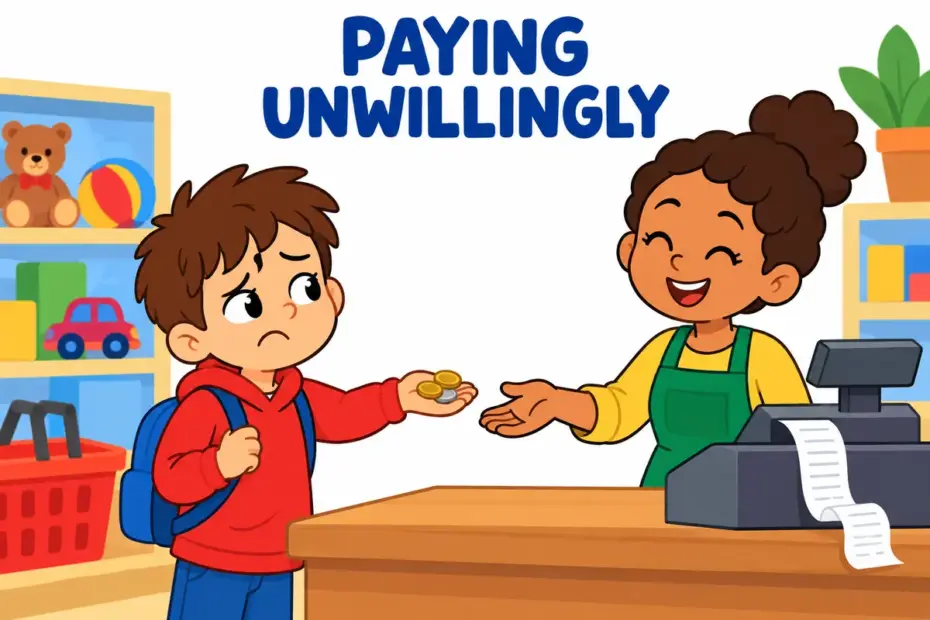
Shell out means to pay money, usually unwillingly, for something you would rather not buy, and the phrase belongs to informal speech and light journalism. To use shell out in a sentence, name the amount and the item: “We had to shell out forty pounds for parking.” The verb is a phrasal verb, so its particle can move.
Shell out at a glance
- Shell out is a transitive phrasal verb meaning to pay, and it is separable: shell out the fee or shell the fee out.
- It usually carries a tone of reluctance, so it suits an unexpected or unwelcome bill.
- The direct object is the sum paid; the thing bought follows for, and the person paid follows to.
- Shell out belongs to informal and conversational English, and to light news writing about prices.
- The commonest error is leaving out the object, because shell out cannot stand alone.
What does shell out mean?
Shell out is a phrasal verb meaning to pay money, especially with reluctance, for something necessary but unwelcome. The Cambridge entry for shell out records the pay sense and its informal label, and that label matters: the phrase signals a payment that felt like a burden rather than a pleasure.
| Sense | Plain meaning | Example sentence |
|---|---|---|
| Pay reluctantly | Give money unwillingly | We shelled out for a new boiler in January. |
| Pay a named sum | Spend a specified amount | Fans shelled out fifty pounds each for the final. |
| Contribute money | Hand over a share for a group purpose | Everyone shelled out for the leaving gift. |
Shell out is not a neutral verb. It signals that the payment hurt, so it sounds odd for a welcome purchase: nobody shells out happily for a holiday they have wanted for years. It is also too casual for an invoice, a contract or a formal report, where pay or settle is the safer choice.
How do you use shell out in a sentence?
Shell out is transitive, so it always needs an object, and that object is money or a sum rather than the purchase. Five patterns cover its ordinary uses, and choosing between them is mostly a choice about what to emphasise.
| Pattern | Example | What it signals |
|---|---|---|
| shell out + amount + for | We shelled out sixty pounds for the repair. | Names both the cost and the reason. |
| shell out + for + thing | They shelled out for a new printer. | Focuses on the purchase, not the figure. |
| shell out + object + to + person | The firm shelled the fees out to two contractors. | Names who receives the money. |
| shell out + amount | I shelled out a fortune at the airport. | Focuses purely on the sum. |
| have to / must shell out | We may have to shell out again next year. | Stresses reluctance and obligation. |
The particle out can move past a short object but must stay before a pronoun: write shell out the cash or shell the cash out, but write shell it out, never shell out it. When you simply mean pay without the grumbling tone, pay is the plain verb.
Shell out in a sentence: examples across contexts
Shell out changes register more than meaning, moving from a chat between friends to a consumer story about rising prices. The ten sentences below show the range, each with one line of explanation.
| Context | Example sentence | Why this works |
|---|---|---|
| Conversation | I had to shell out twenty pounds for a new phone charger. | The small unwelcome sum matches the grudging tone. |
| Consumer news | Households now shell out hundreds a month on energy. | Prices as subject suit light news writing. |
| Workplace email | We may have to shell out for new laptops this quarter. | Flags an unexpected cost to a team. |
| Travel writing | Tourists shell out a small fortune for a short boat ride. | Frames a fair as a mild complaint. |
| Sports report | Fans shelled out record sums for tickets to the final. | Names the crowd and the amount. |
| Parenting | Parents shell out for uniforms, trips and endless stationery. | A list of small costs builds the reluctance. |
| Restaurant review | You will shell out fifty pounds before the wine arrives. | Warns the reader about a high bill. |
| Personal finance blog | It is easy to shell out without checking the subscription. | Gentle advice with an informal verb. |
| Light news column | Commuters shell out more for coffee than for lunch. | A comparison sharpens the complaint. |
| Home repair talk | We shelled out for a plumber and the tap still drips. | Reluctance returns when the fix fails. |
Every sentence above keeps the same shape: some money goes out and the speaker resents it a little. Remove that reluctance and the phrase starts to sound wrong.
Is shell out separable?
Yes. Shell out is a separable phrasal verb, which means the particle out can move to the far side of the object. Both shell out the money and shell the money out are correct, with no change in meaning.
| Object | Correct order | Incorrect order |
|---|---|---|
| A short noun | shell out the cash / shell the cash out | shell out it |
| A pronoun | shell it out | shell out it |
| A long noun phrase | shell out the whole amount for the deposit | shell the whole amount for the deposit out |
| No object | shell out (with for before the thing) | shell out the deposit for |
The rule is simple: a pronoun must sit between shell and out, while a long or heavy noun phrase usually stays after out. A related phrasal verb, back out, uses the same particle but means to withdraw from a promise rather than to pay.
Shell out vs pay up and fork out
Shell out overlaps with pay, spend and save, and it is interchangeable with none of them. The clearest contrast is between spending money all at once and setting it aside beforehand.
| Attribute | shell out | pay | spend |
|---|---|---|---|
| Core meaning | Hand over a sum reluctantly | Settle what is owed | Use money on something |
| Tone | Informal and grudging | Neutral | Neutral to positive |
| Typical object | A sum or a for phrase | A bill, fee or person | Time, money or effort |
| Implies a choice | Often, an unwelcome one | No, it settles a duty | Yes, the buyer chose it |
| Formality | Casual | Fully neutral | Fully neutral |
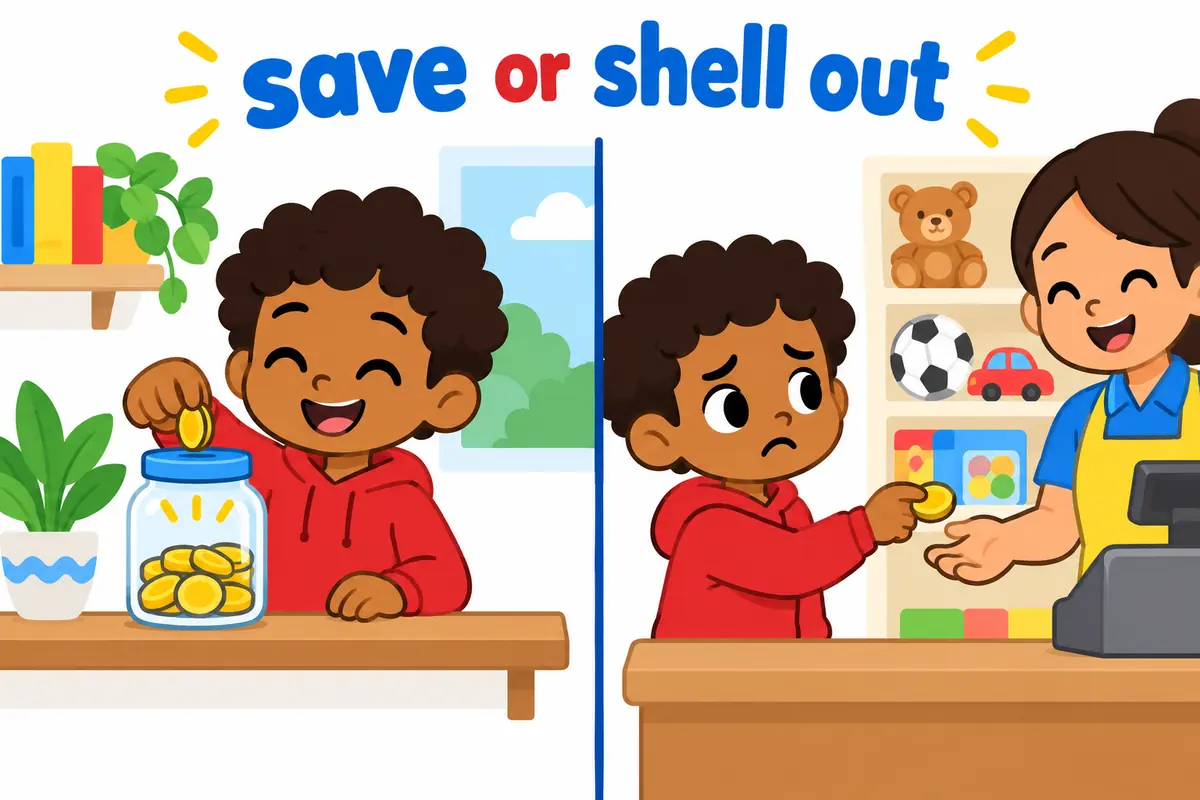
Choose pay when a bill is simply settled, spend when the buyer enjoyed some choice, and shell out when the payment stung. Its opposite is to save, which means keeping the money rather than parting with it.
Shell out in formal writing
Because shell out sounds casual, formal writing needs a plainer or more technical verb. The table below maps the informal phrase onto words that suit a report, an invoice or a policy.
| Informal phrase | Formal alternative | Example |
|---|---|---|
| shell out for a service | pay for a service | The council paid for the repairs. |
| shell out a large sum | disburse a large sum | The fund disbursed the grant in two parts. |
| shell out the costs | meet the costs | The department met the costs from its budget. |
| shell out for staff | incur staff costs | The branch incurred staff costs of forty thousand. |
None of those formal verbs carries the grumbling tone of shell out, which is exactly why they belong in writing that must stay neutral.
Word forms and grammar of shell out
Shell out inflects like a regular verb, but only the base form keeps out attached in third-person and past forms. The particle stays with the verb however the object moves.
| Form | Part of speech | Example |
|---|---|---|
| shell out | verb, base form | We might shell out for a better one. |
| shells out | verb, third person singular | She shells out for the season ticket every year. |
| shelled out | verb, past and past participle | They shelled out more last year. |
| shelling out | verb, present participle | He is still shelling out for old mistakes. |
| shell out + object + to | verb phrase with preposition | The company shelled the money out to suppliers. |
Common mistakes with shell out
- Incorrect:
We shelled out the movie.Correct: We shelled out for the movie tickets. Rule: The object is money or a sum, not the purchase, which follows for. - Incorrect:
She shelled out it.Correct: She shelled it out. Rule: A pronoun always sits between the verb and the particle. - Incorrect:
The invoice asks customers to shell out the balance.Correct: The invoice asks customers to pay the balance. Rule: Shell out is too informal for a formal document. - Incorrect:
We shelled out to the bill.Correct: We shelled out for the bill. Rule: Use for before the thing paid for; to marks the person paid. - Incorrect:
They withheld out the fee.Correct: They withheld the fee. Rule: withhold is a single verb and never gains the particle out.
Practice using shell out
Work through the six items, then read the reason attached to each answer rather than only checking the key.
- Fill the gap: We had to shell ______ fifty pounds for a new tyre.
- Choose the better word: A formal report should say the council (shelled out / paid) the bill.
- Correct the error: She shelled out it without complaining.
- Build a sentence: use shell out for about a group of friends buying a birthday gift.
- Spot the register: which belongs in a text to a friend – I had to shell out for parking, or the parking fee was remitted?
- Rewrite formally: Families shell out for school trips. Use pay.
Answers
- out – shell out is the fixed phrasal verb, and the sum follows it.
- paid – a formal report needs the neutral verb rather than the casual phrase.
- She shelled it out without complaining – a pronoun goes between shell and out.
- Model answer: We all shelled out for a generous birthday gift.
- I had to shell out for parking – the informal phrase fits a friendly text.
- Families pay for school trips – pay is the neutral equivalent.
The bottom line
Use shell out in a sentence when money leaves your pocket and you resent it a little, and keep the phrase for informal writing. Two details decide most sentences: the object is the sum rather than the purchase, so the thing bought follows for, and the verb is separable, so a pronoun must sit between shell and out. When the tone should be neutral, pay or meet the cost does the job.
Frequently asked questions about shell out
Is shell out formal or informal?
Shell out is informal and conversational, with a note of reluctance that keeps it out of contracts, invoices and formal reports. You meet it in speech, messages and light news writing about prices. In a document that must stay neutral, use pay, meet the cost or disburse instead.
Can you say shell it out?
Yes. Shell out is a separable phrasal verb, so a pronoun goes between the verb and the particle: shell it out, not shell out it. A short noun can sit on either side, giving shell out the money or shell the money out, with no change in meaning.
Does shell out mean the same as pay?
Shell out means pay, but it adds a tone of reluctance that pay does not carry. You shell out for a repair you did not expect, while you simply pay a bill. Pay is neutral and works everywhere; shell out suggests the payment felt like a burden.
What is the opposite of shell out?
The opposite of shell out is to save or to hold on to your money. Where shell out means parting with a sum unwillingly, save means keeping it, and withhold means refusing to hand it over at all. The contrast between shelling out and saving is the one finance writers use most.