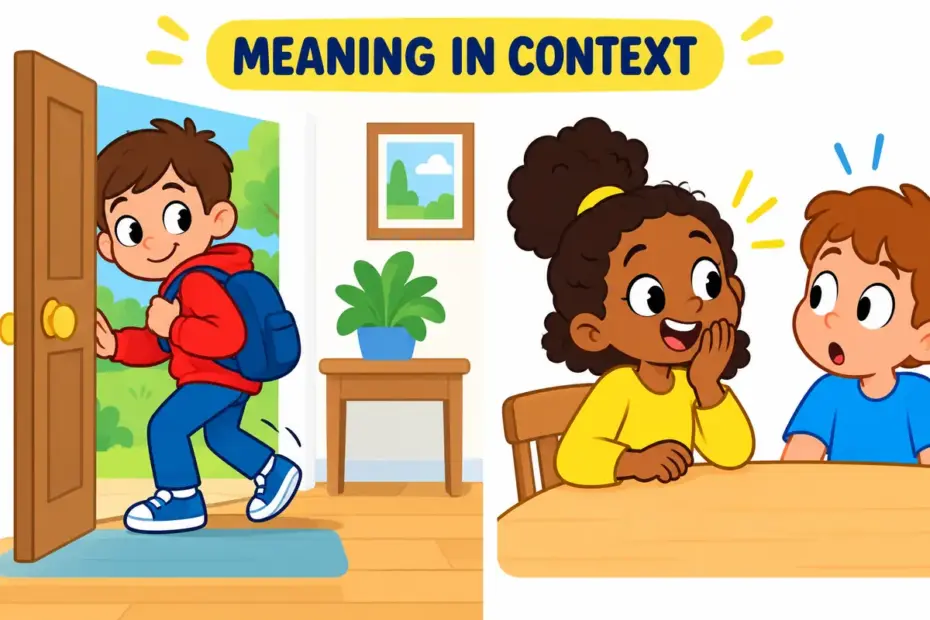
The phrase slip out in a sentence means leave quietly or unnoticed; also, be said or revealed unintentionally. Its grammar depends on the intended sense: slip out of + place. For example, “Jon slipped out before the speeches began.” shows slip out in a natural, complete sentence with enough context to understand the expression.
Slip Out at a glance
- Part of speech: phrasal verb phrase with the base form slip out.
- Core meaning: Leave quietly or unnoticed; also, be said or revealed unintentionally.
- Grammar: slip out of + place is a common construction.
- Useful contrast: leave overlaps in meaning but does not fit every sentence.
- Common learner issue: selecting the right preposition or object for the intended sense.
What does slip out mean?
Slip Out is a phrasal verb meaning leave quietly or unnoticed; also, be said or revealed unintentionally. The subject determines which reading is available. A person slips out of a room; a comment slips out of someone’s mouth; a coin slips out of a pocket. Replacing each subject with the right noun often fixes an unclear sentence more effectively than adding an adverb such as secretly.
| Sense | Plain meaning | Example |
|---|---|---|
| Quiet departure | Leave a place without attracting attention. | Jon slipped out before the speeches began. |
| Unintended disclosure | A word, detail, or secret is revealed accidentally. | The address slipped out during the conversation. |
| Physical emergence | An object can move out of a place accidentally. | The key slipped out of her pocket. |
The Cambridge Dictionary: slip out supports these core meanings and patterns. Nearby vocabulary includes abscond, depart, and elude; each can express a related idea, but none automatically substitutes for every sense of slip out.
How do you use slip out in a sentence?
Slip Out takes different complements according to its meaning. These patterns show the particle or preposition’s job and whether a direct object is required. The subject determines which reading is available. A person slips out of a room; a comment slips out of someone’s mouth; a coin slips out of a pocket. Replacing each subject with the right noun often fixes an unclear sentence more effectively than adding an adverb such as secretly.
| Pattern | Example | What it signals |
|---|---|---|
| slip out of + place | He slipped out of the meeting. | Of names the place left. |
| slip out through + exit | They slipped out through the side door. | Through identifies the route. |
| information + slip out | The answer slipped out before she could stop herself. | A fact or remark is the subject in the disclosure sense. |
| object + slip out of + container | The ticket slipped out of my book. | A physical object can emerge unintentionally. |
It is not separable: keep the particle after the verb. It is intransitive; use of for the place left and through for the route.
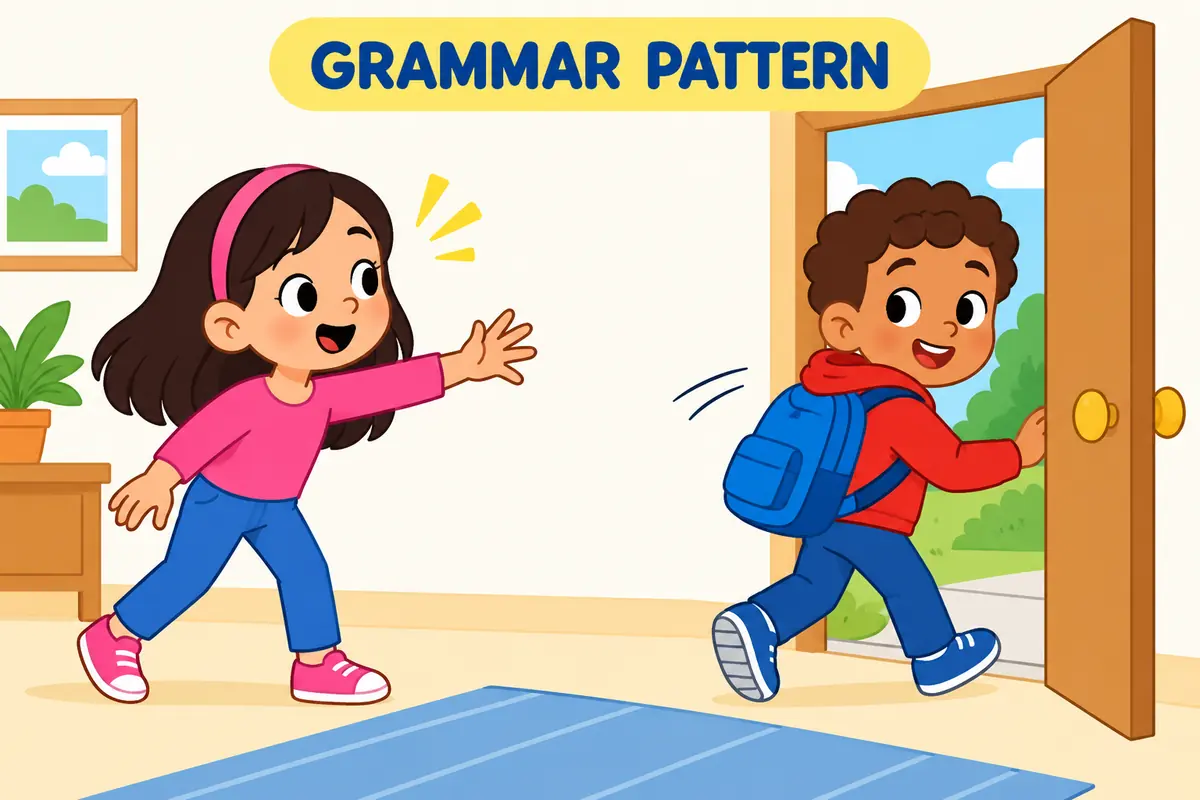
Slip Out in a sentence: examples across contexts
Each example gives enough surrounding detail to identify the sense. The subject, complement and preposition are part of the meaning, rather than decoration.
| Context | Example sentence | Why this works |
|---|---|---|
| Reception | Jon slipped out before the speeches began. | The timing suggests a discreet departure. |
| Meeting | She slipped out of the meeting to take a call. | Of identifies the event she left. |
| Conversation | The address slipped out while they discussed the trip. | The information, rather than a person, is the subject. |
| Travel | We slipped out through the side exit to avoid the crowd. | Through names the route. |
| Classroom | A laugh slipped out when the teacher misread the map. | A sound can emerge involuntarily. |
| Lost item | The ticket slipped out of my notebook on the bus. | The object moves out of a container by accident. |
| Confidentiality | One detail slipped out, so the speaker quickly changed the subject. | The phrase suggests unintended disclosure. |
| Contrast | He left the party openly, while his friend slipped out unnoticed. | The contrast captures the quietness in the departure sense. |
Slip Out vs leave
Leave is a useful comparison because it overlaps with one sense of slip out, but its grammar or emphasis differs. Choose by asking what the sentence needs to communicate.
| Feature | slip out | leave |
|---|---|---|
| Core meaning | leave quietly or unnoticed; also, be said or revealed unintentionally | broader or adjacent meaning |
| Typical subject/object | slip out of + place | depends on the verb’s own pattern |
| Emphasis | the specific action or sense shown above | the related idea without the same nuance |
| Useful context | Reception | general situations where the simpler word is enough |
| When to choose it | when the particle/preposition and context fit | when its plain meaning is the intended one |
Verdict: choose slip out when the sentence needs its specific pattern; choose leave when its broader or simpler meaning is intended.
Word forms and grammar of slip out
Use the form that matches the subject and time reference. Do not transfer the pattern of a related word automatically: the example in each row shows the form in a complete clause.
| Form | Use | Example |
|---|---|---|
| slip out | base form | Guests slip out after dinner. |
| slips out | third-person present | A detail slips out during the interview. |
| slipped out | past form | He slipped out before the vote. |
| slipping out | present participle | The ticket is slipping out of the book. |
Common mistakes with slip out
These errors arise when a learner treats the particle as a separate preposition or gives the verb an object pattern it does not take.
- Incorrect:
She slipped out the office.Correct: She slipped out of the office. Rule: Use of before the place being left. - Incorrect:
The secret slipped out from him.Correct: The secret slipped out. Rule: The information itself can be the subject; an agent phrase is usually unnecessary. - Incorrect:
He slipped the room out.Correct: He slipped out of the room. Rule: Slip out is not separable; keep the particle after the verb. - Incorrect:
The key slipped out my pocket.Correct: The key slipped out of my pocket. Rule: Use of before the container or enclosed place.
Practice using slip out
Complete each task by checking both meaning and grammar. The final two items ask for interpretation and revision, so more than one well-formed answer may be possible.
- Fill the gap: Jon slipped out before the speeches began.
- Choose the better word, slip out or leave: “She slipped out of the meeting to take a call.”
- Correct the error: “She slipped out the office.”
- Build a sentence that uses slip out through + exit.
- Explain the meaning in this example: “The address slipped out while they discussed the trip.”
- Rewrite this sentence more precisely: “It happened.”
Answers
- Jon slipped out before the speeches began. — the context supplies the intended sense.
- slip out — the sentence follows the target phrase’s pattern.
- She slipped out of the office. — Use of before the place being left.
- Model: They slipped out through the side door. — this uses the specified construction.
- The information, rather than a person, is the subject. — the subject and complement signal the sense.
- Model: Jon slipped out before the speeches began. — the revised sentence names the subject and action.
How context changes slip out
Slip Out is easiest to interpret when the sentence gives a concrete subject and complement. Compare these cases: the same phrase can look different when the actor changes, when a preposition is added, or when the sentence shifts from literal to figurative use.
- Reception: Jon slipped out before the speeches began. The timing suggests a discreet departure.
- Meeting: She slipped out of the meeting to take a call. Of identifies the event she left.
- Conversation: The address slipped out while they discussed the trip. The information, rather than a person, is the subject.
- Travel: We slipped out through the side exit to avoid the crowd. Through names the route.
- Classroom: A laugh slipped out when the teacher misread the map. A sound can emerge involuntarily.
- Lost item: The ticket slipped out of my notebook on the bus. The object moves out of a container by accident.
- Confidentiality: One detail slipped out, so the speaker quickly changed the subject. The phrase suggests unintended disclosure.
- Contrast: He left the party openly, while his friend slipped out unnoticed. The contrast captures the quietness in the departure sense.
A reader should not have to guess which sense is intended. Add the object, place, time, or result that distinguishes it. For example, “Jon slipped out before the speeches began.” names the situation; “She slipped out of the meeting to take a call.” adds a different clue. The two sentences share vocabulary but communicate distinct details.
For a related vocabulary step, compare abscond, depart, or elude only after deciding which sense of slip out is active. A synonym may fit one context and fail in another because prepositions and objects belong to particular constructions. Replacing a phrase without checking the whole clause can create a grammatical error even when the dictionary meanings overlap.
Slip out is a useful choice when quietness or accident matters to the scene. “The guest slipped out” describes a person’s manner of leaving; “the name slipped out” makes the word itself the subject of an unplanned disclosure. A sentence such as “the truth slipped out” can be figurative, but it does not specify who revealed it or whether the speaker did so deliberately. Add a phrase such as “during the interview” when the circumstances matter. For a planned departure, “left” is more neutral; for an unauthorized departure, “sneaked out” states that implication more directly.
The bottom line
Use slip out in a sentence when the subject and surrounding words support the intended meaning. The most useful distinction is the subject determines which reading is available. If a simpler word communicates the point more clearly, prefer it.
Frequently asked questions about slip out
Does “slip out” mean leave secretly?
It means leave quietly or without attracting notice, but it does not always imply secrecy or wrongdoing. Someone can slip out of a reception to catch a train. The sentence describes the manner of leaving; it does not by itself explain why the person left.
Can information “slip out”?
Yes. A word, name, detail, or secret can slip out when it is revealed unintentionally. In this use, the information is the grammatical subject: “The address slipped out during lunch.” The wording suggests an accidental disclosure rather than a deliberate announcement.
What preposition follows “slip out”?
Use of before the place or container left, as in “slip out of the room.” Use through when naming the route, as in “slip out through a side door.” An information subject needs no object: “the answer slipped out.” The person’s identity need not be stated.
What is the difference between “slip out” and “sneak out”?
Both can describe a quiet departure. Slip out focuses on leaving without drawing attention and can also describe accidental disclosure or movement of an object. Sneak out more strongly suggests deliberate secrecy, especially when someone leaves without permission. A container normally follows of.