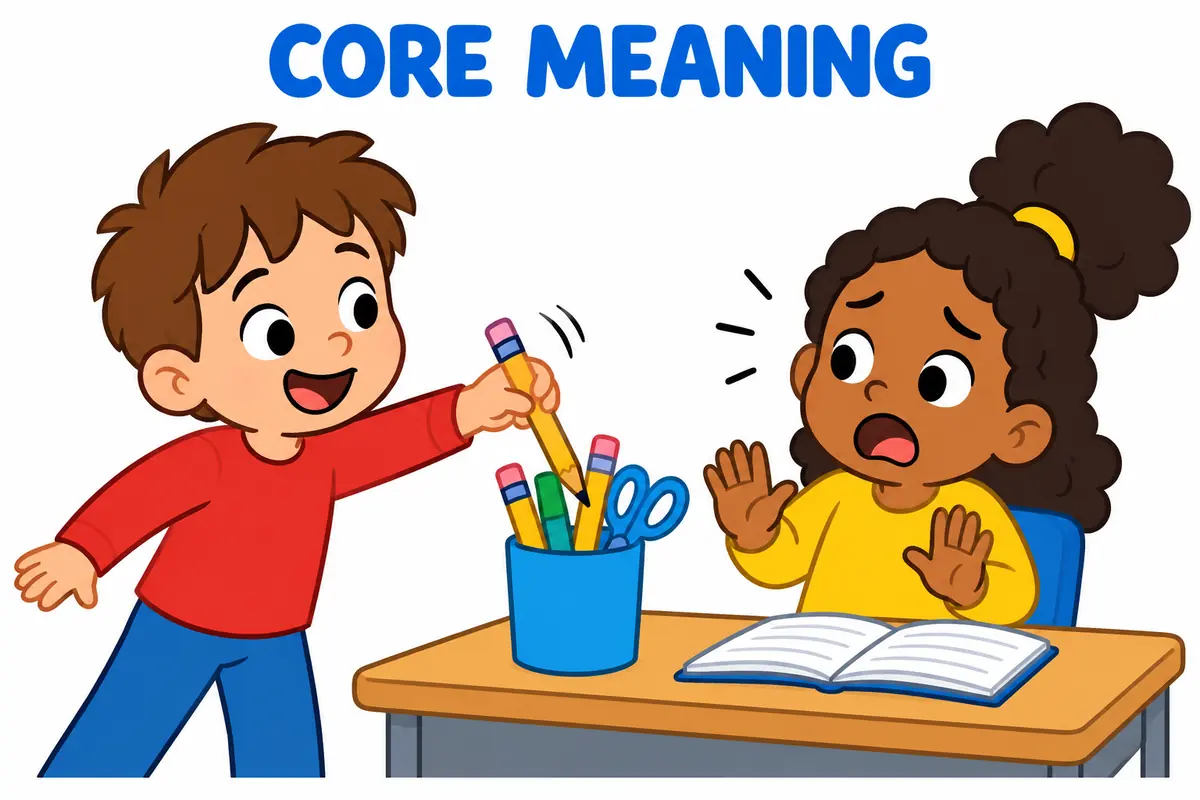
Something vs some thing comes down to one rule: write something as a single word for an unspecified thing, and reserve some thing for two words only when some is a determiner modifying a separate noun. In modern English the two-word form is rare and deliberately formal.
Something vs some thing at a glance
- Something is one word and works as an indefinite pronoun.
- Some thing is two words: the determiner some plus the noun thing.
- The one-word form is standard in everyday and formal writing alike.
- The two-word form survives only where some keeps its contrastive determiner force.
- The commonest error is splitting something into two words out of habit.
Something vs some thing: the master comparison
One quick test separates the pair before any table. Ask whether some is selecting one item from a group. If it is, keep two words; if the sentence simply means an unknown thing, merge them. The comparison below tracks that test across the criteria that matter most.
| Criterion | something | some thing |
|---|---|---|
| Status today | Standard, one word | Rare, two words |
| What it is | Indefinite pronoun | Determiner some plus noun thing |
| Core meaning | An unspecified or unknown thing | One particular thing singled out from others |
| Typical setting | Everyday speech and writing | Formal, philosophical or contrastive writing |
| Can an adjective follow? | Yes: something sweet | No; some stays directly before thing |
| Register | Neutral | Formal and deliberate |
| Example | I have something to tell you. | Not any thing, but some thing in particular. |
The practical verdict is short. Choose the one-word form unless you can point to the selection that some performs, and even then consider rephrasing. Readers treat a split something as a typo far more often than as a deliberate determiner.
What does the one-word something mean?
Something is an indefinite pronoun meaning an unspecified or unknown thing. The Cambridge entry for something lists this core sense and a set of extensions, including a thing of value and a quantity roughly between a small amount and a larger one. It stands alone and takes an adjective after it.
Where the sentence needs a choice from a known pair, anything often fits negative and question frames, while something stays in positive statements. The pronoun never takes a plural, so more than one unspecified item becomes some things, not somethings.
What does the two-word some thing mean?
Some thing is not a pronoun but a noun phrase: the determiner some followed by the noun thing. The Cambridge entry for some thing records it as a rare spacing of the same idea, and the spelling only holds when some is genuinely selecting one item. That contrast is what keeps the two words apart.
In a sentence such as she meant some thing, not any thing, some carries its full determiner weight and thing remains an ordinary countable noun. A writer can also insert an adjective, giving some strange thing, which proves the phrase is two units rather than one pronoun.
How do you use something and some thing in a sentence?
The pronoun is easy because it behaves like a single noun. The two-word phrase is harder because it needs some to do determiner work. The six patterns below keep the two apart, and the first four cover almost all everyday writing.
| Pattern | Example | What it signals |
|---|---|---|
| something + adjective | I would like something cold. | The adjective follows the pronoun. |
| something + to + verb | She found something to read. | A purpose or task attached to the unknown thing. |
| verb + something | He said something kind. | Something works as the object of the verb. |
| something + else | We need something else. | Points to a different unspecified thing. |
| some + thing (two words) | She wanted some thing, not just any. | Some is choosing one item from a set. |
| some + adjective + thing | Some strange thing blocked the path. | The adjective proves thing is a separate noun. |
Two quick checks settle most cases. If you can drop a word between some and thing, the phrase is genuinely two words; if nothing can go between, the words have merged into one. Reaching for everything and nothing by contrast reminds you that these indefinite pronouns are all single words.
Something and some thing in a sentence: examples across contexts
In everyday registers the one-word pronoun dominates so completely that the two-word form reads as an error. The nine sentences below show the standard form in most settings and the deliberate determiner use in the one place it truly belongs.
| Context | Example sentence | Why this works |
|---|---|---|
| Classroom | Please bring something for the nature table. | The pronoun is the object of a plain request. |
| Workplace email | I have something to add to the agenda. | To plus verb shows the attached purpose. |
| News report | Officials said something had gone wrong with the signal. | Reports an unknown cause without naming it. |
| Academic writing | The study found something unexpected in the data. | The adjective follows the pronoun, as expected. |
| Conversation | Do you want something to drink? | Natural question frame with the pronoun. |
| Philosophical prose | Not any thing, but some thing in particular held her gaze. | Some selects one thing, so two words are justified. |
| Older literary style | There is some thing I must tell you. | The spacing deliberately dates the voice. |
| Fixed phrase | Something old, something new, something borrowed, something blue. | A familiar idiom keeps the one-word form. |
| Email to a teacher | Could we discuss something before Friday? | Polite, standard, and unambiguous. |
Only the philosophical sentence needs two words, and a careful writer could still recast it. That imbalance is the whole lesson: the split form is a special effect, not a routine choice.
Which should you use?
A short mapping of reader situations makes the decision mechanical. When in doubt, the one-word form is correct in almost every case, and a split spelling invites a correction.
| Situation | Use | Why |
|---|---|---|
| Everyday sentence about an unknown thing | something | The one-word pronoun is the established standard. |
| Formal sentence choosing one thing from a set | some thing, or rephrase | Some keeps its determiner meaning and selects an item. |
| A choice between two known items | something else, or name them | The contrast is clearer with else or a name. |
| Exam, report or job application | something | Standard spelling is what markers and readers expect. |
| Truly unsure | something | The merged form is right in nearly every real sentence. |
Word forms and grammar of something and some thing
The pronoun has a contraction and an informal spelling, while the noun phrase inflects its noun for number. The table also lists the plural that learners wrongly build from the pronoun.
| Form | Part of speech | Example |
|---|---|---|
| something | indefinite pronoun | Something fell behind the desk. |
| something’s | contraction of something is | Something’s not right here. |
| somethin’ | informal spelling | I heard somethin’ outside. |
| some thing | determiner plus noun | She chose some thing from the shelf. |
| some things | determiner plus plural noun | Some things are better left unsaid. |
| somethings | non-standard | Avoid; write some things instead. |
Notice that the determiner phrase pluralises its noun, giving some things, while the pronoun resists a plural entirely. For a singular object that is simply unknown, entity offers a formal concrete alternative in technical writing.
Common mistakes with something and some thing
- Incorrect:
I need some thing to eat.Correct: I need something to eat. Rule: The indefinite pronoun is one word in standard writing. - Incorrect:
There is some thing wrong with the printer.Correct: There is something wrong with the printer. Rule: Nothing separates some and thing, so the words merge. - Incorrect:
She bought somethings for the trip.Correct: She bought some things for the trip. Rule: The pronoun has no plural; a plural noun phrase is some things. - Incorrect:
He said something kind words.Correct: He said some kind words. Rule: Something never takes a following plural noun. - Incorrect:
I want something sweet thing.Correct: I want something sweet. Rule: Something already contains the noun, so thing must not repeat it.
Practice using something and some thing
Work through the six items, then read the reasons in the answer list rather than checking only the key.
- Fill the gap: I heard ______ moving in the attic last night.
- Choose the better form: For a school report, write (something / some thing).
- Correct the error: She found some thing shiny buried in the sand.
- Build a sentence: use something to plus a verb about a snack after practice.
- Spot the register: which belongs in a quick text to a friend — got something for you, or got some thing for you?
- Rewrite as a plural noun phrase: Some things are better left unsaid. Use some things.
Answers
- something — the pronoun is one word and needs no determiner.
- something — standard spelling is expected in formal school writing.
- She found something shiny buried in the sand — the words merge when nothing separates them.
- Model answer: After practice we wanted something to eat.
- Got something for you — an informal text uses the one-word pronoun.
- The sentence already uses some things — the determiner keeps two words and pluralises thing.
The bottom line
Use something as one word to mean an unspecified thing, and keep some thing as two words only when some is selecting one item from a group. The two details that settle most sentences are that the pronoun never takes a plural, so some things replaces any imagined somethings, and that a split spelling is read as a mistake unless the determiner contrast is obvious. When the contrast matters, something is still the safer choice.
Frequently asked questions about something vs some thing
Is some thing ever correct?
Yes, but rarely. Some thing is correct when some acts as a determiner that singles out one item from a group, as in she wanted some thing, not just any. In that frame thing stays an ordinary noun, and an adjective can sit between the two words. For an unspecified thing with no such contrast, the one-word something is standard.
Is somethings a word?
Not in standard English. Something is an indefinite pronoun and takes no plural, so a sentence that needs several unknown items uses some things, with the determiner and a plural noun. Writers sometimes reach for somethings by analogy with nouns, but dictionaries and style guides treat it as non-standard, and a teacher will mark it wrong.
What is the difference between something and anything?
Something appears in positive statements, while anything is usual in questions, negatives and after if. Compare I have something for you with Do you have anything for me. Both refer to an unspecified thing, and the choice depends on the sentence type. Something can also appear in offers, as in would you like something to drink.
Why is something written as one word?
The one-word spelling is simply the established standard that readers and dictionaries expect. Over time the two words merged in common use, just as some time narrowed to sometime in one of its senses. Nothing grammatical forbids the spaced form, but because the pronoun behaves as a single unit, writers and editors treat it as one word.