
Stationary in a Sentence: Meaning, Usage, and Examples
Stationary means “not moving” or “not changing.” It is an adjective, so it describes a person, object, vehicle, or condition that remains in one place or stays unchanged. For example: The delivery van remained stationary while the driver checked the address. The Cambridge Dictionary gives the core meaning as not moving or not changing.
Do not use stationary to mean paper, envelopes, pens, or other writing supplies. Those items are stationery, a noun. The Cambridge Dictionary defines stationery as things needed for writing, such as paper, pens, pencils, and envelopes. The two words sound alike, but their spellings and grammatical jobs differ.

Stationary vs. stationery: the difference
| Word | Part of speech | Meaning | Example |
|---|---|---|---|
| stationary | Adjective | Not moving; fixed in position; unchanged | The car stayed stationary at the red light. |
| stationery | Noun | Writing materials, such as paper and envelopes | She chose blue stationery for her invitations. |

A quick memory aid is stationary has an a, like “at rest”; stationery has an e, like “envelope.” This is only a spelling reminder; the sentence meaning still determines which word belongs.
How to use stationary in a sentence
Use stationary before a noun (a stationary bike) or after a linking verb such as remain, stay, or be (the bike remained stationary). It describes a state or position; it does not name an object. If the sentence refers to something someone can buy for writing, choose stationery instead.

- Vehicle: The bus remained stationary until the road crew cleared the lane.
- Person: The photographer stayed stationary to keep the camera steady.
- Object: Keep the ladder stationary while your partner climbs.
- Exercise equipment: We rode a stationary bicycle during the storm.
- Queue: The line was stationary for several minutes.
- Position: The lighthouse is stationary, although the boats around it move.
- Price or level: The monthly fee stayed stationary throughout the contract.
- Scientific observation: The camera recorded the stationary marker before tracking the moving cart.
- Traffic: All three cars were stationary when the signal changed.
- Workplace: A stationary desk does not rise or lower like an adjustable desk.
These examples show why context matters: stationary can describe many kinds of things, but each use has the same basic idea of stillness or lack of change. A stationary object may be capable of moving later; the adjective describes what it is doing or its position at the time being discussed.
More stationary sentence examples
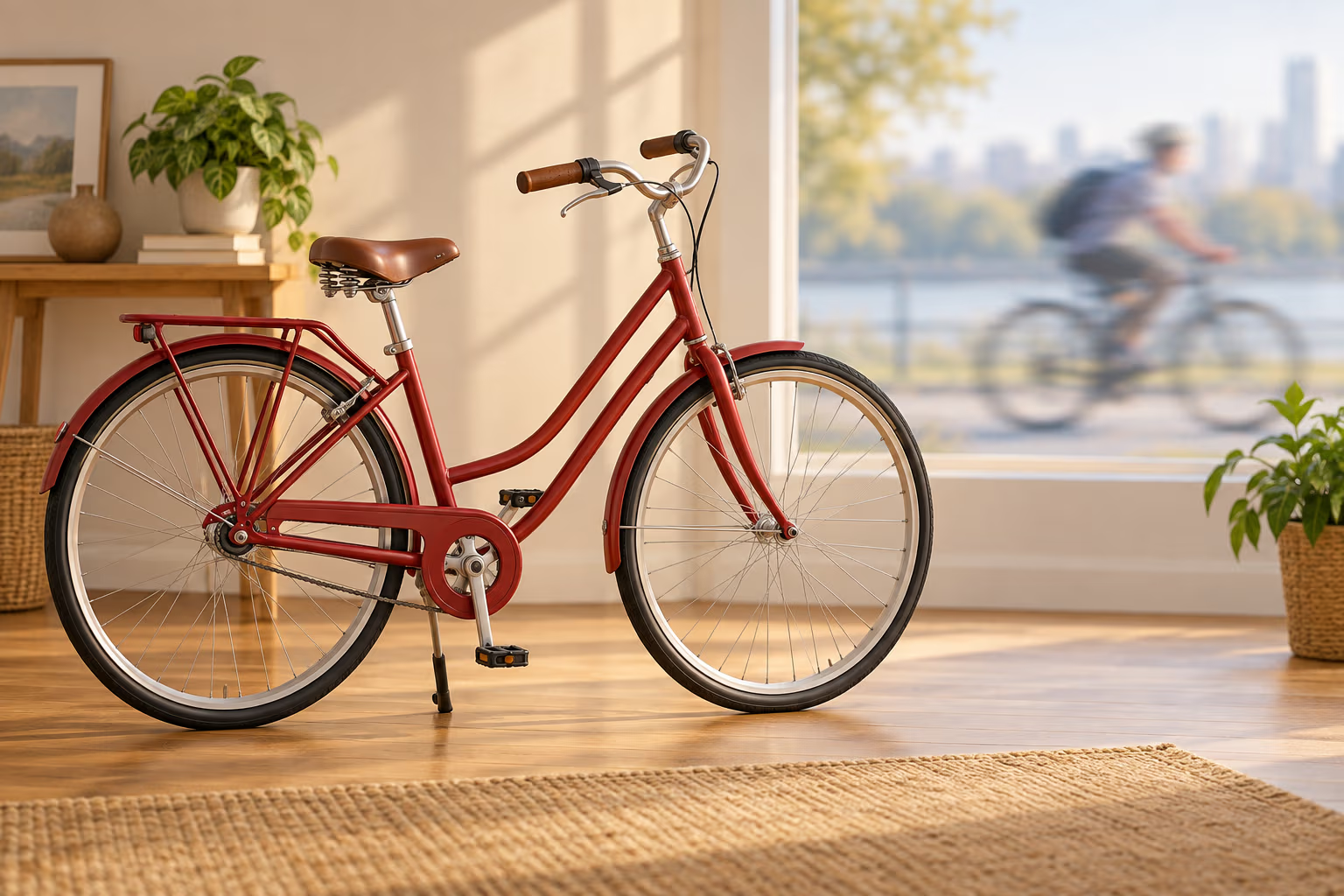
- The parked taxi remained stationary beside the curb.
- For the measurement, hold the ruler stationary against the page.
- The elevator was stationary between floors for only a few seconds.
- We watched the stationary clouds while the plane moved across the sky.
- The goalie stayed stationary until the striker approached the ball.
- Her stationary bike has a small screen that tracks distance.
- Keep your feet stationary and turn your upper body slowly.
- The bus was stationary, so passengers waited for the signal to change.
- Once the camera was stationary, the blurred image became sharp.
- The display remained stationary on the shelf during the earthquake drill.
- The river gauge showed that the water level was nearly stationary.
- The technician secured the stationary machine before inspecting it.
- A stationary point on the map marks the trail entrance.
- Even when the crowd moved, the statue remained stationary.
- Traffic became stationary near the tunnel after a lane closed.
- The value appeared stationary across three consecutive readings.
- She placed a stationary target on the table for the demonstration.
- Keep the tripod stationary while the camera records the experiment.
- The train stayed stationary until the conductor gave the signal.
- At first, the distant boat seemed stationary against the shoreline.
- The desk is stationary, but the chair rolls freely across the floor.
Each sentence uses stationary as an adjective: it describes a noun (such as taxi, bike, or level) or follows a verb such as remain, stay, and seem. If one of these sentences referred to paper or pens instead, the correct spelling would be stationery.
Common sentence patterns with stationary
- stationary + noun: a stationary vehicle, a stationary target, stationary equipment.
- remain/stay + stationary: The train remained stationary outside the station.
- keep + object + stationary: Keep the paper stationary while you draw the line.
- stationary compared with moving: The platform is stationary, while the escalator moves.
Stationary is not normally used as a noun for supplies, and it is not the standard spelling in stationary shop when you mean a shop selling paper goods. Write stationery shop or stationery store. Likewise, write stationery supplies, letter stationery, and personalized stationery.
Stationary and stationery in paired examples
- The stationary bicycle stood beside the desk; the notebook on the desk was part of her stationery.
- The delivery truck was stationary outside the stationery store.
- He kept the camera stationary while his colleague arranged the paper and pens.
- The cyclist stopped and remained stationary, then bought a card and matching stationery.
- Although the shop’s sign was stationary, its shelves were full of colorful stationery.
Notice the grammar as well as the meaning. In each example, stationary describes a thing or its state, while stationery names a category of supplies. The ending -ery belongs to the noun for writing materials.
Common mistakes to avoid
- Incorrect: I bought stationary for school. Correct: I bought stationery for school.
- Incorrect: The stationery car waited at the crossing. Correct: The stationary car waited at the crossing.
- Incorrect: Put the letters in the stationary drawer. Correct: Put the letters in the stationery drawer (if it holds writing supplies).
- Incorrect: The price stayed stationery. Correct: The price stayed stationary (unchanged).
Some older or informal writing uses stationary incorrectly for writing materials, but standard contemporary usage distinguishes the adjective stationary from the noun stationery. When proofreading, ask whether you could replace the word with “not moving” or “unchanged.” If so, stationary is likely right. If you mean paper or writing supplies, use stationery.
Practice: choose stationary or stationery
- The photographer asked everyone to remain ______ while she took the picture.
- We ordered recycled ______ for the office.
- A ______ bike lets you pedal indoors.
- The bookstore sells notebooks, cards, and other ______.
- The boat looked ______ from shore, but it was moving slowly.
Answers: 1. stationary; 2. stationery; 3. stationary; 4. stationery; 5. stationary. In the last sentence, the word describes how the boat appeared from a particular viewpoint, not necessarily its actual motion.
Frequently asked questions
What does stationary mean?
Stationary means not moving or remaining in the same position. It can also describe something that stays unchanged, such as a stationary price or level.
Is stationary a noun or an adjective?
Stationary is an adjective: it modifies a noun or follows a linking verb to describe a state. The noun for paper, pens, and similar writing materials is stationery.
How can I remember the spelling?
Think of an a in stationary and an object “at rest.” Think of the e in stationery and an envelope. The mnemonic helps with spelling, while the sentence context confirms the meaning.
Can stationary mean unchanged?
Yes. In addition to being fixed in place, something described as stationary can stay at the same level or rate. For example, Demand remained stationary during the quarter means it did not change during that period.
For more detail, compare the dictionary entries for stationary and stationery. Their definitions show the practical distinction: one describes a state, and the other names writing materials.
Correction for the older examples below
The original examples retained below contain multiple places where stationary is used for pens, paper, or writing supplies. Those uses should read stationery. The correct spelling is stationary only when the intended meaning is “not moving” or “unchanged.” In particular, use stationery in the older lists about school supplies, pens, paper, shopping, and stationery holders. The guide above gives corrected examples and explains the difference.

Do you ever confuse “stationary” with “stationery”? Let’s clear up the confusion. “Stationary” with an ‘a’ means not moving, while “stationery” with an ‘e’ refers to paper and other office supplies. Understanding the difference can help you communicate more clearly in writing.
Mixing up “stationary” and “stationery” in your writing can lead to misunderstandings. By grasping the distinction between the two words, you’ll be able to use them correctly in your everyday communication. Let’s explore some examples to see how these words are used in sentences.
7 Examples Of Stationary Used In a Sentence For Kids
- Stationary items like pencils and erasers are important for school.
- I keep my stationary neatly arranged in my pencil box.
- Let’s draw colorful pictures using our stationary.
- My favorite stationary is a sparkly pencil.
- We use stationary to write letters to our friends.
- Remember to always return your stationary after using it.
- Our teacher reminds us to take care of our stationary.
14 Sentences with Stationary Examples
- I need to buy some stationary for my upcoming exams.
- Have you seen my stationary? I can’t find my favorite pen.
- It’s important to keep your stationary organized to stay focused while studying.
- I always keep extra stationary in my bag in case someone needs to borrow something.
- Can you recommend a reliable shop to buy good quality stationary at a reasonable price?
- My stationary holder on my desk helps me keep track of all my pens and pencils.
- I love browsing through different designs of stationary at the store.
- I prefer using eco-friendly stationary to reduce waste.
- The university bookstore has a great selection of stationary for students.
- I always write my notes neatly using colorful stationary to make studying more enjoyable.
- It’s beneficial to have a separate pouch for your stationary in your backpack.
- I need to restock my stationary supplies before the new semester starts.
- Do you prefer using digital notes or traditional stationary for your studies?
- I like to add personalized touches to my stationary to make it unique.
How To Use Stationary in Sentences?
Stationary is a common word used to describe something that is not moving. Here are some tips on how to correctly use stationary in a sentence:
-
* stationary* as an adjective: When used as an adjective, stationary describes something that is not moving. For example, “The car was parked in a stationary position.” In this sentence, stationary is used to show that the car was not in motion.
-
stationary as a noun: When used as a noun, stationary refers to materials used for writing and office supplies. For example, “I need to buy some new stationary for school.” Here, stationary refers to items such as pens, paper, and envelopes.
-
Be mindful of the spelling: It’s easy to confuse stationary with “stationery,” which refers specifically to writing paper and envelopes. Make sure you use the correct spelling depending on the context of your sentence.
-
Practice using stationary in sentences: To get comfortable using stationary correctly, try incorporating it into your daily writing. This will help reinforce the proper usage and make it easier to remember in the future.
Overall, understanding the difference between stationary as an adjective and a noun, as well as practicing using it in sentences, will help you become more confident in your communication.
Conclusion
In conclusion, stationary refers to things that are still or not moving. When used in a sentence, this term can describe a fixed object like a stationary bike in the gym or a stationary car parked in the driveway. The use of stationary in sentences helps to convey a sense of stability, immobility, or the absence of motion, making it a versatile term to describe various scenarios where things are at rest.
Whether it’s at the office, in a classroom, or on the road, the word stationary can effectively highlight the state of being motionless or fixed. By incorporating this keyword in sentences, it becomes easier to communicate ideas about objects, locations, or situations that are not moving or changing position.


