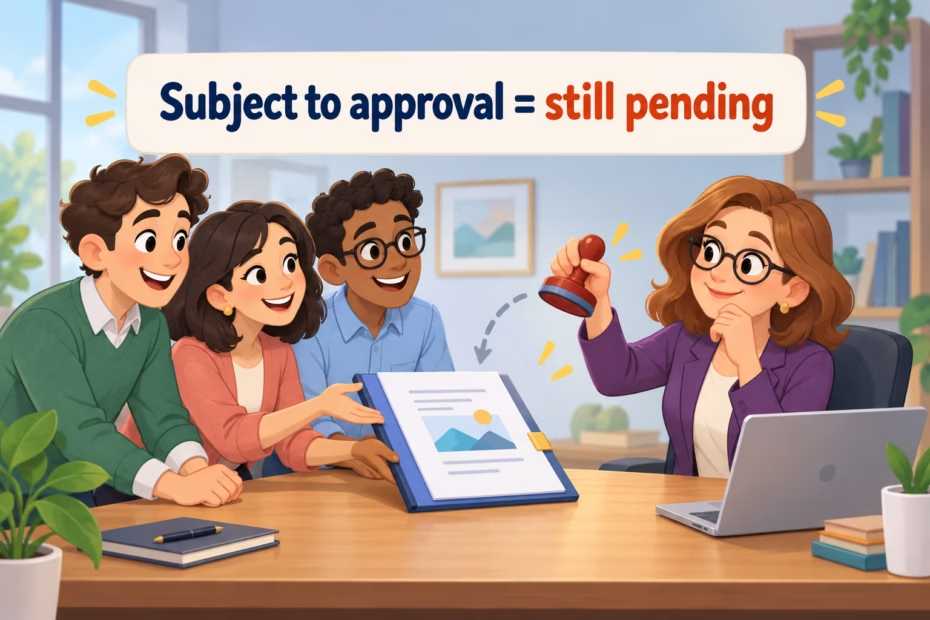
What “subject to approval” means
Subject to approval means that a proposal, action, or arrangement depends on someone with authority agreeing to it. The decision is not final merely because a request has been submitted or discussed; the relevant approval still has to happen. Cambridge Dictionary gives the pattern “We plan to go on Wednesday, subject to your approval,” showing how the phrase can attach a condition to a plan.

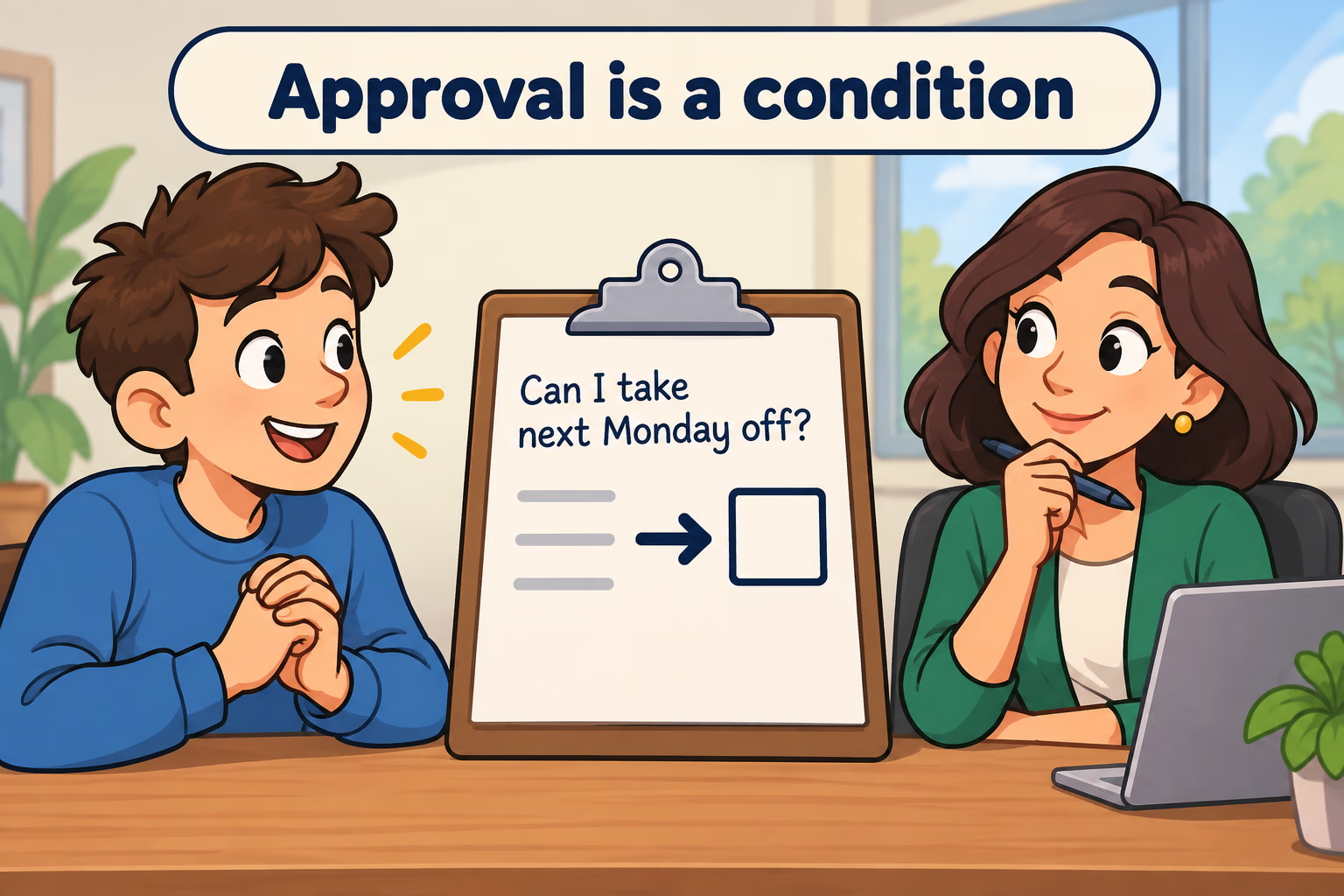
In this expression, subject to introduces a dependency or condition. The noun approval names the decision or permission being sought. The phrase is useful in everyday, school, workplace, and administrative writing because it signals that someone still needs to decide. It does not identify who will decide, what standard they will use, or when the answer will arrive; add those details when readers need them.
Where it fits in a sentence
The phrase can appear after the plan it qualifies: The schedule is subject to approval by the department head. It can also open a sentence before the result: Subject to approval, the team may reserve the room. When an opening phrase is set apart from the main clause, a comma helps readers see the boundary; Purdue OWL explains comma use after introductory clauses and longer or potentially confusing introductory phrases. A short opening phrase may not always need a comma, so read the sentence for clarity.
- After a noun: “The revised budget, subject to approval, will take effect in July.”
- After a linking verb: “The extension is subject to approval from the instructor.”
- At the beginning: “Subject to approval by the principal, students may hold the event on Friday.”
For the clearest wording, place the phrase close to the thing whose status depends on approval. If the condition applies to a whole plan, say so directly: “The move is subject to approval.” If it applies only to one part, name that part so readers do not mistake a limited approval for permission to proceed with everything.
Make the approval condition specific
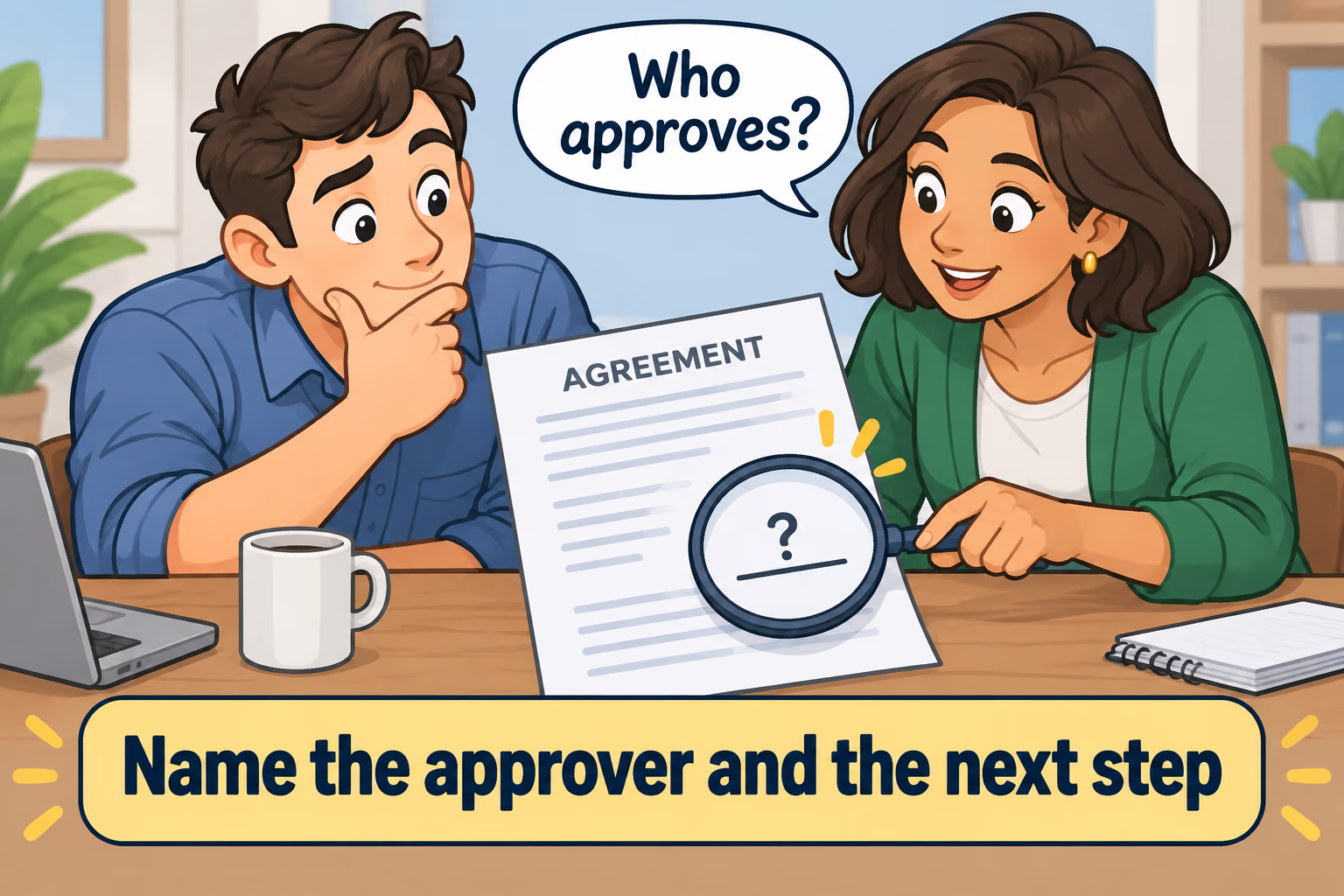
A useful approval notice answers three practical questions: Who approves? What is being approved? What happens while the decision is pending? Compare “The event is subject to approval” with “The event is subject to approval by the campus office; do not advertise a confirmed date until the office responds.” The second version identifies the decision maker and avoids implying that approval has already been granted.
When relevant, explain the deadline, criteria, and next step too: “The purchase is subject to approval by Finance by 15 June; if it is approved, Procurement will issue the order.” Do not invent a standard process where none exists. If timing or requirements are unknown, say that they have not yet been confirmed.
Approval is pending, not guaranteed
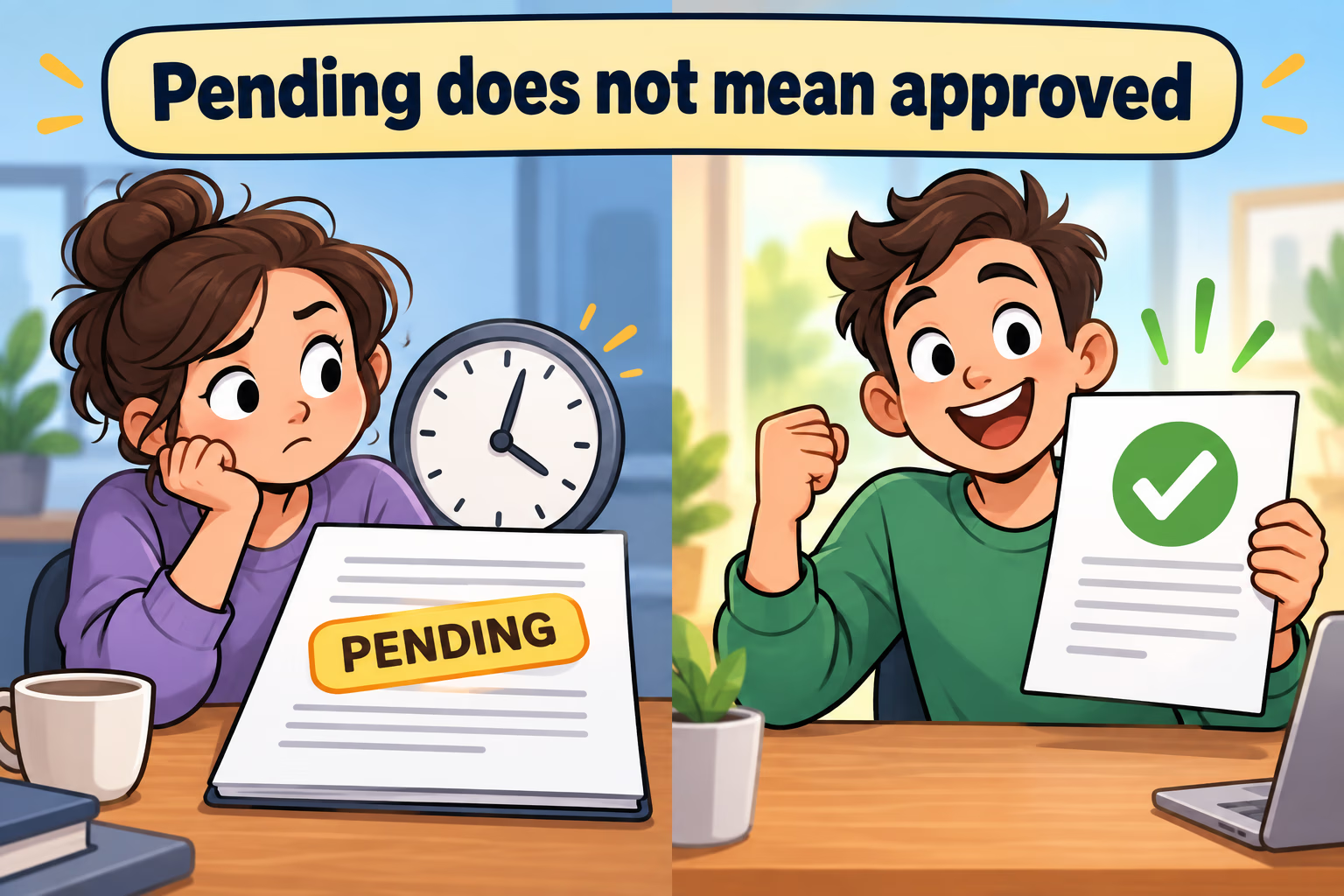
The phrase describes a condition; by itself, it does not predict whether the answer will be yes or when a decision will be made. “The request is subject to approval” therefore differs from “The request has been approved.” If a decision is still awaited, pending approval is a concise alternative: “The room booking is pending approval.” If approval has been granted, write that plainly and identify any other conditions that remain.
Use care in contracts and formal notices
In a contract or official notice, the phrase may relate to important rights, responsibilities, or timing, but its effect depends on the complete wording and context. Cornell Law School’s Legal Information Institute describes a condition precedent as an event that must occur before a contractual duty arises; it also notes that courts interpret conditions in context. That legal concept is not automatically identical to every everyday use of subject to approval. For a consequential agreement, identify the approving party, the specific decision, any deadline or criteria, and the effect of approval or refusal—and have qualified counsel review language when legal rights are at stake.
Common wording problems
- Leaving the approver unclear: “Subject to approval” may prompt the reader to ask “by whom?” Name the person, role, committee, or agency where possible.
- Making approval sound certain: Do not call a request “approved” while it is still awaiting a decision.
- Hiding the scope: Say whether approval covers the full proposal, a date, a budget, or one specific change.
- Using a vague timeline: If the date matters, give a known response deadline or explain that no timeline has been set.
- Assuming the phrase settles a legal question: A short phrase does not replace reading the whole agreement or getting appropriate advice.
Quick examples
| Situation | Clear sentence |
|---|---|
| Work schedule | The shift change is subject to approval by the team manager. |
| School activity | Subject to approval from the principal, the club can use the auditorium on Friday. |
| Purchase request | The order is subject to budget approval; no purchase will be placed before the decision. |
| Event planning | The outdoor location is subject to approval by the parks office and confirmation of availability. |
Frequently asked questions
Is “subject to approval” the same as “approved”?
No. It indicates that approval is a condition or that the decision is still awaited. Use approved only when the relevant decision has actually been made.
Can a sentence begin with “subject to approval”?
Yes. For example: “Subject to approval by the board, the project will begin in September.” A comma after the opening phrase often makes the sentence easier to read, especially when the phrase is long.
What is a clearer alternative?
Depending on the context, try “pending approval,” “if approved,” or “after approval.” Each highlights a slightly different relationship: a decision is awaited, an outcome is conditional, or an action follows approval. Name the approver whenever that information matters.
Sources: Cambridge Dictionary, “subject to”; Purdue OWL, “Commas After Introductions”; Cornell Law School Legal Information Institute, “Condition precedent”.
“Subject to approval” is a commonly used term in various procedural and administrative processes, indicating that a decision or action is pending validation or acceptance. This phrase is typically employed in situations where final authorization is needed before a particular task or request can be carried out.
Whether it pertains to a loan application, a building permit, or a job offer, the inclusion of “subject to approval” signifies that the outcome is contingent on meeting certain criteria or obtaining necessary clearance. This qualifier is a standard practice in ensuring that actions are taken only upon meeting specified conditions or receiving the necessary consent.
7 Examples Of Subject To Approval Used In a Sentence For Kids
- You can have extra playtime subject to approval.
- Please bring your favorite toy for show and tell subject to approval.
- You can choose a book to read from the library subject to approval.
- Let’s have a picnic in the park next week subject to approval.
- You can paint a picture in art class subject to approval.
- We will have a special guest visit our class subject to approval.
- You can choose a game to play during recess subject to approval.
14 Sentences with Subject To Approval Examples
- Subject to approval, students can form study groups in the library.
- Attending a new course is subject to approval by the academic advisor.
- Subject to approval, students can organize a charity event on campus.
- Changing majors is subject to approval by the department head.
- Using the college gym facility is subject to approval by the sports coordinator.
- Renting out college equipment for an event is subject to approval by the administration.
- Taking a leave of absence is subject to approval by the registrar.
- Any changes to the academic calendar are subject to approval by the college board.
- Holding a bake sale on campus is subject to approval by the student council.
- Reserving a conference room for a group project meeting is subject to approval by the facilities manager.
- Requesting an extension for an assignment is subject to approval by the professor.
- Applying for a scholarship is subject to approval by the scholarship committee.
- Getting a student discount at certain stores is subject to approval by showing a valid college ID.
- Participating in a cultural exchange program is subject to approval by the international relations office.
How To Use Subject To Approval in Sentences?
Subject To Approval is used when you want to express a statement or action that is dependent on someone else’s agreement or permission. The phrase is commonly used in various contexts, such as requesting a loan, getting a job offer, signing a contract, or submitting a project proposal.
For example, “The construction project will proceed subject to approval from the city council” means that the project will only move forward if it receives the required permission from the city council. In this case, the approval from the city council is crucial for the project to continue.
When using Subject To Approval in a sentence, it is important to clearly indicate what the approval is contingent upon. This helps set expectations and avoid misunderstandings. Additionally, make sure to follow up on the approval process and provide any necessary documentation or information to facilitate the decision-making process.
Overall, using Subject To Approval conveys the conditional nature of a decision or action, emphasizing that it is not final until the approval criteria are met. By incorporating this phrase in your communication, you can effectively communicate the dependency on external validation or agreement in a concise and professional manner.
Conclusion
In conclusion, “subject to approval” indicates that a decision is pending and is dependent on obtaining consent or permission. This phrase is commonly used in various contexts such as loan applications, job offers, contracts, and more. For example, “The new project proposal is subject to approval from the board of directors.” By using “subject to approval,” individuals or organizations communicate that final confirmation is required before proceeding with the proposed course of action. This phrase serves as a safeguard, ensuring that necessary approvals are obtained before moving forward with plans or agreements.
Understanding the implications of “subject to approval” is vital in navigating formal processes and agreements. It signals that certain conditions must be met or permissions granted before a certain action can be finalized. Whether in business, legal matters, or personal arrangements, being aware of this term helps individuals manage expectations and adhere to protocols that require approval from relevant authorities or parties involved.


