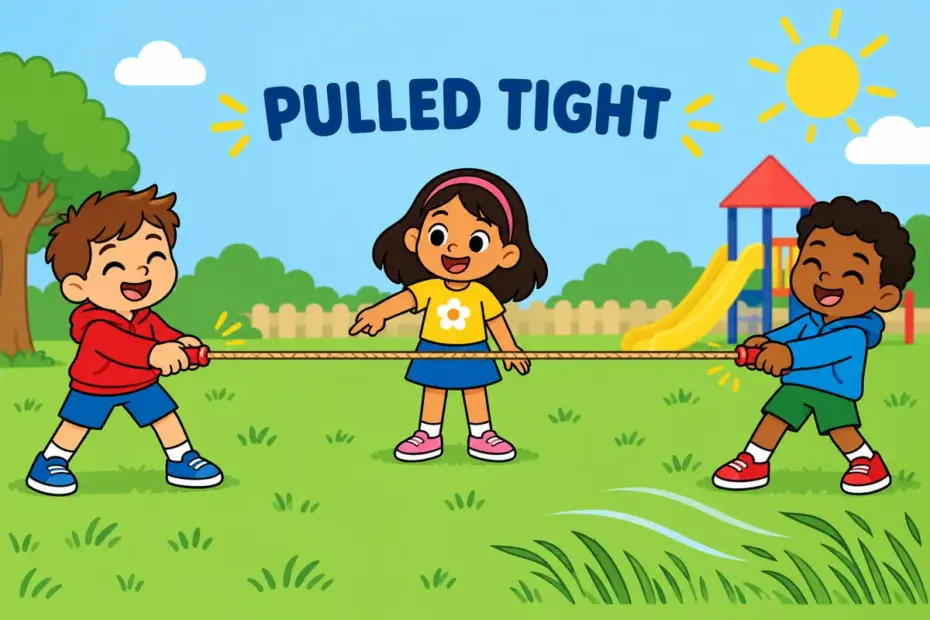
Taut means pulled tight or showing strain, and the word describes both a rope under tension and a person’s nerves before an exam. To use taut in a sentence, name the thing under strain: the sail was taut in the wind. The adjective reports the tension rather than the cause of it.
Taut at a glance
- Taut is an adjective; its forms are tauter, tautest, tautly and tautness.
- The dominant pattern is noun + be + taut, as in the rope was taut.
- A second pattern places taut before its noun, as in a taut line.
- Common collocations include taut rope, taut skin, taut nerves and taut prose.
- The commonest error is writing taught, the past tense of teach, for taut.
What does taut mean?
Taut is an adjective meaning stretched tight or showing nervous strain. The Cambridge entry for taut records the physical sense and the figurative one, and the division matters: a taut rope carries genuine tension, while a taut voice only sounds as if it does. For cloth pulled just slightly, tight is the plainer word; taut suggests tension close to the limit.
| Sense | Plain meaning | Example sentence |
|---|---|---|
| Physical | Stretched or pulled tight, with no slack | The tent guy-rope stayed taut through the storm. |
| Emotional | Showing strain, worry or controlled tension | Her voice turned taut when the name came up. |
| Stylistic | Lean and disciplined, with nothing wasted | His prose is taut and every clause earns its place. |
One limitation is worth stating. Taut does not mean broken or stiff. A taut cable still works, and a taut schedule is efficient rather than rigid. The word cannot describe a loose thing either, so a baggy sleeve is never taut; a membrane stretched near its limit is the physical case.
How do you use taut in a sentence?
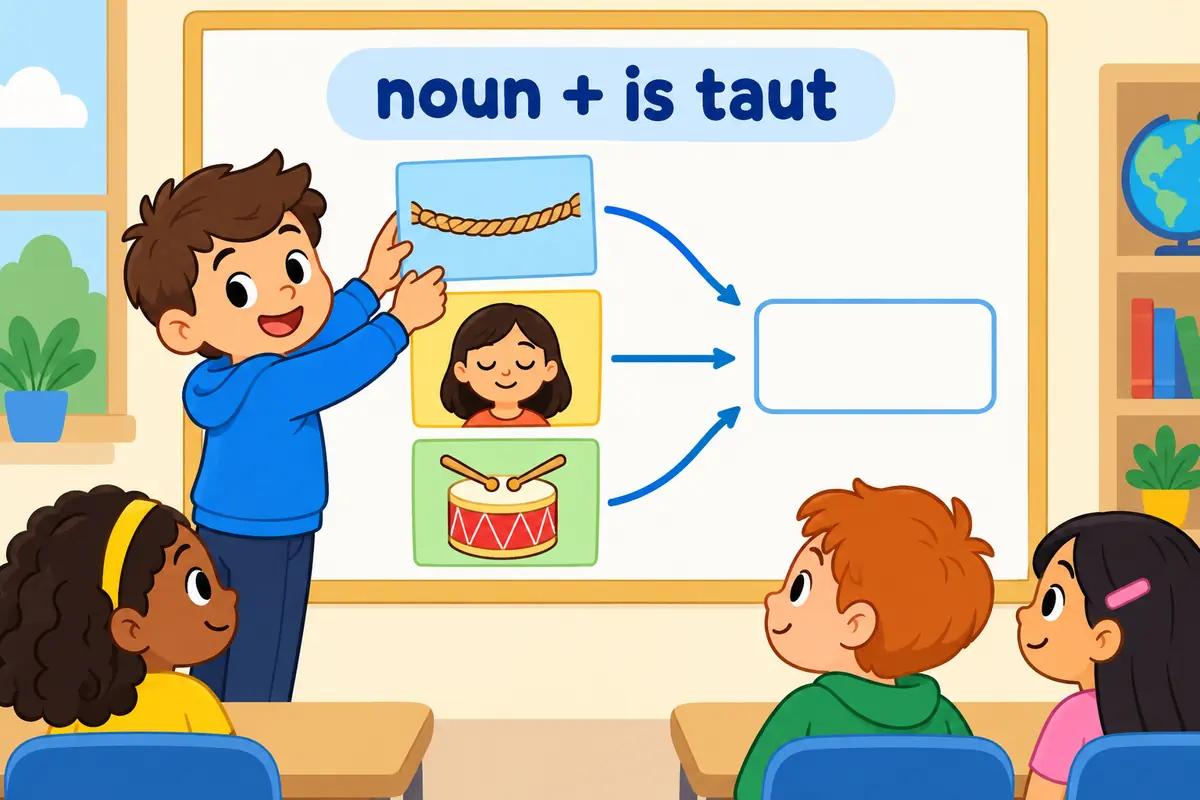
Taut follows a linking verb or sits directly before a noun, and it names the thing under tension rather than the tension itself. Five patterns cover almost every real sentence a learner will need.
| Pattern | Example | What it signals |
|---|---|---|
| noun + be + taut | The drum skin was taut. | The subject is the object under tension. |
| taut + noun | A taut line held the mast upright. | The adjective sits before the noun it describes. |
| keep / pull + object + taut | She kept the leash taut. | An action maintains the tension. |
| taut with + emotion | His face was taut with effort. | The cause of the strain follows with. |
| taut + abstract noun | The film has taut pacing. | The figurative, stylistic sense. |
When a writer needs the noun rather than the adjective, tension carries the abstraction and taut reports how it shows. The practitioner rule is simple: if the thing could snap, taut fits; if it merely feels anxious, tense fits.
Taut in a sentence: examples across contexts
Taut keeps its meaning as it moves from a workshop to a courtroom, but the register shifts with the subject. The eight sentences below show what the word modifies in each setting and why the choice works.
| Context | Example sentence | Why this works |
|---|---|---|
| Classroom | The skipping rope went taut as the two children pulled. | A concrete action makes the physical sense visible. |
| Workplace email | The deadlines stay taut until the client signs off. | The figurative sense signals pressure held under control. |
| News report | Security was taut on the final day of the summit. | Describes a controlled, tense operation without naming anxiety. |
| Sports commentary | The final set was taut from the first point. | Pacing language that suits live description. |
| Music writing | The strings stayed taut even in the quiet passage. | The technical sense of tuning and tension. |
| Style essay | Her taut sentences leave no room for padding. | The stylistic sense, applied to prose rather than objects. |
| Medical note | The skin over the joint felt taut and warm. | A clinical observation, stated without drama. |
| Conversation | Everyone went taut when the head teacher walked in. | The emotional sense, common in speech. |
Taut vs tense
Taut and tense both describe strain, and they are not interchangeable. Taut reports a physical or stylistic tightness; tense reports suspense or anxiety. Where nothing is actually pulled, tense is the honest choice.
| Attribute | taut | tense |
|---|---|---|
| Core job | Report something pulled tight or written leanly | Report worry, suspense or strain |
| Typical subject | A rope, skin, a line, prose | A person, a room, a match, a silence |
| Physical or mental | Primarily physical, then stylistic | Primarily mental or emotional |
| Register | Neutral to literary | Neutral, very common in speech |
| What it implies | Tension near a limit, still holding | Expectation of something about to happen |
Verdict: choose taut for something pulled tight or written leanly, and rigid only when the point is that something will not bend at all.
Word forms and grammar of taut
Taut is a plain adjective that inflects only for comparison. Its adverb tautly appears in written narrative, and the table also lists the homophone learners reach for by mistake.
| Form | Part of speech | Example |
|---|---|---|
| taut | adjective, base form | The cable is taut. |
| tauter | adjective, comparative | Pull it a little tauter. |
| tautest | adjective, superlative | It was the tautest drum in the band. |
| tautly | adverb | She held the rope tautly. |
| tautness | noun | The tautness of the fabric showed in the light. |
| taught | verb, different word | He taught the class to tie knots. |
Common mistakes with taut
- Incorrect:
The coach taut the rope before the race.Correct: The coach pulled the rope taut before the race. Rule: Taut is an adjective, never a verb; a verb such as pulled or kept carries the action. - Incorrect:
She taught the sail against the wind.Correct: She pulled the sail taut against the wind. Rule: Taught is the past tense of teach; taut is the adjective meaning tight. - Incorrect:
Her voice was taut of worry.Correct: Her voice was taut with worry. Rule: Taut takes with before the cause, not of. - Incorrect:
The loose cable was taut.Correct: The loose cable hung slack. Rule: Taut contradicts loose, so the two cannot describe the same thing. - Incorrect:
The rope was very rigid.Correct: The rope was very taut. Rule: Rigid means stiff and unbending; taut means stretched tight.
Practice using taut
Work through the six items, then check the reasoning rather than only the answer.
- Fill the gap: The sail went ______ as the wind picked up.
- Choose the better word: The silence in the hall was (taut / taught).
- Correct the error: The line was taut of the weight of the net.
- Build a sentence: use taut + noun about a drum.
- Spot the register: which belongs in a school report, the schedule was taut, or I felt totally taut?
- Rewrite with the adverb: She held the rope tight. Use tautly instead.
Answers
- taut — the sail is pulled tight by the wind, so the adjective follows the linking verb went.
- taut — the silence carries tension; taught is only the past tense of teach.
- The line was taut with the weight of the net — taut takes with before the cause.
- Model answer: A taut drum skin gives a sharper note.
- The schedule was taut — a report avoids totally and the first person.
- She held the rope tautly — the adverb describes how the action was done.
The bottom line
Use taut in a sentence for anything pulled tight or holding controlled strain, and let the noun carry the subject: the rope, the face, the prose. Two nuances decide most uses. Taut is an adjective in the be taut and taut + noun patterns, never a verb, and its homophone taught belongs to teach. For plain anxiety a writer chooses tense; taut keeps the sense of something stretched near its limit.
Frequently asked questions about taut
Is taut a formal word?
Taut is neutral in register and appears in everyday speech as well as literary writing. People say the rope is taut or everyone went taut without affectation. It becomes more literary when applied to style, as in taut prose, because the metaphor asks the reader to picture writing under tension.
What is the difference between taut and tight?
Tight is the general word for anything fixed firmly or fitting closely, so a tight lid and a tight sweater are both normal. Taut narrows the meaning to something stretched with little slack, which is why a rope or a drum skin is taut. Taut also carries a figurative sense of strain that tight does not.
Can taut describe writing?
Yes, and the usage is well established. A taut sentence or a taut plot is lean and controlled, with every word doing work and no padding. The image borrows from a stretched rope: the writing is held tight. Reviewers use the term as praise, so it rarely describes writing that feels merely short.
Is taut the same as taught?
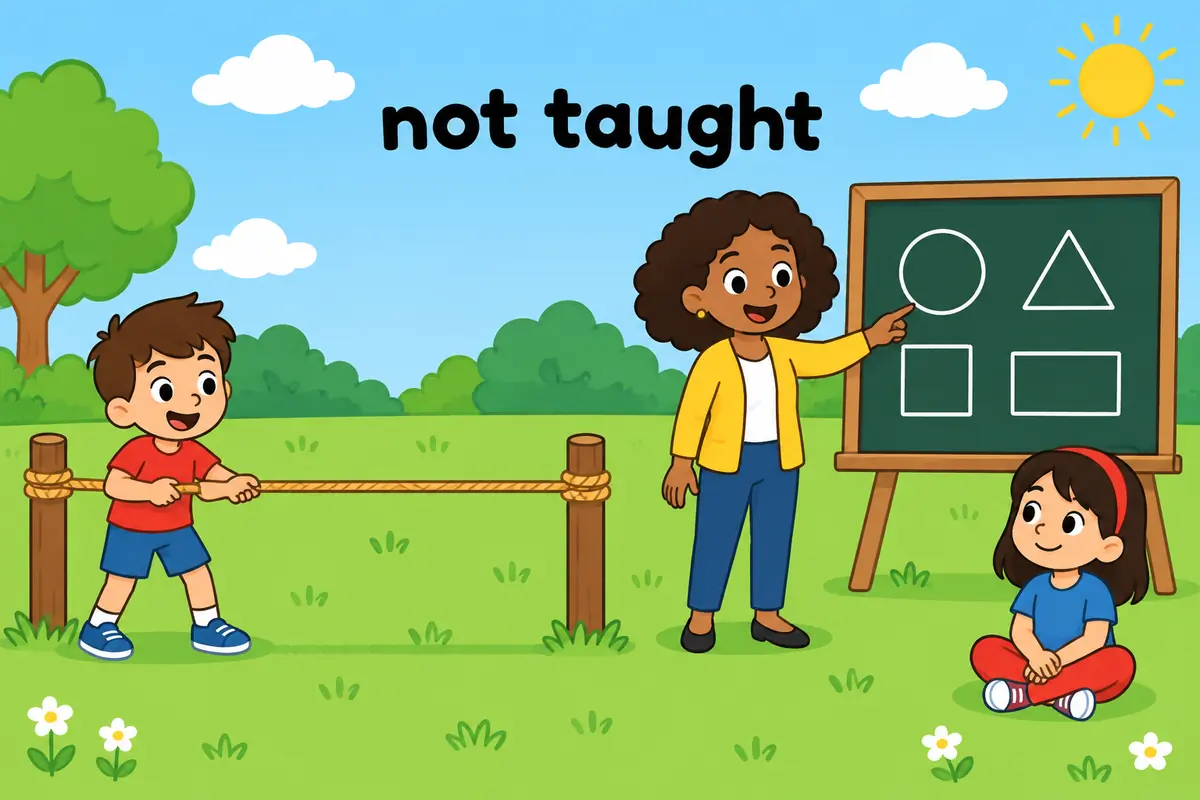
No, and the two are homophones, which causes the confusion. Taut is an adjective meaning pulled tight or strained, while taught is the past tense of the verb teach. The spelling decides the meaning, so a sentence about a rope needs taut and a sentence about a lesson needs taught.
Have you ever heard someone describe a rope as being taut? When a rope is described as taut, it means that it is stretched or pulled tight, with no slack or looseness.
In a similar way, when a person’s skin is described as taut, it means that it is smooth, firm, and not wrinkled or sagging. This word is often used to describe a feeling of tension or tightness in various materials or surfaces.
7 Examples Of Taut Used In a Sentence For Kids
- The string on the kite was taut and ready to fly.
- Be careful when you pull the rubber band, make sure it is taut.
- The drum skin must be taut to make good music.
- Pull the shoelaces taut before tying your shoes.
- The line of ants was marching in a taut row.
- The spider spun a taut web to catch its prey.
- The sailboat’s sails were taut in the wind.
14 Sentences with Taut Examples
- Taut deadlines are common in college, so it’s important to manage your time effectively.
- Make sure your arguments in your essays are taut and well-supported with evidence.
- It’s essential to keep your focus and attention taut during lectures to absorb the material.
- Some students find yoga helpful in keeping their bodies taut and minds relaxed during exam time.
- Group study sessions can help in keeping your understanding of complex topics taut.
- Effective note-taking is crucial in keeping your study materials taut and organized.
- Time management skills are necessary to keep your schedule taut and balanced between classes and extracurricular activities.
- Always keep your resume taut and updated with relevant experiences and skills.
- A healthy diet and regular exercise routine can help keep your body taut and energized for long study sessions.
- The competition for internships can be taut, so be sure to showcase your unique strengths and qualities.
- Some colleges offer taut mentorship programs to help students navigate their academic and professional goals.
- Joining student clubs and organizations can help in building a taut network of connections for future opportunities.
- Practice exams can help in keeping your knowledge taut and well-prepared for actual tests.
- It’s important to establish taut communication with your professors for guidance and clarification on course material.
How To Use Taut in Sentences?
To use the word Taut in a sentence, you need to understand its meaning and how it is typically used. Taut is an adjective that describes something that is stretched or pulled tightly, creating tension and firmness.
Here is a simple guide on how to incorporate taut into a sentence:
- Identify a subject or object that appears stretched or pulled tightly.
- Think about the tension or firmness associated with the subject or object.
- Form a sentence that conveys the idea of tightness or tension using the word taut.
For example:
– The taut rope held the weight of the hanging swing.
– Her taut expression revealed her anxiety about the upcoming exam.
– The drum skin was stretched so taut that it produced a crisp sound.
Remember that taut is used to describe physical tightness or tension, either literally or metaphorically. When constructing a sentence with taut, make sure it is clear how the subject or object is exhibiting this quality. Practice using taut in different contexts to become more comfortable incorporating it into your vocabulary.
Conclusion
In conclusion, sentences with the keyword “taut” often describe something that is stretched or pulled tightly. These sentences convey a strong sense of tension, rigidness, or firmness in the subject being described. For example, “The rope was taut, holding the weight of the hanging banner,” illustrates this idea clearly. Using the word “taut” in a sentence helps to paint a vivid picture of a tight, tense, or controlled situation.
By incorporating “taut” into sentences, writers can effectively convey a sense of precision or discipline in their descriptions. Whether referring to a taut facial expression, a taut rope, or a taut situation, this word adds depth and clarity to the imagery being presented. Overall, sentences with the keyword “taut” are a powerful tool for creating tension and emphasizing the rigidity or tightness of a given subject.


