A tenet is a core principle or belief that a person, group or system holds to be true. To use tenet in a sentence, name whose belief it is and what the belief states: “Honesty is a central tenet of this course.” The noun is countable, so it almost always carries an article or a possessive.
Tenet at a glance
- Tenet is a countable noun; its plural is tenets.
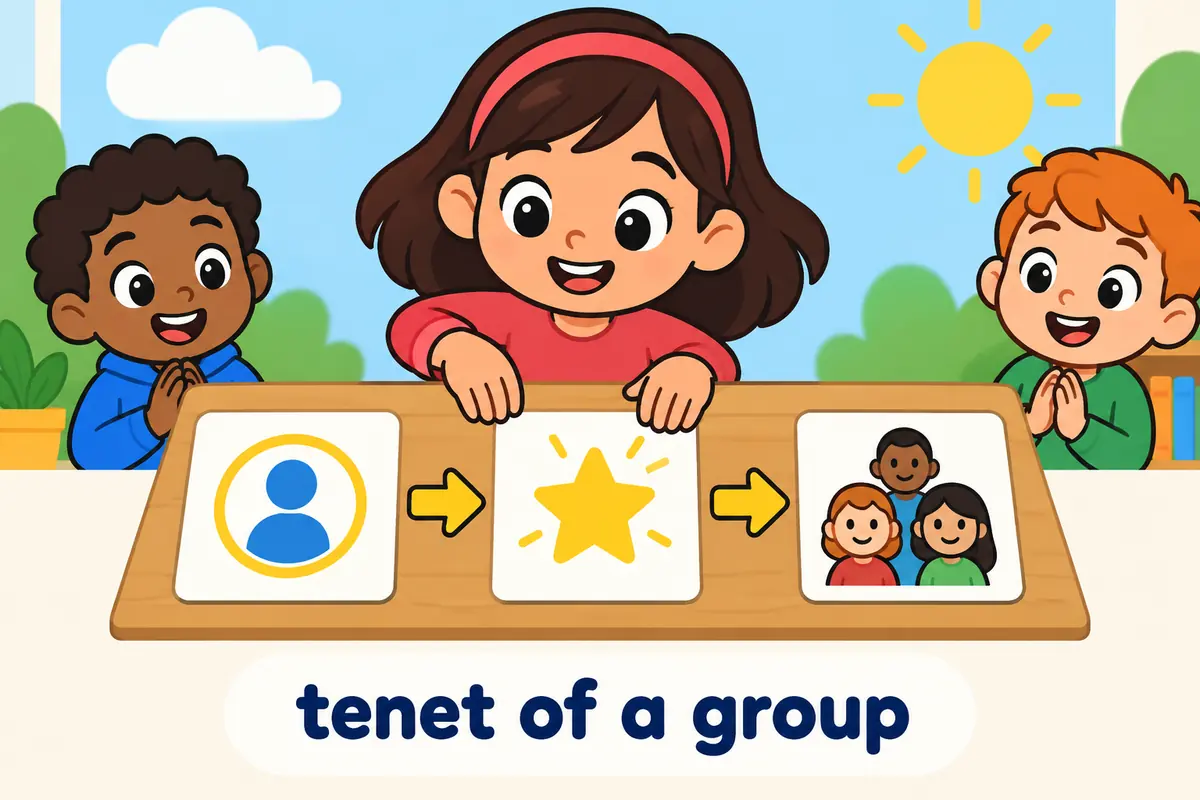
- The dominant pattern is tenet of a group, with a possessive or adjective in front.
- Common adjectives are central, fundamental, basic and core.
- The usual verbs are uphold, defend, reject and abandon.
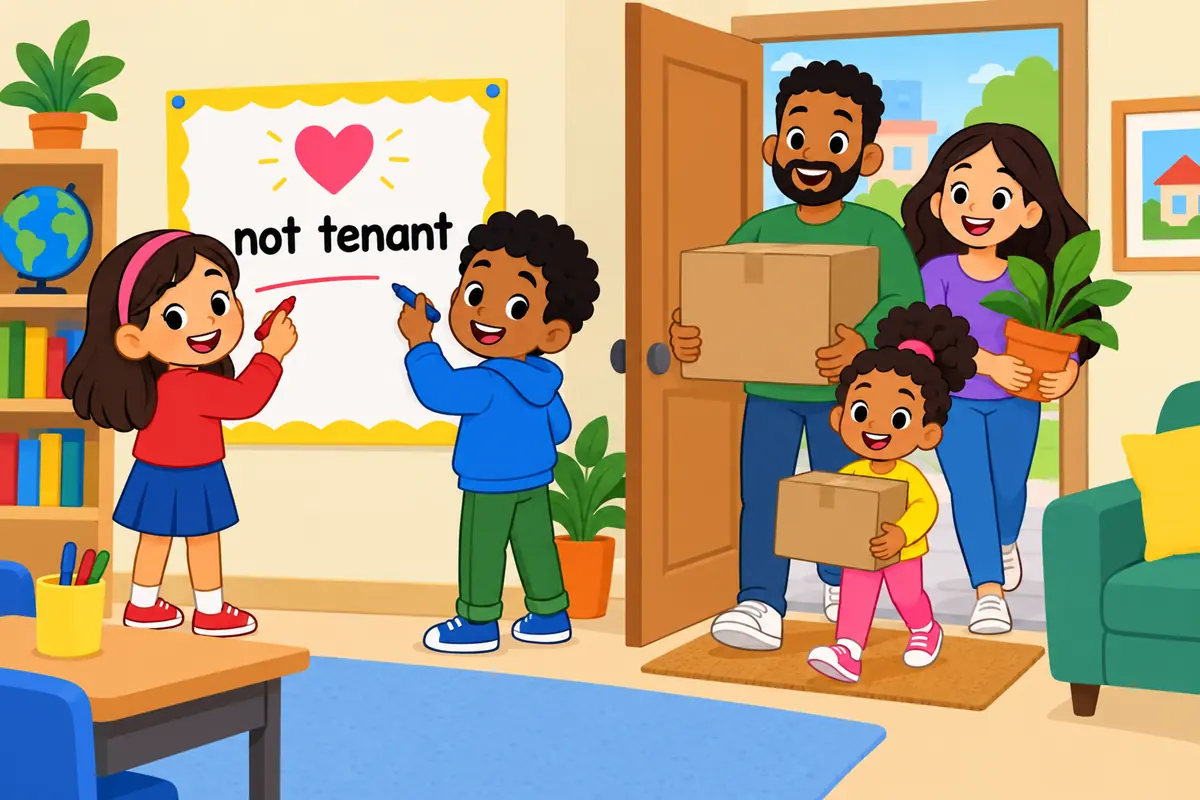
- The commonest error is confusing tenet with tenant, a person who rents a home.
What does tenet mean?
A tenet is a noun meaning a core principle or belief that a person or group holds to be true. The dictionary entry for tenet keeps the word close to principle, and it appears so often beside central, fundamental and basic that those adjectives are almost part of the definition.
| Sense | Plain meaning | Example sentence |
|---|---|---|
| Core belief | A principle a person or group treats as true | Honesty is a central tenet of the school’s code. |
| Official doctrine point | A stated item of a religion, ideology or system | Non-violence became a tenet of the movement early. |
| Shared working belief | An idea a team acts on without debating it | Test before you ship is a tenet of the whole lab. |
One limitation is worth stating plainly. A tenet is not a fact and it is not a rule. Facts can be checked and rules can be enforced; a tenet is simply held. Calling a lunch rota a tenet overstates it, because a tenet is a belief a community treats as settled rather than a practical arrangement.
How do you use tenet in a sentence?
Put the belief first and attach it to the group that holds it, usually with of. Five patterns cover almost every real sentence, and the adjective slot in front of the noun is where most writers signal importance.
| Pattern | Example | What it signals |
|---|---|---|
| possessive + tenet | Fair play is a central tenet of our club. | Names whose belief it is. |
| tenet + of + group | The report listed the tenets of the charter. | Attaches the belief to a body that holds it. |
| adjective + tenet | A basic tenet of the method is to measure twice. | Ranks the belief as more or less important. |
| uphold / defend + tenet | Every member promised to uphold the tenet. | Signals a commitment to keep the belief. |
| reject / abandon + tenet | The group abandoned that tenet in the 1990s. | Signals a deliberate break with the belief. |
The small rule that separates native from translated use is this: keep the group or possessive in the sentence, because a tenet with no holder feels unfinished. Compare a central tenet was agreed, which floats, with a central tenet of the union was agreed, which tells the reader who is bound by it. A useful test is to swap in the word belief: if the sentence still reads smoothly, the noun is doing its job.
Tenet in a sentence: examples across contexts
Tenet changes register more than it changes meaning. The sentences below keep the same noun while moving from a classroom to a legal submission, and each one names the group that holds the belief.
| Context | Example sentence | Why this works |
|---|---|---|
| Classroom | Being kind to new pupils is a tenet of our class. | The group is small and concrete, which suits a young reader. |
| Workplace email | Test the backup before you trust it is a tenet of this team. | Names a working belief the team acts on daily. |
| News report | Free movement of goods has long been a tenet of the trade bloc. | Treats a political belief as settled for a large body. |
| Legal writing | The duty to disclose is a tenet of the profession. | Uses the formal sense and names the body that enforces it. |
| Religious writing | Charity is a tenet held by the congregation. | Uses the doctrine sense with a clear holder of the belief. |
| Academic prose | Reproducibility is a founding tenet of the discipline. | Places a methodological belief in a scholarly register. |
| Sports commentary | Attack first is a tenet the manager never drops. | Shows the word carrying a tactical belief in casual speech. |
| Business writing | The customer is the arbiter is a tenet of the firm. | Turns a slogan into a stated organising belief. |
| History essay | Neutrality was a tenet of the alliance until 1914. | Dates the belief so a reader can see it change. |
| Conversation | Her main tenet is that nobody works alone. | The possessive keeps the belief personal rather than institutional. |
Tenet vs doctrine, dogma and principle
A tenet overlaps with three neighbours and replaces none of them. A doctrine is a whole body of teaching, while dogma adds the idea that the teaching must not be questioned. A principle is broader and can describe a law of nature as easily as a belief.
| Attribute | tenet | doctrine | dogma |
|---|---|---|---|
| Scope | One belief | A connected body of beliefs | A belief enforced as certain |
| Who holds it | A person or a group | An institution | An authority |
| Tone | Neutral and factual | Formal and systematic | Negative and rigid |
| Typical collocation | central tenet | church doctrine | party dogma |
| Open to challenge | Yes, without weakening the word | Usually, inside the system | No, by definition |
Verdict: use tenet for a single belief a group holds, doctrine for the system those beliefs belong to, and dogma only when you mean that the belief is imposed without argument.
Word forms and grammar of tenet
Tenet inflects like any regular noun, and it has no verb form at all. A creed is the nearest noun for a formal statement of belief, while a maxim is a short saying that guides behaviour.
| Form | Part of speech | Example |
|---|---|---|
| tenet | noun, singular | A single tenet can guide a whole career. |
| tenets | noun, plural | The tenets of the agreement were printed on one page. |
| tenet’s | noun, possessive | The tenet’s wording was kept deliberately simple. |
| tenets’ | noun, plural possessive | The tenets’ order follows their age. |
| tenant | noun — different word | The tenant paid the rent on Friday. |
There is no verb, so teneted and teneting are not English. When a writer needs an action, use hold, uphold or reject and keep tenet as the object.
Common mistakes with tenet
- Incorrect:
Honesty is a tenet on this school.Correct: Honesty is a tenet of this school. Rule: the belief attaches to its holder with of, not on or in. - Incorrect:
The owner raised the tenet by ten percent.Correct: The owner raised the rent by ten percent. Rule: tenet is a belief and tenant is a renter, so a single vowel changes the whole sentence. The look-alikes beget and beset are equally distant in meaning. - Incorrect:
Respect is a tenet belief here.Correct: Respect is a tenet here. Rule: tenet already means a belief, so adding belief is redundant. - Incorrect:
Every tenet were reviewed.Correct: Every tenet was reviewed. Rule: every takes a singular verb even when it ranges over many items. - Incorrect:
The board teneted the new rule.Correct: The board treated the new rule as a tenet. Rule: tenet is a noun only, so it cannot be turned into a verb.
Practice using tenet
Work through the six items, then read the reasoning rather than only the answer.
- Fill the gap: Respect for the flag is a long-standing ______ of the regiment.
- Choose the better word: The landlord raised the (tenet / tenant’s) rent in spring.
- Correct the error: Fairness is a tenet on our club.
- Build a sentence: use a central tenet of about a rule in a school science lab.
- Spot the register: which belongs in an official statement — non-violence is a tenet of the movement, or we are all about non-violence?
- Rewrite in the plural: The tenet was never written down. Use tenets instead.
Answers
- tenet — the belief belongs to the regiment, so the singular noun fits and few would ever say tenets here.
- tenant’s — the rent belongs to a renter; a tenet is a belief and cannot be raised.
- Fairness is a tenet of our club — the holder takes of.
- Model answer: Wearing goggles at every bench is a central tenet of the school science lab.
- Non-violence is a tenet of the movement — a formal statement avoids the casual phrase all about.
- The tenets were never written down — the plural verb were agrees with the plural noun.
The bottom line
Use tenet in a sentence when you mean a core belief that a group holds to be true, and name the group with of. Two nuances decide most sentences: the noun is countable, so it needs an article or possessive, and it is weaker than dogma because a tenet can be questioned without the word collapsing. If you mean a rule or a fact, reach for those plainer words instead. In formal writing the plural tenets often carries more weight than the singular, because a listed set of beliefs sounds considered rather than improvised.
Frequently asked questions about tenet
Is tenet a formal word?
Tenet sits in formal, academic and religious writing, where a group states what it believes. It appears in news analysis far more than in everyday talk. Saying that is a tenet of mine in casual conversation sounds stiff, where that is my rule of thumb sounds natural and means roughly the same thing.
What is the difference between a tenet and a doctrine?
A tenet is a single belief, while a doctrine is the connected body of beliefs a group teaches. A church may hold five tenets, and those tenets together form part of its doctrine. Choose tenet when you can count the belief, and doctrine when you mean the whole system in which it sits.
Is a tenet always religious?
No. The word began in religious language, but it now labels any core belief a group treats as settled. Companies, sports teams and scientific fields all describe their working assumptions as tenets. The shared feature is not religion but a community that holds the belief and expects its members to accept it.
What is the plural of tenet?
The plural is tenets, formed by adding s. It takes a plural verb, as in the tenets were agreed, and a plural possessive is written tenets’. The form tenet’s with an apostrophe marks the singular possessive, as in the tenet’s wording, so the apostrophe alone tells a reader whether you mean one belief or several.