
Terrain in a Sentence: Meaning and Examples
Terrain in a sentence refers to land considered through its physical features: “The hikers crossed rocky terrain.” Use adjectives such as flat, rugged, steep, or uneven to show what the land is like. Terrain can also appear figuratively for an unfamiliar subject, but context should distinguish that use from actual ground.
Terrain at a glance
- Terrain is land considered in terms of its natural features, such as slopes, surfaces, and unevenness.
- Terrain is a noun, commonly uncountable; types of terrain is useful when distinguishing several land categories.
- Do not confuse terrain with territory: physical land features differ from an area’s boundaries or ownership.
- Context should make the intended sense clear before adding decorative description.
What does terrain mean?
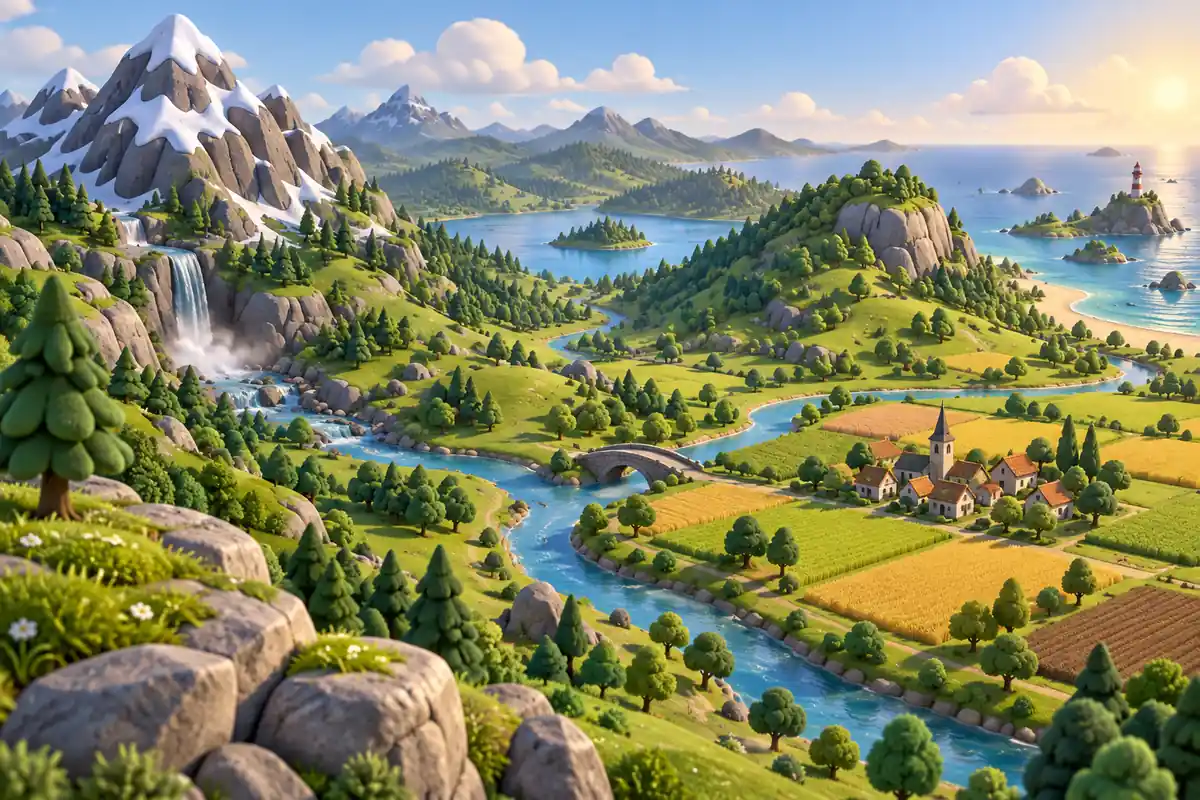
Terrain is land considered in terms of its natural features, such as slopes, surfaces, and unevenness. The dictionary entry for terrain documents the basic vocabulary sense; the examples here show how that sense works in complete sentences.

Terrain in a sentence: clear examples
- The hikers crossed rocky terrain.
- The path leads across flat terrain near the river.
- The vehicle struggled on uneven terrain.
- Our map shows the terrain around the campsite.
- Steep terrain made the final climb difficult.
- The group studied the terrain before choosing a route.
- The valley’s terrain differs from the nearby hills.
- The survey described the terrain without naming every road.
- The essay takes readers into unfamiliar intellectual terrain.
- The cyclists selected tires suitable for rough terrain.
How does the context change the meaning?
| Use | Meaning or pattern | Example |
|---|---|---|
| Surface | rocky terrain | The hikers crossed rocky terrain. |
| Shape | flat terrain | The route follows flat terrain. |
| Movement | across terrain | The vehicle moved across uneven terrain. |
| Figurative subject | unfamiliar terrain | The debate entered unfamiliar terrain. |
Which grammar patterns are useful?
Terrain is often uncountable in everyday descriptions: rough terrain, difficult terrain, and the terrain around a village. Instead of counting “three terrains” in a beginner exercise, say “three types of terrain” or name the three areas. Specialized usage may distinguish particular terrains.
Choose prepositions by the relationship: on terrain describes location, across terrain describes movement, and through difficult terrain describes passage. “The route crosses rocky terrain” uses terrain as a direct object, so it needs no additional preposition.
How can you avoid unclear word choices?
Terrain and territory are different. Terrain concerns physical features; territory concerns an area, sometimes with ownership, jurisdiction, or an animal’s range. A country can have mountainous terrain within its territory. Replacing one word with the other can change the central meaning.
Do not make rough terrain automatically mean danger or impossibility. Describe the actual surface, gradient, or route when those details matter. In figurative prose, “new terrain” suggests unfamiliar subject matter; a literal place description benefits from a concrete adjective instead.
Frequently asked questions about terrain
What is a short sentence with terrain?
“The hikers crossed rocky terrain.” is a short example using terrain. The sentence supplies a concrete setting so the meaning can be understood without a separate definition. For a classroom exercise, ask learners to identify the key relationship, then change one detail while keeping the same grammatical pattern.
Which related forms should I learn with terrain?
Terrain is a noun, commonly uncountable; types of terrain is useful when distinguishing several land categories. Learn the related forms alongside a complete sentence, rather than as isolated endings. A change in grammatical role can require a different form even when the underlying idea remains similar. Read the surrounding subject, verb, and modifiers before deciding which form belongs.
What mistake should I check before using terrain?
Do not confuse terrain with territory: physical land features differ from an area’s boundaries or ownership. Check the intended meaning as well as the spelling. A sentence can be grammatically complete yet suggest the wrong relationship. When revising, name the subject and explain what the surrounding phrase contributes, then remove any word that creates an unintended implication.
Can I replace terrain with a simpler word?
Ground or landscape may fit a simple description, but neither always preserves the focus on physical features. Choose a replacement that preserves the intended meaning and level of formality. Test it in the whole sentence: a near synonym may fit one sense while failing in another. Keep the original word when its distinction matters to the reader.
Have you ever stumbled upon a difficult word like “terrain” while reading or listening to someone speak? Don’t worry, you’re not alone! “Terrain” refers to the physical features of a piece of land, including its surface and how it is shaped.
This term is commonly used in various contexts, such as hiking, military operations, and geographical studies. Understanding the concept of “terrain” can help you better navigate maps, interpret descriptions, and make informed decisions when encountering different types of landscapes.
7 Examples Of Terrain Used In a Sentence For Kids
- The terrain is hilly in the mountains.
- We can walk on the flat terrain easily.
- Be careful when walking on rocky terrain.
- The desert terrain is dry and sandy.
- The terrain changes from grassy to muddy in the forest.
- It can be hard to ride a bike on rough terrain.
- The slippery terrain caused us to fall down.
14 Sentences with Terrain Examples
- The terrain of the campus is perfect for morning walks and evening runs.
- Studying in the hills can offer a different terrain for exploration during breaks.
- Planning a terrain-friendly picnic can be a fun weekend activity for college students.
- Exploring the rugged terrain of nearby forests can be a great adventure.
- Taking up photography can help capture the beautiful terrain of the college surroundings.
- Trekking clubs organize trips to conquer challenging terrain on weekends.
- The hilly terrain around the college is popular for off-road cycling.
- Drones can capture stunning aerial views of the varied terrain near the campus.
- Studying geology can enhance understanding of different types of terrain.
- Agricultural science students study the impact of terrain on crop growth.
- The sports complex offers facilities for athletic training on different terrain.
- Botany students often venture into diverse terrain to study plant species.
- Architecture students learn to design structures that blend harmoniously with the terrain.
- The environmental science department conducts studies on the impact of urbanization on natural terrain.
How To Use Terrain in Sentences?
Terrain refers to the physical features of a piece of land, such as its elevation, slopes, and vegetation. When using the word “terrain” in a sentence, it’s important to keep in mind its meaning and context.
Here are some examples of how to use terrain in a sentence:
- “The hilly terrain made it difficult for the hikers to reach the mountain peak.”
- “The military trained in different types of terrain to prepare for various combat scenarios.”
- “The desert terrain was vast and unforgiving, with little vegetation in sight.”
- “She studied the map carefully to navigate the rocky terrain of the canyon.”
- “The construction crew had to adapt their plans to account for the rugged terrain of the building site.”
When incorporating terrain in a sentence, consider the specific characteristics of the land being described and choose words that accurately depict its features. Pay attention to the surrounding details and use terrain to enhance the description of the landscape.
By practicing using terrain in different contexts, you can become more comfortable incorporating it into your vocabulary and effectively communicating about the physical features of land.
Conclusion
In conclusion, the varied examples provided showcase how the word “terrain” can be used in sentences to describe different types of landscapes or the physical characteristics of an area. Whether referencing rugged mountain terrain, lush forest terrain, or flat desert terrain, the word effectively conveys the topographical features of a particular location. From challenging terrains for hiking to smooth terrains for cycling, understanding the nuances of terrain is crucial for navigating and exploring different environments.
By incorporating “terrain” into sentences, we can paint a vivid picture of the geographical diversity present in our world. This word serves as a versatile tool for expressing the nature of the land, allowing us to communicate effectively about the landscapes we encounter and the obstacles we may face in various terrains.


