
The Sooner the Better in a Sentence: Meaning & Examples
“The sooner the better” means that an action should happen as soon as possible. In a full comparative sentence, it links an earlier action with a more favorable result: The sooner we send the form, the better. As a short reply, it can stand alone when the timing is already clear.
- Meaning: do something as quickly or early as the situation allows.
- Full pattern: the + comparative phrase + clause, the + comparative phrase + clause.
- Short reply: “When should I call?” “The sooner, the better.”
- Punctuation: use a comma between two full comparative clauses.
- Tone: the phrase can signal urgency, so add a deadline or soften it when appropriate.

What does “the sooner the better” mean?
The idiom means “as soon as possible” or “the earlier, the more desirable.” Cambridge Dictionary illustrates it as an answer to “When would you like to meet?”; Collins likewise describes it as saying something should be done as soon as possible. The wording states a preference about timing, but it does not name a precise deadline.
For example, “Please send the draft today; the sooner the better” communicates that an early delivery is preferred. It does not automatically mean “immediately,” and it does not prove that acting sooner is always safer or wiser. The context decides how much urgency the speaker intends.
How does the comparative pattern work?
“The sooner … the better” is a paired comparative pattern: one timing change is connected to an evaluation or outcome. The first the sooner sets the earlier timing; the second the better supplies the preferred result. Cambridge describes this use of the before two comparatives as showing how one amount changes in relation to another.
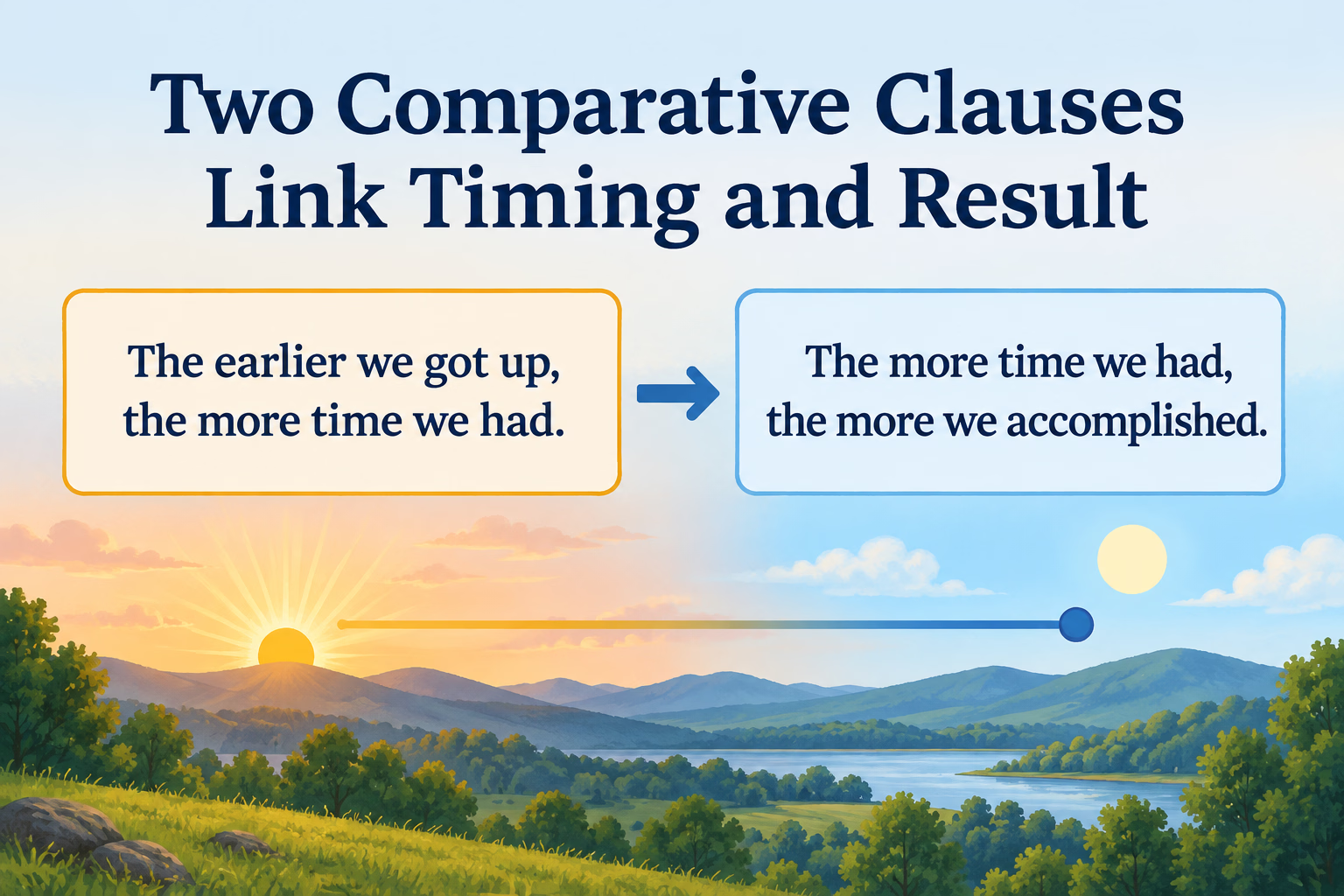
Use two clauses for a complete sentence
In the clearest full version, the first part names an action and the second part names its consequence or evaluation: The sooner we book the room, the easier it will be to choose a time. Each part can contain its own subject and verb. Other comparative pairs work the same way: The earlier you leave, the less traffic you may meet.
Sooner is the comparative form of soon, and better is the comparative form of good or well, depending on its role. Do not replace them with more sooner or more better; those double comparative forms are nonstandard in ordinary edited English.
Use the short form when context fills the gap
The expression can also be a complete conversational reply even though it omits words a listener can infer: “When should we tell Maya?” “The sooner, the better.” The implied thought is that telling her earlier is preferable. This concise form works best after a question or statement that makes the missing action obvious.
When the action is not clear, name it: The sooner we notify the customers, the better. A reader should not have to guess what should happen sooner.
Where does the comma go?
Place a comma after the first clause when both parts are stated: The sooner you reserve a seat, the better chance you have of choosing one. The comma marks the boundary between the linked comparative clauses and makes the relationship easier to read.
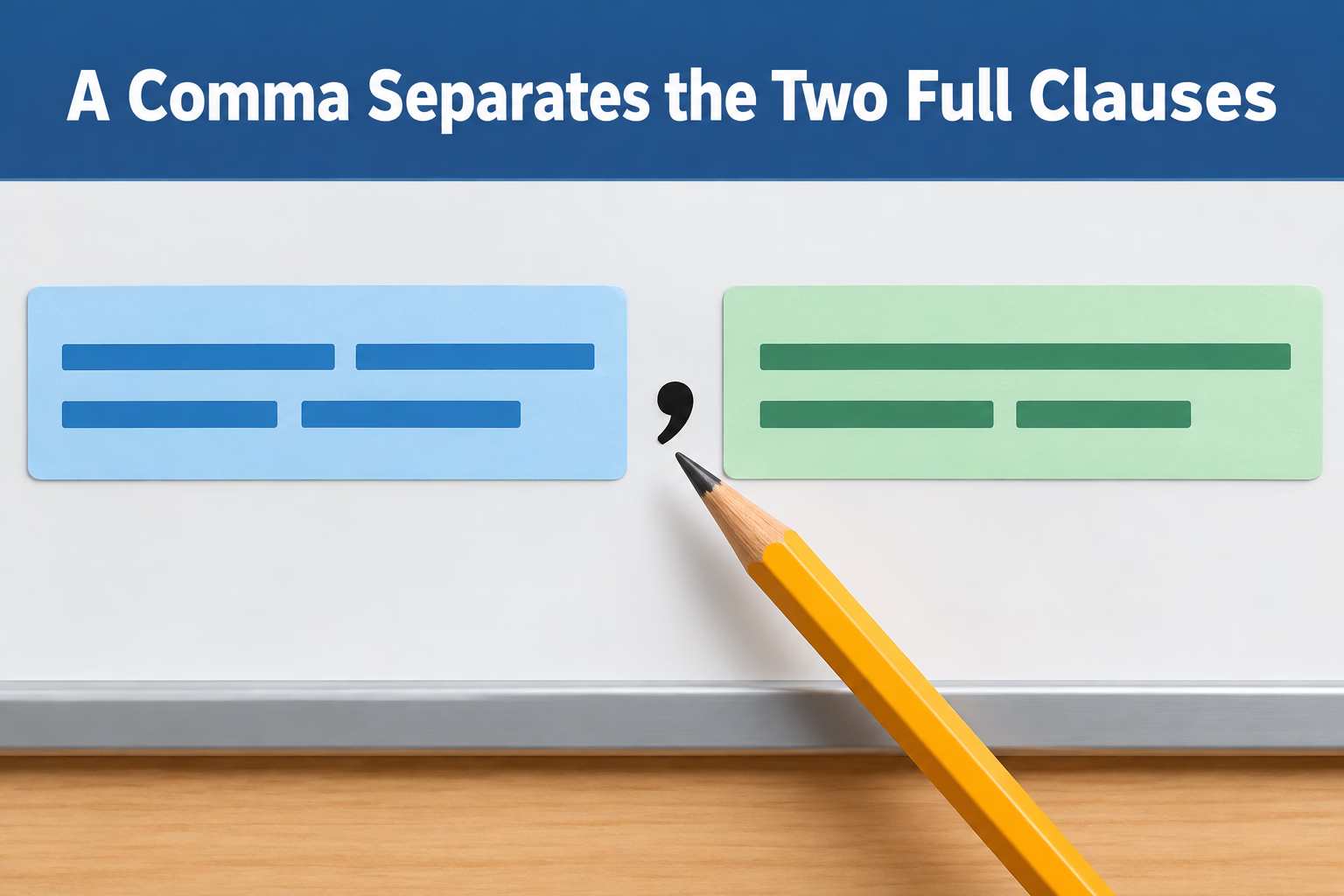
As a short standalone reply, punctuation varies by sentence rhythm and house style: both The sooner, the better. and the familiar unseparated The sooner the better. appear in published English. Cambridge’s dictionary example uses the latter. In edited instructional writing, the comma can make the two-part structure more visible; follow the style guide for the publication you are writing.
How can you use the phrase in a sentence?
Use the phrase after identifying an action, request, or choice whose earlier timing is preferred. These original examples model complete clauses, natural short replies, and different levels of urgency.
| Situation | Example sentence | What it conveys |
|---|---|---|
| School | The sooner you begin reviewing, the more time you will have to ask questions. | An earlier start creates more study time. |
| Work | Please share the agenda by Thursday; the sooner the better. | Thursday is the latest useful point, with earlier preferred. |
| Planning | The sooner we choose a date, the easier it will be to reserve a table. | The result depends on availability. |
| Travel | The sooner we leave, the more daylight we will have at the campsite. | An earlier departure gives more daylight. |
| Customer service | Could you confirm the address today? The sooner, the better. | A prompt confirmation is requested politely. |
| Home | The sooner we label these boxes, the faster we can unpack them later. | An early small task can save time later. |
| Health appointment | “When should I call the clinic?” “The sooner, the better.” | A timing preference, not a diagnosis or treatment instruction. |
| Team project | The sooner each person picks a section, the sooner we can combine the draft. | Earlier assignments move the next step forward. |
| Weather plan | If we want to walk before the rain, the sooner we start, the better. | Timing matters because conditions may change. |
| Invitation | Let me know by Friday if you can come; the sooner the better. | The speaker wants a timely response. |
| Repair | The sooner the leak is reported, the sooner maintenance can inspect it. | Reporting starts a process; it does not guarantee a repair time. |
| Travel booking | The sooner we compare train times, the easier it is to find a departure that fits. | Early comparison preserves more choices. |
| Writing | “Should I send you the revised paragraph now?” “Yes—the sooner the better.” | A concise answer makes the action clear from context. |
| Meeting | The sooner the meeting starts, the earlier everyone can return to their other work. | Earlier start time changes the likely finish time. |
| Classroom | The sooner students see the assignment criteria, the more time they have to revise. | Early information gives a longer revision window. |
| Shared task | We should tell the neighbors about the road closure, and the sooner the better. | The phrase adds urgency to a stated recommendation. |
| Event setup | The sooner we test the microphone, the less rushed the setup will feel. | Testing early can reduce last-minute pressure. |
| Everyday reply | “Would next week be too late?” “The sooner, the better.” | Next week is less preferred, without specifying an exact date. |
How do you build your own example?
Start with the action that should happen earlier, then connect it to a result that improves when that action moves forward. This four-step check catches the most common sentence problems.
- Name the action: “we send the invitation.”
- Add the first comparison: “The sooner we send the invitation…”
- State the outcome: “…the more time guests have to reply.”
- Check the logic and punctuation: add a comma between the two clauses, and make sure the claimed benefit is plausible.
Finished example: The sooner we send the invitation, the more time guests have to reply. If no specific outcome is needed, shorten it to The sooner, the better only when the surrounding conversation already supplies the action.
Can “the sooner the better” sound too forceful?
Yes. The idiom often presses for early action, so in a request it may sound impatient if the listener has no deadline or control over the task. Pair the request with a reason or a real cutoff: If possible, please send it by Wednesday so I can compile the report; earlier would help.

A useful editorial rule is to reserve the sooner the better for situations where speed genuinely helps. If timing is flexible, say whenever convenient or give a date range. If safety, health, money, or legal obligations are involved, state the actual deadline or direct the reader to an appropriate professional source instead of relying on this idiom.
Which similar phrases mean something different?
Several expressions contain soon, but they do different jobs. Choose by meaning rather than by the shared word.
| Expression | Meaning | Example |
|---|---|---|
| the sooner … the better | Earlier action is preferred. | The sooner you reply, the better. |
| as soon as possible | Do it as quickly as circumstances permit; often more direct. | Please reply as soon as possible. |
| sooner rather than later | Prefer an earlier time but do not necessarily demand immediate action. | We should discuss the change sooner rather than later. |
| sooner or later | At some future time, with no claim that early timing is better. | They will need to make a decision sooner or later. |
| no sooner … than | One event happens immediately after another. | No sooner had the train left than it began to rain. |
Cambridge’s sooner entry distinguishes the “as quickly as possible” idiom from sooner or later and no sooner … than. A quick substitution test helps: if you mean “immediately after,” use no sooner … than; if you mean “at some point eventually,” use sooner or later.
Frequently asked questions about “the sooner the better”
Is “the sooner the better” a complete sentence?
It can function as a complete conversational reply when context makes the action clear: “When should I call?” “The sooner, the better.” In a standalone formal sentence without context, name the action and result: “The sooner we call, the better chance we have of reaching her.”
Does “the sooner the better” mean immediately?
No. It expresses a preference for the earliest practical time, but it does not specify “now” or give a deadline. If a task must happen immediately, say so directly; if a particular date is the limit, name that date.
Should I write “the sooner, the better” with a comma?
Use a comma between two stated clauses: “The sooner we book, the better.” The short reply is printed both with and without an internal comma. Pick the punctuation that fits your house style and makes the paired parts easiest to read.
Is “the sooner the better we finish” correct?
That wording is not a clear standard comparative sentence because it runs the two parts together. Write “The sooner we start, the sooner we finish” or “The sooner we start, the better.” Put the action or subject and verb in the first part before the second comparative.
What is the difference between “the sooner the better” and “no sooner than”?
“The sooner … the better” says an earlier time is preferred. “No sooner … than” links two events that happen one immediately after the other, as in “No sooner had I sat down than the phone rang.” The expressions have different meanings and sentence structures.
Source examples preserved from the earlier page
Editorial note: The archived text below is included unchanged for source preservation, but some of its examples do not show the standard pattern clearly. Use the corrected explanations and examples above as the guidance for current writing; treat the marked source block as legacy material, not as a model for new sentences.

Have you ever heard the phrase “the sooner the better” being used in conversations or writing? This idiomatic expression is often employed to convey the idea that taking action promptly or at the earliest opportunity is favorable or advantageous.
“The sooner the better” essentially suggests that delaying or procrastinating is not beneficial, and that swift action or decision-making is preferred. This saying is commonly used to emphasize the importance of acting promptly in order to achieve a desired outcome or to avoid potential problems or obstacles.
7 Examples Of The Sooner The Better Used In a Sentence For Kids
- The sooner the better we can finish our snack time and go out to play.
- Let’s clean up our toys now, the sooner the better we can start a new game.
- It’s important to finish our homework now, the sooner the better we can enjoy our evening.
- Remember to share with your friends, the sooner the better we can all have fun together.
- We should wear our jackets now, the sooner the better before going out in the rain.
- Don’t forget to say sorry if you make a mistake, the sooner the better so we can all be friends again.
- Brushing our teeth before bed is important, the sooner the better to keep them healthy.
14 Sentences with The Sooner The Better Examples
- The sooner the better you start studying for your upcoming exams.
- Make sure to submit your assignments the sooner the better.
- It’s important to finalize your project topic the sooner the better.
- The sooner the better you apply for internships to gain practical experience.
- Don’t procrastinate on preparing for campus placements – the sooner the better.
- Register for workshops and seminars the sooner the better to enhance your skills.
- Start networking with professionals in your field the sooner the better.
- The sooner the better you join extracurricular clubs and societies for holistic development.
- Ensure you attend career counseling sessions the sooner the better.
- Get involved in community service initiatives the sooner the better.
- The sooner the better you start working on building your resume.
- Set up a study group with your peers the sooner the better.
- Apply for scholarships and financial aid the sooner the better.
- Seek guidance from professors and mentors the sooner the better.
How To Use The Sooner The Better in Sentences?
To use The Sooner The Better in a sentence, simply follow this structure:
“The [action] the better.”
For instance, you can say “I should start studying the sooner the better” to convey that you should start studying as soon as possible for best results.
Remember, the phrase The Sooner The Better indicates that taking action promptly leads to more favorable outcomes. It emphasizes the importance of acting quickly to achieve optimal results or to prevent further complications.
When incorporating The Sooner The Better into your sentence, consider the context and choose verbs that suit the situation. Whether it’s about starting a project, making a decision, or addressing an issue, using this phrase can encourage a sense of urgency or promptness in communication.
You can also use The Sooner The Better to advise someone else to act promptly by saying, “You should inform them the sooner the better” to suggest that timely communication is essential.
With practice, you’ll become more comfortable using The Sooner The Better in your everyday conversations to stress the significance of timeliness. This phrase can effectively convey the importance of acting swiftly and decisively in various situations.
Conclusion
In conclusion, the phrase “the sooner the better” emphasizes the importance of taking prompt action or making decisions promptly to achieve the best outcomes. Whether it is seeking medical attention for an illness or addressing a problem in a timely manner, acting without delay is often more advantageous.
By understanding the significance of acting promptly, individuals can avoid unnecessary complications and ensure the most favorable results. From booking appointments early to addressing issues right away, embracing the principle of “the sooner the better” can lead to increased efficiency, better outcomes, and overall peace of mind.


