Thermography in a Sentence: Meaning and Examples
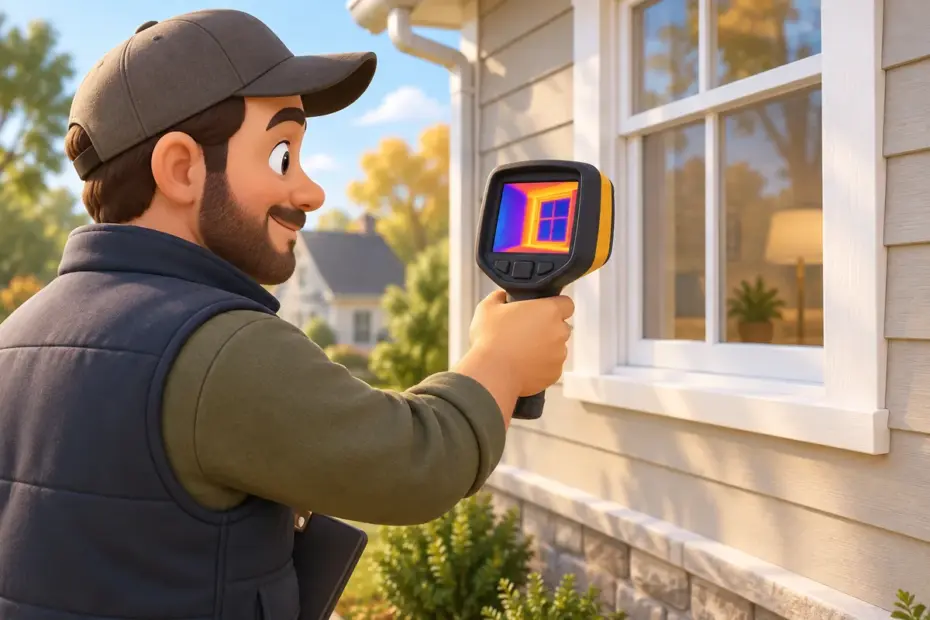
Thermography uses an infrared camera to create images of heat patterns and estimate temperature differences at an object’s surface. In a thermography in a sentence example, the noun names the imaging method: “The inspector used thermography to find a cold patch near the window.” The result needs context and careful interpretation.
Key facts at a glance
- Thermography converts detected infrared radiation into a visible thermal pattern.
- A thermogram is the image; thermographic is the adjective.
- Thermal measurements describe surfaces and depend on material and environmental conditions.
- The FDA says thermography is not a substitute for mammography.
What does thermography mean?
FLIR’s infrared guide explains that a thermal camera detects infrared radiation and turns it into a visible image representing temperature variation across a surface. The U.S. Food and Drug Administration likewise describes thermography as an infrared image showing heat patterns on or near the body’s surface.
Thermography names the technique or process; a thermogram is the resulting image, and thermographic is the adjective. A thermal image is not an ordinary photograph or an X-ray: it represents emitted infrared energy, and a temperature reading is an estimate affected by material emissivity, distance, and surroundings.
| Term | Meaning | Example |
|---|---|---|
| thermography | Imaging or measurement using infrared patterns | The crew used thermography during the building survey. |
| thermogram | The image produced by thermal imaging | The thermogram showed a cooler area around the frame. |
| thermographic | Related to thermography | The thermographic camera recorded the surface pattern. |
How do you use thermography in a sentence?
Use thermography as a noun naming a method of infrared imaging or measurement. Introduce the purpose or setting so readers know what the thermal pattern is being used to examine.
- “The building inspector used thermography to compare heat patterns around the windows.”
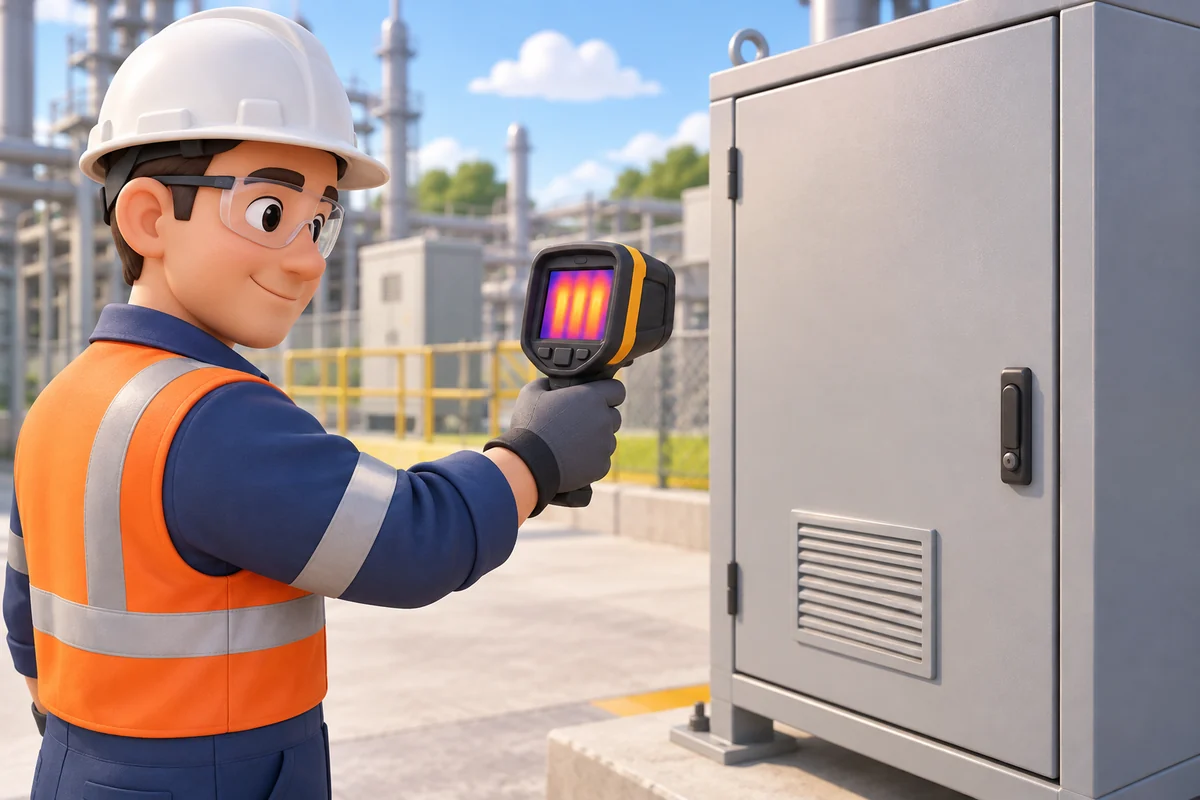
- “Engineers scheduled thermography to check for unusually warm connections in the closed electrical cabinet.”
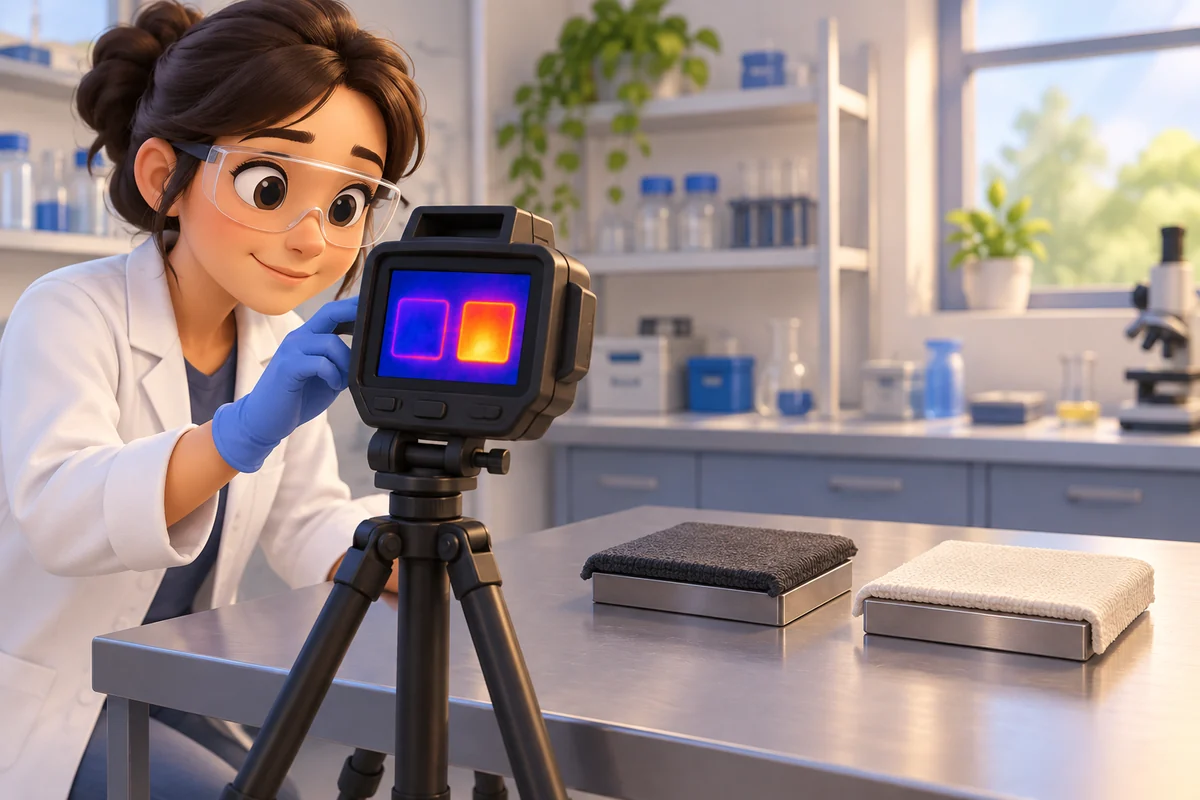
- “Researchers used thermography to track surface-temperature changes during the materials test.”
- “The thermographic image showed a temperature difference across the roof.”
- “A thermogram helped the team visualize the warm and cool regions.”
The most precise sentences describe an observed pattern rather than claiming the camera identified a hidden cause by itself. For example, “thermography showed a cool patch” is more cautious than “thermography proved the wall had a leak”; an inspector may need other measurements to confirm the explanation.
Where is thermography used?
Thermography appears in building surveys, equipment inspections, research, and some medical contexts. A U.S. Department of Energy project describes using infrared cameras to locate thermal anomalies in building envelopes, while FLIR lists building, firefighting, industrial, and scientific applications.
- Buildings: compare surface-temperature patterns around roofs, windows, and exterior walls.
- Equipment: look for unusual heating that may warrant a closer inspection.
- Research: monitor surface-temperature changes during a controlled experiment.
- Medical settings: show heat patterns near the body’s surface, with uses limited by the specific device and clinical question.
Thermography has limits. Reflections, emissivity, distance, airflow, and environmental conditions can affect the image or measurement. A thermal camera records a pattern; it does not automatically explain why the pattern exists or see through an opaque wall.
Can thermography screen for breast cancer?
The FDA says thermography is not a substitute for mammography and has not been shown to be effective as a standalone breast-cancer screening test. The agency says thermography devices have been cleared only as an adjunctive tool for use alongside a primary screening method, not in place of it.
This medical distinction matters when writing examples: say that a thermogram displays surface heat patterns, not that it independently diagnoses cancer or reliably finds a disease before other tests. Anyone choosing a screening schedule should discuss the appropriate test with a qualified health professional.
Frequently asked questions about thermography
What is thermography in simple words?
Thermography is a way to create an image from infrared energy emitted by objects. A thermal camera displays patterns that correspond to surface-temperature differences, often using colors for contrast. The colors are a visual scale, not visible light from the object, and interpretation depends on the camera and measurement conditions.
Is a thermogram the same as thermography?
No. Thermography is the process or technique of infrared imaging; a thermogram is an image produced by that process. The adjective thermographic describes equipment, data, or an image related to the technique: “The thermographic camera produced a thermogram.” The terms name different parts of the same imaging workflow.
Can thermography see through walls or diagnose illness?
No. An infrared camera records energy from surfaces in its field of view; it does not see through an opaque wall like an X-ray. A thermal pattern may lead an expert to investigate further, but it does not establish the hidden cause. The FDA also says thermography cannot replace mammography for breast-cancer screening.
What makes a thermography reading inaccurate?
Distance, ambient temperature, reflections, airflow, focus, and a material’s emissivity can affect a thermal measurement. FLIR’s camera guidance says displayed temperature depends on several factors, including distance, surroundings, and emissivity. A trained operator considers those conditions and treats unusual patterns as findings to assess, not automatic diagnoses.
Original article content
Have you ever heard of thermography? This cutting-edge technology involves capturing images using infrared radiation to detect heat patterns and temperature variations in objects and living beings.
Using thermography, heat signatures are visualized through color variations on a thermal image, providing valuable insights in various fields such as medicine, building inspections, research, and more. This non-invasive and quick method has proven to be a powerful tool in detecting anomalies and analyzing temperature distribution with precision and efficiency.
7 Examples Of Thermography Used In a Sentence For Kids
- Thermography is a special camera that takes pictures of heat.
- We can use thermography to see which things are hot and which are cold.
- Thermography can help doctors see inside our bodies without touching us.
- Firefighters use thermography to find people in smokey rooms.
- Thermography can show us where animals are hiding in the dark.
- Thermography can help scientists study volcanoes and hot springs.
- Infrared goggles use thermography to help us see in the dark.
14 Sentences with Thermography Examples
- Thermography is a non-invasive technique that can be used to detect anomalies in buildings.
- Many engineering students are learning about the applications of thermography in industrial settings.
- Thermography is a useful tool for monitoring the temperature of electrical systems.
- College students studying environmental science find thermography helpful in identifying heat loss in buildings.
- Thermography can also be used in the medical field for detecting abnormalities in the human body.
- Students in architecture are exploring the use of thermography in building design to improve energy efficiency.
- Thermography is a valuable skill for researchers studying heat distribution in different materials.
- Students in physics are conducting experiments using thermography to analyze thermal properties of substances.
- Thermography is becoming increasingly popular in the field of preventive maintenance for various industries.
- College students in India are attending workshops to learn more about the principles of thermography.
- Thermography is used in wildlife conservation efforts to study animals’ thermal patterns.
- Electronics engineering students are using thermography to troubleshoot circuit boards and electronic devices.
- Thermography can help detect problems in mechanical systems before they escalate into major issues.
- Civil engineering students are incorporating thermography into their studies to examine the thermal properties of construction materials.
How To Use Thermography in Sentences?
Thermography is a technique that uses infrared cameras to detect differences in temperature in an object or area. The main advantage of thermography is that it can capture images without direct contact, making it a non-invasive and safe method for various applications.
To use thermography effectively, start by preparing the thermographic camera for operation. Make sure it is set to the appropriate temperature range for the object being inspected. Next, aim the camera at the target area and ensure that it is in focus. Press the capture button to take an thermographic image.
After capturing the image, analyze the thermography to identify any temperature variations. Hot spots indicate areas of higher temperature, while cold spots indicate areas of lower temperature. These variations can be used to detect issues such as electrical faults, insulation problems, or leaks.
Interpret the thermographic data carefully and make note of any anomalies. Follow up with further inspections or maintenance as needed. Regular thermography inspections can help prevent potential problems and ensure the efficiency of systems or equipment.
Overall, thermography is a valuable tool for detecting temperature differences and identifying potential issues, making it a useful technique for various industries and applications.
Conclusion
In conclusion, thermography is a non-invasive imaging technique that detects and visualizes temperature differences in objects or living beings. By capturing and analyzing infrared radiation emitted by these subjects, thermography can provide valuable insights into various applications such as medical diagnosis, building inspections, and industrial monitoring. For example, medical professionals use thermography to detect abnormalities in the human body, while architects employ it to identify energy inefficiencies in buildings.
Overall, thermography offers a versatile and effective solution for obtaining temperature-related information in different fields. Its ability to showcase heat patterns and variations makes it an invaluable tool for enhancing safety, optimizing performance, and diagnosing conditions that may otherwise go unnoticed. Embracing thermography as part of our technological resources can lead to more informed decision-making and improved outcomes in a wide range of industries.


