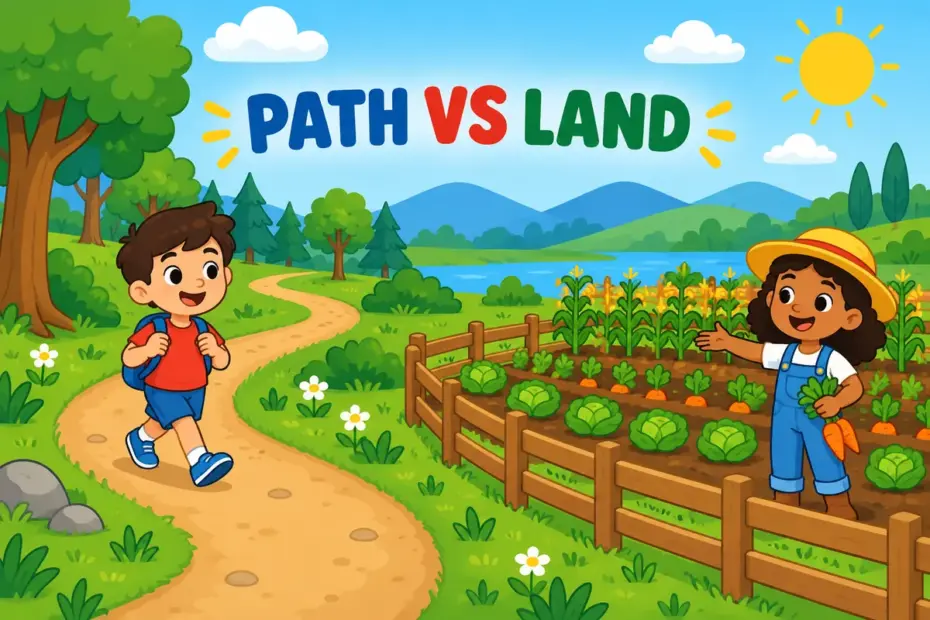
Track vs tract comes down to shape: use track for a path, a route or the act of following, and tract for a measured area of land, a body system or a short pamphlet. A forest trail is a track, while a wide stretch of forest is a tract. The words sound alike but share no meaning.
Track vs tract at a glance
- Track is a noun and a verb; tract is only a noun.
- Track means a path, a route, marks left behind, or the act of following.
- Tract means a measured area of land, a system of organs, or a pamphlet.
- Track answers where something goes; tract answers how much land or which system.
- The commonest error is writing a large track of land for a large tract of land.
Track vs tract: the master comparison
The two words part company at the first question you ask of them. Track is about a line of movement, while tract is about an extent of something. The table sets the contrast out across the criteria that decide real sentences. For a full treatment of the first word, see the page on track in a sentence.
| Criterion | track | tract |
|---|---|---|
| Primary meaning | A path, a route or the act of following | A measured area of land |
| Second meaning | A rail line, a song or a course | A system of organs, or a pamphlet |
| Part of speech | Noun and verb | Noun only |
| Typical phrase | A muddy track; track a parcel | A tract of forest; the digestive tract |
| How it is measured | Followed, laid or worn | Measured in acres or described by region |
| Common pairing | Track and field | A tract of land |
| Memory hook | Share it with a running track | Hide it in tractor, which works the land |
What does track mean?
Track is a noun meaning a path, a route, the marks left by movement, a rail line or a song, and it is also a verb meaning to follow or monitor. The Cambridge entry for track lists the path sense first, because a physical line of movement underlies the rest. To follow a trail is the everyday way to say the same thing without the technical edge that track can carry.
| Sense | Plain meaning | Example sentence |
|---|---|---|
| Path or trail | A rough path worn by use | We followed a narrow track to the lake. |
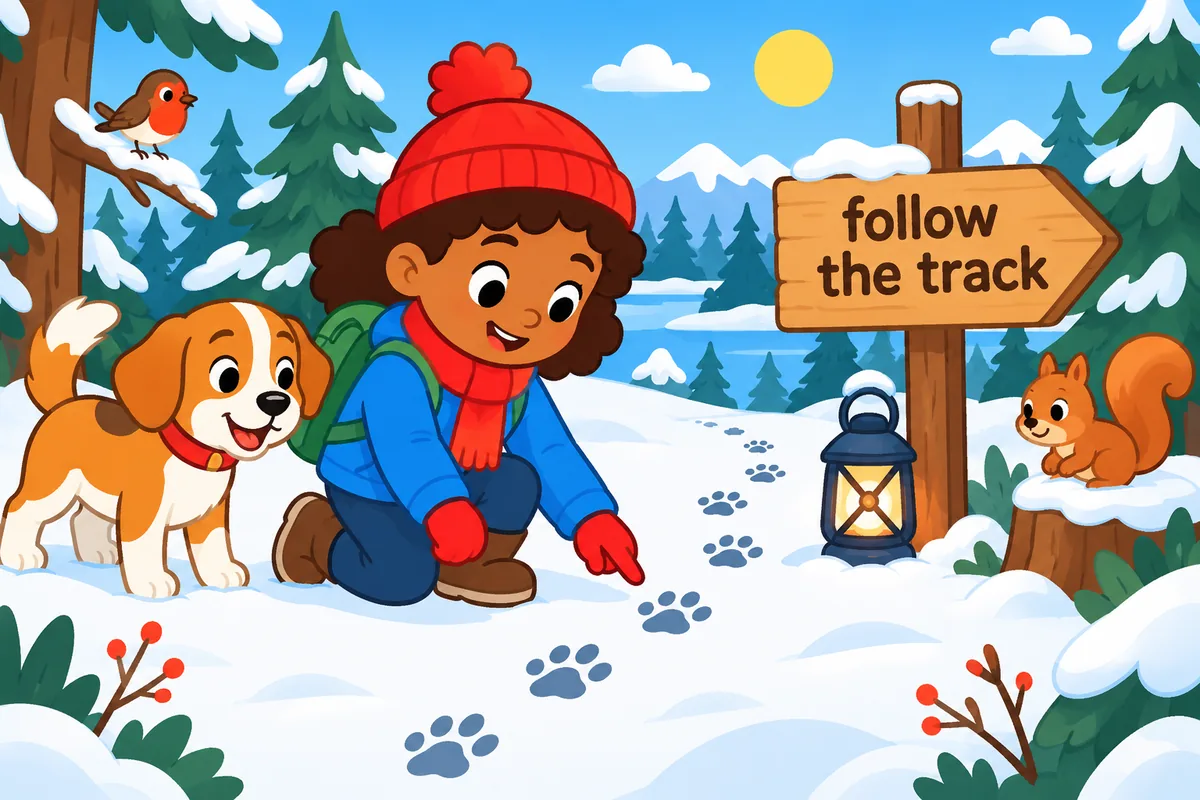
| Marks left behind | Prints or traces of movement | The fox left tracks across the snow. |
| Route or course | The line something follows | The storm changed track overnight. |
| Rail line | The metal line a train runs on | The track was closed for repairs. |
| Song | One recording on an album | The final track is the best one. |
| Verb: follow | Follow and monitor progress | The app tracks your daily steps. |
What does tract mean?
Tract is a noun meaning an area of land, a system of connected organs, or a short written work, usually persuasive. The Cambridge entry for tract records the land sense and the body sense, which are the two a reader meets most often. A large expanse of land and a region are close in meaning, but tract suggests a bounded and measurable piece rather than a general area.
| Sense | Plain meaning | Example sentence |
|---|---|---|
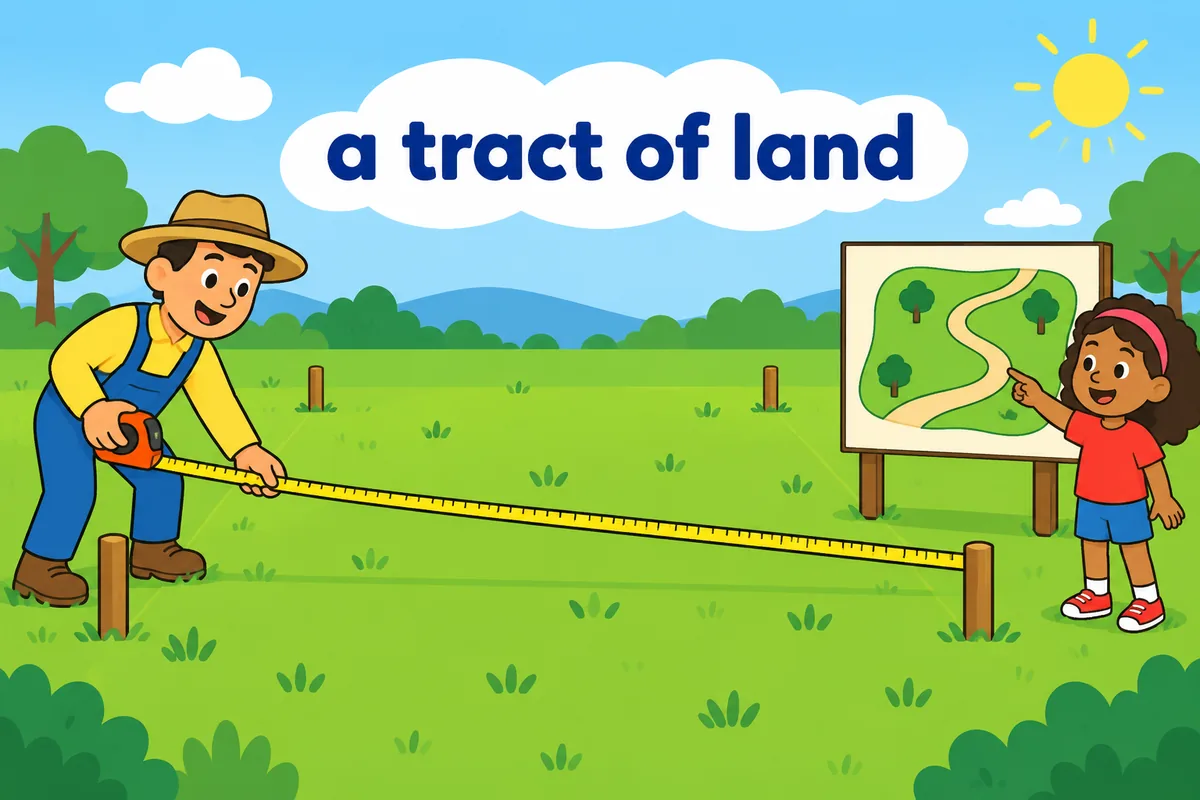
| Area of land | A large, defined stretch of land | They bought a tract of woodland. |
| Body system | A connected set of organs | The digestive tract breaks down food. |
| Pamphlet | A short written work, often persuasive | She handed out a political tract. |
| Dated: treatise | A formal written treatment of a subject | The old tract argued for reform. |
One limitation is worth stating. Tract is not a general word for land you happen to own: it names a sizeable, defined piece, so a small garden is never a tract. In the body sense, tract is technical and belongs in medical writing, where a plainer word such as passage would sound imprecise.
Which should you use?
Match the word to what the noun actually is, and the choice makes itself. The five situations below cover the cases that cause most doubt.
| Situation | Use | Why |
|---|---|---|
| You are following marks or progress | track | The word carries the idea of a path or a trace. |
| You are measuring a stretch of land | tract | A tract is an area, counted in acres. |
| You mean a song on an album | track | Tracks are listed one by one on a release. |
| You mean part of the digestive system | tract | The body system is always a tract. |
| You mean a short persuasive booklet | tract | A pamphlet of argument is a tract. |
Track in a sentence: examples across contexts
Track appears wherever something is followed, whether that something is an animal, a parcel or a tune. These seven sentences show the range.
| Context | Example sentence | Why this works |
|---|---|---|
| Hiking | We followed a muddy track beside the river. | The physical path sense. |
| Nature | Deer tracks crossed the frosty field. | Marks left by movement. |
| Technology | The app tracks your parcel from depot to door. | The verb meaning to follow progress. |
| Transport | A fallen tree blocked the railway track. | The rail sense with a concrete cause. |
| Music | The opening track sets the mood of the album. | The song sense. |
| Sport | She broke the record on the home track. | The running venue sense. |
| News | The hurricane changed track and headed north. | The route sense for a moving system. |
Tract in a sentence: examples across contexts
Tract appears in property writing, biology and history, and it always names an extent or a system. These seven sentences keep within those senses.
| Context | Example sentence | Why this works |
|---|---|---|
| Land | The farmer sold a tract of land near the coast. | The core land sense. |
| Property | Developers built a new tract of houses outside town. | An American use for planned housing. |
| Biology | Fibre passes slowly through the digestive tract. | The body-system sense. |
| Medicine | The infection spread along the respiratory tract. | Technical medical register. |
| Publishing | The pamphlet was a short political tract. | The persuasive booklet sense. |
| History | The reformer wrote a tract against the trade. | The dated written-work sense. |
| Geography | A vast tract of desert stretches to the border. | The land sense with a size word. |
Word forms and grammar of track and tract
Track inflects as a noun and a verb, while tract stays a noun and simply takes a plural. The table also flags tractable, which looks like tract but means manageable. A delivery route and a parcel both belong with track, because they involve following something to a place.
| Form | Part of speech | Example |
|---|---|---|
| track | noun, singular | The track leads to the farm. |
| tracks | noun, plural | Animal tracks dotted the mud. |
| tracked | verb, past and past participle | The system tracked every delivery. |
| tracking | verb, present participle | They are tracking the storm closely. |
| tract | noun, singular | A tract of forest runs to the ridge. |
| tracts | noun, plural | Long tracts of coastline remain wild. |
| tractable | adjective, different word | The problem turned out to be tractable. |
Common mistakes with track and tract
- Incorrect:
They own a large track of land.Correct: They own a large tract of land. Rule: an area of land is a tract. - Incorrect:
The parcel’s tract shows it reached the depot.Correct: The parcel’s track shows it reached the depot. Rule: a route or record of movement is a track. - Incorrect:
Fibre moves through the digestive track.Correct: Fibre moves through the digestive tract. Rule: the body system is a tract. - Incorrect:
Tract the delivery on the website.Correct: Track the delivery on the website. Rule: the verb meaning follow is track. - Incorrect:
She wrote a track calling for reform.Correct: She wrote a tract calling for reform. Rule: a short persuasive booklet is a tract.
Practice using track and tract
Work through the seven items, then check the reasons with the answers.
- Fill the gap: The old railway ______ was overgrown with weeds.
- Choose the better word: They bought a large (track / tract) of forest.
- Correct the error: Fibre travels slowly through the digestive track.
- Build a sentence: use tract of land about a farmer selling part of a field.
- Spot the difference: which word fits a song on an album?
- Rewrite: The app follows your steps. Use track as a verb.
- Choose: The reformer published a (track / tract) against the new law.
Answers
- track — a rail line is a track, not a tract.
- tract — an area of forest is measured as a tract.
- Fibre travels slowly through the digestive tract — the body system is a tract.
- Model answer: The farmer sold a small tract of land beside the river.
- track — a recording is a track.
- The app tracks your steps — the verb meaning follow is track.
- tract — a short persuasive booklet is a tract.
The bottom line
Track vs tract is settled by asking what the noun really is. Use track for a path, a route, a song or the act of following, and tract for a measured area of land, a system of organs or a short pamphlet. When in doubt, remember that a track is followed and a tract is owned or measured.
Frequently asked questions about track vs tract
Is it track or tract of land?
The correct phrase is tract of land. A tract is a defined, measurable area, so a farmer sells a tract and a developer builds on a tract. Track of land is a common error, because the two words sound identical, but a track is a path or a route and cannot name an area.
What does tract mean in the body?
In the body, a tract is a connected passage or set of organs that shares one function. The digestive tract and the respiratory tract are the commonest examples. This sense is technical, so it belongs in medical and biology writing rather than everyday conversation, where passage or system may read more naturally.
Can track and tract ever be used the same way?
No. The two words never share a meaning. Track always involves a line of movement, a path or the act of following something. Tract always names an extent, such as an area of land, a body system or a pamphlet. Because they sound alike, the swap is easy to make and hard for a spell-checker to catch.
How do I remember track vs tract?
Link each word to a clue. Track contains the idea of a running track or a rail, so it is the word for paths and following. Tract hides inside tractor, which works the land, so it is the word for an area of land. The clue turns a spelling choice into a picture.