Using “Ugly Duckling” in a Sentence
The phrase ugly duckling can refer literally to the familiar fairy-tale character, but it is also used figuratively for someone or something that is initially considered unattractive or unsuccessful and later admired. A sentence usually makes that change in perception clear.
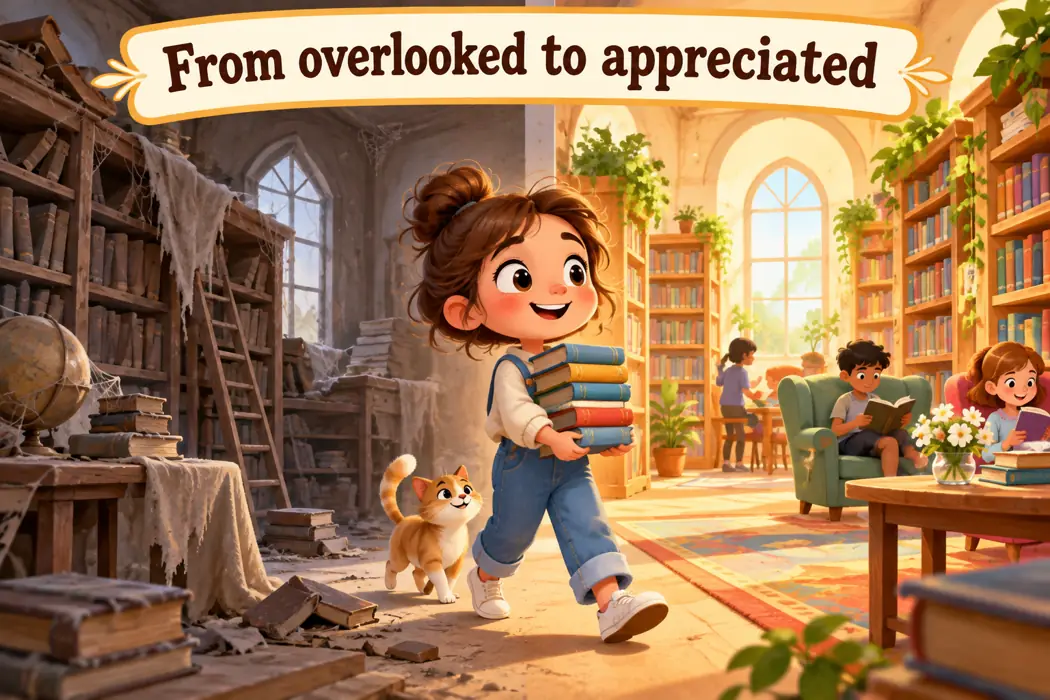
- “Once dismissed as the ugly duckling of the neighborhood, the old library became its most welcoming public space after renovation.”
- “The small phone was the ugly duckling of the product line until its long battery life won over customers.”
- “The quiet first-year player seemed like the team’s ugly duckling, then surprised everyone with her skill and leadership.”
Use the expression thoughtfully when describing a real person. Even when the sentence ends with success or admiration, the word ugly can sound hurtful or suggest that someone’s appearance determines their value. If appearance is not important to the point, words such as overlooked or underrated may be clearer.
Show the change in perception
The expression usually contains an implied before-and-after story. At first, the subject is judged unfavorably; later, people recognize a quality they missed or see a transformation. If your sentence only means that something is unpopular, the phrase may leave the reader waiting for a later change. Make that contrast clear with words such as once, initially, later, or eventually.
“The warehouse was once the ugly duckling of the street, but its renovation made it a lively community center.” This original example gives the unfavorable first impression, the later improvement, and the setting in which the comparison applies. The expression is figurative because a building is not a young bird. The surrounding details guide readers toward the intended meaning.
Useful sentence patterns
- The small theater was the ugly duckling of the district until its new program attracted an audience.
- Once treated as an ugly duckling, the prototype became the team’s most successful design.
- The essay compares the restored station to an ugly duckling that eventually finds appreciation.
- The narrator uses the ugly duckling image to explore exclusion and belonging.
- The story challenges the judgments that made its central character feel like an ugly duckling.
Common constructions include “the ugly duckling of” a group and “an ugly duckling” as a noun phrase. Of names the comparison group: a neighborhood, product range, or collection. The article a or an matters in a singular sentence. Write “an ugly duckling,” because ugly begins with a vowel sound, rather than “a ugly duckling.”
Literal story and figurative expression
When discussing the fairy tale, a writer may capitalize the words as a title: The Ugly Duckling. When using the expression as an ordinary description, lowercase is usual: “an ugly duckling.” A title identifies a particular work, while the everyday phrase draws on its familiar transformation pattern. The reader should be able to tell which use you intend.
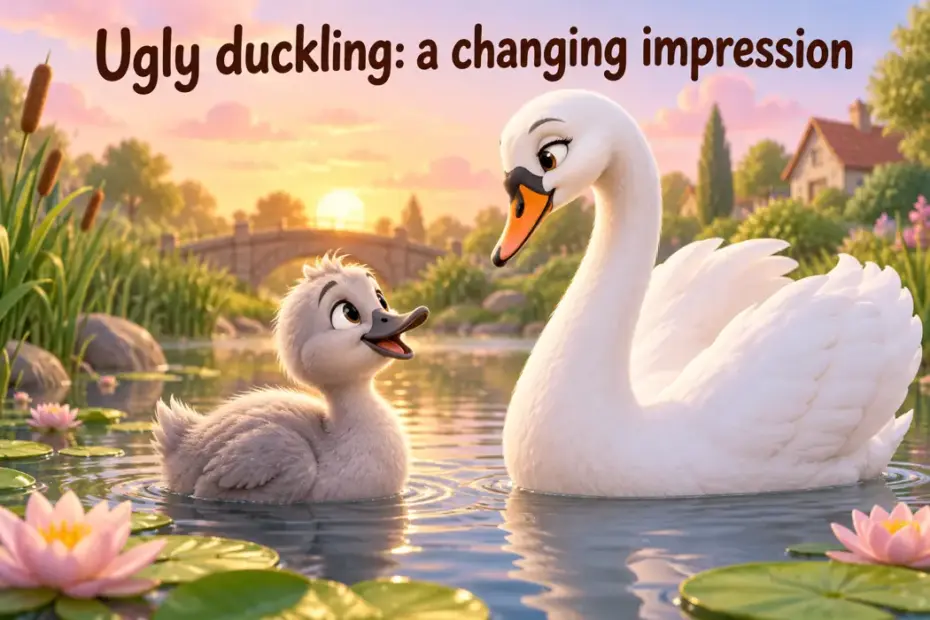
In Hans Christian Andersen’s story, the young bird is eventually recognized as a swan. The tale is not a biological claim that an ordinary duck changes species. In figurative writing, the emphasis falls on changing judgment, development, or recognition. Keeping that distinction clear helps learners understand the expression without treating its story image as a literal description of nature.
Ugly duckling, underdog, and late bloomer
An underdog is someone or something expected to lose or facing a disadvantage. A late bloomer develops a skill or quality later than expected. An ugly duckling emphasizes an unfavorable early impression followed by later admiration or success. These expressions can overlap in a particular story, but they do not highlight the same feature.
If your sentence concerns a team expected to lose a match, underdog may be more precise. If it concerns someone discovering a talent later in life, late bloomer may fit better. If the central point is that a once-unpromising design becomes admired, the ugly duckling image can work. Choose the expression according to the specific change you are describing.
Practice a clear, considerate example
Start with an object, place, or fictional project. Describe its initial reputation and a later improvement. “The neglected garden was the ugly duckling of the square until volunteers restored its paths and planted flowers.” This sentence explains why the figurative comparison is useful without making a judgment about a real person’s appearance.
Now replace the expression with overlooked or unpromising. Does the replacement preserve your main point more directly? If it does, the plainer wording may suit a factual report. If you are analyzing a story or deliberately using a familiar transformation image, ugly duckling can add a recognizable narrative pattern. The choice depends on purpose, audience, and tone.
Quick questions
Is ugly duckling a noun phrase? Yes. It can follow an article and serve as a subject or complement, as in “The old theater was an ugly duckling.” Does it always describe a person? No. It can describe a thing figuratively. Does it simply mean ugly? No. The familiar expression suggests later beauty, success, or appreciation, rather than only an unfavorable appearance.
See Cambridge Dictionary’s ugly duckling entry for the standard expression. The sentence examples and comparison exercises here are original illustrations designed to show its grammar and context.
Have you ever heard of the term “ugly duckling”? This phrase is often used to describe someone or something that initially appears unattractive or unpromising, but eventually transforms into something beautiful or successful.
In literature and everyday life, the concept of the ugly duckling can be seen as a metaphor for personal growth, resilience, and the potential for greatness that lies within all of us.
7 Examples Of Ugly Duckling Used In a Sentence For Kids
- The ugly duckling was teased by other ducks.
- The ugly duckling felt sad and lonely.
- But one day, the ugly duckling transformed into a beautiful swan.
- Everyone was surprised by the transformation of the ugly duckling.
- The ugly duckling learned to embrace its uniqueness.
- From an ugly duckling, it became a graceful swan.
- The story of the ugly duckling teaches us to be kind to everyone.
14 Sentences with Ugly Duckling Examples
- Ugly duckling struggled to fit in with the fashionable crowd at the college party.
- The once ugly duckling in the classroom surprised everyone with a stunning makeover.
- The transformation of the ugly duckling into a confident, stylish student was remarkable.
- Despite being considered the ugly duckling of the group, she always maintained a positive attitude.
- Ugly duckling found solace in books and studies, away from the judgmental eyes of classmates.
- The journey of the ugly duckling resonated with many students who faced similar challenges.
- The message of self-acceptance and embracing one’s uniqueness was evident in the story of the ugly duckling.
- The protagonist’s struggles as an ugly duckling mirrored the challenges faced by many students in college.
- The moral of the ugly duckling story taught students the importance of looking beneath the surface.
- The shy student blossomed into a social butterfly, shedding the ugly duckling persona.
- The theme of transformation and growth in the ugly duckling tale resonated deeply with college students.
- Overcoming insecurities, the ugly duckling found her voice and identity in the academic community.
- The revelation that the ugly duckling was actually a swan was a powerful metaphor for self-discovery and acceptance.
- The story of the ugly duckling served as a reminder to not judge others based on appearances.
How To Use Ugly Duckling in Sentences?
To use Ugly Duckling in a sentence, begin by introducing the main idea or subject of your sentence. For example, “The story of the Ugly Duckling teaches us valuable lessons about self-acceptance and inner beauty.” Here, the main word “Ugly Duckling” is used to refer to the character in the famous fairy tale by Hans Christian Andersen.
You can also use “Ugly Duckling” to describe someone who undergoes a transformation or grows into their full potential. For instance, “Anna felt like the Ugly Duckling of her friend group, but over time, she blossomed into a confident and successful individual.” In this context, “Ugly Duckling” is used figuratively to represent someone who undergoes a positive change.
Another way to use “Ugly Duckling” is to compare something or someone to the character in terms of appearance or behavior. For example, “The old house on the corner may look like an Ugly Duckling now, but with some renovations, it has the potential to become a beautiful home.” Here, “Ugly Duckling” is used to suggest a potential for improvement or transformation.
By incorporating “Ugly Duckling” into your sentences in these various ways, you can add depth and imagery to your writing while also referencing a well-known character or concept.
Conclusion
In conclusion, the concept of the ugly duckling is a powerful and relatable one. It symbolizes transformation, growth, and ultimately discovering one’s true beauty and potential. The various examples of sentences involving the ugly duckling showcase the universality of this theme across different contexts and narratives.
Whether it’s used metaphorically to describe personal discovery and self-acceptance, or to emphasize the beauty of inner qualities over external appearances, the ugly duckling resonates with audiences of all ages. Through its enduring message of transformation and self-realization, the story of the ugly duckling continues to inspire and uplift individuals, reminding them that there is always potential for change and beauty to be found within.