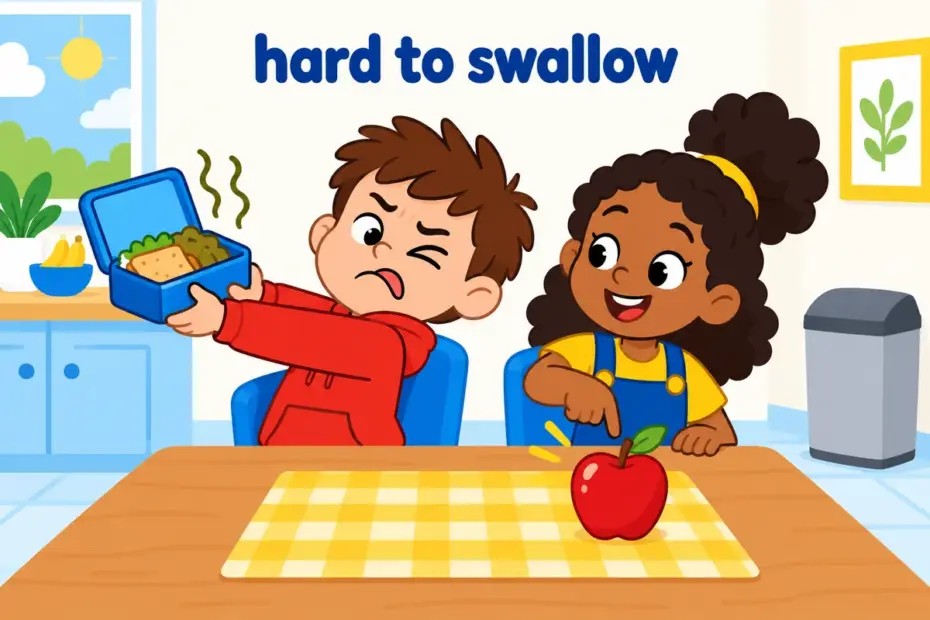
Unsavory describes something unpleasant to taste or smell, or, far more often, something morally distasteful and disreputable. To use unsavory in a sentence, place it before the noun it judges: “The deal left him with some unsavory partners.” It is an adjective, so it never takes an object.
Unsavory at a glance
- Unsavory is an adjective; the usual forms are unsavory and, in British English, unsavoury.
- It carries two senses: physically unpleasant to taste or smell, and morally distasteful.
- The moral sense dominates in modern use and often describes people, deals and reputations.
- Unsavory is gradable, so rather unsavory and the most unsavory both work.
- The commonest error is using it for mild inconvenience, where unpleasant is the plainer word.
What does unsavory mean?
Unsavory is an adjective meaning unpleasant to taste or smell, or, in its dominant modern sense, morally distasteful and likely to damage a reputation. The Cambridge entry for unsavory records both senses, and the examples below keep them apart: one judges a flavour, the other judges conduct.
| Sense | Plain meaning | Example sentence |
|---|---|---|
| Physical | Unpleasant to taste or smell | An unsavory smell drifted from the bin. |
| Moral | Distasteful or disreputable | She refused to sign the unsavory contract. |
| Reputational | Associated with doubtful people or acts | Unsavory rumours followed the club for years. |
One honest limitation: unsavory is a word of judgement, not of fact, so it fits an editorial or a personal view better than a neutral report. When the point is merely that something is disagreeable, unpleasant is plainer and makes a smaller claim, and a dubious arrangement is doubtful rather than disgusting.
The two senses share one shape of feeling, which is why the word moved so easily from food to conduct. Both describe something a person wants to push away, whether the cause is a spoiled smell or a spoiled reputation, and both imply that contact should be avoided. That single idea of revulsion is what separates unsavory from the neutral vocabulary of paperwork and process.
How do you use unsavory in a sentence?
Unsavory is an attributive adjective, so it sits before the noun it describes, and it can also follow a linking verb in the predicate. It never takes a preposition of its own; the judgement is built into the word.
| Pattern | Example | What it signals |
|---|---|---|
| unsavory + noun | He kept unsavory company in those years. | The judgement attaches directly to a person or thing. |
| noun + is + unsavory | The whole arrangement was unsavory. | A predicate use, common in reported opinion. |
| rather / most + unsavory | The methods were rather unsavory. | Degree, because the adjective is gradable. |
| leave / find + object + unsavory | They found the terms unsavory. | An object complement, common in business writing. |
| unsavory + business noun | Unsavory practices cost the firm its licence. | The default modern collocation about conduct. |
Notice that the moral sense usually needs a noun with a human or institutional flavour, such as characters, dealings, tactics or reputation, while the flavour sense needs something edible or smelly. Feed the adjective the wrong kind of noun and it sounds strange.

Unsavory in a sentence: examples across contexts
Unsavory moves easily from a kitchen to a courtroom, and the moral sense now dominates. The ten sentences below keep one adjective while changing the register and the kind of judgement it makes, alongside its opposite savory and the food-specific unappetizing.
| Context | Example sentence | Why this works |
|---|---|---|
| Home kitchen | An unsavory odour filled the fridge when the power returned. | The literal sense fits food that has spoiled. |
| Restaurant review | The dish looked pretty but tasted distinctly unsavory. | Taste is the object of judgement, not the diner. |
| Workplace email | We cannot proceed with a supplier of unsavory reputation. | Reputation is the default moral collocation. |
| News report | The inquiry uncovered unsavory dealings between the two firms. | Dealings suits the disreputable sense exactly. |
| Legal writing | The court described the scheme as unsavory but lawful. | Distinguishes moral distaste from illegality. |
| Political comment | Voters tired of the campaign’s unsavory tactics. | Tactics names conduct rather than flavour. |
| Personal letter | I admit his friends struck me as unsavory. | The predicate form softens a personal judgement. |
| Academic prose | Historians have noted the unsavory origins of the fund. | A measured academic register still allows the word. |
| Product warning | Unsavory smells in a new mattress usually fade within days. | The literal sense appears in consumer advice. |
| Conversation | That whole episode was pretty unsavory, if you ask me. | Degree and a spoken register mark everyday use. |
| Advertising copy | The brand cut ties with an unsavory influencer. | The moral sense drives a commercial decision. |
| Book review | The memoir reveals an unsavory side to a famous name. | The reputational sense suits a critical review. |
The one context where unsavory rarely appears is a laboratory report: there the smell would be described as unpleasant or acrid, because the moral overtones of unsavory would be out of place.
Unsavory vs unpleasant: which should you use?
Unsavory and unpleasant both express dislike, but unsavory adds a flavour of disgust and, in the moral sense, a hint of wrongdoing. The table separates the two.
| Attribute | unsavory | unpleasant |
|---|---|---|
| Range | Narrow: taste, smell or moral distaste | Broad: any disagreeable experience |
| Typical nouns | characters, dealings, reputation, smell | weather, surprise, task, truth |
| Intensity | Stronger; suggests disgust | Milder; suggests discomfort |
| Moral charge | Often implies wrongdoing | None |
| Register | Formal to journalistic | Neutral and everyday |
Verdict: choose unpleasant when the sentence simply records discomfort, and unsavory when the writer means that something is not only disagreeable but faintly disgusting or disreputable.
Word forms and grammar of unsavory
Unsavory inflects regularly and pairs with a British spelling that is identical in meaning. The table also lists a related form that is real but rare.
| Form | Part of speech | Example |
|---|---|---|
| unsavory | adjective (US standard) | The paperback told an unsavory tale. |
| unsavoury | adjective (British spelling) | The paperback told an unsavoury tale. |
| unsavorier / unsavoriest | comparative, non-standard | Avoid it; use more unsavory. |
| more / most unsavory | comparative and superlative | The second deal was even more unsavory. |
| unsavorily | adverb, rare | Rarely used; in an unsavory way is clearer. |
| unsavoriness | noun, rare | The unsavoriness of the whole affair troubled her. |
The British unsavoury shares the root and the meaning, so a reader who meets one spelling should recognise the other immediately.
Common mistakes with unsavory
- Incorrect:
The traffic was unsavory this morning.Correct: The traffic was unpleasant this morning. Rule: Unsavory needs taste, smell or moral distaste, not routine inconvenience. - Incorrect:
He unsavory the proposal.Correct: He found the proposal unsavory. Rule: Unsavory is an adjective, so it cannot act as a verb. - Incorrect:
The unsavory of the scheme worried them.Correct: The unsavoriness of the scheme worried them. Rule: A noun is needed after the, and that noun is unsavoriness. - Incorrect:
She was unsavory with the result.Correct: She was unhappy with the result. Rule: Unsavory describes the thing judged, not a person’s mood. - Incorrect:
The court found the scheme unsavory and therefore illegal.Correct: The court found the scheme unsavory but lawful. Rule: Unsavory is a moral judgement, not a legal verdict. - Incorrect:
The plan was unsavory and therefore unpopular.Correct: The plan was unpopular and therefore shelved. Rule: Unsavory means distasteful, not merely disliked or unsuccessful.
Formal alternatives to unsavory
Unsavory is a judgement word, so controlled writing often replaces it with a term that names the problem. The table maps the usual contexts to a more precise choice.
| Context | Plainer or more exact choice | Why it is better |
|---|---|---|
| A minor inconvenience | unpleasant | Keeps the claim modest and avoids moral overtones. |
| Doubtful conduct | disreputable | Names the damaged standing that unsavory implies. |
| Illegal conduct | unlawful or fraudulent | States the legal fact that unsavory only hints at. |
| Intense disgust | repugnant | Matches a stronger reaction than unsavory conveys. |
| Bad taste or smell | unappetizing or acrid | Describes the sensation for a technical reader. |
Choosing the exact word protects a writer from a common complaint: unsavory can sound like an accusation without evidence, because it blends distaste with a hint of wrongdoing. When a claim must stand up to challenge, the precise alternative is the safer sentence, and the milder word keeps the writer’s judgement proportionate to the facts.
Practice using unsavory
Attempt each item, then check the reasoning so the choice becomes automatic.
- Fill the gap: A distinctly ______ smell came from the drain.
- Choose the better word: The delay was (unsavory / unpleasant) but hardly disgraceful.
- Correct the error: They were unsavory about the new timetable.
- Build a sentence: use unsavory dealings about a business partner.
- Spot the register: which belongs in a court judgment — the scheme was unsavory but lawful, or the scheme was yuck?
- Rewrite with a plainer word: The whole business was unsavory. Use unpleasant.
Answers
- unsavory — the smell sense fits an adjective of disgust.
- unpleasant — no moral distaste is present, so the broader word is correct.
- They were unhappy about the new timetable — unsavory judges a thing, not a person’s mood.
- Model answer: The investor pulled out after reports of unsavory dealings.
- The scheme was unsavory but lawful — a judgment keeps the formal adjective and separates distaste from legality.
- The whole business was unpleasant — plainer, but it drops the hint of wrongdoing that unsavory supplies.
The bottom line
Use unsavory in a sentence when something is unpleasant to taste or smell, or, more commonly, morally distasteful and disreputable. Two nuances decide most uses: the moral sense needs nouns such as characters, dealings or reputation, and unsavory is a judgement rather than a legal finding, so it can sit beside lawful. Where the point is simple discomfort, unpleasant stays plainer and safer.
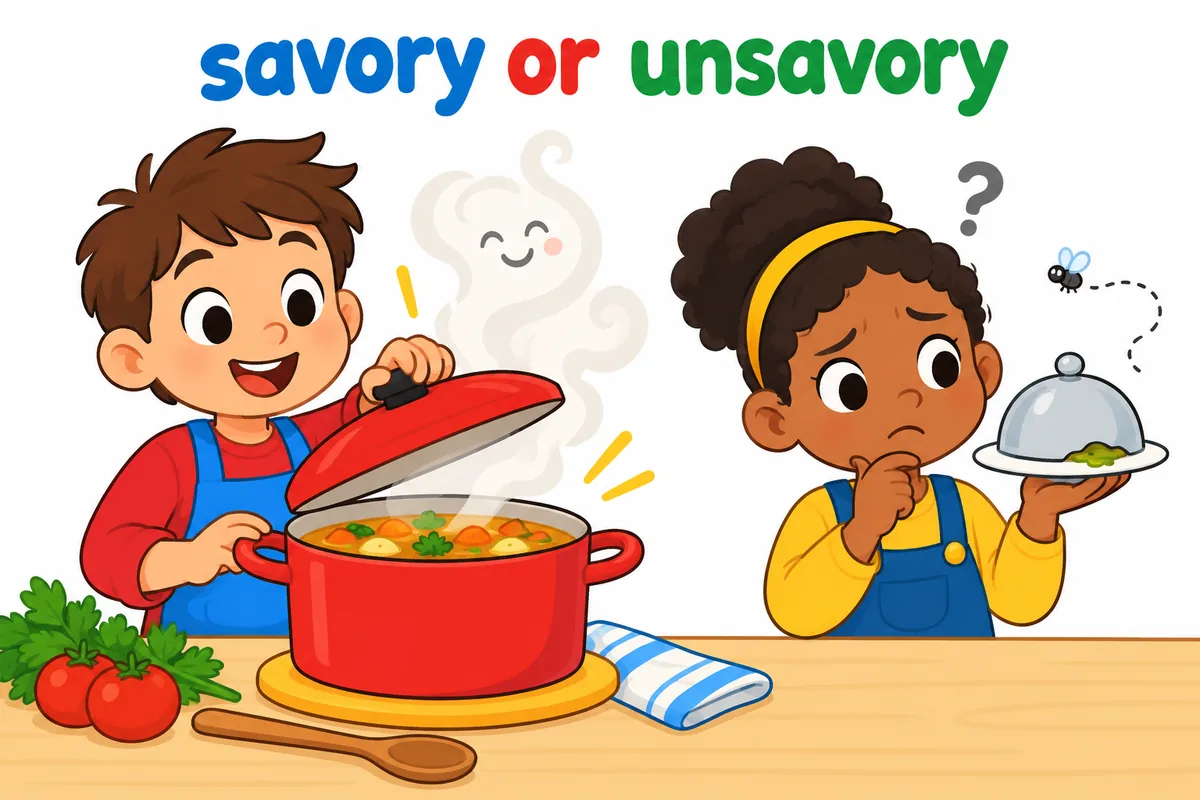
Frequently asked questions about unsavory
Is unsavory a formal word?
Unsavory sits in the middle register and leans formal in its moral sense, where it appears in journalism and business writing. In everyday speech people often say unpleasant or shady instead. The literal taste sense is neutral enough for consumer writing, so the word is not restricted to any one formality level.
What is the difference between unsavory and unsavoury?
Unsavory and unsavoury are the same word spelled for two markets. American English uses unsavory, while British English uses unsavoury. The meaning, the grammar and the two senses are identical, so a reader who meets either spelling should treat them as interchangeable in everything but geography.
Can unsavory describe a person?
Unsavory usually describes a person’s character, associates or reputation rather than the person directly, so unsavory company and an unsavory reputation sound natural. Calling a single person unsavory is possible but harsh, because the word implies lasting disrepute rather than one poor decision.
Does unsavory mean illegal?
No. Unsavory expresses moral distaste, not a legal finding, so conduct can be unsavory and still lawful. Courts often use the word precisely to signal that something is distasteful without being prohibited. If illegality is the point, choose unlawful, illegal or fraudulent instead, and keep unsavory as the separate moral comment.