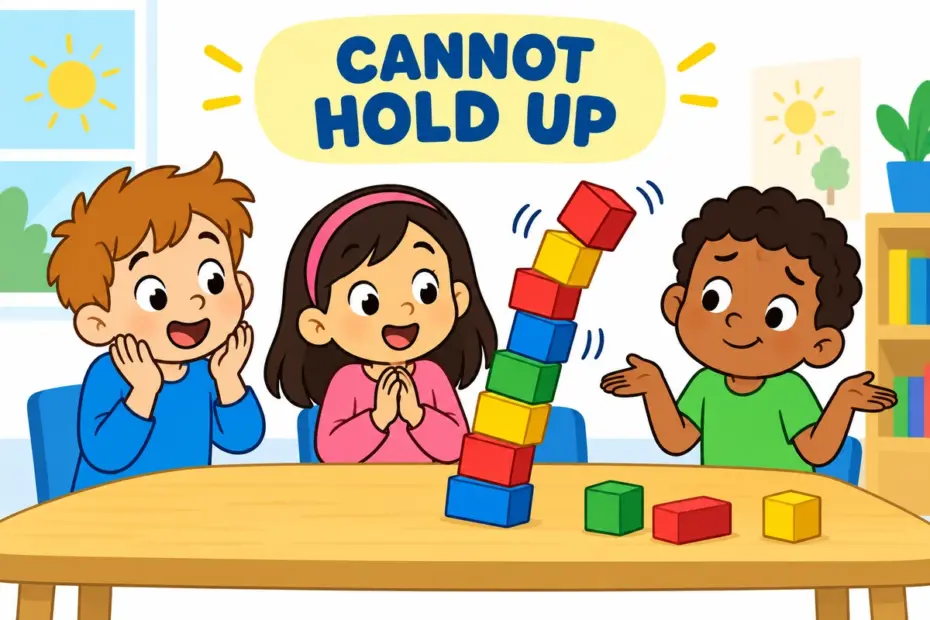
Untenable is an adjective meaning impossible to defend or maintain against criticism or pressure. To use untenable in a sentence, attach it to the position, plan or situation that cannot hold any longer: “The minister resigned after his explanation became untenable.”
Untenable at a glance
- Untenable is an adjective; it has the rare adverb form untenably and the noun form untenability.
- It has two senses: impossible to defend, and impossible to bear or continue.
- The usual pattern is a position, argument, theory or situation followed by be or become and then untenable.
- Common subjects are argument, position, theory, situation, arrangement and policy.
- The commonest error is mistaking it for untenanted, which means empty of tenants and is unrelated.
What does untenable mean?
Untenable is an adjective meaning not able to be defended or maintained. The Cambridge entry for untenable records both the logical and the endurance senses, and the difference decides the sentence: one judges a claim, the other judges a situation. Where a claim simply lacks evidence, baseless is the more exact word.
| Sense | Plain meaning | Example sentence |
|---|---|---|
| Impossible to defend | An argument or position cannot be upheld | The theory became untenable after the new test. |
| Impossible to continue | A situation cannot be endured or kept going | The arrangement proved untenable within a month. |
| Impossible to justify | A rule or policy cannot be supported | The policy was untenable once the costs were known. |
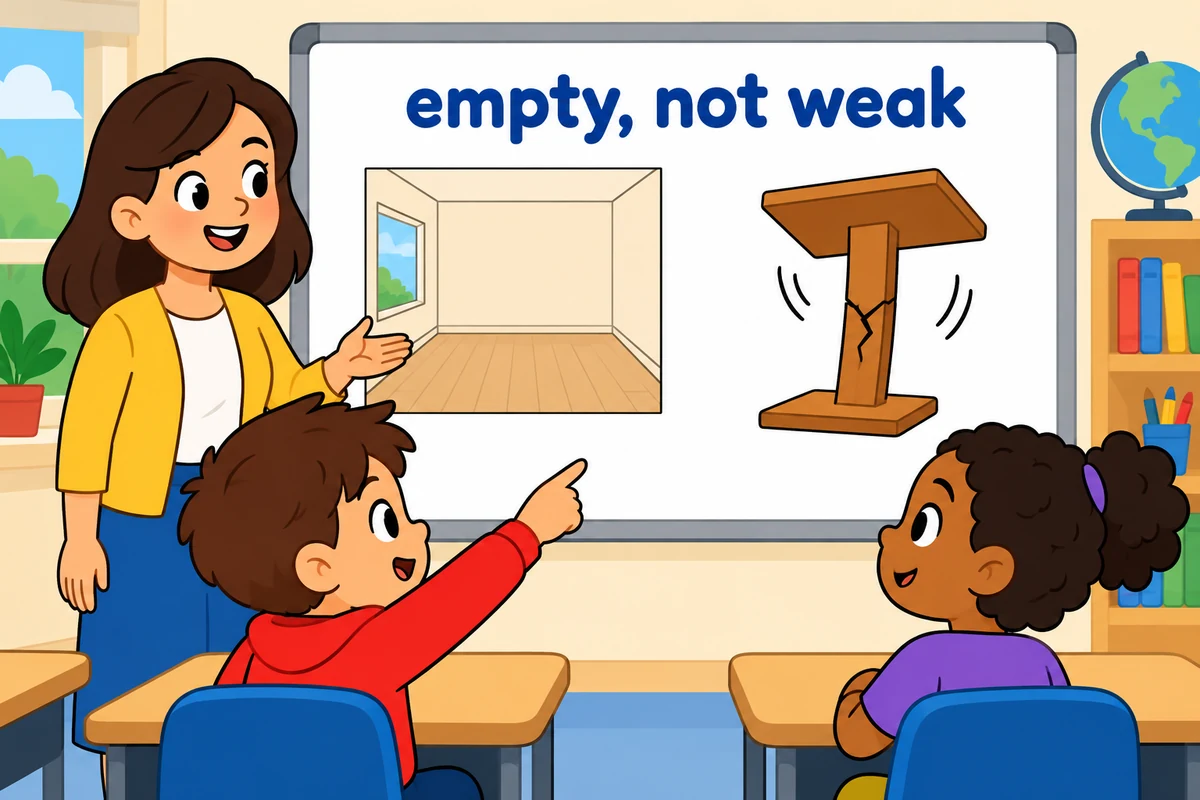
Untenable states a judgement rather than measuring difficulty. A hard task is not untenable unless it cannot be upheld or borne at all, and a person is never untenable; a person holds or defends a position that is. The near-twin untenanted means only that a building has no tenants, and it shares no meaning with this word.
How do you use untenable in a sentence?
Untenable is a predicative adjective, so it normally follows be or become, or follows a verb such as find, hold or render that passes judgement on its object. The four patterns below cover almost every real sentence.
| Pattern | Example | What it signals |
|---|---|---|
| subject + be/become + untenable | The position became untenable after the leak. | The thing itself collapses under pressure. |
| find/hold + object + untenable | The board found the proposal untenable. | A body judges something impossible to defend. |
| untenable + noun | That is an untenable argument. | The adjective sits before its noun. |
| render/leave + object + untenable | The ruling rendered the policy untenable. | Names the cause of the collapse. |
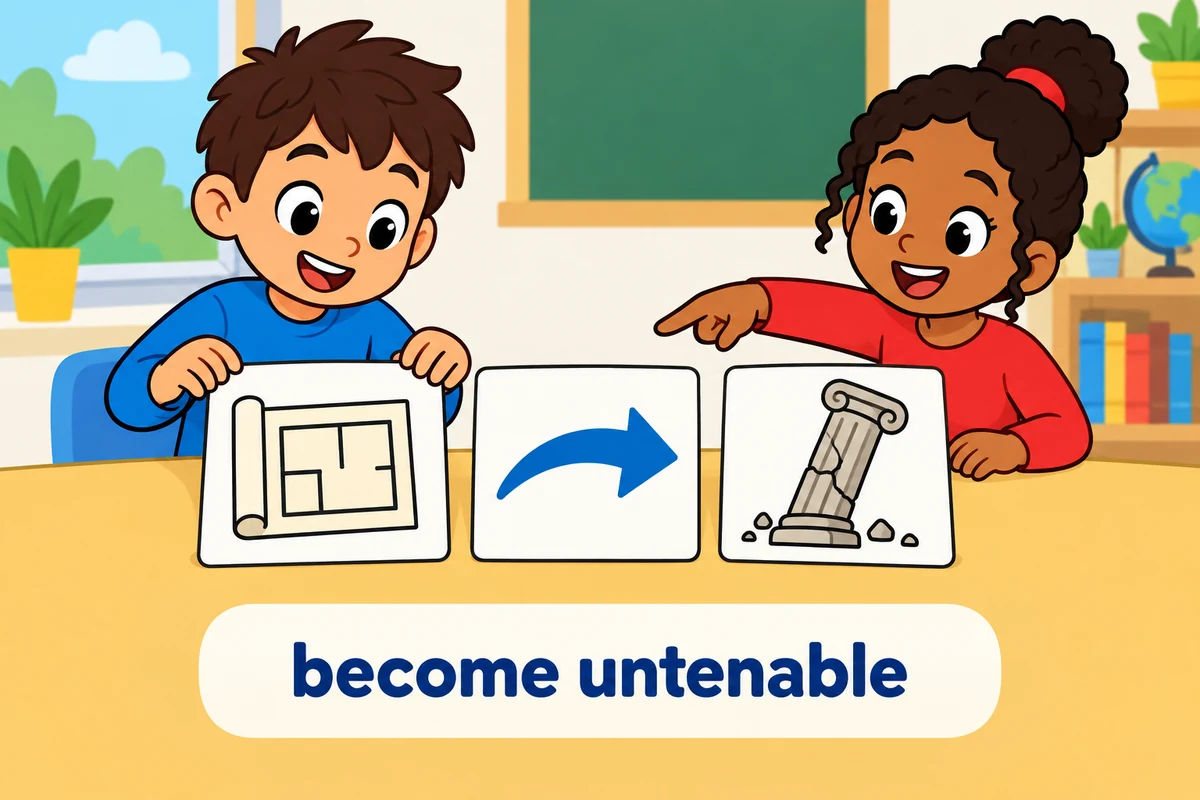
Untenable in a sentence: examples across contexts
Untenable keeps one meaning while its subject changes from a chess plan to a peace deal. The nine sentences below show which noun it qualifies in each setting.
| Context | Example sentence | Why this works |
|---|---|---|
| Classroom debate | The team dropped the claim once it became untenable. | A position collapses, which is the core sense. |
| Workplace email | This schedule is untenable without two more staff. | An arrangement cannot be maintained. |
| News report | The mayor called the funding gap untenable. | A public figure judges a situation impossible to sustain. |
| Legal writing | Counsel argued that the charge was untenable. | A legal claim cannot be defended. |
| Academic prose | The hypothesis became untenable in the light of replication. | Evidence removes the support for a theory. |
| Business strategy | The board declared the old pricing model untenable. | A model is judged unsustainable. |
| Diplomacy | Both sides described the truce as untenable. | An agreement is judged impossible to keep. |
| Sports writing | The defensive setup was untenable after the injury. | A tactic cannot hold for the rest of the match. |
| Conversation | Living there became untenable, so they moved. | The endurance sense, in plain speech. |
Untenable vs indefensible
Untenable and indefensible both mean without defence, but they judge different things. Recall too that impractical describes something hard to carry out, not something that cannot be upheld at all.
| Attribute | untenable | indefensible |
|---|---|---|
| Main meaning | Cannot be maintained or endured | Cannot be justified or excused |
| What it describes | A position, theory or situation | An action, decision or behaviour |
| What it implies | It will collapse under pressure | It is simply wrong |
| Endurance sense | Yes, a situation can be unbearable | No |
| Register | Formal, common in news and debate | Formal and moral |
Verdict: choose untenable when a position or arrangement cannot be kept up, and indefensible when an action cannot be excused. Where the problem is weak evidence rather than a collapse, invalid or baseless is the sharper term.
Word forms and grammar of untenable
Untenable is a plain adjective, and its family is small. The table also separates two look-alike words that share the letters untena but not the meaning; the unrelated untenanted is the one readers most often confuse it with.
| Form | Part of speech | Example |
|---|---|---|
| untenable | adjective | The position is untenable. |
| more untenable | comparative adjective | The second excuse is more untenable than the first. |
| most untenable | superlative adjective | That was the most untenable claim of all. |
| untenably | adverb, rare | The rule was untenably vague. |
| untenability | noun | The untenability of the plan soon emerged. |
| untenantable | adjective, different meaning | The flat was untenantable, so nobody could rent it. |
| untenanted | adjective, different meaning | The house stood untenanted for a year. |
Common mistakes with untenable
- Incorrect:
The office is untenable, so we rent it out.Correct: The office is untenanted, so we rent it out. Rule: Untenanted means empty of tenants; untenable means impossible to defend. - Incorrect:
The manager was untenable after the scandal.Correct: The manager’s position became untenable after the scandal. Rule: Positions, arguments and situations are untenable; a person only holds one. - Incorrect:
The task was untenable because it was long.Correct: The task was impractical because it was long. Rule: Untenable means cannot be upheld or borne, not merely time-consuming. - Incorrect:
The plan is very untenable to defend.Correct: The plan is untenable. Rule: Untenable already carries the negative and normally takes no to-infinitive. - Incorrect:
After three sleepless nights the noise was untenable.Correct: After three sleepless nights the noise was unbearable. Rule: In everyday description, unbearable is plain; untenable belongs to arguments and situations.
Practice using untenable
Work through the six items, then read the reasons rather than only the answers.
- Fill the gap: The minister’s position became ______ once the recording was published.
- Choose the better word: The decision to ignore the warning was (untenable / indefensible).
- Correct the error: The old warehouse is untenable, so the council will sell it.
- Build a sentence: use find + object + untenable about a committee rejecting a budget.
- Spot the register: which belongs in a legal memo — the charge is untenable, or the charge is totally not going to work?
- Rewrite with the noun: The committee agreed the plan could not be defended. Use untenability.
Answers
- untenable — a position that cannot be defended is exactly what the adjective describes.
- indefensible — the subject is a decision, which indefensible judges; untenable fits a position or situation better.
- The old warehouse is untenanted — an empty building has no tenants, which is a different word.
- Model answer: The committee found the proposed budget untenable and asked for a rewrite.
- The charge is untenable — a legal memo keeps the formal adjective and avoids slang.
- The committee agreed on the untenability of the plan — the noun names the state of being indefensible.
The bottom line
Use untenable in a sentence when a position, theory or situation cannot be defended or kept up any longer. The two decisions that settle most examples are whether you are judging a claim or an arrangement, and whether the failure comes from argument or from endurance. Keep the word on the position itself, and let an action be indefensible instead.
Frequently asked questions about untenable
Is untenable a formal word?
Untenable belongs to formal writing and appears freely in news reports, editorials and academic prose. It fits a resignation statement or a legal memo without sounding stiff. In casual speech people usually reach for cannot be defended or cannot go on, which carry the same meaning in plainer words.
What is the opposite of untenable?
The direct opposite is tenable, meaning able to be defended or maintained. A tenable argument stands up to challenge, and a tenable plan can be kept going. English also uses defensible, sustainable and workable as everyday opposites, each stressing a slightly different test of whether something can hold.
Can a person be untenable?
A person is not normally called untenable, because the word judges a position or situation rather than a human being. Writers say the manager’s position became untenable, not the manager was untenable. Keeping the person separate from the position is both more precise and less harsh than the compressed version.
Does untenable mean impossible?
Not quite. Untenable means impossible to defend or continue, so it is narrower than impossible. A difficult task can be possible yet still feel unbearable. The word always implies that something has been challenged and cannot answer the challenge, which is why it fits arguments, theories, policies and agreements.
Do you ever find yourself using a word that sounds complex and intimidating, like “untenable,” but you’re not quite sure what it means? Fear not! In simple terms, “untenable” refers to something that is impossible to maintain or defend.
In everyday language, describing a situation, argument, or position as “untenable” means that it is not sustainable and cannot be justified or supported. Let’s explore how this word can be used to convey the idea of something being unworkable or indefensible.
7 Examples Of Untenable Used In a Sentence For Kids
- The house was untenable because it was falling apart.
- It is untenable to play outside when it is raining heavily.
- The old bridge is untenable and cannot be crossed.
- Sleeping on a bed filled with rocks would be untenable.
- Trying to balance a tall tower of blocks is untenable.
- Wearing shoes that are too tight is untenable.
- Climbing a tree without any branches is untenable.
14 Sentences with Untenable Examples
- Untenable situations arise when students skip class and then struggle to catch up on missed material.
- It is untenable to have unrealistic expectations for oneself and expect perfect grades without putting in the effort.
- The idea of living on junk food alone during exams is untenable for maintaining good health.
- It is untenable to ignore feedback from professors and not make necessary improvements in assignments.
- Procrastinating until the day before an exam is an untenable strategy for success.
- The notion of spending all night partying before an important test is untenable for achieving good grades.
- Relying solely on last-minute cramming is an untenable approach to learning and retaining information.
- It is untenable to believe that cheating is a viable solution when faced with academic pressure.
- Choosing to ignore mental health needs in favor of endless studying is untenable in the long run.
- The belief that skipping classes regularly will not affect academic performance is untenable.
- It is untenable to think that plagiarism will go unnoticed in today’s academic environment.
- Waiting until the last minute to start a project is an untenable situation that leads to unnecessary stress.
- The unrealistic expectation of maintaining a perfect work-life balance while pursuing higher education is untenable.
- The notion that academic success is solely dependent on natural intelligence and not hard work is untenable.
How To Use Untenable in Sentences?
To use the word Untenable in a sentence, simply follow these steps:
-
Understand the meaning of Untenable: The word Untenable is used to describe a situation, argument, or position that is not able to be maintained or defended due to being weak, illogical, or unsustainable.
-
Choose the context: Think of a situation where something is not acceptable or cannot be supported due to its inherent flaws or contradictions.
-
Construct your sentence: Form a sentence where you want to convey the idea of something being unsustainable, indefensible, or not viable.
Example Sentence: “His claim that the Earth is flat became untenable when confronted with scientific evidence proving otherwise.”
In the example sentence above, the word Untenable is used to describe a claim that cannot be maintained or supported due to contradicting evidence.
Remember, using Untenable in a sentence can help to emphasize the idea that a particular argument, belief, or position is not feasible or logical. Keep practicing using the word in different contexts to become more comfortable incorporating it into your vocabulary.
Conclusion
In summary, the examples of sentences with the keyword “untenable” clearly illustrate situations or ideas that are unsustainable, unjustifiable, or impossible to maintain. These sentences convey the idea that the circumstances described are not viable or reasonable and cannot be supported for long.
From the examples provided, it is evident that using the word “untenable” emphasizes the impracticality or instability of a particular situation. Whether referring to a logical argument, a political position, or a physical condition, “untenable” suggests that the status quo is not sustainable or defensible. Overall, incorporating this word into sentences adds a sense of urgency and highlights the necessity for change or reassessment.


