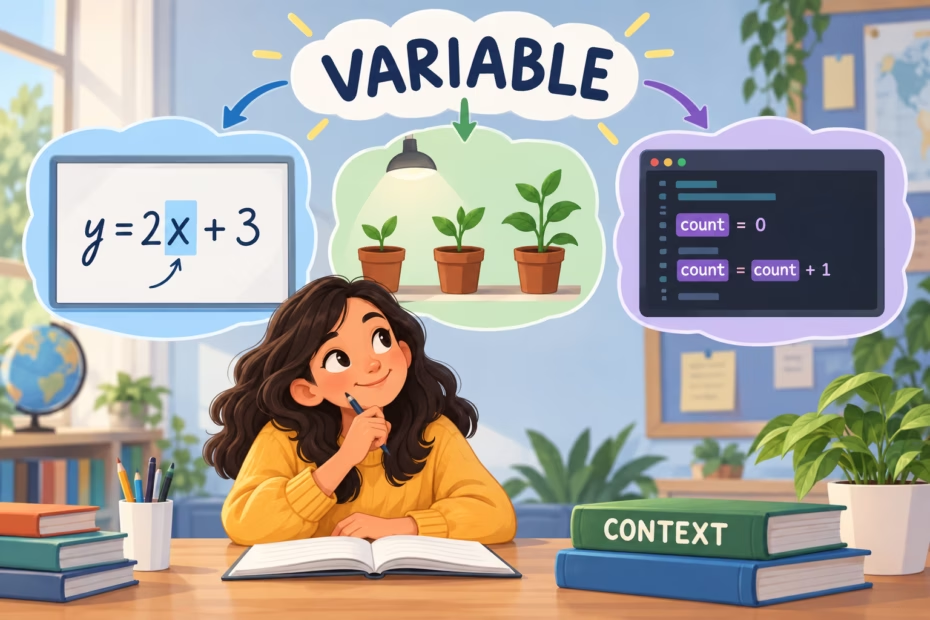
In “variable in a sentence,” variable can be a noun or an adjective. As a noun, it names a quantity, factor, or symbol that can take different values; as an adjective, it means changing or different. Context tells you which meaning is intended, as in “solve for the variable” and “variable weather.”
Variable at a glance
- Noun in math: a symbol such as x that represents a value.
- Noun in research: a characteristic or condition that can vary or be measured.
- Noun in programming: a named reference used to work with a value in code.
- Adjective: likely to change or differ, as in “variable temperatures.”
- Key distinction: an unknown is a value to find; a variable is the symbol or quantity that can represent values.
How is variable used as a noun or adjective?
A quick grammar clue is the word around it. In “the variable changed,” variable is a noun; in “variable weather,” it is an adjective modifying weather. Cambridge Dictionary lists both the noun sense—a number, amount, or situation that can change—and the adjective sense “likely to change.”
| Sentence | Part of speech | Meaning |
|---|---|---|
| “The forecast predicts variable winds.” | Adjective | The winds are expected to change. |
| “The monthly payment is variable.” | Adjective | The amount may differ from month to month. |
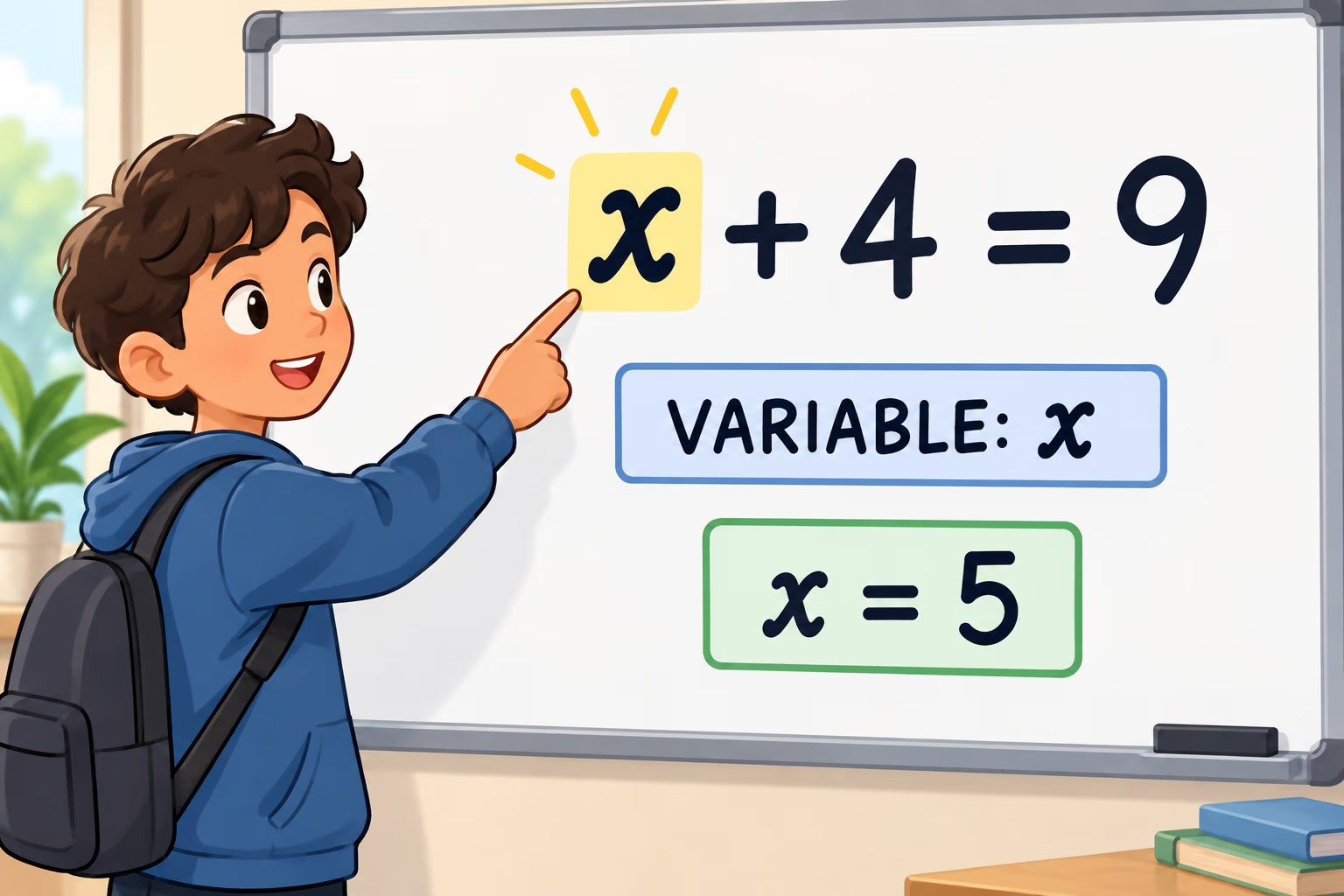
| “Solve for the variable in x + 4 = 9.” | Noun | x represents the value to find; here, x = 5. |
| “The study recorded plant height as a variable.” | Noun | Plant height is a measurable characteristic. |
| “The experiment changed one variable at a time.” | Noun | A condition was deliberately changed for comparison. |
| “The company reviewed its variable costs.” | Adjective | The costs change with the activity or amount produced. |

Does a variable always mean an unknown number?
No. A variable can be an unknown value, but it can also stand for a quantity that changes or a measured characteristic. In x + 4 = 9, x is the unknown you solve for, so x = 5. In a formula such as y = 2x + 3, x can take different values and determine the corresponding value of y. The symbol is a variable in both cases, but only the first example asks you to find an unknown.
In a research study, a variable might be a participant’s age, a room’s temperature, or a plant’s height. Some variables are manipulated; others are observed or held constant. A variable does not have to be an unknown, and researchers do not manipulate every variable they study.
How do variables work in an experiment?
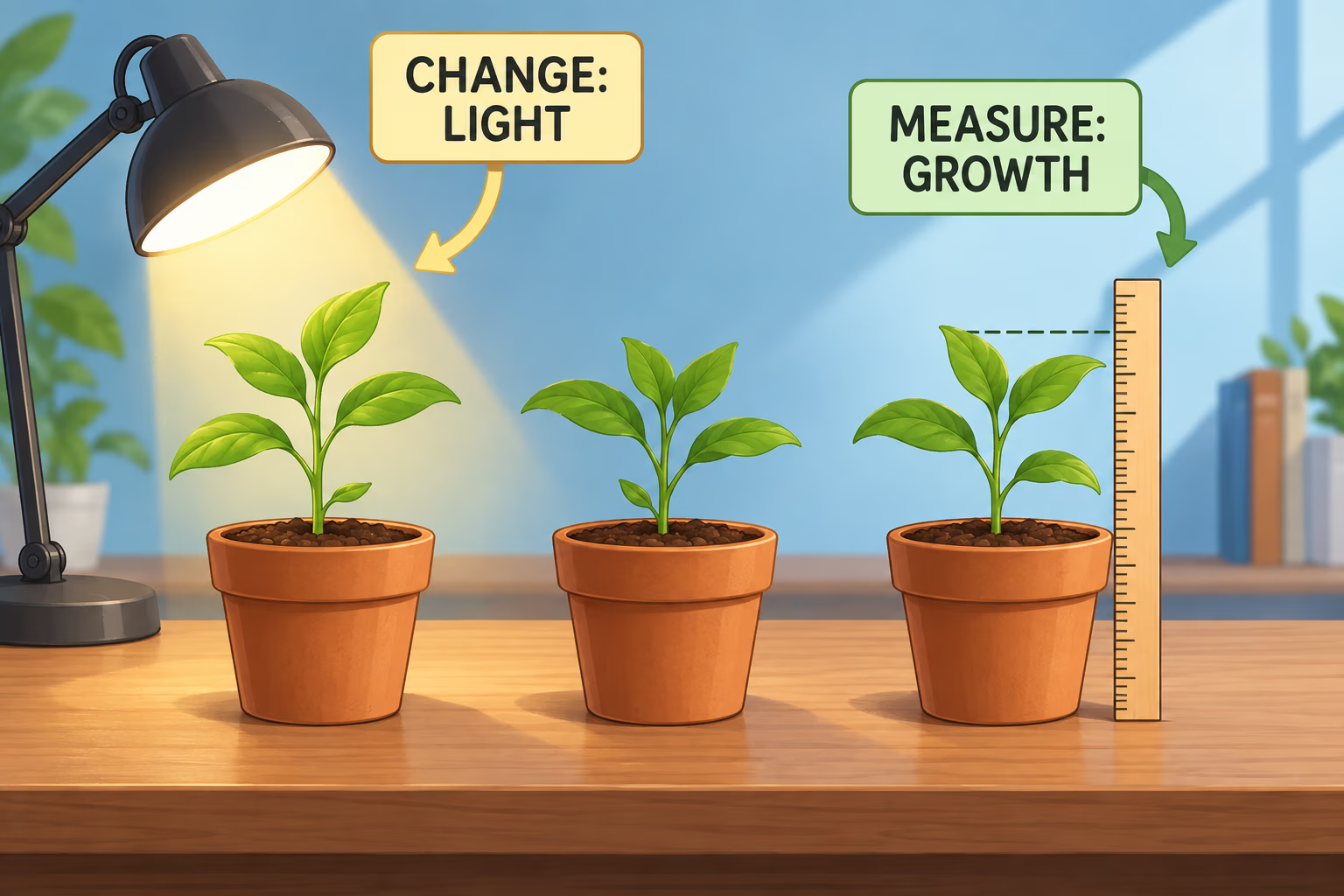
In a controlled experiment, the independent variable is the condition the researcher changes, the dependent variable is the outcome measured, and controlled variables are conditions kept the same. For example, a student might change how much light plants receive, measure their growth, and keep water and soil consistent. This helps clarify what changed and what was observed.
The labels depend on the experiment’s question. If the question is whether light affects plant height, light exposure is the independent variable and plant height is the dependent variable. In an observational study, researchers may record both factors without changing either one.
What does variable mean in programming?
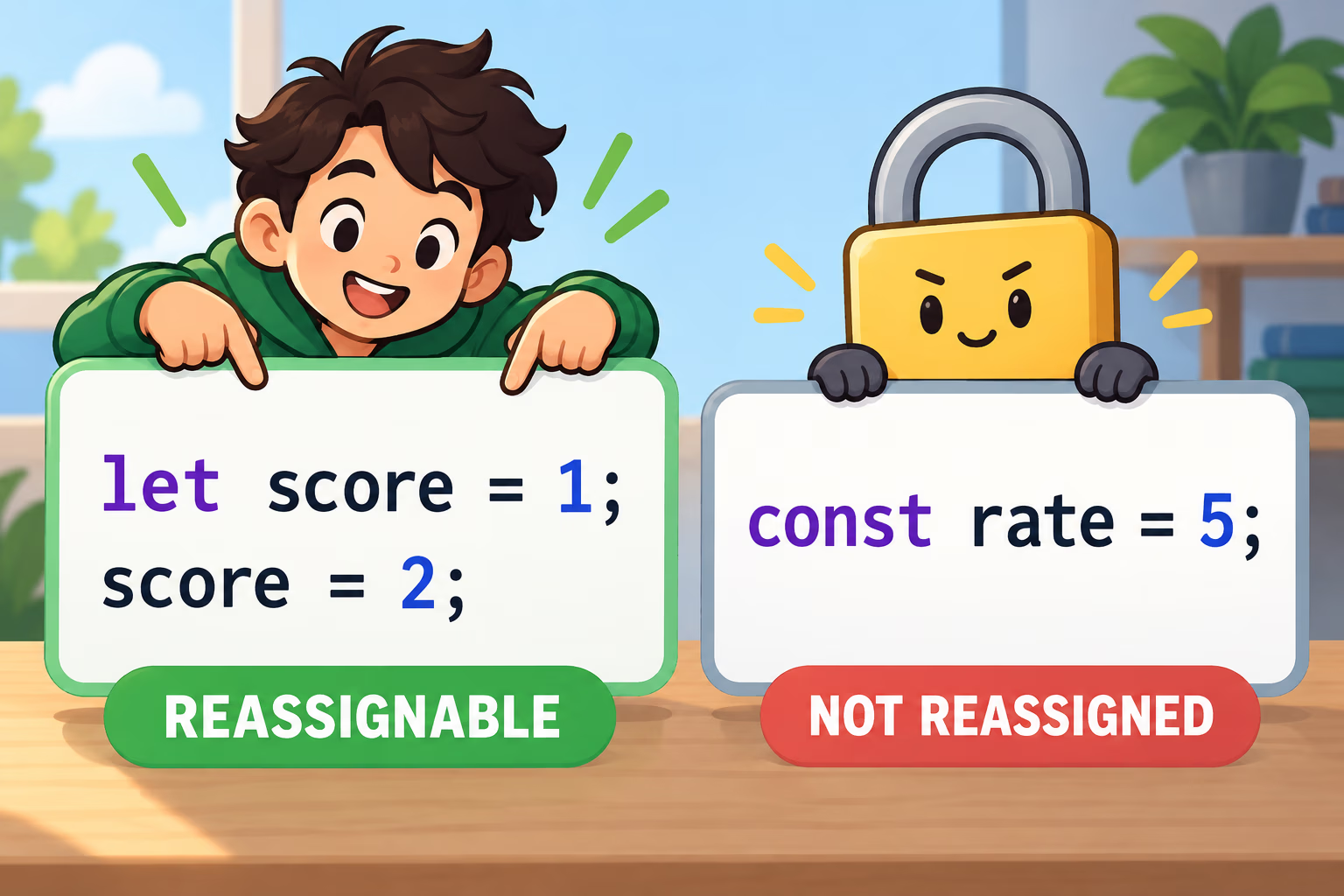
In programming, a variable is a named way to refer to a value so code can use it. In JavaScript, let score = 1; creates a variable that can be reassigned: score = 2;. The word variable does not mean that every value must change, however: JavaScript’s const declaration creates a binding that cannot be reassigned.
For example, const rate = 5; cannot later be reassigned to another number. If a const variable refers to an object, the binding remains fixed even though some properties of the object can still change. This JavaScript distinction is language-specific; other programming languages have their own rules.
More sentences with variable
- “Her work schedule is variable, so she checks it each week.”
- “The variable pressure changed during the test.”
- “In this formula, n is a variable for the number of items.”
- “The researchers measured sleep duration as one variable.”
- “We kept the room temperature constant while testing the variable.”
- “Variable rainfall can affect the timing of a harvest.”
Use variable in a sentence
To use variable clearly, decide whether you mean a changing quality, a measurable factor, or a symbol in a formula. Put the adjective before the thing that changes (“variable weather”), or use the noun for a value or factor (“the variable in the equation”). The original examples below are preserved as published, with notes to clarify where their math, research, and programming explanations need more precision.
The source material below is preserved exactly as published. Some statements simplify the term: a mathematical variable can stand for an unknown to solve for or a quantity that can vary, but these are related rather than identical ideas; researchers do not manipulate every variable; and some examples use variable as an adjective. In JavaScript, a variable declared with const cannot be reassigned. Use the distinctions above when applying the original examples.
7 Examples Of Variable Used In a Sentence For Kids
- Variable is something that can change in a math problem.
- We can use variables like x and y to solve equations.
- Let’s find out the value of the variable in this math problem.
- A variable can be a letter or a symbol in a math equation.
- Practice using variables in math to get better at it.
- Can you tell me what the variable represents in this equation?
- Using variables makes solving math problems more fun.
14 Sentences with Variable Examples
- When conducting experiments in the science lab, it’s important to identify and control every variable.
- The success of a statistical analysis often depends on how well you manipulate the variables in the equation.
- In computer programming, a variable is used to store data that can be changed throughout the program.
- Understanding the relationship between independent and dependent variables is crucial in academic research.
- When solving mathematical equations, it’s essential to substitute the known variables correctly.
- Variable cost analysis is a key component of managerial accounting for making strategic business decisions.
- As a college student, it’s important to adapt to the variable workload each semester.
- The efficacy of a scientific study can be compromised if researchers fail to account for all variables.
- Economic models often include multiple variables to simulate real-world scenarios accurately.
- To excel academically, one must learn how to manage the variable distractions that come with college life.
- Variable interest rates can make it challenging for students to budget for loan repayments.
- When designing experiments, it’s important to clearly define the independent and dependent variables.
- The value of a variable can greatly impact the outcome of a mathematical equation.
- In statistics, a variable is any characteristic or quantity that can be measured or counted.
How To Use Variable in Sentences?
Variable is a term used in sentences to represent a placeholder for a number, value, or concept that can change or vary. When using a variable in a sentence, it is important to understand its purpose and how it can be applied correctly.
To use a variable in a sentence, you first need to choose a suitable variable name. This name should be descriptive of what the variable represents, making it easier for others to understand the variable‘s purpose in the sentence.
Next, you can introduce the variable into the sentence by assigning it a value. For example, “Let x represent the number of apples.” Here, “x” is the variable representing the number of apples.
When using the variable in the rest of the sentence, you can refer back to it by its name. For instance, “If x equals 5, then there are 5 apples.” This sentence demonstrates how the variable “x” is used to represent the quantity of apples.
By incorporating variables into your sentences, you can make your writing more flexible and adaptable. Variables allow you to express relationships and calculations effectively, making your sentences clearer and more concise. Practice using variables in your sentences to become more comfortable with this essential concept in writing.
Conclusion In programming, sentences with variables are essential for creating adaptable and dynamic code. Variables are symbols that represent values or data within a program, allowing developers to store and manipulate information easily. By using variables in sentences, programmers can create more flexible and efficient code, making it easier to update and maintain. Whether it’s assigning a value to a variable, updating it during the program’s execution, or using it in calculations, sentences with variables add a layer of versatility to a program. They enable developers to write code that can handle a range of inputs and scenarios, making their applications more robust and scalable. Understanding how to work with variables in sentences is fundamental for anyone looking to dive into the world of programming and create functional and adaptable software solutions.

