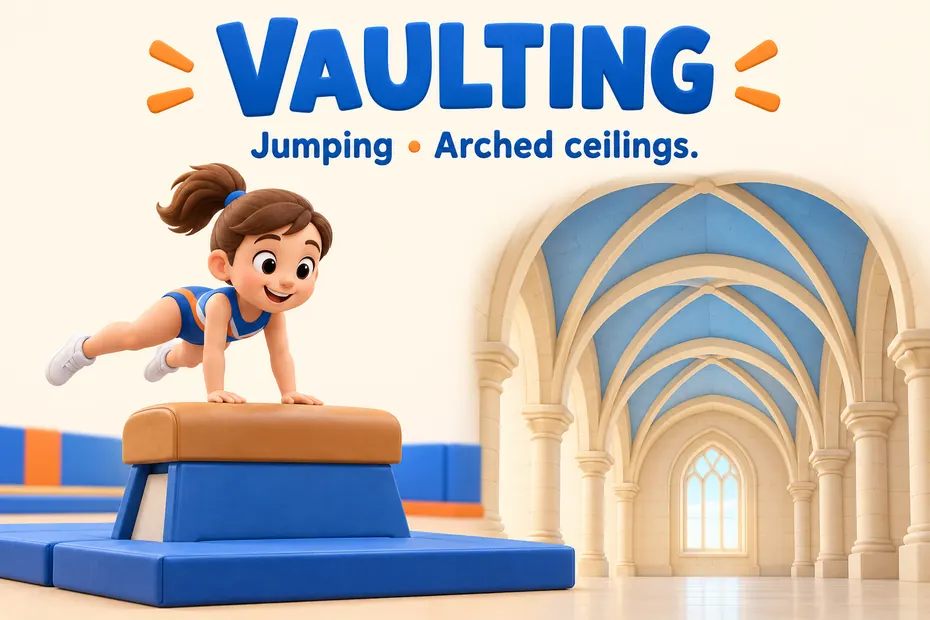
What does vaulting mean in a sentence?
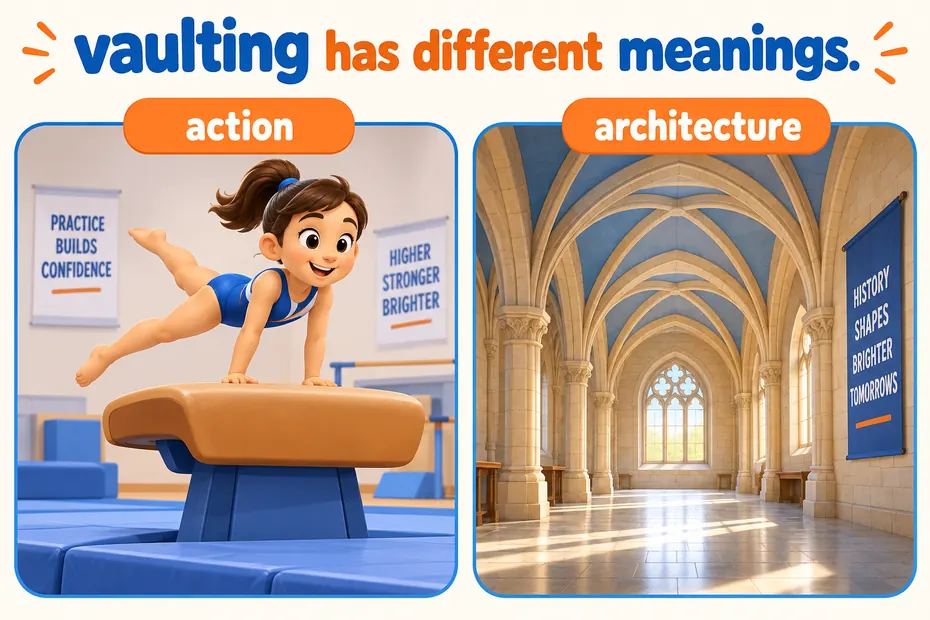
Vaulting can describe leaping, arched construction or something reaching ambitiously upward. “The athlete was vaulting over the apparatus” describes an action. “We admired the stone vaulting” refers to architecture. “Her vaulting ambition shaped the story” uses an adjective figuratively. The surrounding words tell you which meaning applies, so begin by identifying the subject and the activity or structure being described.
Key facts and an important correction
The opening of the original article below calls vaulting a literary device for adding extravagant language. That is not an established definition supported by the dictionary entries consulted here. A phrase such as vaulting imagination can describe an imagination that reaches boldly, but it does not make vaulting the name of a general writing technique. Use metaphor, hyperbole or elaborate diction only when those terms actually fit the writing feature you mean.
| Use | Example | Meaning in context |
|---|---|---|
| Verb form | The gymnast was vaulting. | Performing a leaping action |
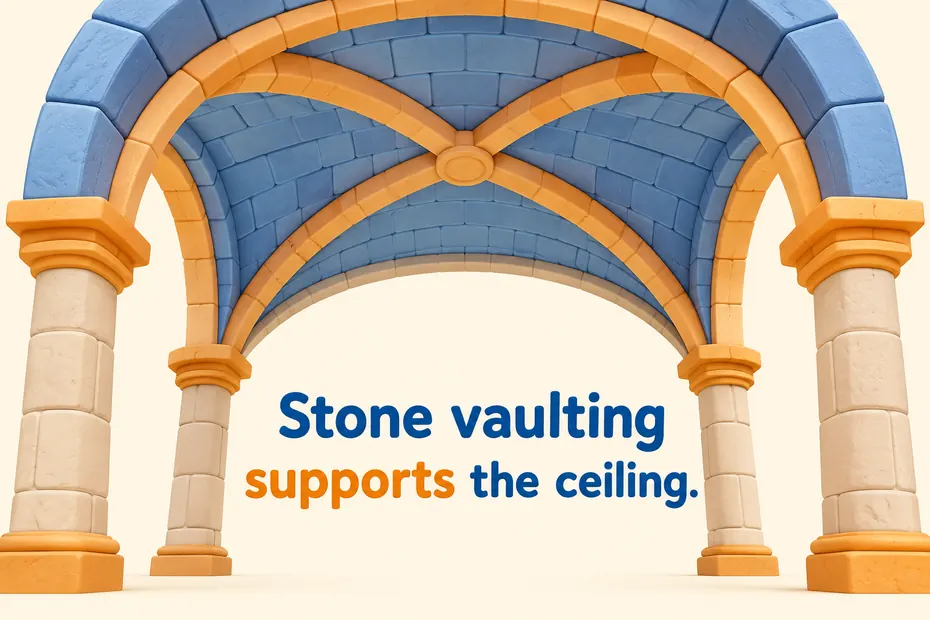
| Architecture noun | The hall has stone vaulting. | Arched construction |
| Descriptive adjective | The novel shows vaulting ambition. | Ambition reaching for great heights |
| Equipment modifier | A vaulting block stood nearby. | Equipment intended for vaulting |
Merriam-Webster’s vaulting entry distinguishes the construction noun and adjective senses. Its vault entry explains the related leaping and arching verbs. These distinctions provide a reliable starting point for choosing an example rather than assuming every sentence describes a single sport.
Grammar: vault, vaulted and vaulting
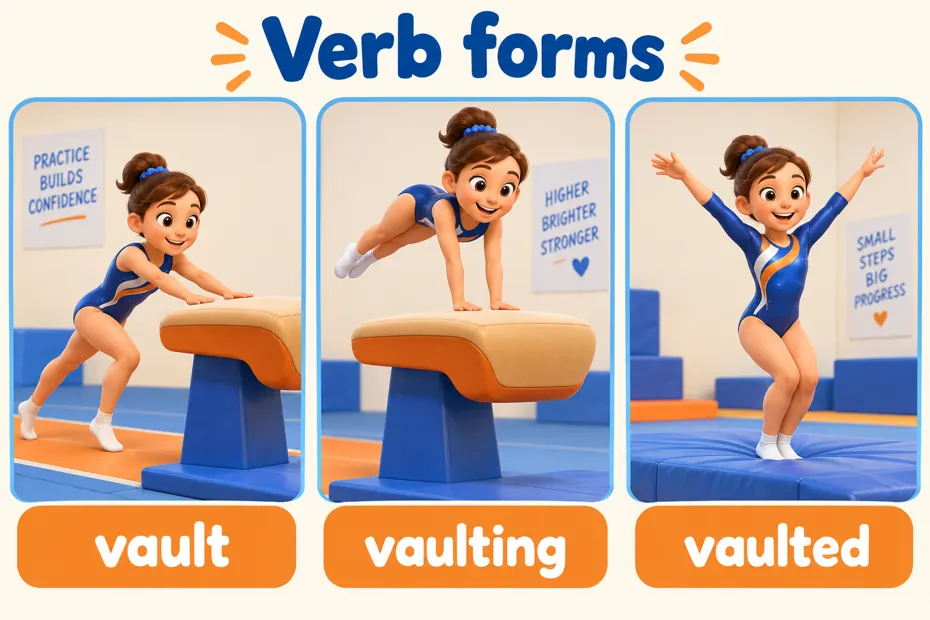
When vault means leap, vaulting is its -ing form: “The gymnast is vaulting.” The auxiliary is helps express an action in progress. Change the auxiliary for time: “The gymnast was vaulting” places that action in the past. For a completed past action, use vaulted: “The gymnast vaulted over the apparatus.” After can or will, use the base form: “The gymnast can vault.”
Vaulting can also name an activity: “Vaulting requires practice.” In that sentence, the activity is the subject. Compare it with “The athlete is vaulting,” where the athlete is the subject and is vaulting is the verb phrase. The word has the same spelling but a different role in the sentence. Ask what the sentence is about before labeling the grammar.
In architecture, the noun can refer collectively to vaulted construction: “The old hall’s vaulting impressed the visitors.” A related adjective is vaulted: “The old hall has a vaulted ceiling.” That describes the ceiling’s form. You would not normally replace vaulted with vaulting in that example, because “a vaulting ceiling” can suggest an action or a different figurative impression.
Choosing precise examples
- The coach watched the gymnast’s vaulting practice.
- The athlete was vaulting over the padded apparatus.
- The guide pointed out the hall’s stone vaulting.
- The architect studied the shape of the existing vaulting.
- A vaulted ceiling gave the room a sense of height.
- The novel’s main character was driven by vaulting ambition.
- The unexpected success vaulted the team into public attention.
- The diagram compared a flat ceiling with an arched vault.
The example about public attention is figurative: it describes a rapid rise as though it were a leap. The architecture examples refer to forms in a building. The athlete examples refer to movement. Adding a concrete noun such as gymnast, ceiling or ambition makes the intended sense much easier for a learner to identify.
Vaulting versus jumping and leaping
Jumping is a broad everyday word. Leaping often emphasizes a vigorous jump. Vaulting commonly suggests a leap over something, particularly with support from the hands or a pole. These words overlap, but they are not equally natural in every context. “The child jumped in a puddle” sounds ordinary; “The child vaulted in a puddle” does not express the same simple action naturally.
For the original butterfly example below, fluttering or flying from flower to flower is more natural than vaulting. For a kangaroo moving repeatedly across a field, hopping or bounding is usually clearer. A cat crossing a fence may be described as leaping or vaulting, depending on the movement the writer wants readers to picture. Choose a specific verb rather than substituting vaulting for every kind of motion.
Context for sports and figurative writing
Pole vaulting and gymnastic vaulting are recognizable sporting contexts, but high jump and hurdling should not simply be treated as alternate names for vaulting. A sentence can mention related jumping activities while keeping their names distinct. Likewise, a reference to vaulting on horseback provides a different context from an athlete using a pole or a stationary apparatus. Name the setting clearly.
The original suggestions about crossing gates, barriers or stairs are sentence examples, not training directions. A vocabulary lesson only needs to establish the meaning of the action. For a classroom rewrite, “The coach supervised vaulting practice” gives the word a useful setting without inviting readers to copy a hazardous shortcut.
Practice and frequently asked questions
Identify the sense: “The church’s vaulting was restored.” “The athlete was vaulting.” “The story explores vaulting ambition.” The answers are construction, action and figurative adjective. Then complete “Yesterday the athlete ___” with vaulted, and “The athlete can ___” with vault. These changes test grammar separately from the meaning.
Is vaulting a verb?
It can be a verb form, as in “She is vaulting.” It also occurs as a noun or adjective in other contexts.
What is vaulting in architecture?
It refers to vaulted construction, commonly associated with arched ceilings or roofs.
Does vaulting always involve a horse?
No. Different sporting and ordinary movement contexts use the word, and architecture uses it without any jumping activity.
Is vaulting a literary device?
The word can be used figuratively, but it is not a standard general term for making writing elaborate or extravagant.

Have you ever wondered how to add more flair to your writing? Look no further than the technique known as “vaulting.” Vaulting is a literary device used to elevate and enhance the style of a sentence or passage by incorporating inventive or extravagant language.
This technique involves using exaggerated or elaborate expressions to create a more dynamic and engaging narrative. By incorporating vaulting into your writing, you can transform ordinary sentences into captivating pieces that leave a lasting impression on the reader.
7 Examples Of Vaulting Used In a Sentence For Kids
- The monkey was vaulting from tree to tree in the forest.
- The circus performer showed off their amazing vaulting skills over the horse.
- We saw a beautiful butterfly vaulting from flower to flower in the garden.
- The dancer did a graceful vaulting move during the performance.
- The cat was vaulting effortlessly over the fence in the backyard.
- The kangaroo was vaulting across the field with great speed.
- The athlete practiced their vaulting technique to prepare for the competition.
14 Sentences with Vaulting Examples
- Vaulting over puddles during the monsoon season can be a fun challenge on campus.
- Balancing textbooks while vaulting up the stairs can be tricky but entertaining for some students.
- Many college students enjoy participating in vaulting competitions as part of their extracurricular activities.
- Vaulting over the campus gate may seem like a shortcut, but it’s important to prioritize safety.
- The excitement of vaulting over a high bar during a sports event can be exhilarating for spectators.
- Students in the drama club often practice vaulting movements to enhance their performances on stage.
- The adrenaline rush of vaulting over obstacles during obstacle races is a popular choice for fitness enthusiasts.
- College athletes train rigorously to perfect their vaulting techniques in various sports such as pole vault or high jump.
- Vaulting over fallen branches on nature trails can add a sense of adventure to outdoor excursions.
- The graceful art of vaulting on a horse is a sport that requires both skill and finesse.
- Students studying architecture may learn about the history of vaulting in building construction.
- Vaulting over hurdles during track and field events demands precision and agility.
- The flexibility required for successful vaulting can be achieved through regular stretching exercises.
- College students interested in urban exploration may encounter opportunities for vaulting over fences or barriers during their adventures.
How To Use Vaulting in Sentences?
Vaulting is the act of using an object, typically a horse, to perform a variety of acrobatic and gymnastic movements. In a sentence, the word vaulting can be used in the following way:
“The talented equestrian showcased impressive vaulting skills during the competition.”
To effectively use vaulting in a sentence, it’s important to ensure that the context is clear and that the word is used appropriately. When describing an individual or a team engaging in vaulting, provide specific details about the maneuvers, techniques, or stunts involved to paint a vivid picture for the reader.
Consider incorporating additional information about the setting, participants, or audience to create a more engaging sentence. For instance, you could describe how the crowd reacted to the stunning vaulting performance or how the judges scored the routine.
Remember that vaulting can refer to both the act of jumping or leaping over an object and the sport of performing gymnastic and artistic movements on horseback. Choose the appropriate definition based on the context of your sentence to accurately convey your message.
With these tips in mind, you can confidently incorporate the word vaulting into your sentences to add depth, interest, and specificity to your writing.
Conclusion
In conclusion, sentences with the keyword “vaulting” have been exemplified through various contexts, showcasing their versatility and usage in different scenarios. From the literal sense of physical movement like vaulting over an obstacle to metaphorical applications in literature or speeches, the word “vaulting” can add depth and vividness to communication.
These examples highlight how “vaulting” can enhance the imagery in writing and bring attention to moments of progress, ambition, or aspiration. Whether describing a gymnast’s graceful vault or a nation’s vaulting ambition for greatness, the word captures a sense of elevation and advancement, making it a valuable addition to effective and expressive communication.


