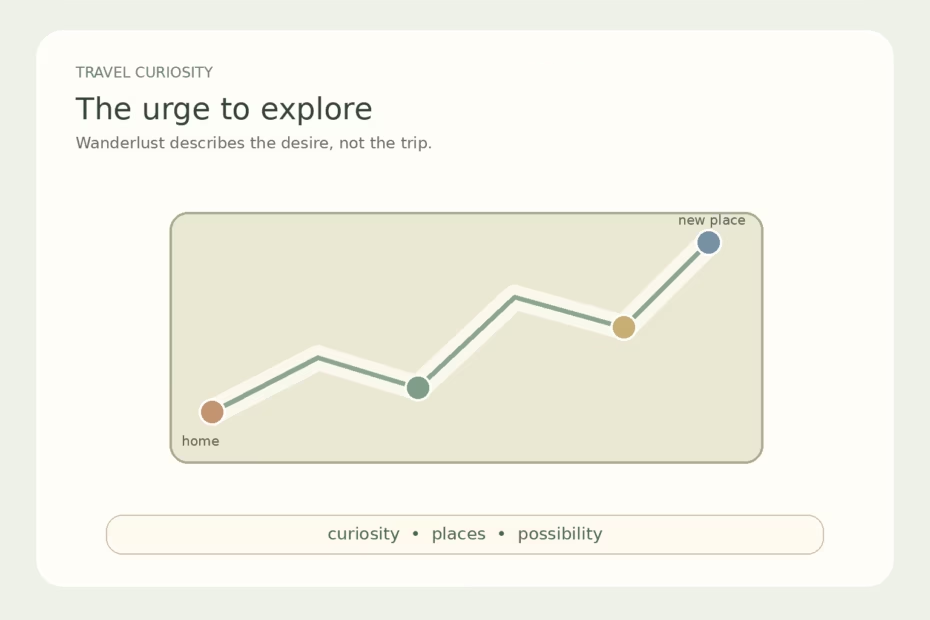
Wanderlust is a strong desire to travel and explore different places. It names the feeling or impulse, not the trip itself: “Her wanderlust inspired her to plan a weekend by train.” The word can describe a wish to visit a nearby town just as naturally as a hope to travel farther away.

How to use wanderlust in a sentence
Wanderlust is a noun and is usually uncountable, so standard sentences say feel wanderlust, strong wanderlust, or a sense of wanderlust, rather than “a wanderlust.” Common patterns include:
- Feel or have wanderlust: “By early spring, Mateo felt wanderlust and began looking at day trips.”
- Wanderlust for + place or experience: “Her wanderlust for quiet coastal towns grew after the first visit.”
- Wanderlust led / inspired + person: “Their wanderlust led them to explore the islands by ferry.”
- A source of wanderlust: “Travel essays became a source of wanderlust for the class.”
For a countable phrase, write “a desire to travel,” “a travel dream,” or “a sense of wanderlust.” The noun can also come before another noun as a modifier, as in “a wanderlust club” or “wanderlust-inspired writing.”
Wanderlust, travel, and adventure
Travel is the act of going from one place to another; wanderlust is the desire to do so. A person can feel wanderlust while staying home and reading about destinations, and a person can travel for work without feeling wanderlust. Adventure can mean an unusual or exciting experience, including one close to home. These words overlap in some contexts, but they describe different things.
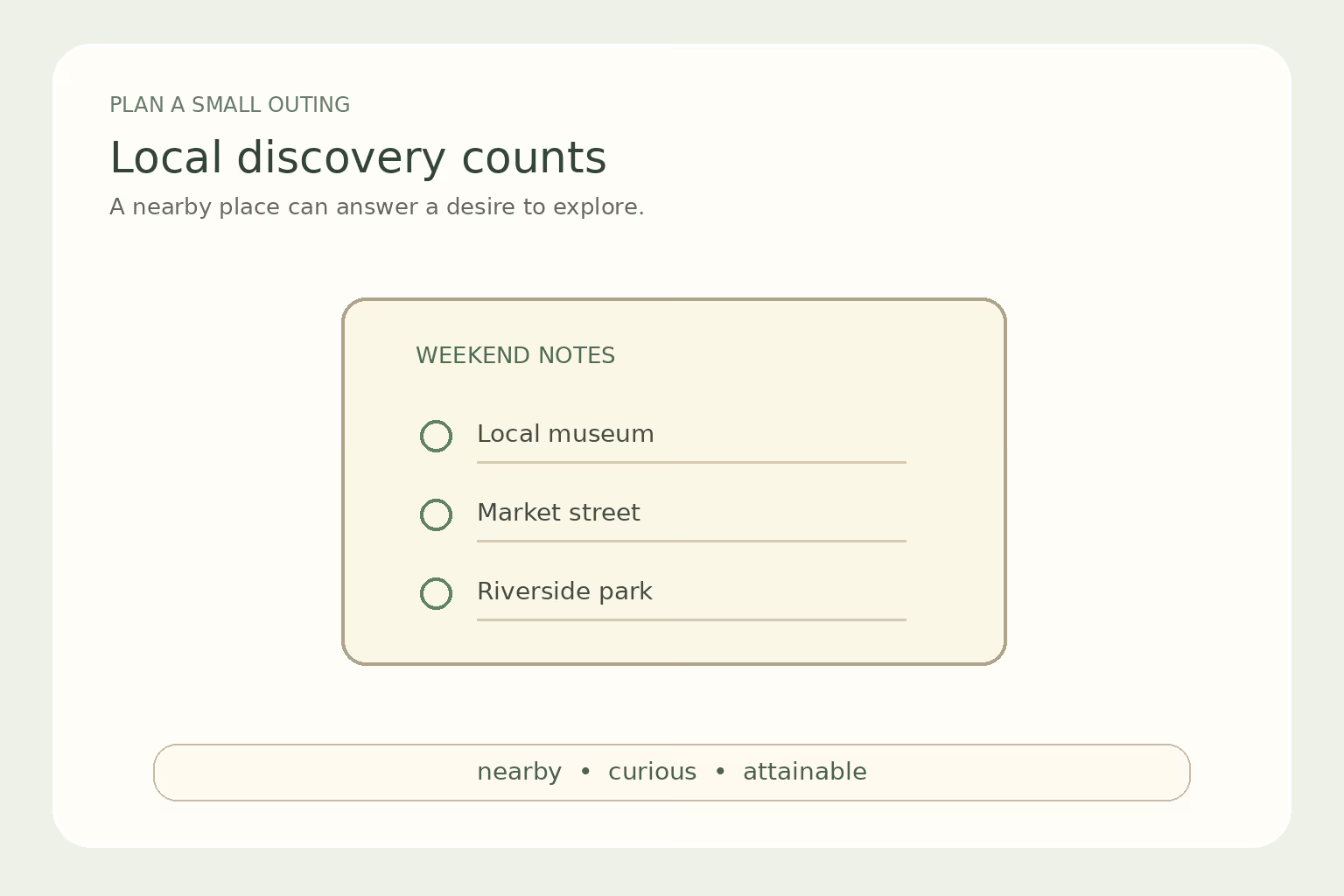
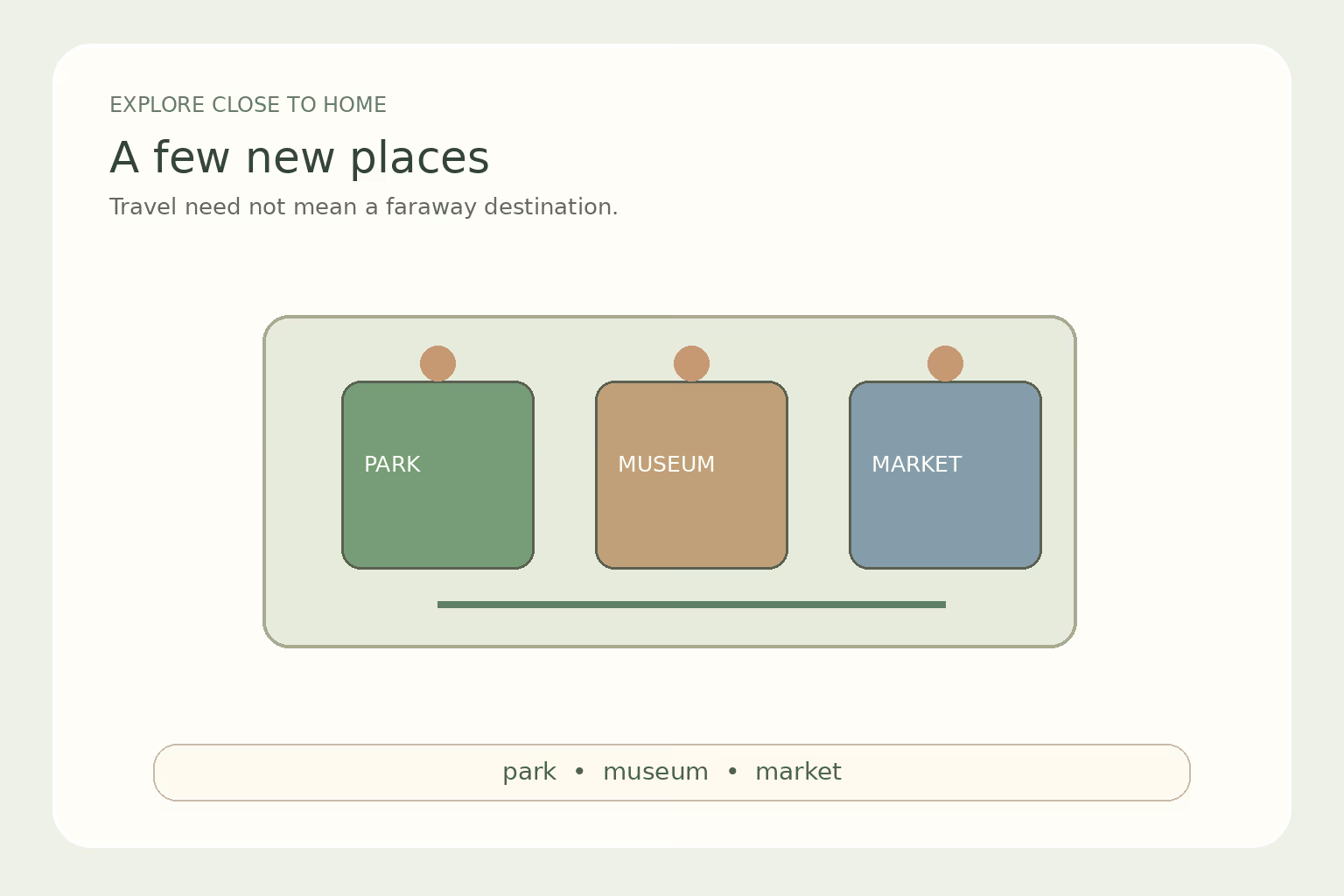
Wanderlust does not have to mean expensive or international travel. A sentence about exploring a new neighborhood, taking a local bus to a park, or visiting a nearby market can express curiosity about place. This keeps the word useful for different budgets, schedules, and ways of getting around.
Wanderlust or homesickness?
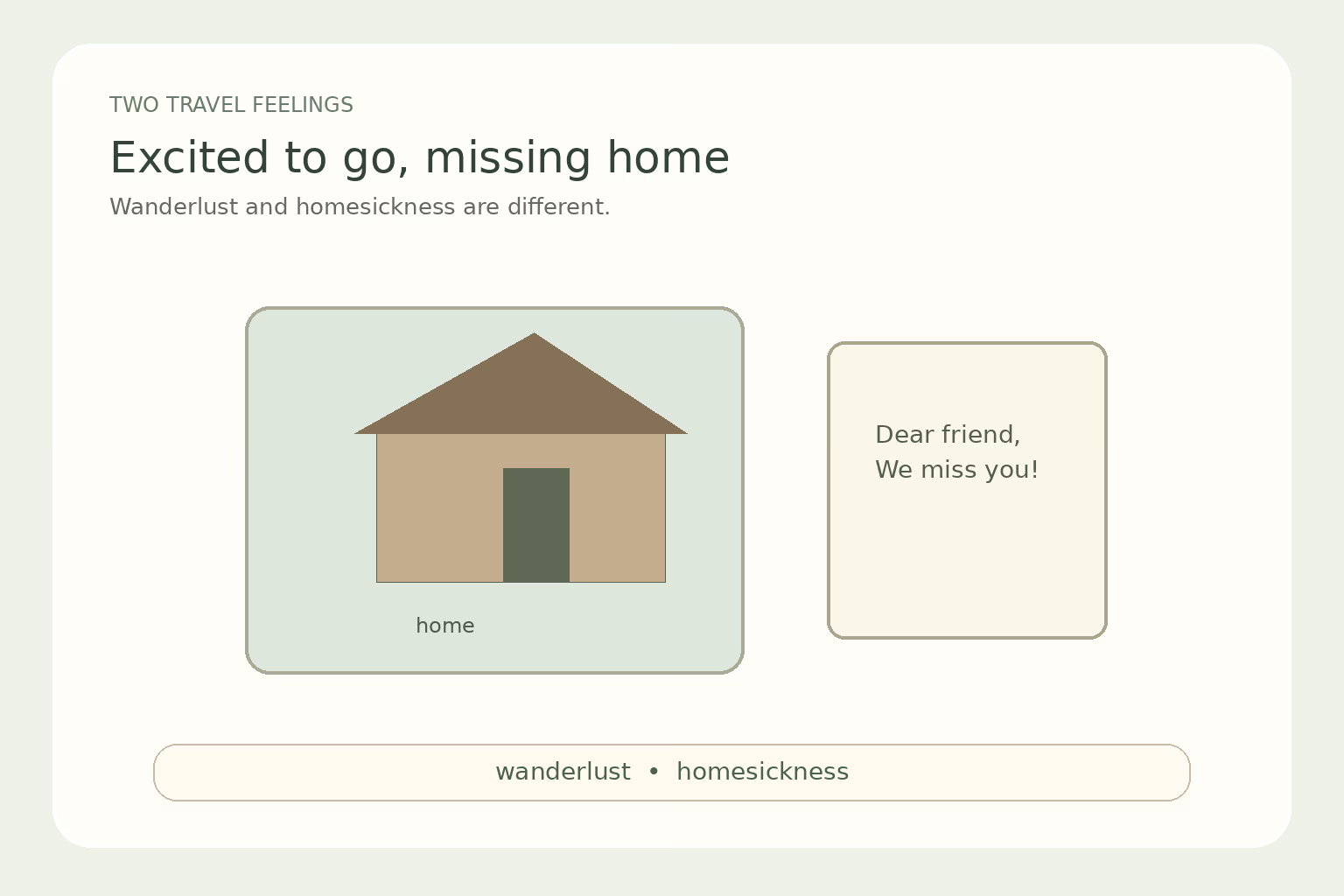
Wanderlust points toward wanting to travel or explore. Homesickness is sadness or longing for home while away. A traveler might feel both at different times: wanderlust before leaving and homesickness during a long trip. Naming the feeling precisely makes the sentence clearer.
Make the example specific
To write a clear sentence, show what prompts the wanderlust or what the person does with it: “A documentary about mountain villages stirred her wanderlust, so she planned a train trip for the autumn.” This gives readers a reason and a next step. If a character only imagines a trip, say so; if the person actually travels, name the action. The distinction keeps the sentence accurate and easy to picture.
Do you ever feel a deep yearning to explore new places, to immerse yourself in different cultures, and to wander through unfamiliar streets? If so, you may be experiencing what is commonly known as wanderlust. Wanderlust is a strong desire or impulse to travel and explore the world, fueled by a deep curiosity and a passion for new experiences.
This innate sense of wanderlust often leads individuals to seek out adventures, discover hidden gems, and engage with diverse communities around the globe. It is a powerful emotion that drives people to step out of their comfort zones, embrace the unknown, and create unforgettable memories on their journeys.
7 Examples Of Wanderlust Used In a Sentence For Kids
- Wanderlust makes me want to explore new places.
- I dream of going on adventures filled with wanderlust.
- Wanderlust is the feeling of wanting to travel and discover new things.
- The world is full of wanderlust waiting to be experienced.
- I imagine the stars guiding my wanderlust journey.
- Wanderlust fills my heart with excitement for the unknown.
- Let’s embrace our wanderlust and go on a magical trip together.
14 Sentences with Wanderlust Examples
- Wanderlust led me to sign up for the backpacking trip across the Himalayas.
- Every semester break, I succumb to my wanderlust and plan a new adventure.
- A group of friends and I are feeding our wanderlust by exploring different cities during long weekends.
- Despite the upcoming exams, the allure of wanderlust is strong, and I’m already planning my next trip.
- The campus is buzzing with talk of summer internships, but all I can think about is satisfying my wanderlust.
- The idea of studying abroad for a semester is appealing to my wanderlust.
- Wanderlust is urging me to attend the music festival happening in a neighboring city.
- My friends and I are always looking for budget-friendly ways to satisfy our wanderlust.
- Next semester, I’m considering joining the college’s wanderlust club to meet like-minded travel enthusiasts.
- Even with a busy schedule, I manage to find time to fulfill my wanderlust by going on short day trips.
- The university’s annual cultural exchange program is calling out to my wanderlust.
- My dream is to combine my studies with my wanderlust by participating in an archaeological dig abroad.
- With each passing year, my wanderlust grows stronger, and I can’t wait to explore more of India.
- The thought of being able to study, travel, and live independently is fueling my wanderlust for a post-graduate degree.
How To Use Wanderlust in Sentences?
To use the word “Wanderlust” in a sentence, you can describe a strong desire or urge to travel and explore the world. For example, “His wanderlust led him to quit his job and backpack through Europe for a year.”
Remember that Wanderlust is a noun, so it should be used as the subject or object of a sentence. It is important to ensure that the sentence structure is correct to convey the meaning effectively.
When incorporating Wanderlust in a sentence, consider the context in which you want to express the longing for travel and adventure. You can use it to describe someone’s constant need to explore new places or to explain your own desire to embark on an exciting journey.
Additionally, you can use Wanderlust to evoke a sense of wanderlust in others or to express admiration for someone’s adventurous spirit. Just make sure to place the word appropriately in the sentence to maintain clarity and coherence.
Overall, incorporating Wanderlust into your vocabulary can add richness and depth to your descriptions of travel experiences and aspirations. Experiment with using it in various contexts to master its usage effectively.
Conclusion
In a world where wanderlust reigns, individuals seek out new adventures and experiences beyond their familiar horizons. The yearning to travel, explore, and immerse oneself in different cultures is a common theme among those with wanderlust. These individuals are driven by a curiosity for the unknown and an insatiable desire to discover what lies beyond the confines of their everyday lives.
From embarking on spontaneous road trips to booking flights to far-off lands, those with wanderlust find joy in the journey and excitement in the exploration of new destinations. Their hearts are filled with a boundless passion for travel, continually seeking out opportunities to feed their adventurous spirits. Ultimately, the essence of wanderlust lies in the relentless pursuit of wander and exploration, a driving force that fuels the quest for discovery and fulfillment.


