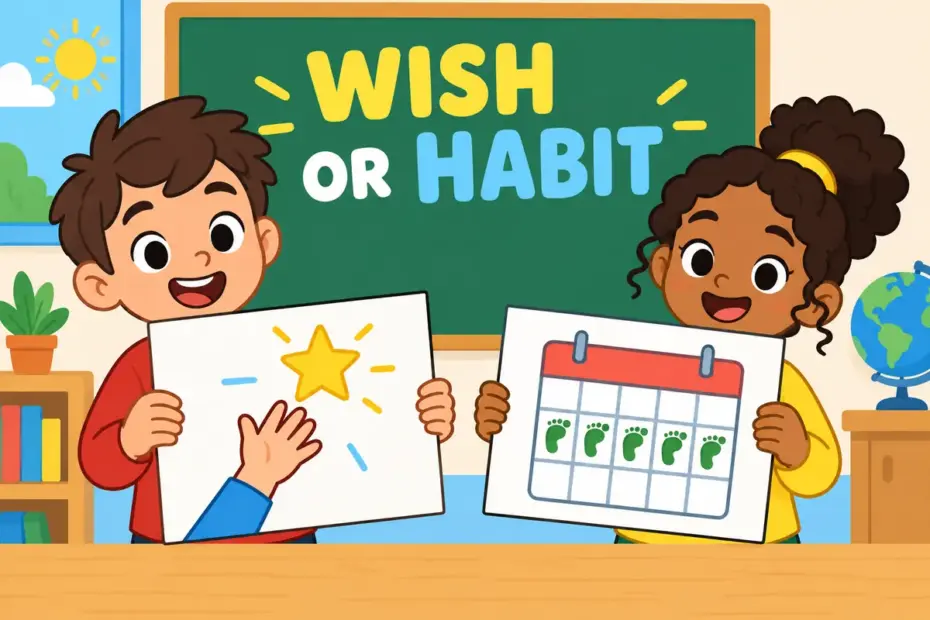
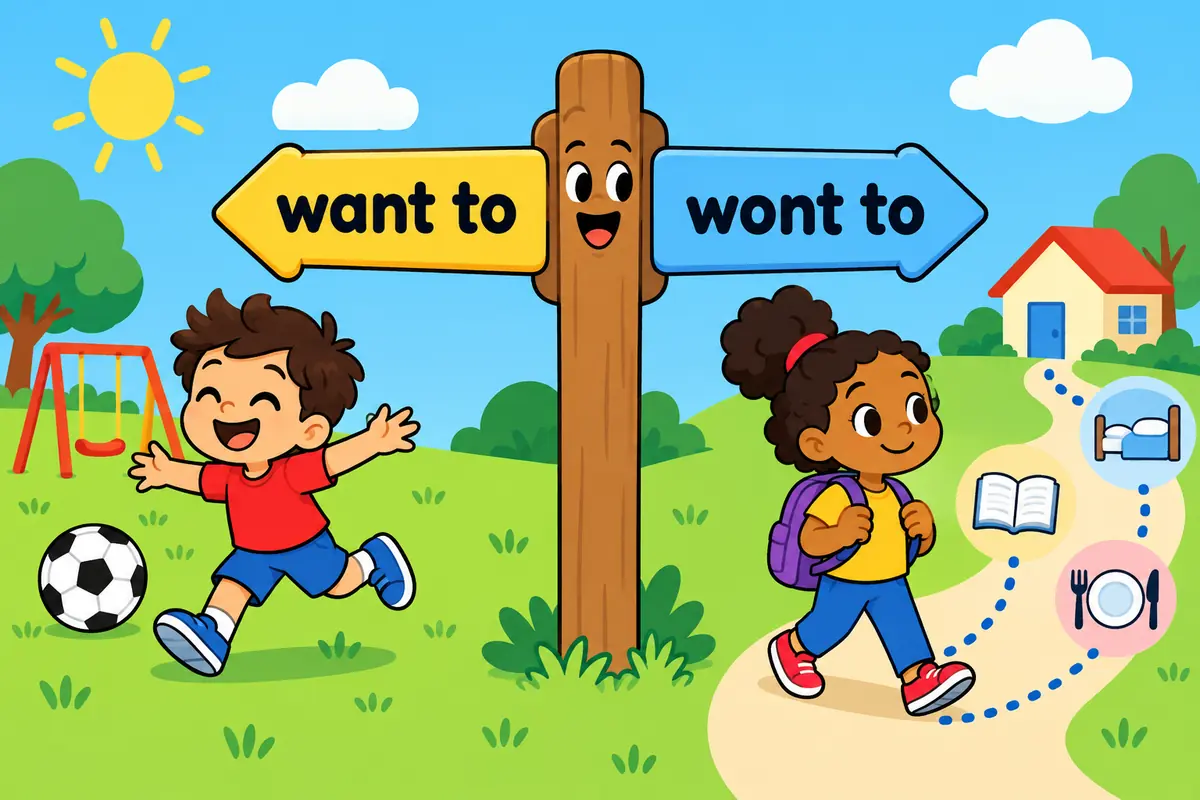
Want vs wont comes down to desire against habit. Use want, a verb, when someone wishes for or needs something: “I want a break.” Use wont, an adjective, for an old, repeated habit: “She was wont to walk at dawn.” Never write wont when you mean will not.
Want vs wont at a glance
- Want is a verb of desire and need, and also a noun for a wish or shortage.
- Wont is an adjective meaning accustomed, and a noun for a customary habit.
- Want takes a noun, or to plus a base verb; wont links to a verb through to.
- Wont is literary and formal; want is everyday and neutral.
- The commonest error is writing wont when the contraction won’t is meant.
Want vs wont: the core difference
One word describes a desire, the other describes a habit, and that single contrast settles almost every decision. The table weighs the criteria that actually change a reader’s choice.
| Criterion | want | wont |
|---|---|---|
| Core meaning | To wish for or need something | Accustomed to do something |
| Part of speech | Verb, also a noun | Adjective, also a noun |
| Typical structure | want + noun, or want + to + verb | be wont to + verb |
| What it signals | A present wish or a shortage | A repeated, settled habit |
| Register | Everyday to formal | Literary and formal |
| Frequency today | Extremely common | Rare outside fiction and biography |
| Apostrophe? | Never | Never; the contraction is a different word |
| Main confusion | Want versus need | Wont versus won’t |
What do want and wont mean?
Want and wont look alike but do entirely different jobs. Want is a verb meaning to wish for or need something, and a noun for that wish or for a shortage; the Cambridge entry for want covers each sense. Wont is an adjective meaning accustomed, and a noun for a habitual practice; the Cambridge entry for wont shows how formal it is. The two never swap roles: want reports a wish, while wont describes a settled pattern of behaviour.
| Word | Sense | Part of speech | Example sentence |
|---|---|---|---|
| want | To desire something | verb | I want a quiet evening. |
| want | To need or lack, formal | verb | The gate wants a coat of paint. |
| want | A wish or a shortage | noun | The seedling died from want of water. |
| wont | Accustomed to do something | adjective | He was wont to rise before dawn. |
| wont | A customary habit | noun | As was her wont, she waved goodbye. |
One limitation belongs to each word. Want is too plain for the most formal registers, where require or desire fits better. Wont is so literary that most modern sentences avoid it; it survives mainly in fiction, biography and formal prose, and it is easily mistaken for the contraction won’t, which merely shortens will not. Wont, by contrast with want, describes a settled habit rather than a single act, and the noun want names a shortage or need rather than a wish.
How do you use want and wont in a sentence?
Want is transitive and takes a noun, or to plus a base verb, or an object with to do something. Wont never takes an object; it links to a verb through to inside the frame be wont to do something. The two structures never overlap, so the part of speech decides which word you need.
| Pattern | Example | What it signals |
|---|---|---|
| want + noun | I want a break. | A direct wish for a thing. |
| want + to + base verb | She wants to leave early. | A wish to perform an action. |
| want + object + to + verb | They wanted us to wait. | A wish about another person’s action. |
| want + noun (need sense) | The room wants paint. | A formal statement of what is lacking. |
| be wont to + verb | He was wont to hum while working. | A settled habit in formal prose. |
| as + possessive + wont | As was his wont, he arrived early. | A customary practice as a noun. |
Want vs wont: examples across contexts
Want fills ordinary sentences about wishes and shortages, while wont appears mostly in literary narration about habits. Each example below keeps the words in their natural registers.
| Context | Example sentence | Why this works |
|---|---|---|
| Everyday | I want to finish this book tonight. | want plus to plus base verb, the commonest pattern. |
| Classroom | Do you want a turn at the board? | want plus a noun in a direct question. |
| Business email | We would want to review the figures first. | A hedged, polite desire in formal writing. |
| Literature | She was wont to wander the garden after dark. | wont as an adjective of habit. |
| Biography | He was wont to quote his grandfather. | Habit in a measured narrative voice. |
| Home | The stairs want a fresh coat of paint. | The formal need sense of want. |
| Conversation | They want us to arrive early. | want plus object plus to plus verb. |
| News report | Residents want the road repaired by winter. | want plus object plus past participle. |
| Essay | As was his wont, the author digressed at length. | The noun wont for a customary practice. |
| Letter | I have always wanted to visit the coast. | The present perfect form of want. |
| Poetry | The birds, wont to sing at dawn, fell quiet. | wont inside a descriptive participial phrase. |
| Travel writing | Travellers are wont to overpack. | Habit in a gently ironic tone. |
| Advertising | Everything you want, in one place. | want as a noun in marketing copy. |
| Legal writing | A want of evidence ended the case. | The noun sense of shortage in formal prose. |
| Gardening | The lawn wants rain after a dry month. | The need sense in plain description. |
| Social post | I want, therefore I shop. | Playful first-person desire. |
Which should you use?
Match the word to the reader’s situation rather than to the spelling. The table gives a firm recommendation for each common case.
| Situation | Use | Reason |
|---|---|---|
| You mean to desire or need something | want | It is the plain verb for a wish or a need. |
| You mean will not | won’t | The apostrophe marks the contraction; wont means accustomed. |
| You describe a repeated habit in fiction | wont | Be wont to signals habitual action in a literary voice. |
| You write formal prose about a shortage | want | The noun want names a lack. |
| You write an email or report | want | Wont would sound archaic and out of place. |
The dedicated pages on want as a verb of desire and on wont as a word of habit carry further practice for each side.
Word forms and grammar of want and wont
Want inflects like any regular verb, while wont barely changes at all. The table also marks the derived adjective wonted and the contraction that causes the confusion.
| Word | Form | Part of speech | Example |
|---|---|---|---|
| want | want | verb, base form | I want coffee. |
| want | wants | verb, third person singular | She wants a moment. |
| want | wanted | verb, past and participle | They wanted to help. |
| want | wanting | verb, present participle | The team is wanting a new captain. |
| want | want | noun | There is no want of ideas. |
| wont | wont | adjective | She was wont to smile. |
| wont | wont | noun | As is his wont. |
| wont | wonted | adjective, derived | He returned to his wonted calm. |
Note the trap at the end of the list. Won’t, with an apostrophe, is the contraction of will not; wont, without one, means accustomed. Dropping the apostrophe turns a future statement into a description of habit.
Common mistakes with want vs wont
- Incorrect:
I wont a new phone.Correct: I want a new phone. Rule: Want is the verb of desire; wont describes a habit. - Incorrect:
He is want to arrive late.Correct: He is wont to arrive late. Rule: The adjective of habit is wont, linked to a verb by to. - Incorrect:
I wont go to the party.Correct: I won’t go to the party. Rule: The contraction of will not keeps its apostrophe. - Incorrect:
She was want to cry every winter.Correct: She was wont to cry every winter. Rule: A repeated habit uses wont; want would report a single wish. - Incorrect:
I want going home.Correct: I want to go home. Rule: Want takes to plus a base verb, never a gerund.
Practice using want and wont
Work through the seven items, then read the reasoning rather than only the answers.
- Fill the gap: The old clock ______ a good clean.
- Choose the better word: As was her (want / wont), she read the letters aloud.
- Correct the error: He is want to forget his keys.
- Build a sentence: use be wont to about a neighbour who gardens at dawn.
- Spot the register: which belongs in a novel — he was wont to disappear at dusk, or he was want to disappear at dusk?
- Fix the contraction: She wont agree to the plan. Add the missing mark.
- Choose the sense: in the field wants rain, does want mean desire or need?
Answers
- wants — the need sense of want takes the clock as subject and the object cleaned.
- wont — the sentence describes a repeated habit, so the adjective of habit is right.
- He is wont to forget his keys — a settled habit uses wont, not want.
- Model answer: Our neighbour is wont to garden at dawn.
- He was wont to disappear at dusk — only wont carries the literary sense of habit.
- She won’t agree to the plan — the contraction of will not needs an apostrophe.
- need — the field is not wishing; it is lacking rain, the formal need sense.
The bottom line
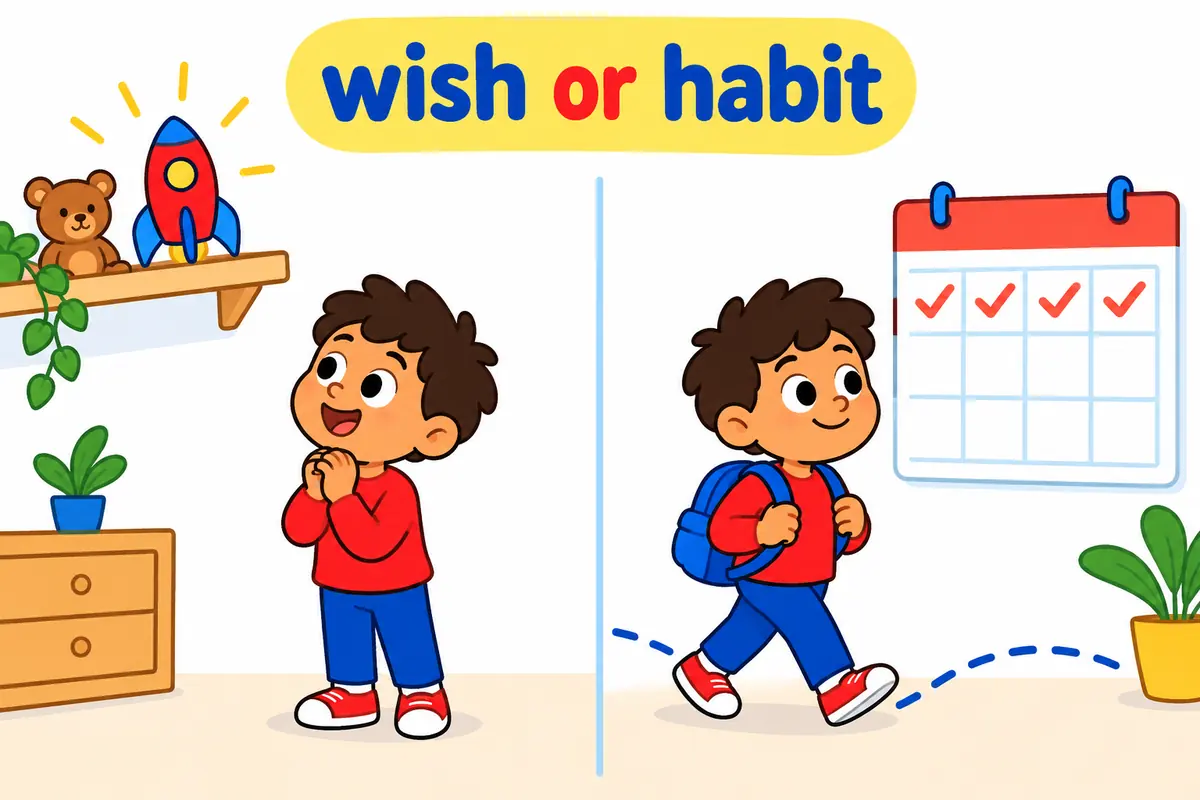
Use want for a wish or a need and wont for an old habit, and let the part of speech guide you. The two details that decide most sentences are these: want takes a noun or to plus a verb, while wont links to a verb through to, and wont must never stand in for the contraction won’t. Keep the pair straight and a tendency to repeat is all that wont ever means.
Frequently asked questions about want vs wont
Is wont still used today?
Wont survives mainly in fiction, biography and formal prose, where it gives a measured, old-fashioned tone. In everyday speech and email it has almost vanished, and most writers choose used to instead. Understand it when you read it, but reach for it sparingly when you write.
What does want mean as a noun?
As a noun, want means a wish or, more formally, a shortage. The noun appears in fixed phrases such as for want of a better word, where it names a lack. In ordinary writing the verb is far more common than the noun, so keep the noun for formal contexts.
Can wont be a noun?
Yes. Wont works as a noun for a customary practice, as in as was her wont. It is usually singular and appears in the frame as is my wont. The noun is even rarer than the adjective, so treat it as a literary choice rather than everyday vocabulary.
Why do people confuse wont and won’t?
They sound alike and differ by a single mark. Won’t, with an apostrophe, contracts will not, while wont, without one, means accustomed. Because the apostrophe is easy to drop, a sentence about refusing something can turn into a sentence about a habit.