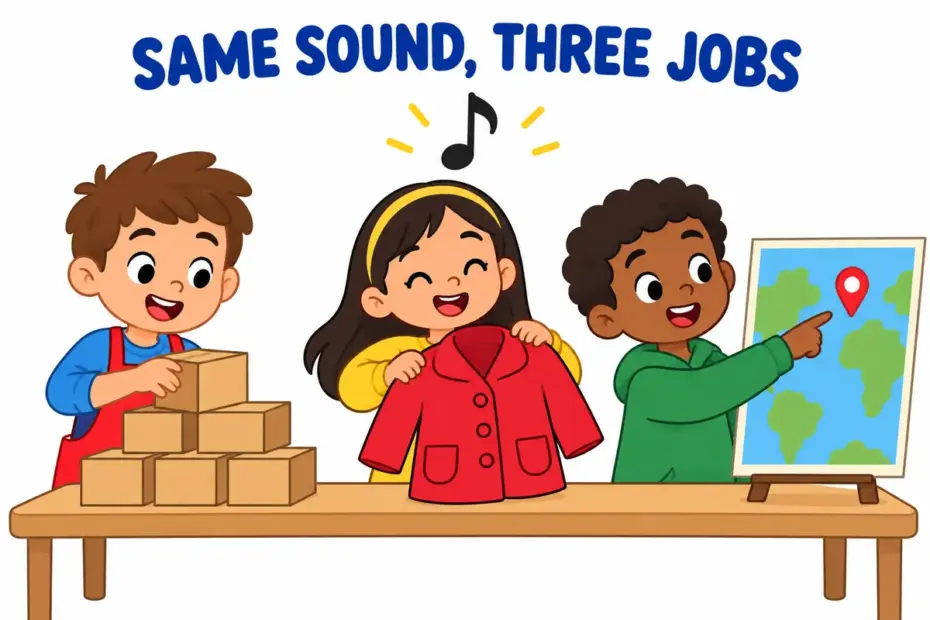
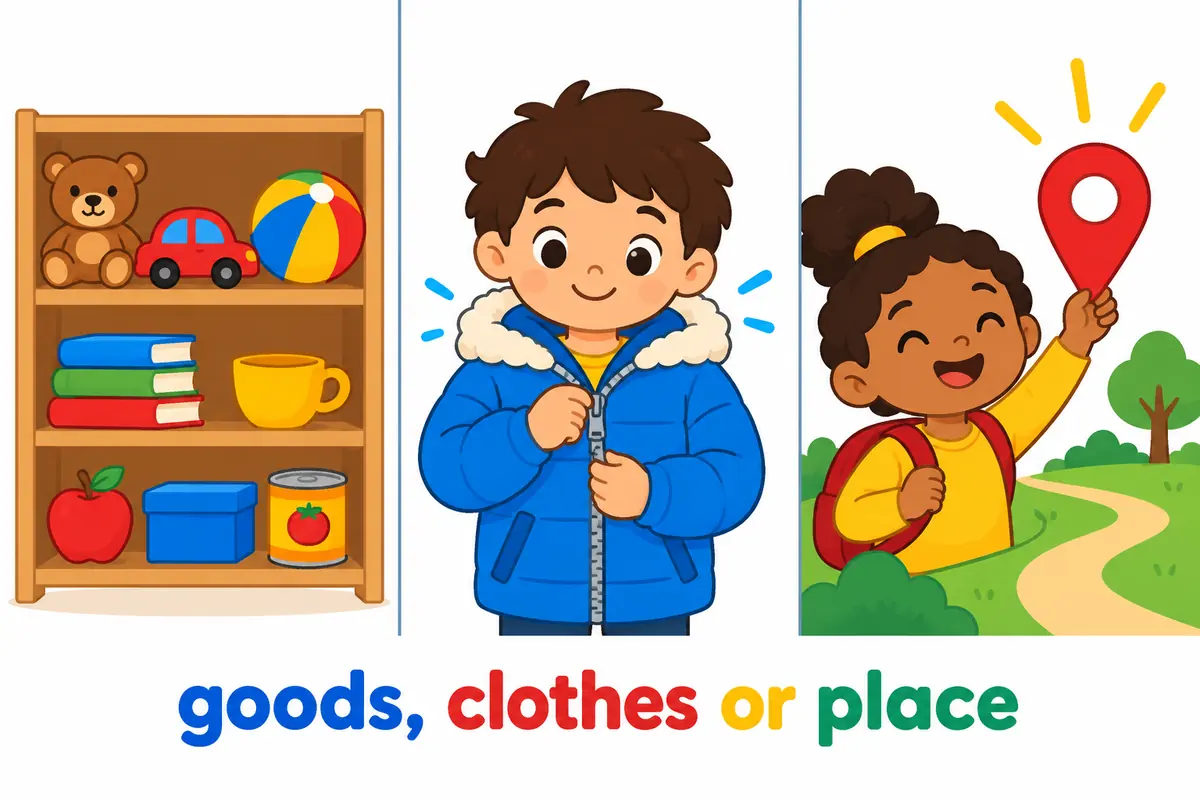
Ware vs wear vs where are homophones, so the choice is decided by meaning: use ware for goods, wear for clothing or damage from use, and where for a place. “The software shop sells what you wear?” fails on both counts, because goods take ware and clothing takes wear, while where would answer the question of location.
Ware vs wear vs where at a glance
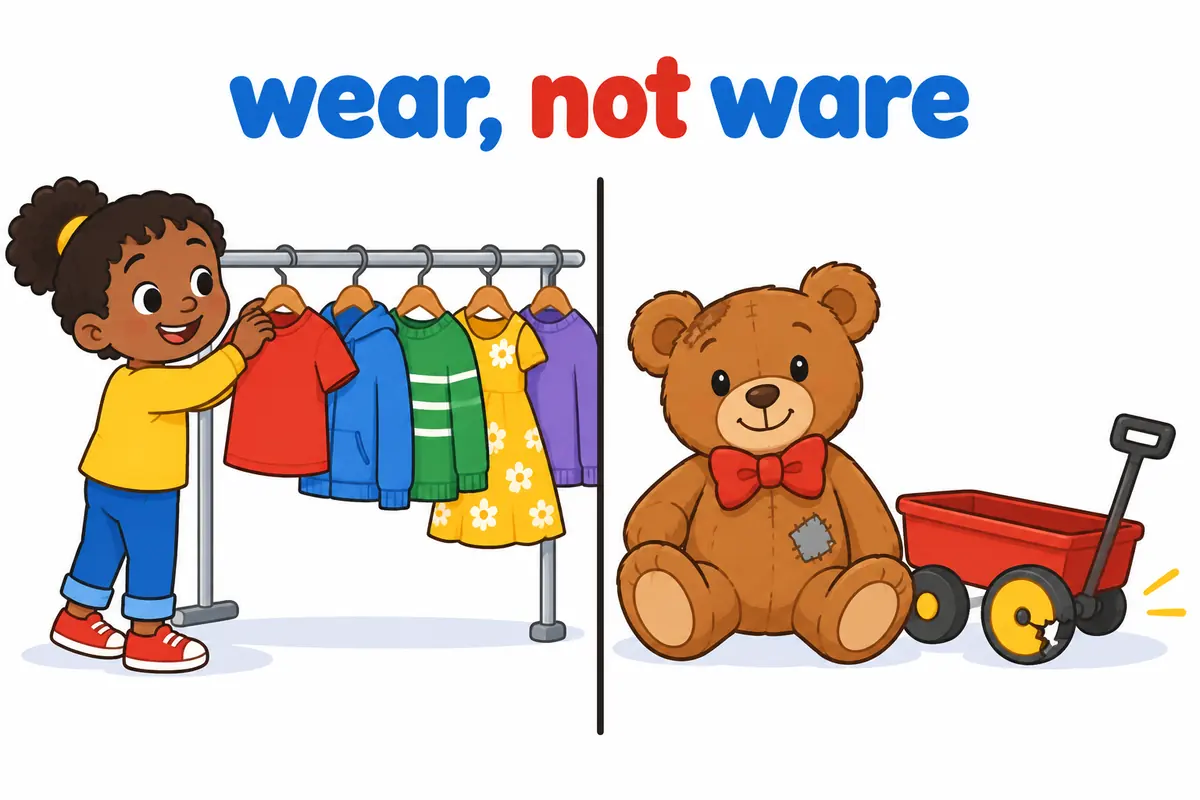
- Ware is a noun for goods or articles, and it usually appears in compounds such as hardware and software.
- Wear is a verb meaning to have clothing on the body, and also to damage something through long use.
- Where is an adverb and conjunction that asks or tells about place.
- All three are pronounced the same in most accents, which is why they are classic homophones.
- The commonest errors are spelling wear as ware, and spelling where as wear.
- The quick test is goods, body or place: each answer points to a different spelling.
Ware vs wear vs where: the master comparison
The three words share a sound and nothing else, so a single table settles most decisions. Read down each column to see what the word does, where it lives and how to remember it.
| Attribute | ware | wear | where |
|---|---|---|---|
| Part of speech | noun | verb, and an uncountable noun | adverb and conjunction |
| Core meaning | Goods, articles or items for sale | To have clothing on; to damage by use | In or to what place |
| Typical context | Shops, industry and technology | Clothing, endurance and repairs | Questions and place clauses |
| Common partners | hardware, software, kitchenware, wares | wear and tear, sportswear, wear out | everywhere, anywhere, somewhere |
| Memory hook | ware joins other words to name products | wear is what you do with clothes | where holds here, and here is a place |
| Wrong twin | wear, when the meaning is goods | ware, when the meaning is clothing | wear, when the meaning is place |
The table also shows why ware is the rarest of the three on its own. Outside a few set phrases it prefers to hide inside a longer word, so hardware, software and earthenware are far commoner than a bare ware.
What does each word mean?
The noun ware names goods or articles rather than actions, and the Cambridge entry for ware treats it mainly through compounds and the plural goods. The verb wear covers two jobs, clothing and damage through use, which the Cambridge entry for wear records. The adverb where asks about or points to a place, as the Cambridge entry for where shows for both its question and relative uses.
| Word | Question it answers | Example sentence |
|---|---|---|
| ware | What kind of goods is it? | The stall sold kitchenware and cheap earthenware. |
| wear | What is on the body, or what is damaged? | She likes to wear bright colours to work. |
| where | In or to what place? | Where did you leave the keys? |
One limitation is worth stating plainly. This trio is only confusing in writing, because the ear cannot tell them apart. A sentence spoken aloud may be perfectly clear while the written version is wrong, so the check has to be a meaning check and not a sound check.
How do you use ware, wear and where in a sentence?
Each word occupies a different grammatical slot, and that is the surest way to keep them apart. Ware fills a noun slot, wear fills a verb slot, and where fills an adverb or clause slot that points at a place. The patterns below show the typical shape of each.
| Word | Pattern and example | What it signals |
|---|---|---|
| ware | modifier + ware: the shop sells houseware | Goods named by a compound noun. |
| ware | wares: traders displayed their wares | Goods for sale, in the plural. |
| wear | wear + clothing: I wear a coat in winter | The action of having clothing on. |
| wear | wear out or wear and tear | Damage that grows with use. |
| where | question: Where is the station? | Asking for a place. |
| where | relative clause: the town where I grew up | Linking a place to a clause. |
All three belong to the same sound group, so they are true homophones rather than near-misses. That is the source of the confusion and also the reason the meaning test works so well.
Ware, wear and where in a sentence: examples across contexts
Each sentence below uses only one of the three, and the context makes the choice obvious. Read the meaning first, then note the spelling, because the pattern repeats across every register.
| Word | Context | Example sentence | Why the spelling fits |
|---|---|---|---|
| ware | Shop sign | We stock household ware for every kitchen. | Names goods, so it takes ware. |
| ware | Technology | The update fixed a fault in the software. | Software is a compound built on ware. |
| ware | Market report | Traders carried their wares to the coast. | The plural wares means goods for sale. |
| wear | Getting dressed | We must wear a helmet on the building site. | An action on the body takes wear. |
| wear | Repairs | The sofa shows wear and tear after ten years. | The fixed phrase uses wear for damage. |
| wear | Fashion | The label specialises in children’s wear. | The uncountable noun for clothing. |
| where | Directions | Where is the nearest bus stop? | A question about place takes where. |
| where | Relative clause | This is the bench where we first met. | Links a place to a clause. |
| where | Condition clause | Where there is smoke, there is usually fire. | Introduces a situation or condition. |
The technology row is the one that trips people up most, because software sounds like it should involve clothing and is in fact built from ware. Learning the compounds as whole words is the fastest fix: hardware, software, kitchenware, earthenware.
Which should you use?
Match the situation to the word and the choice is settled every time. The five decisions below cover almost every real sentence a learner will need.
- Naming items, products or goods, especially in a compound: use ware, as in software or kitchenware.
- Putting clothes on the body: use wear, as in I wear a jacket.
- Describing damage that grows with use: use wear, as in wear and tear.
- Asking or telling a place: use where, as in Where are you?
- Linking a place to a clause: use where, as in the town where I grew up.
When two answers seem possible, ask which word you could substitute. If you could say goods, choose ware; if you could say put on or damage, choose wear; if you could say at which place, choose where.
Word forms and grammar of ware, wear and where
Each word has its own family, and the families never overlap, which is a useful extra check. The table sets the three side by side so the forms can be compared at a glance.
| Word | Forms | Example |
|---|---|---|
| ware | ware, wares; compounds such as hardware | The wares filled three tables. |
| wear | wear, wears, wore, worn, wearing; wearer | The soles are worn thin. |
| wear, noun | uncountable wear, meaning clothing or damage | It is built to withstand years of wear. |
| where | where, wherever, everywhere, anywhere, somewhere | She looked everywhere for the ticket. |
| where | no verb forms; introduces clauses | I know where it is. |
Two extra notes help with spelling. The verb wear is irregular, so its past form is wore and its participle is worn. An old adjective ware once meant cautious, and its ghost survives inside beware and aware, which is why ware never became the clothing verb.
Common mistakes with ware, wear and where
- Incorrect:
I need to buy new wear for the kitchen.Correct: I need to buy new ware for the kitchen. Rule: goods take ware; wear is clothing or damage. - Incorrect:
I do not know wear my phone is.Correct: I do not know where my phone is. Rule: a place clause takes where, not wear. - Incorrect:
Where and tear has damaged the sofa.Correct: Wear and tear has damaged the sofa. Rule: the fixed phrase for damage uses wear. - Incorrect:
She likes to ware bright colours.Correct: She likes to wear bright colours. Rule: the verb for putting on clothing is wear. - Incorrect:
We visited the ware the accident happened.Correct: We visited the place where the accident happened. Rule: relative place clauses use where, never ware. - Incorrect:
The softwear crashed again.Correct: The software crashed again. Rule: the technology compound is spelled with ware.
Practice using ware, wear and where
Work through the six items, then read the reasoning.
- Fill the gap: The market traders spread their ______ across the table.
- Choose the right word: Please (wear / ware) a coat, it is freezing.
- Correct the error: Do you know wear the library is?
- Build a sentence: use where in a question about a train station.
- Spot the right spelling: which belongs on a shop sign — kitchenware, or kitchenwear?
- Rewrite the phrase: The carpet is damaged from use. Use the fixed phrase with wear.
Answers
- wares — the plural of ware names goods offered for sale.
- wear — putting on a coat is an action on the body.
- Do you know where the library is? — a place clause takes where.
- Model answer: Where is the nearest train station?
- kitchenware — goods are spelled with ware, as in hardware and software.
- The carpet shows wear and tear — the fixed phrase for damage uses wear.
The bottom line
Use ware vs wear vs where by asking what the word names: goods take ware, the body or damage takes wear, and a place takes where. Two nuances decide most sentences: ware almost always hides inside a compound such as software, and the clothing verb wear is irregular, with wore and worn as its past forms. If the meaning is goods, merchandise is the plainer word; if it is place, where is already the clearest.
Frequently asked questions about ware vs wear vs where
Do ware, wear and where sound exactly the same?
In most accents all three are pronounced the same, which makes them true homophones rather than near-misses. A few speakers give where a slightly different vowel, but the difference is small and cannot be relied on. Because the ear cannot separate them, always check the meaning and the spelling in writing.
What does ware mean in software and hardware?
In those compounds ware keeps its old sense of goods or articles, so software is a set of programs treated as goods and hardware is the physical equipment. The same pattern builds kitchenware, earthenware and silverware. A bare ware is rare, which is why learners meet the word mainly inside these longer forms.
How can I remember wear or where correctly?
Use the hidden word trick: where contains here, and here is a place, while wear belongs to the body and the verb. For ware, remember that it lives with other words to name products, as in hardware. Testing the meaning as goods, body or place is the quickest method of all and never depends on sound.
Is ware ever used as a verb?
Not in modern standard English. The clothing verb is always wear, and ware serves only as a noun for goods, usually in compounds. An old adjective ware once meant cautious, and traces of it survive in beware and aware, but that use is historical and does not make ware a verb today.