
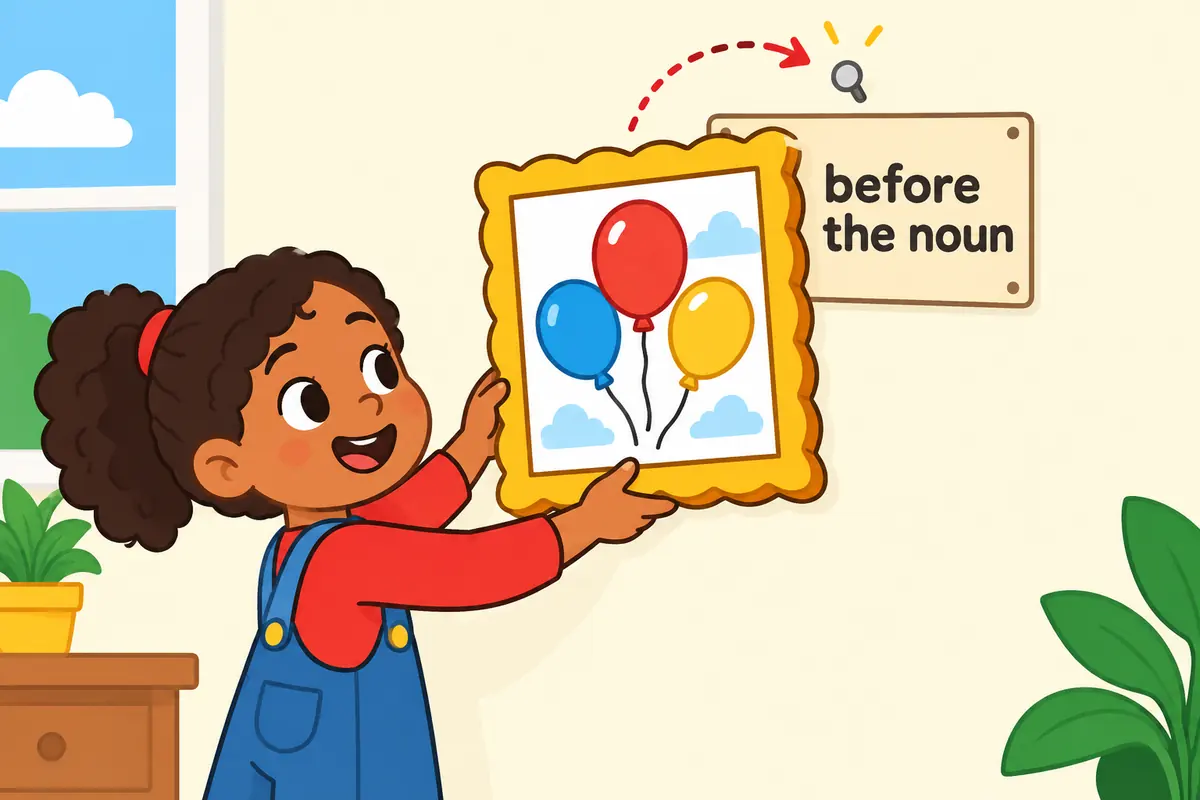
Whimsical describes something playful, fanciful and slightly odd in an appealing way. To use whimsical in a sentence, place it before the noun it describes: “a whimsical garden.” The adjective usually praises imagination rather than criticising oddity, so it suits stories, design and light description.
Whimsical at a glance
- Whimsical is an adjective; its forms are whimsical, whimsically and whimsicality.
- It describes playful, fanciful imagination, almost always as praise.
- Whimsical goes before a noun (a whimsical tale) or after be, seem or feel (the design is whimsical).
- Common collocations include whimsical humour, a whimsical touch and whimsical design.
- The commonest error is using whimsical for careless unreliability, which is capricious.
What does whimsical mean?
Whimsical is an adjective meaning playfully fanciful, unusual and lightly imaginative. The Cambridge entry for whimsical records that core sense, and ordinary use shows two shades of it. Playful names the mood, while whimsical adds imagination and a fondness for the unexpected.
| Sense | Plain meaning | Example sentence |
|---|---|---|
| Playfully fanciful | Odd in an imaginative, charming way | The little shop had a whimsical name. |
| Lightly humorous | Amusing and a little silly | His whimsical remarks cheered the whole room. |
| Led by sudden fancy | Rare and literary; guided by changing whim | The old diary records a whimsical, wandering journey. |
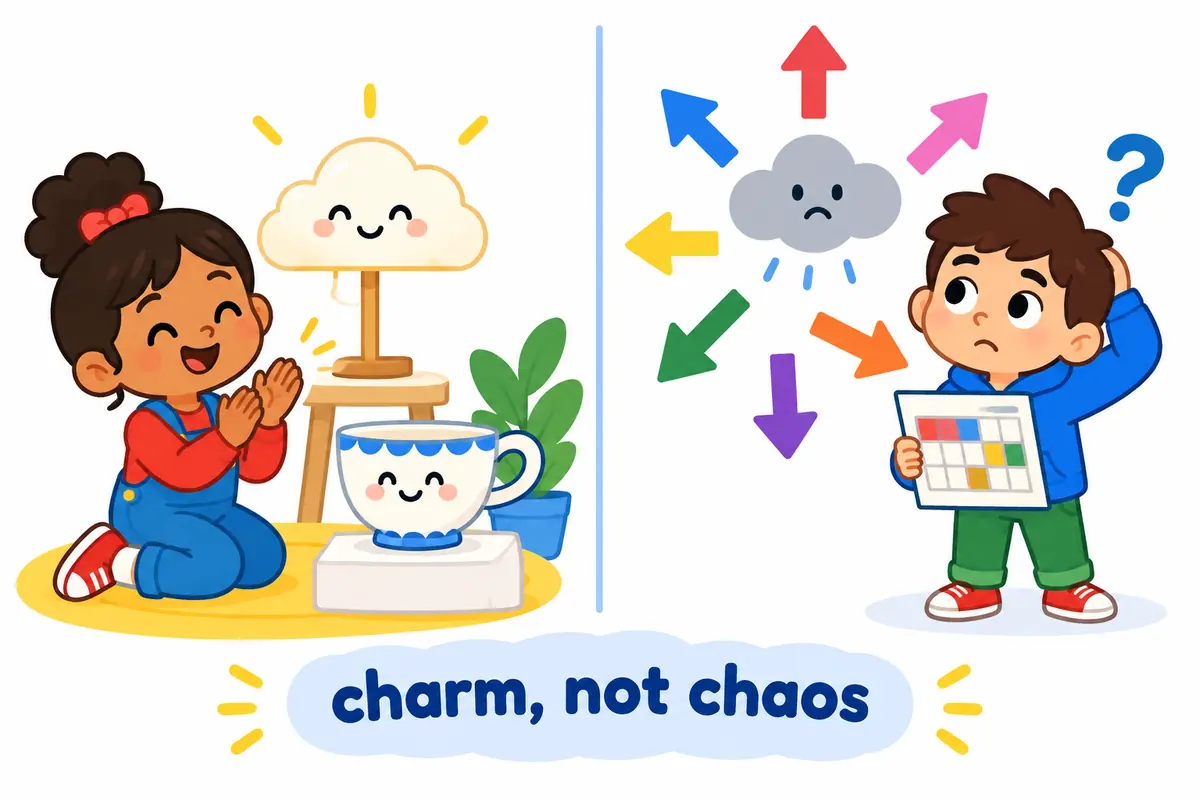
One limitation is worth stating plainly. Whimsical is not a synonym for weird, careless or unreliable. Fanciful stresses invention, and whimsical stresses charm; when unpredictability causes harm, capricious is the honest word. A business report should never be called whimsical just because it is disorganised.
How do you use whimsical in a sentence?
Put whimsical before the noun it describes whenever you can. Five patterns cover almost every real sentence, and the attributive position is both the commonest and the safest.
| Pattern | Example | What it signals |
|---|---|---|
| whimsical + noun | A whimsical little café opened on the corner. | The default position, and it always reads as praise. |
| be / seem / feel + whimsical | The ending feels whimsical. | Describes the impression something gives. |
| a whimsical + noun + of + noun | She has a whimsical sense of humour. | Names the creative quality and who shows it. |
| more / most + whimsical | It is the most whimsical piece in the show. | Compares the degree of playful imagination. |
| adverb + whimsical | The whole film is decidedly whimsical. | An intensifier sharpens the judgement. |
The word order carries the meaning. A whimsical drawing praises the artist, while a drawing that is whimsical makes the same point after a linking verb. Writers who put whimsical after the noun, as in a garden whimsical, sound as if they have translated from another language.
Whimsical in a sentence: examples across contexts
Whimsical shifts easily between description and judgement, so the examples below move from a book review to a wedding and each one points at what exactly is being called whimsical.
| Context | Example sentence | Why this works |
|---|---|---|
| Book review | The novel is whimsical without ever becoming silly. | Concedes the risk of the word and defends the book. |
| Interior design | She added a whimsical mural to the plain nursery wall. | Places the adjective before the noun it praises. |
| Fashion | His whimsical tie featured tiny dancing cactuses. | A concrete detail shows what the adjective means. |
| Café menu | The café serves whimsical cakes shaped like garden snails. | Uses the attributive position for a light, warm compliment. |
| Classroom | The teacher drew a whimsical map of the island from the story. | Applies the word to an object, not a person’s skill. |
| Conversation | That little hat is delightfully whimsical. | The linking verb plus adverb keeps the tone affectionate. |
| Film criticism | The director’s whimsical touches keep the sadness light. | Shows the word doing evaluative work in a review. |
| Art writing | The exhibition pairs whimsical drawings with serious sculpture. | Sets the word against its opposite for contrast. |
| Wedding planning | They chose whimsical paper birds instead of formal centrepieces. | Names a style choice rather than a mood. |
| Marketing copy | The brand’s whimsical mascot made the app memorable. | Uses the word as a commercial virtue. |
Whimsical vs capricious
Whimsical and capricious both point to unpredictability, and that similarity makes them easy to confuse. The difference is approval: whimsical admires the imagination, while capricious objects to the unreliability. An eccentric choice sits between the two, odd but not necessarily playful.
| Attribute | whimsical | capricious |
|---|---|---|
| Core meaning | Playfully fanciful and charming | Unpredictably changeable, often unfairly |
| Tone | Warm, affectionate, usually praise | Critical or neutral; implies unreliability |
| Usual subject | Stories, design, humour, objects | People, weather, decisions, markets |
| Connotation | Light-hearted imagination | Sudden change with no good reason |
| Typical pairing | a whimsical tale, a whimsical touch | a capricious boss, capricious weather |
Verdict: choose whimsical when the oddity delights you, and choose capricious when the unpredictability costs somebody something.
Word forms and grammar of whimsical
Whimsical builds a small family, and the noun whimsy is the one most writers prefer to the longer forms. The adverb keeps the playful meaning, while the abstract nouns are rarer and suit reviews and catalogue copy.
| Form | Part of speech | Example |
|---|---|---|
| whimsical | adjective | The garden is whimsical and full of surprises. |
| whimsically | adverb | The path winds whimsically through the trees. |
| whimsicality | noun | The whimsicality of the design won a prize. |
| whimsy | noun | Her shop is full of gentle whimsy. |
| more whimsical | comparative phrase | This version is more whimsical than the first. |
| whimsicalness | noun, rarely used | Prefer whimsy or whimsicality to whimsicalness. |
Common mistakes with whimsical
- Incorrect:
The report was whimsical and full of errors.Correct: The report was careless and full of errors. Rule: Whimsical praises charm, not sloppiness. - Incorrect:
We cannot trust his whimsical decisions.Correct: We cannot trust his capricious decisions. Rule: For damaging unpredictability, use capricious. - Incorrect:
The old cottage was whimsical and needed repairs.Correct: The old cottage was quaint and needed repairs. Rule: Quaint describes charming age; whimsical describes playful imagination. - Incorrect:
She is a whimsical worker.Correct: She has a whimsical sense of humour. Rule: Whimsical modifies creative qualities, not job competence. - Incorrect:
He completed the forms whimsical.Correct: He completed the forms whimsically. Rule: An adjective cannot modify a verb; the adverb is whimsically.
The last error is the grammatical one, and the first is the judgement error. Choosing the wrong register for whimsical, praising a mistake as charming when you meant to criticise it, is the mistake that costs a writer the most.
Practice using whimsical
Work through the six items, then check the reasoning rather than only the answer.
- Fill the gap: The illustrator filled the book with ______ creatures.
- Choose the better word: The landlord changed the rent without warning, which everyone called (whimsical / capricious).
- Correct the error: The essay was whimsical and hard to follow.
- Build a sentence: use a whimsical touch about a plain room.
- Spot the register: which belongs in a design review, This lamp is delightfully whimsical, or The lamp is kind of silly?
- Rewrite with the noun: The park’s design is full of playful imagination. Use whimsy instead.
Answers
- whimsical — the adjective sits before the noun it describes.
- capricious — changing the rent without warning is harmful unpredictability, not charm.
- The essay was disorganised and hard to follow — whimsical praises invention, not confusion.
- Model answer: A whimsical touch of painted stars gave the plain room real character.
- This lamp is delightfully whimsical — a review keeps the warm evaluative tone.
- The park’s design is full of whimsy — the noun names the quality without describing with an adjective.
The bottom line
Use whimsical in a sentence to praise playful imagination, keeping it before the noun it describes or after a linking verb. The two nuances that decide most sentences are that whimsical is warm rather than critical and that capricious is the sharper word for damaging unpredictability. Where plain charm or age is the point, quaint and charming will do the job better.
Frequently asked questions about whimsical
Is whimsical a compliment?
Whimsical is almost always a compliment, because it praises playful imagination rather than criticising oddity. Calling a café or a story whimsical suggests charm and originality. Only when it describes a person’s decisions does it shade toward unreliable, and even then capricious is the sharper word.
What is the difference between whimsical and capricious?
Whimsical means playfully fanciful and is warm or admiring. Capricious means unpredictably changeable in a way that causes problems, and it is critical. A whimsical costume delights people, while a capricious manager changes the schedule without warning. The second word points at unreliability.
Can you describe a person as whimsical?
You can, but it describes their imagination or sense of humour rather than their reliability. A whimsical aunt tells charming, fanciful stories, which is praise. If you mean that somebody cannot be relied on, whimsical is too kind, and capricious or unpredictable states the criticism plainly.
What does whimsical mean in design?
In design and fashion, whimsical means playful, fanciful and a little unexpected, such as a lamp shaped like a cloud or a mural of floating teacups. It signals light-hearted imagination rather than childishness, and it pairs naturally with words such as touch, twist and detail.
Have you ever come across a sentence that made you pause with its playful and imaginative tone? That’s a whimsical sentence for you. Whimsical sentences are delightful and often full of creativity, bringing a sense of lightheartedness to the reader.
These sentences typically feature unexpected twists, fanciful language, or a touch of surrealism. They can evoke a sense of wonder and spark the imagination of those who encounter them. Whether in literature, poetry, or everyday conversation, whimsical sentences add a touch of magic to the words we use.
7 Examples Of Whimsical Used In a Sentence For Kids
- The whimsical fairy sprinkled magical dust on the flowers.
- The whimsical clown juggled colorful balls at the circus.
- The whimsical unicorn pranced through the enchanted forest.
- The whimsical dragon breathed out sparkly fire.
- The whimsical rainbow appeared after the rainstorm.
- The whimsical mermaid swam playfully in the ocean.
- The whimsical wizard waved his wand and made objects float.
14 Sentences with Whimsical Examples
- Whimsical decor can brighten up any college dorm room and create a fun atmosphere.
- College students may find whimsical stationery designs a great way to add some personality to their study supplies.
- A whimsical approach to studying can sometimes lead to creative breakthroughs and new ideas.
- Attending a whimsical themed college party can be a refreshing break from the usual routine.
- Choosing a whimsical outfit for a college event can be a fun way to showcase your unique style.
- A whimsical phone case can add a touch of fun to a college student’s everyday accessories.
- College students might enjoy reading whimsical novels as a lighthearted escape from academic pressures.
- Incorporating whimsical artwork into your study space can inspire creativity and imagination.
- Joining a whimsical club on campus can provide a fun outlet for students to explore their interests.
- Listening to whimsical music while studying can help create a more relaxed and enjoyable environment.
- Engaging in whimsical activities like scavenger hunts or themed parties can foster a sense of community among college peers.
- Writing a whimsical short story for a creative writing assignment can showcase your imaginative side.
- Decorating a whimsical bulletin board in your college dorm can be a fun way to showcase your interests and personality.
- Creating a whimsical vision board can help college students stay motivated and inspired throughout the semester.
How To Use Whimsical in Sentences?
Whimsical is an adjective used to describe something that is playful or imaginative in an unusual or amusing way. To use whimsical in a sentence, follow these steps:
-
Choose a noun or subject to describe in a whimsical manner. For example, “The whimsical cat” or “Her whimsical paintings.”
-
Place the word whimsical before the noun or subject you have chosen. Remember, whimsical always comes before the noun it describes. For example, “The whimsical cat played with a ball of yarn” or “Her whimsical paintings brightened up the room.”
-
Make sure that the sentence creates a vivid image or feeling of something that is lighthearted, quirky, or fanciful. Whimsical sentences often evoke a sense of joy, creativity, or humor.
-
Experiment with different nouns and whimsical elements in your sentences to see how they change the tone or mood of your writing. Have fun exploring different ways to incorporate whimsical into your sentences!
Remember, whimsical is a fun and expressive word that can add a touch of magic to your writing. Enjoy playing with its meaning and creating whimsical sentences that spark the imagination.
Conclusion
In writing, sentences with a whimsical tone add a touch of playfulness and imagination to the text. These sentences often convey a sense of lightheartedness and creativity, capturing the reader’s attention and sparking their curiosity. By incorporating whimsical sentences into your writing, you can infuse your work with a sense of charm and whimsy that engages readers and brings a sense of delight to the overall narrative. Whether used in fiction, poetry, or even non-fiction writing, whimsical sentences can help create a memorable and enjoyable reading experience for your audience.
The use of whimsical sentences can be a powerful tool for writers looking to inject a sense of fun and wonder into their work. By experimenting with different styles and tones, incorporating whimsical sentences can help writers bring a unique flair to their writing and leave a lasting impact on their readers. So, next time you’re crafting a piece of writing, consider adding a touch of whimsy with imaginative and playful sentences to elevate the overall tone and captivate your audience.


