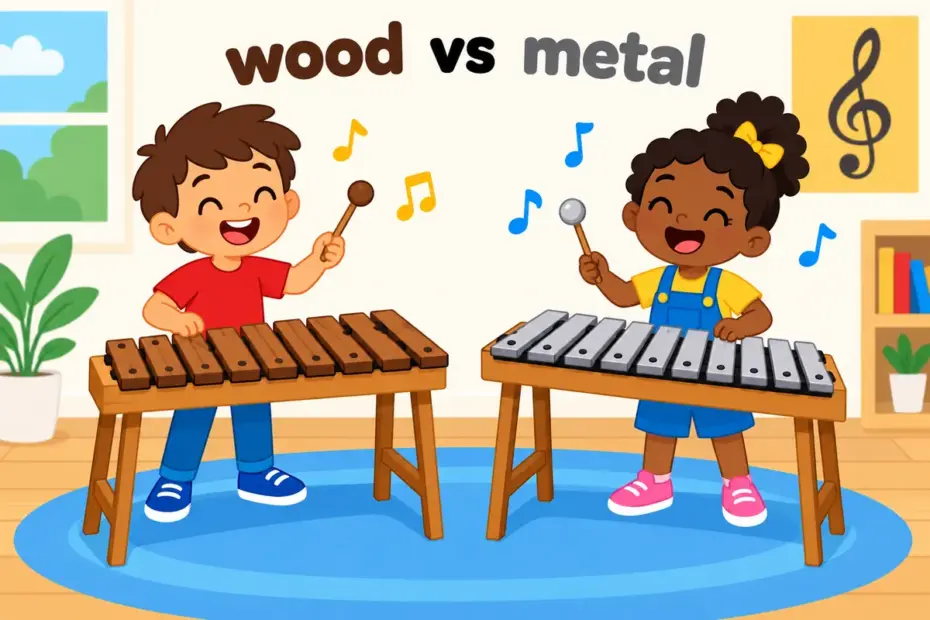
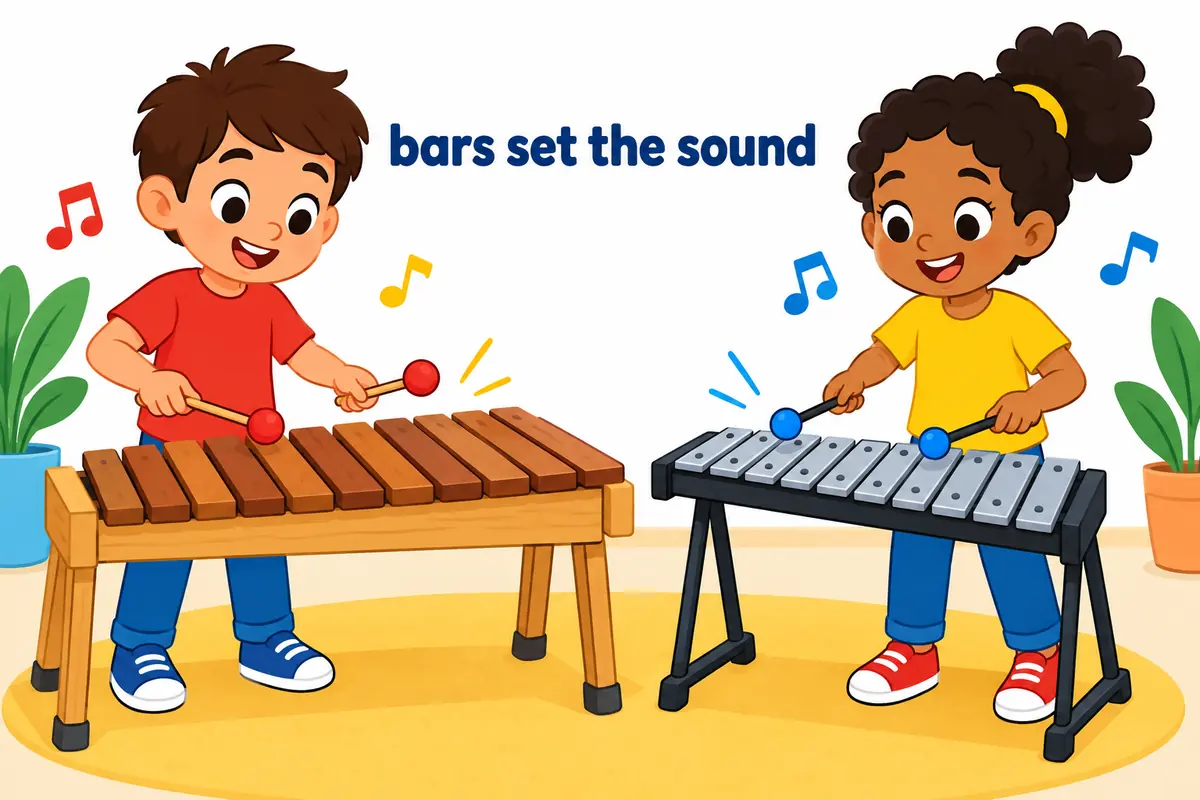
Xylophone vs glockenspiel comes down to material: the xylophone has wooden bars and a warm, dry sound, while the glockenspiel has metal bars and a bright, ringing tone. Choose the xylophone for a soft wooden melody and the glockenspiel when the music needs high, bell-like sparkle.
Xylophone vs glockenspiel at a glance
- Xylophone is a percussion instrument with wooden bars struck by mallets.
- Glockenspiel is a percussion instrument with metal bars struck by mallets.
- Both are tuned idiophones laid out like a keyboard, one note per bar.
- The xylophone sounds warm and dry; the glockenspiel sounds bright and ringing.
- Bar material, not size, is the deciding difference between the two.
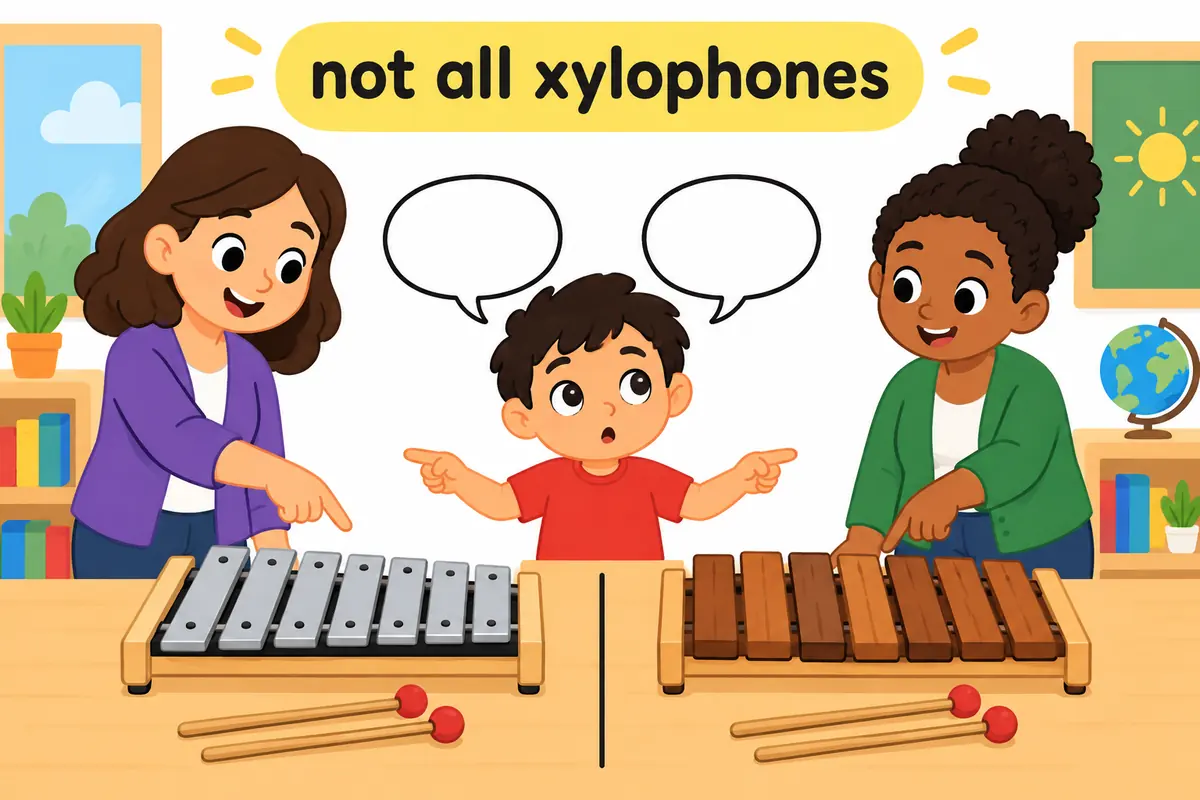
- Learners often call any barred instrument a xylophone, even when it is a glockenspiel.
Xylophone vs glockenspiel: the master comparison
The table weighs the two instruments across the criteria that actually change a decision, from bar material to the setting where each belongs.
| Attribute | Xylophone | Glockenspiel |
|---|---|---|
| Bar material | Wood, often rosewood or a synthetic substitute | Metal, usually steel or brass |
| Timbre | Warm, dry and woody | Bright, ringing and bell-like |
| Pitch range | Middle to lower range | High range |
| Sustain | Short, because each note dies quickly | Long, because each note rings on |
| Mallet head | Hard rubber or wooden | Plastic, brass or hard rubber |
| Projection | Moderate, and it blends with other instruments | Piercing, and it cuts through a full orchestra |
| Typical setting | Orchestra, classroom and folk groups | Orchestra, marching band and school bell parts |
| Name origin | From Greek xylon, meaning wood | From German Glocken, meaning bells |
| Common nickname | Rarely nicknamed | Often simply called bells |
| Blend in a group | Blends into the texture | Stands out above the texture |
The name origin is a reliable memory hook: xylon is wood, so the xylophone is the wooden one, and Glocken are bells, so the glockenspiel is the ringing one. Practical choices follow from those same materials. A wooden bar loses its energy quickly, so the xylophone speaks in short, dry taps that sit well under a melody and never smother it. A metal bar keeps vibrating, so the glockenspiel rings on after each stroke, and that ringing is what lets a single player be heard above a full ensemble. Neither instrument is harder to play in principle, but the glockenspiel punishes an uneven hand, because every stray note continues to sound while the xylophone’s notes fade at once.
Which should you use?
Five everyday situations point to a firm answer.
- You need a warm, wooden melody beneath the strings: use the xylophone.
- You need a sparkling high line above a large ensemble: use the glockenspiel.
- You are naming instruments for a school list: call the glockenspiel bells and describe the xylophone by its wooden bars.
- You want a dry, percussive rattle for a dramatic moment: use the xylophone.
- You want a bell shimmer in a carol or a lullaby: use the glockenspiel.
When a score names both, the composer is usually trading a wooden pulse against a metal shimmer. The xylophone often carries a playful or skeletal motif, and the glockenspiel often marks a magical or celebratory moment. That division is a convention rather than a rule, but it explains why arrangers rarely swap the two instruments without changing the mood.
What do xylophone and glockenspiel mean?
A xylophone is a percussion instrument with a row of wooden bars that are struck with mallets to produce notes, and a glockenspiel is a percussion instrument with a row of metal bars struck in the same way. The Cambridge entry for xylophone and the Cambridge entry for glockenspiel both place the two among tuned percussion. The names themselves record the difference: xylophone joins the Greek xylon, wood, to phone, sound, while glockenspiel joins the German Glocken, bells, to Spiel, play. One sense of each word names the physical instrument; a looser school sense uses xylophone for almost any barred classroom instrument, which is exactly where the confusion begins. The glockenspiel is the wrong choice when you need a soft, blending wooden tone, and the xylophone is the wrong choice when the music demands a penetrating bell ring; in both cases the other instrument, or a percussion alternative, serves better.
| Instrument | Plain meaning | Example sentence |
|---|---|---|
| Xylophone | A wooden-barred tuned percussion instrument | The xylophone carries the playful theme. |
| Glockenspiel | A metal-barred tuned percussion instrument | The glockenspiel rings above the strings. |
| School bells | The classroom name for a glockenspiel | Our teacher calls the glockenspiel bells. |
How do you use xylophone and glockenspiel in a sentence?
Both are countable nouns, so they take an article, and both name the instrument with the, not a bare noun.
| Pattern | Example | What it signals |
|---|---|---|
| play the + instrument | She plays the glockenspiel in the orchestra. | The definite article marks a known instrument. |
| on the + instrument | He performed a solo on the xylophone. | On marks the instrument being played. |
| a + instrument + part | The score adds a glockenspiel part. | Attributive use, no article on the second noun. |
| the instrument, also called bells | The glockenspiel, also called bells, led the tune. | Names the school term in apposition. |
| plural countable | The hall stores three xylophones. | Countable plural with a number. |
Xylophone and glockenspiel in a sentence: examples across contexts
| Context | Example sentence | Why this works |
|---|---|---|
| Orchestral programme | The glockenspiel adds a silver shimmer to the finale. | Names instrument and effect together. |
| Music lesson | Practise the scale on the xylophone before the ensemble. | On marks the practice instrument. |
| School band | Our band calls the glockenspiel bells. | Records the common classroom name. |
| Concert review | The xylophone’s dry, wooden tone suited the folk tune. | Ties timbre to repertoire. |
| Composer’s notes | Write a glockenspiel part for the final verse. | Attributive noun needs no second article. |
| Parent conversation | She is learning the xylophone this term. | Article plus instrument reads naturally. |
| Instrument shop | We stock three xylophones and two glockenspiels. | Countable plurals with numbers. |
| Film scoring | A lone glockenspiel rings over the closing scene. | Shows the long, bell-like sustain. |
| Marching band | The glockenspiel cuts through the drums outdoors. | Shows its piercing projection. |
| Classroom list | Put the xylophone beside the keyboard instruments. | Groups it with pitched percussion. |
| Rehearsal note | The conductor asked for less glockenspiel in the quiet verse. | Shows the ringing tone can overpower a soft passage. |
| Instrument care | Wipe the xylophone bars after a warm rehearsal. | Wooden bars respond to heat and moisture. |
| Primary school | Every child had a turn on the glockenspiel. | Shows the instrument’s place in classroom music. |
Word forms and grammar of xylophone and glockenspiel
| Form | Part of speech | Example |
|---|---|---|
| xylophone | Noun (singular) | The xylophone sits at the back. |
| xylophones | Noun (plural) | Two xylophones share the stand. |
| xylophonist | Noun (person) | The xylophonist waited for the cue. |
| glockenspiel | Noun (singular) | The glockenspiel rang above the strings. |
| glockenspiels | Noun (plural) | The band owns several glockenspiels. |
| bells | Noun (school name) | In class we call the glockenspiel bells. |
A player of the xylophone is a xylophonist, while players of the glockenspiel are usually described simply as percussionists or, in a school band, as bell players; the instrument mallet is the shared tool that makes both sound. Each instrument is a tuned idiophone laid out like a keyboard, and a glockenspiel part can cut through a full orchestra where the xylophone blends.
Common mistakes with xylophone and glockenspiel
- Incorrect:
The glockenspiel is a wooden xylophone.Correct: The glockenspiel is a metal-barred instrument, not a xylophone. Bar material, not size, separates the two. - Incorrect:
She played glockenspiel.Correct: She played the glockenspiel. Instrument names take the definite article in this pattern. - Incorrect:
He bought a metal xylophone.Correct: He bought a glockenspiel. Metal bars make it a glockenspiel, whatever the shop label says. - Incorrect:
The xylophone rang like a bell.Correct: The glockenspiel rang like a bell. Only the metal bars sustain a bell-like ring. - Incorrect:
a glockinspielCorrect: a glockenspiel. The spelling keeps the e before the l.
Practice using xylophone and glockenspiel
Work through the six items, then check the reasoning rather than only the answer.
- Fill the gap: The wooden ______ carries the gentle folk melody.
- Choose the better instrument: For a piercing ring above the orchestra, choose the (xylophone / glockenspiel).
- Correct the error: The player struck the metal xylophone.
- Build a sentence: use play the glockenspiel about a pupil joining the school band.
- Spot the register: which belongs in a concert programme, the glockenspiel adds a silver shimmer, or the metal bells thing makes a shiny sound?
- Rewrite with the school name: The glockenspiel led the carol. Use bells instead.
Answers
- xylophone. The word wooden points to the instrument with wooden bars.
- glockenspiel. Metal bars and a high, ringing tone belong to the glockenspiel.
- The player struck the glockenspiel. Metal bars make it a glockenspiel, not a xylophone.
- Model answer: Priya will play the glockenspiel when she joins the school band.
- The glockenspiel adds a silver shimmer. A programme keeps the instrument name and avoids vague praise.
- The bells led the carol. Bells is the common school name for the glockenspiel.
The bottom line
Xylophone vs glockenspiel is settled by one question: are the bars wood or metal? Wooden bars mean the warm, dry xylophone, and metal bars mean the bright, ringing glockenspiel. When the music needs high bell-like sparkle, choose the glockenspiel. Remember the names themselves, since xylon means wood and Glocken means bells, and keep the article when you write play the xylophone or play the glockenspiel. When a school list calls the metal instrument bells, that is the same glockenspiel under its classroom name.
Frequently asked questions about xylophone vs glockenspiel
What is a glockenspiel called in a school band?
In many schools the glockenspiel is simply called bells, and the player is a bell player. The nickname comes from its bell-like tone and its metal bars. A teacher asking for bells means the glockenspiel, not a set of orchestral bells or a handbell, so the school context usually makes the meaning clear.
Are xylophone bars always made of wood?
Traditional xylophone bars are wood, often rosewood, though many modern instruments use a synthetic material that resists wear and stays in tune. The bars must be hard and dry to give the sharp, wooden click the instrument is known for. If the bars are metal, the instrument is a glockenspiel, not a xylophone.
What kind of mallets does each instrument need?
The xylophone usually takes hard rubber or wooden mallets, which draw out its dry wooden attack. The glockenspiel usually takes plastic, brass or hard rubber mallets, which excite the metal bars into their ringing tone. Softer mallets can be used on both, but they mute the characteristic sound and are chosen only for a deliberately quiet passage.
Is the glockenspiel hard to learn?
The glockenspiel is one of the easier tuned percussion instruments to begin, because the bars are laid out like a piano keyboard and each one gives a single clear note. Beginners often start with simple melodies in a school band. The main skill is striking cleanly and evenly, since the ringing metal bars make every uneven stroke easy to hear.