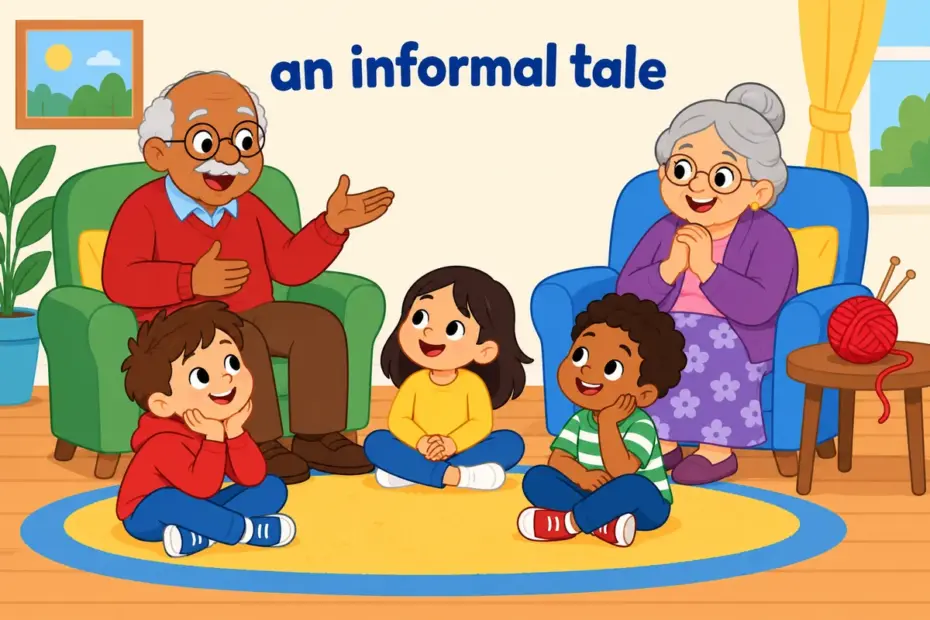
Yarn vs story comes down to register: both name an account of events, but a yarn is informal and often stretched, while a story is the neutral term. Use story for news, facts and fiction alike. Choose yarn when the telling is casual and the details may have grown in the retelling. Yarn is also the thread you knit with.
Yarn and story at a glance
- Yarn is a noun meaning spun thread, or informally a long tale; its verb means to tell stories.
- Story is a noun meaning an account of events, real or imagined.
- Only yarn carries the hint that the tale is stretched for effect.
- Story is neutral and works in news, fiction, history and everyday speech.
- The commonest error is using yarn for a sober factual report.
What do yarn and story mean?
Yarn is a noun with two lives. Its original sense is spun fibre for knitting; its second, informal sense is a long story, especially one told for amusement. The Cambridge entry for yarn records both. Story is the broad, neutral noun for any account of events, whether true, invented, written or spoken.
The overlap is real but narrow. A yarn is a kind of story, told in a particular spirit, so every yarn is a story while few stories are yarns. The difference sits in who is talking, how seriously, and how much the facts have been allowed to stretch. A witness gives a story; a neighbour over a fence gives a yarn.
| Word | Sense | Register | Example sentence |
|---|---|---|---|
| yarn | Spun thread for knitting | Neutral, concrete | She wound the yarn into a neat ball. |
| yarn | A long, informal tale | Informal | Grandad told a yarn about his first job. |
| yarn | To tell stories (verb) | Informal | They yarned for hours by the fire. |
| story | An account of events | Neutral | The report tells the story of the rescue. |
| story | A work of fiction | Neutral | She read a bedtime story to the children. |
One honest limitation applies to yarn. It is not the word for trauma, evidence or official findings; the playful hint of exaggeration makes it wrong for a serious account. Use story, account or report for anything a reader must trust. A yarn invites a raised eyebrow, so keep it to friendly, informal settings where stretching the truth is part of the fun.
Yarn vs story: the decisive differences
The comparison below weighs the two words on the criteria that actually change word choice: register, implication, what each can introduce, and how each behaves in the plural.
| Criterion | yarn | story |
|---|---|---|
| Part of speech | Noun and verb | Noun |
| Primary sense | Thread, then an informal tale | Any account of events |
| Register | Informal or dialectal | Neutral |
| Implies exaggeration | Often, yes | No |
| Typical teller | A grandparent, sailor or neighbour | Anyone, including a reporter |
| Can be official | No | Yes |
| Plural | yarns | stories |
| Common error | Used for a serious report | None, but it never implies a tall tale |
The practical rule falls out of the table: if the account must be believed, choose story; if it is told to entertain and may have grown, choose yarn. A tale sits between them, slightly more literary than story and less knowing than yarn.
Which should you use?
Five everyday situations cover nearly every choice. Match your sentence to the situation, and the word follows.
| Situation | Use | Model |
|---|---|---|
| A neutral account of events | story | The film tells the story of a long journey. |
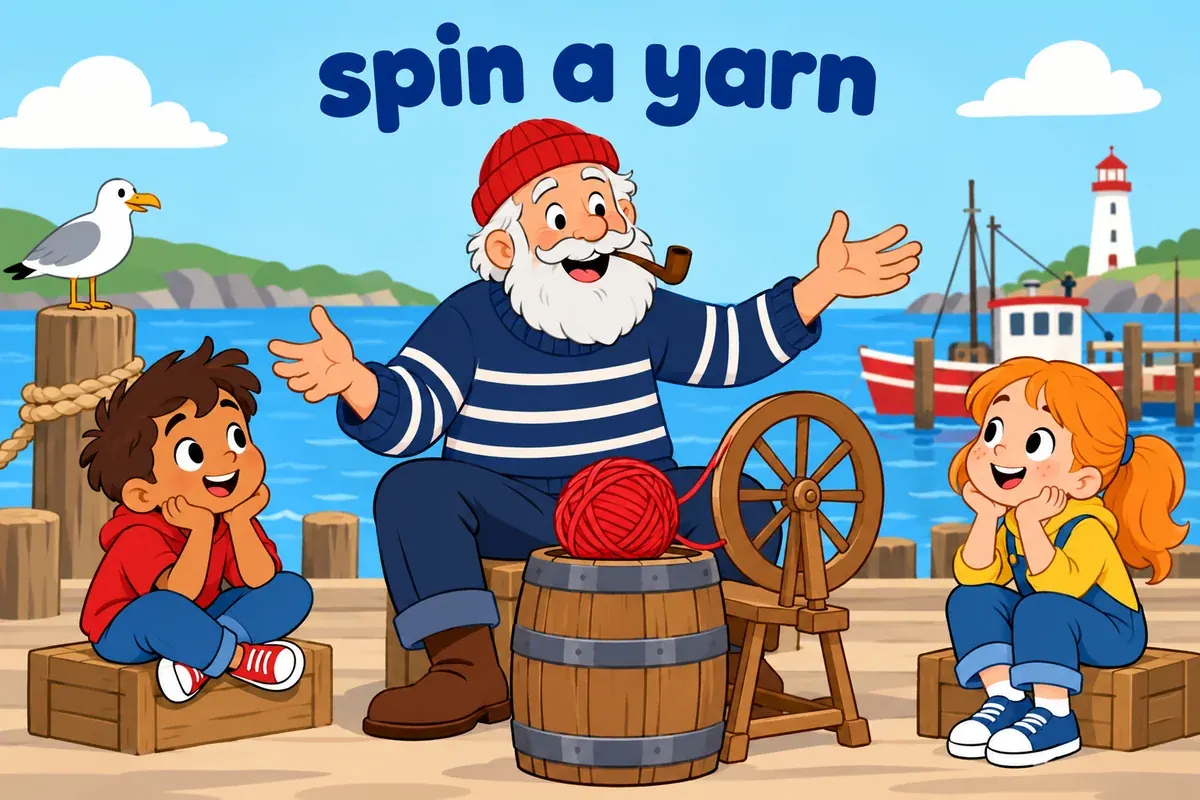
| An entertaining, stretched tale | yarn | He spun a yarn about the giant fish. |
| Knitting fibre | yarn | She bought green yarn for the scarf. |
| A news or magazine report | story | The paper ran the story on page one. |
| A short amusing incident | anecdote | She shared an anecdote about the trip. |
How do you use yarn and story in a sentence?
Both words take a teller and a content. Story happily introduces a clause with about or that, while yarn prefers the fixed idioms that give it its flavour.
| Pattern | Example | What it signals |
|---|---|---|
| tell / spin a yarn | The old sailor spun a yarn about the storm. | The set idiom for an entertaining tale. |
| a yarn about + noun | He told a yarn about a lost dog. | Names the subject of the tale. |
| tell a story | Tell me a story before bed. | The neutral, all-purpose pattern. |
| the story of + noun | This is the story of a small town. | Frames a narrative with a clear subject. |
| the story that + clause | The story that she resigned proved false. | Introduces a reported claim. |
| yarn (verb) | They yarned late into the night. | Informal, regional sense of telling tales. |
The practitioner rule is simple: story takes almost any structure, and yarn takes the idioms. When you want the neutral noun that can also mean a news item or a lie, story is the safe default; when you want the warmth and suspicion of the fireside, spin a yarn.
Yarn and story: examples across contexts
The ten sentences below move from a classroom to a police report, and each shows register doing the choosing.
| Context | Example sentence | Why this works |
|---|---|---|
| Classroom | The teacher read a story about a brave lighthouse keeper. | Neutral noun for any narrative. |
| Family gathering | Uncle Ray told a yarn about catching a fish with his hat. | Informal and clearly stretched. |
| News report | The paper led with the story of the factory closure. | Official register, no hint of invention. |
| Knitting club | She chose a soft yarn for the winter blanket. | The concrete, original sense of fibre. |
| Workplace email | Please share the full story of the missed deadline. | Neutral noun for a factual account. |
| Travel writing | Every village has a yarn about the bridge that fell. | Local, oral, possibly embellished. |
| History essay | The accepted story of the treaty has been revised. | Academic use of the neutral noun. |
| Fiction | She spun a yarn so wild that nobody believed the true part. | Plays on the exaggeration the word implies. |
| Conversation | Stop yarning and tell me what really happened. | The verb’s informal, accusing tone. |
| Police report | Witnesses gave differing stories of the crash. | Sober register where yarn would fail. |
Word forms and grammar of yarn and story
Yarn inflects as both noun and verb, and story inflects as a noun. The table also lists the spelling learners confuse with story.
| Form | Part of speech | Example |
|---|---|---|
| yarn | noun, singular | The yarn was soft and warm. |
| yarns | noun, plural | Two yarns cross in the weave. |
| yarn / yarns | verb | They yarn all afternoon. |
| yarned / yarning | verb forms | We yarned until midnight. |
| story / stories | noun, singular and plural | The children wanted three stories. |
| storey / storeys | noun, different word | A two-storey house, not a two-story one in British use. |
Note the spelling trap: in British English a floor of a building is a storey, while a narrative is a story. American English uses story for both, which is why so many learners mix them up.
Common mistakes with yarn and story
- Incorrect:
The official yarn confirmed the cause of the fire.Correct: The official story confirmed the cause of the fire. Rule: A yarn implies embellishment, so it cannot carry an official account. - Incorrect:
She spun a story about the sea.Correct: She spun a yarn about the sea, or told a story about the sea. Rule: Spin belongs with yarn, not story. - Incorrect:
He told me a yarn that he was leaving.Correct: He told me a story that he was leaving. Rule: A yarn does not introduce a that-clause. - Incorrect:
They bought story to repair the sweater.Correct: They bought yarn to repair the sweater. Rule: The fibre is yarn, never story. - Incorrect:
Please give me a short yarn of what happened.Correct: Please give me a short account of what happened. Rule: A factual summary is an account or report, not a yarn.
Practice using yarn and story
- Fill the gap: The fisherman ______ a yarn about the one that got away.
- Choose the better word: The newspaper printed the full (yarn / story) on its front page.
- Correct the error: He told a yarn that the shop was closing.
- Build a sentence: use spin a yarn about a journey home.
- Spot the register: which belongs in a police report — the witness told a story, or the witness spun a yarn?
- Rewrite with story: The old sailor yarned about his voyages. Use story as a noun instead.
Answers
- spun — the fixed idiom is spin a yarn, not tell a yarn alone.
- story — an official newspaper account takes the neutral noun.
- He told a story that the shop was closing — a yarn cannot introduce that.
- Model answer: She spun a yarn about the taxi that took her the wrong way home.
- The police report takes the witness told a story — a yarn implies exaggeration.
- The old sailor told stories about his voyages — story is the neutral noun, told not yarned.
The bottom line
Choose story for any neutral account of events and yarn for the informal, entertaining tale that may have grown in the telling; that register test settles yarn vs story almost every time. The two nuances that decide the rest are these: a yarn can also mean the fibre you knit with, and the idiom is spin a yarn, never spin a story. Keep yarn for the fireside and story for the record.
Frequently asked questions about yarn vs story
Is a yarn always untrue?
No, but it is often stretched. A yarn is a story told for entertainment, and the word hints that the details may have been enlarged in the telling. It can be entirely true. The signal is tone and social setting rather than fact: a yarn belongs beside a fire, while a report belongs on a page.
Where does the word yarn come from?
The word names spun thread, and the “tale” sense grew informally from the idea of spinning something long. That is why the idiom is spin a yarn, borrowing the picture of turning fibre into a continuous strand. The thread sense remains the primary one, so yarn still means wool or cotton for knitting.
Can yarn be used as a verb?
Yes, though mainly in informal and some regional English. To yarn means to tell stories or chat at length, as in they yarned until midnight. It stays out of formal writing, where tell stories or talk is preferred. The verb shares the noun’s easy, conversational tone.
What other word means a short amusing story?
An anecdote is a short, often amusing account of a real incident, and it is the neutral cousin of a yarn. A fib is a small, harmless lie, which is closer to an untrue story. If the account is long and invented, legend or myth may fit better than either.