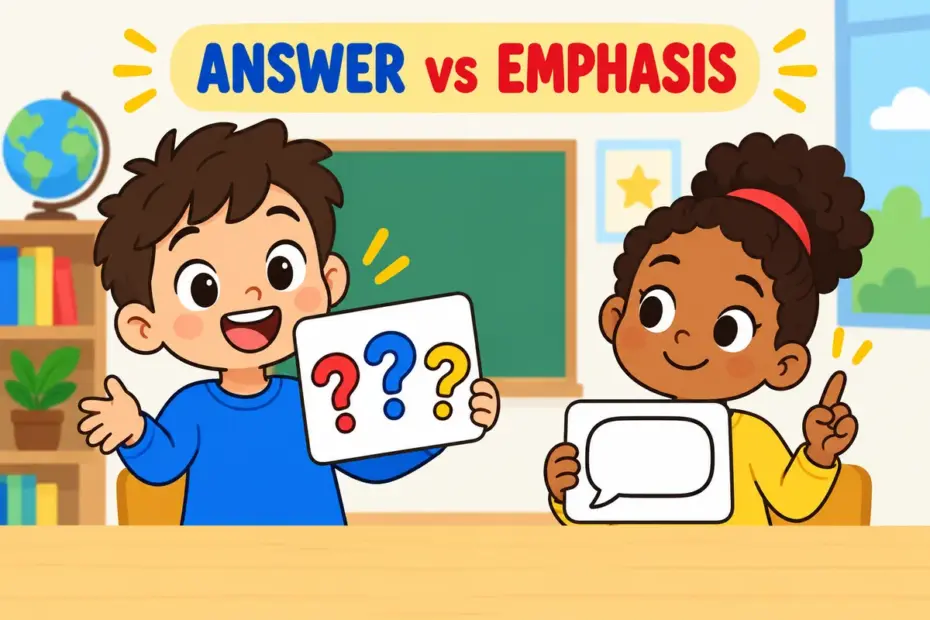
Yes vs indeed is a choice between a direct answer and an emphatic confirmation: use yes to answer a question, and indeed to confirm or intensify a statement. A plain yes works almost anywhere, while indeed adds force and a more formal tone. When in doubt, choose yes for an answer and indeed for emphasis.
Yes and indeed at a glance
- Yes is a response word, adverb and noun that gives a direct affirmative answer.
- Indeed is an adverb that confirms a statement, adds emphasis or marks surprise.
- Yes answers a yes-or-no question; indeed usually comments on a statement already made.
- Indeed is more formal and more common in British English, while yes is neutral everywhere.
- Both can stand alone, but a bare indeed is emphatic and slightly formal.
- The commonest error is using indeed to answer a simple question where yes is expected.
Yes vs indeed: the key differences
Yes answers, and indeed comments. That single split decides almost every sentence, because the two words respond to different things: yes replies to a question, while indeed reacts to a statement that has already been made. The table below holds the features a writer actually weighs.
| Criterion | yes | indeed |
|---|---|---|
| Main job | Give an affirmative answer | Confirm or intensify a statement |
| Answers a yes/no question | Always works | Possible, but sounds formal and emphatic |
| Answers a wh-question | No | No, a full statement is needed |
| Stands alone as a reply | Natural in every register | Formal and emphatic, chiefly British |
| Register | Neutral in speech and print | Formal, literary and a little old-fashioned |
| Adds emphasis to an adjective | No | Yes, as in very cold indeed |
| Typical position | First word of the reply | Mid-sentence, or after the verb it modifies |
| Common partners | yes please, yes sir, say yes | yes indeed, indeed it is, indeed so |
Read the table as one rule with several consequences. Wherever a sentence replies to a question, yes is safe; wherever it adds weight to a claim, indeed is the natural choice. The overlap is narrow, which is why the two words are so often mixed up.
Which should you use?
The setting, not personal taste, decides the word. Four everyday situations map to a firm answer, and only the formal ones invite yes in its polished form, such as affirmative in a written record.
| Situation | Use | Why |
|---|---|---|
| Agreeing with a friend | yes | A direct answer is exactly what the question invites. |
| Confirming a fact in an essay | indeed | It confirms and adds weight without repeating yes. |
| Intensifying an adjective | indeed | It follows the adjective, as in very true indeed. |
| Replying to a roll call | yes | A formal answer is expected, and yes sir or yes madam also fits. |
| Responding to a surprising claim | indeed | It agrees and raises an eyebrow at the same time. |
| Adding a courteous reply in a letter | indeed | It sounds polished, where a bare yes can feel abrupt. |
Test a sentence by asking what came just before it. If the previous line was a question, the reply wants yes; if it was a statement, the reply can take indeed. Notice that only the roll-call setting produces a written record of the word itself, while the other situations use it for colour and weight.
What do yes and indeed mean?
Yes is a response word, and also an adverb and a noun, giving a direct affirmative answer to a question or accepting an offer. The Cambridge entry for yes lists the answer, the agreement and the noun uses, and the word carries no extra emphasis on its own.
| Sense | Plain meaning | Example sentence |
|---|---|---|
| Direct answer | Reply that something is true | Yes, the train leaves at six. |
| Agreement or consent | Accept a proposal | Yes, I will take the job. |
| A vote in favour | A positive vote or voter | The motion passed with twenty yeses. |
| Answering a call | Respond when you are named | Yes, who is there? |
Indeed is an adverb that confirms a statement, adds emphasis or signals surprise at what has just been said. Its Cambridge entry for indeed shows it strengthening a claim rather than answering a question, so it usually stands after the point it comments on. Confirmation words such as certainly overlap with it in formal speech. In casual talk really does much of the emphatic work that indeed does in formal prose, which is why indeed sounds a little stiff in a text message.
| Sense | Plain meaning | Example sentence |
|---|---|---|
| Confirmation | State that something is true | The plan is risky indeed. |
| Emphasis after an adjective | Strengthen the word before it | The soup was very hot indeed. |
| Surprise or irony | React to a claim | Indeed, and who told you that? |
| Formal agreement | Agree emphatically | Indeed it is, and I am glad you noticed. |
One limitation matters. Indeed is not a drop-in replacement for yes: asked whether a shop is open, a clerk says yes, not indeed, because a bare indeed replies to a statement rather than a question. And yes cannot add emphasis, so very cold yes is meaningless, while emphasis needs indeed, as in very cold indeed.
How do you use yes and indeed in a sentence?
Yes works as a one-word reply, as a polite acceptance with please, and as a countable noun in a vote. Indeed attaches itself to the word it strengthens: after a verb, inside the frame very plus adjective plus indeed, or at the start of a clause it confirms.
| Pattern | Example | What it signals |
|---|---|---|
| yes as a one-word reply | Yes, I can help. | The basic affirmative answer. |
| yes + please or thank you | Yes please, a little more. | Politeness added to agreement. |
| yes as a countable noun | Count the yeses and the nos. | Names a vote or an approval. |
| indeed after the verb | The results are indeed surprising. | Confirms what has just been stated. |
| very + adjective + indeed | The road was very steep indeed. | The fixed emphatic frame. |
| indeed at the start | Indeed, the whole plan changed. | Adds weight to the following clause. |
| indeed as a standalone reply | Was it difficult? Indeed. | Formal, emphatic agreement. |
The punctuation follows the job. A sentence-opening yes or indeed takes a comma, as in Yes, I agree and Indeed, the plan changed. Inside the emphatic frame, the three words run together without commas, because very cold indeed is a single unit of emphasis.
Yes and indeed in a sentence: examples across contexts
The examples below keep the answer-and-confirm split while moving from a classroom to a formal letter. Where a speaker wants the sense of exactly, indeed often carries that weight without the casual tone.
| Context | Example sentence | Why this works |
|---|---|---|
| Everyday conversation | Yes, I would love a coffee. | A plain, warm affirmative answer. |
| Classroom | Yes, the answer is eight. | A direct reply to the teacher’s question. |
| Workplace email | Yes, we can meet on Thursday. | Agreement inside a short professional reply. |
| Formal letter | Indeed, the committee accepted every recommendation. | Confirms with formal weight. |
| Academic writing | The trend is indeed visible in both samples. | Adds emphasis to a stated finding. |
| News feature | The wait was long indeed. | The emphatic frame after an adjective. |
| Meeting minutes | The motion passed with twelve yeses and three nos. | The noun form records the count. |
| Debate | Indeed, and that is why the budget changed. | Agreement that also strengthens a claim. |
| Story dialogue | Yes, she said, and indeed the storm grew worse. | Shows both words working together. |
| Service counter | Yes, we have that size in stock. | Answers a question directly and briefly. |
Word forms and grammar of yes and indeed
Yes changes shape only as a noun, gaining the plural yeses, while indeed never inflects at all. The hedge surely behaves very differently, because it questions a claim instead of confirming one.
| Form | Part of speech | Example |
|---|---|---|
| yes | response word and adverb | Yes, that is correct. |
| yes | noun | One yes is enough to carry it. |
| yeses | plural noun | The yeses outnumbered the nos. |
| indeed | adverb | It is indeed ready. |
| indeed | interjection | Indeed! What a surprise. |
| indeed | no inflections | The form never changes, whatever the position. |
Common mistakes with yes and indeed
- Incorrect:
Indeed, I can come on Friday.Correct: Yes, I can come on Friday. Rule: A bare indeed answers a statement, not a yes-or-no question. - Incorrect:
It is cold very indeed.Correct: It is very cold indeed. Rule: Indeed follows the adjective, not very. - Incorrect:
He said yeses to the plan.Correct: He said yes to the plan. Rule: Yes stays singular after said; yeses only counts votes. - Incorrect:
Indeed said the committee approved it.Correct: Indeed, the committee approved it. Rule: Indeed cannot introduce a quotation or act as a reporting verb. - Incorrect:
Very indeed true.Correct: Very true indeed. Rule: The emphatic frame puts very before the adjective and indeed after it.
Practice using yes and indeed
Work through the six items, then check the reasoning rather than only the answer.
- Fill the gap: ______, the report is accurate on every point.
- Choose the better word: Was the climb hard? (Yes / Indeed), harder than anything we had tried.
- Correct the error: Indeed, I would like the window seat.
- Build a sentence: use very … indeed about a long journey.
- Spot the register: which suits a formal letter — Indeed, we accept your terms, or Yeah, fine?
- Rewrite for emphasis: change The soup was hot into the very-plus-adjective-plus-indeed frame.
Answers
- Indeed — the word confirms the statement that follows.
- Yes — a direct answer to the question comes first; indeed can then add force.
- Yes, I would like the window seat — indeed does not answer a simple offer.
- Model answer: The journey was very long indeed.
- Indeed, we accept your terms — the formal letter keeps the formal adverb.
- The soup was very hot indeed — the fixed frame places indeed after the adjective.
The bottom line
Use yes vs indeed as a choice of job, not of meaning: yes gives the direct affirmative answer, and indeed confirms or intensifies a statement. The two facts that settle most sentences are that only yes replies to a question and that only indeed adds emphasis. Where both seem possible, answer first and let indeed supply the weight.
Frequently asked questions about yes and indeed
Can yes be a noun?
Yes can be a countable noun meaning a positive vote, an approval or an affirmative answer, and its plural is yeses. The word then takes an article and a plural verb, as in the yeses outnumbered the nos. In ordinary replies the same word works as an adverb, so context tells you which role it is playing.
How do you use indeed for emphasis?
The commonest emphatic pattern is very plus an adjective plus indeed, as in the road was very steep indeed. Indeed can also follow the verb it strengthens, as in the results are indeed surprising. Both positions push the statement harder, which is why indeed rarely appears in a plain, neutral sentence.
What does a standalone indeed mean?
A standalone indeed is a formal, emphatic agreement, often with a hint of raised eyebrows. Asked whether something was difficult, a speaker who answers simply indeed confirms it strongly and formally. In everyday talk most people answer yes or exactly instead, and reserve indeed for moments that deserve extra weight.
Is yeah the same as yes?
Yeah and yes mean the same thing, but they live in different registers. Yeah is casual speech and relaxed writing, while yes is neutral and safe in almost any setting, from a chat to a formal letter. Indeed is not a third register of yes at all, because it confirms a statement rather than answering a question.