Youll vs You Will: Choosing the Right Form
The choice behind youll vs you will is a choice of register rather than correctness: you’ll suits everyday speech, dialogue and informal writing, while you will suits formal prose, emphasis and any position where the verb is left out. Both are standard English, and the full form is never wrong, only sometimes stiff.
Youll vs you will at a glance
- You’ll is the contraction of you will; you will is the two-word full form.
- Both are standard English, and the difference is register, not meaning.
- Contractions dominate speech, dialogue and informal online writing.
- Full forms dominate contracts, academic prose and emphatic statements.
- The contraction cannot end a sentence or carry the main stress.
- The commonest error is writing youll without an apostrophe.
Youll vs you will: the master comparison
The two forms share one meaning and differ along a few decision points. The table below weighs them side by side, and the rest of the page expands each criterion.
| Criterion | You’ll | You will |
|---|---|---|
| Form | One word with an apostrophe | Two words, pronoun plus modal verb |
| Register | Speech, dialogue, informal writing | Formal, academic and legal writing |
| Emphasis | Weak and flowing | Strong, able to carry stress |
| Sentence position | Needs a verb after it | Can stand alone at the end |
| Negation | You won’t | You will not |
| Questions | Will you? uses the full form | Will you? is the standard inversion |
| Rhythm | Speeds the sentence up | Slows and formalises it |
| Clarity | Fine when the verb follows | Safer where confusion is costly |
What does youll mean?
Youll, correctly written you’ll, is the contraction of you will, made by joining the pronoun and the modal verb and marking the missing letters with an apostrophe. The Cambridge entry for youll treats it as the spoken and informal form, while the full form you will carries the same meaning in formal registers.
| Form | Full version | Typical use |
|---|---|---|
| you’ll | you will | Predictions, promises and offers in speech |
| you’ll be | you will be | Continuous future, as in you’ll be waiting |
| you’ll have | you will have | Future perfect, as in you’ll have finished |
| you won’t | you will not | The negative future in speech |
| you will not | you will not | Emphatic or formal negative |
The contraction is the right choice in almost all conversation and in writing that imitates speech. It is the wrong choice in a contract, a formal abstract or a legal warning, where the full form protects against ambiguity. It is also impossible at the very end of a sentence, because the modal verb has to be there in full.
How do you use youll and you will in a sentence?
The contraction behaves like a single helping verb and always pulls the next verb with it. The full form splits into two words, which frees the second word to move or to stress.
| Pattern | Example | What it signals |
|---|---|---|
| you’ll + base verb | You’ll find the keys on the hook. | An informal prediction or promise. |
| you will + base verb | You will finish the report today. | A firm or formal statement. |
| you’ll have + past participle | You’ll have finished by noon. | Future perfect in everyday speech. |
| you won’t + base verb | You won’t need a ticket. | Negative future, informal. |
| Will you + base verb? | Will you help me with this? | A question, which the contraction cannot form. |
Youll vs you will: examples across contexts
The same future meaning appears in very different clothes. Each row shows why the form fits the context, from a text message to a legal warning.
| Context | Example sentence | Why this works |
|---|---|---|
| Text message | You’ll love this film, I promise. | Speech-like writing uses the contraction. |
| Formal letter | You will receive a decision within ten working days. | Business correspondence prefers the full form. |
| Dialogue in fiction | You’ll never guess who called. | Quoted speech sounds natural with the contraction. |
| Contract | You will not assign this agreement without consent. | Legal text avoids contractions for clarity. |
| Emphatic reply | You think I will not, but you will see that I always keep a promise. | The full form carries the stress on will. |
| Tag sentence | I expect you to try, and I think you will. | The verb is omitted, so the full form is required. |
| Email to a colleague | You’ll get the file before lunch. | A relaxed workplace email keeps the contraction. |
| Academic writing | You will find three objections to this view in section two. | Formal guidance uses the full form. |
| Advertisement | You’ll never pay full price again. | Marketing mimics speech to sound friendly. |
| Instructions | You will need a photo and proof of address. | Forms prefer the unambiguous full form. |
| Storytelling | You’ll have reached the top by sunrise. | The future perfect softens a long journey. |
| Warning sign | You will not enter without a pass. | Short formal warnings use the full form. |
| Podcast script | You’ll hear the difference in the first minute. | The spoken register welcomes the contraction. |
| Customer service | You will receive a link by email. | Routine service messages often keep the full form. |
| News analysis | You will find the full details in tomorrow’s paper. | Reported guidance prefers the full form. |
Notice the pattern: the more a sentence wants to sound like a person talking, the more likely it is to use the contraction. The more it wants to sound like an institution, the more likely it is to use the full form.
Two habits decide most cases. The first is sentence weight, because a short spoken sentence leans on the contraction while a long formal one leans on the full form and grows heavier with every added clause. The second is what follows the verb, since the contraction cannot be left holding an empty space where a verb should be.
Which should you use?
| Situation | Recommended form | Why |
|---|---|---|
| Message to a friend | You’ll | The contraction matches spoken rhythm. |
| Essay or thesis | You will | Academic prose avoids contractions. |
| Policy or contract | You will | The full form removes ambiguity. |
| Novel dialogue | You’ll | Quoted speech sounds stilted without it. |
| Emphatic correction | You will | Stress falls on will, which cannot shrink. |
Word forms and grammar of youll and you will
| Form | Type | Example |
|---|---|---|
| you’ll | contraction | You’ll see the sign on the left. |
| you will | pronoun + modal | You will see the sign on the left. |
| you’ll have | future perfect contraction | You’ll have seen it by then. |
| you will have | future perfect full form | You will have seen it by then. |
| you won’t | negative contraction | You won’t miss the turn. |
| you will not | negative full form | You will not miss the turn. |
| youll | non-standard spelling | Avoid; the apostrophe is required. |
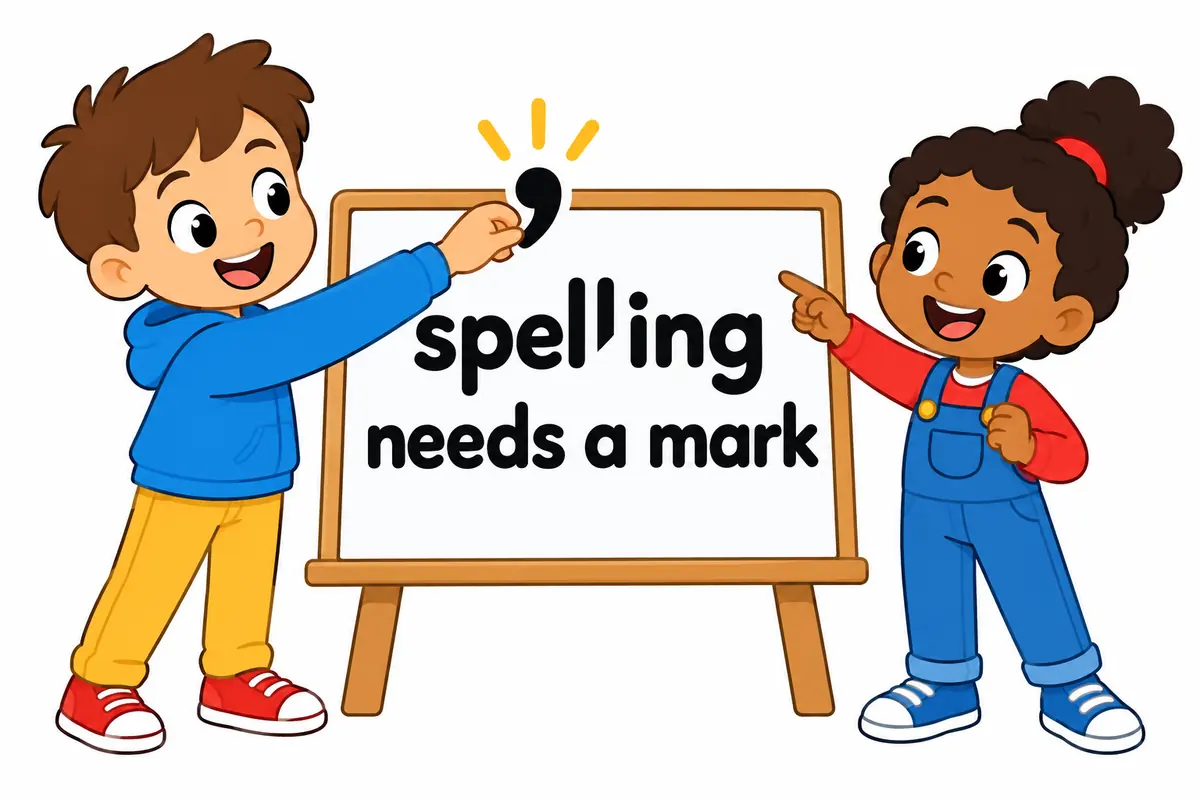
The contraction belongs to a small family that includes contraction forms of the other pronouns, and each one marks the missing letters the same way. An apostrophe is not decoration here; it is the signal that letters have been removed, and leaving it out changes a correct contraction into a misspelling.
Common mistakes with youll and you will
- Incorrect: Youll finish it later. Correct: You’ll finish it later. Rule: the contraction needs its apostrophe.
- Incorrect: I think you’ll. Correct: I think you will. Rule: a verb cannot be omitted after the contraction.
- Incorrect: Will you’ll come? Correct: Will you come? Rule: question inversion uses the full form.
- Incorrect: You’ll of heard by now. Correct: You’ll have heard by now. Rule: write have, not of.
- Incorrect: You will’nt be late. Correct: You will not be late. Rule: the negative is won’t or will not, not will’nt.
- Incorrect: In this contract you’ll indemnify the company. Correct: In this contract you will indemnify the company. Rule: formal documents avoid contractions.
Practice using youll and you will
- Fill in the blank: You ___ find the office on the second floor. (informal note)
- Choose the better form: In the lease, (you’ll / you will) pay the rent on the first day.
- Correct the error: I doubt you’ll.
- Build a sentence: Write a text promising a friend a gift, using the contraction.
- Spot the register: Which sentence belongs in an academic essay? (a) You’ll notice a pattern. (b) You will notice a pattern.
- Correct the error: Will you’ll join us for dinner?
- Fill in the blank: By June, you ___ have saved enough for the trip. (spoken)
- Choose the better form: For emphasis in a speech, (you’ll / you will) succeed.
Answers
- You’ll — the informal note matches the contraction.
- you will — leases and contracts avoid contractions.
- I doubt you will — the contraction cannot stand without a following verb.
- You’ll get your present on Friday — the contraction suits a friendly message.
- (b) — academic prose keeps the full form.
- Will you join us for dinner? — questions use the full form.
- You’ll have saved enough — the spoken future perfect uses the contraction.
- you will — the stress falls on will, which cannot shrink.
The bottom line
You’ll and you will mean exactly the same thing, so the right choice depends on register and on grammar. Use you’ll for speech, dialogue and informal writing, and switch to you will for formal documents, for emphasis and whenever the verb is left out at the end of a sentence. A pronoun joined to a verb by a missing apostrophe is still a contraction, not a new word, and correct spelling always restores that mark.
Frequently asked questions about youll vs you will
Is youll a real word?
Not as written without an apostrophe. The real word is you’ll, the standard contraction of you will, and it appears in dictionaries as an informal and spoken form. The spelling youll is simply a typo that dropped the apostrophe. If you see it in a draft, adding the mark between the u and the double l restores the correct contraction.
Can youll ever mean something different from you will?
No, the contraction and the full form carry the same future meaning. The only difference is tone and emphasis, because the full form can stress will while the contraction cannot. That is why you will sounds firmer in a warning, and you’ll sounds friendlier in a chat. Neither version changes the facts of the sentence.
Why do people write youll without an apostrophe?
Most often because a phone keyboard drops the apostrophe, or because the writer is typing quickly on a small screen. Some informal chat styles leave apostrophes out on purpose to look casual. In any edited writing, though, the missing mark reads as an error rather than a choice, so the contraction should always carry its apostrophe.
Can youll appear at the end of a sentence?
No, the contraction cannot stand at the end, because the modal verb has to be present in full when it is not followed by another verb. A sentence such as I think you will is correct, while I think you’ll cannot be completed by the contraction alone. This is the clearest grammatical reason to choose the full form.