Z Words for Kids: Easy Examples, Sounds & Activities
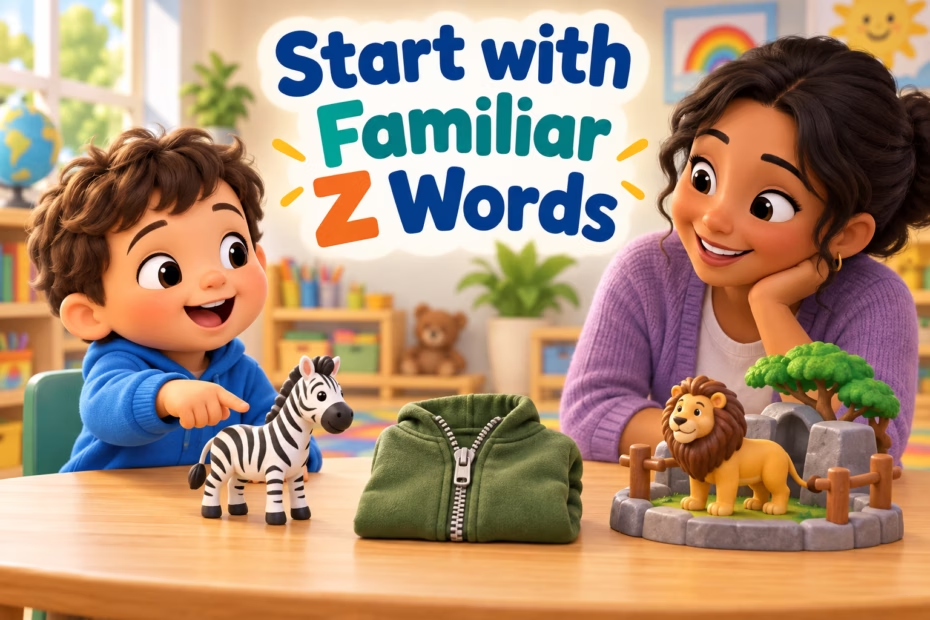
Z words for kids are English words that begin with the letter Z, such as zebra, zoo, zipper, zero, and zigzag. For preschool and kindergarten learners, start with familiar objects and animals, say the opening /z/ sound, and connect each word to a picture, movement, or short sentence.
- Easy starters: zebra, zoo, zip, zipper, zero, zigzag, zoom, and zucchini.
- Letter and sound: Z is the letter; /z/ is the sound heard at the start of many Z words.
- Say the letter name: English speakers say “zee” in the United States and “zed” in the United Kingdom.
- Make it hands-on: use picture cards, a zipper, a drawn zigzag, or a pretend zoo.
- Go at the child’s pace: keep technical words such as zygote for older learners or a science lesson.

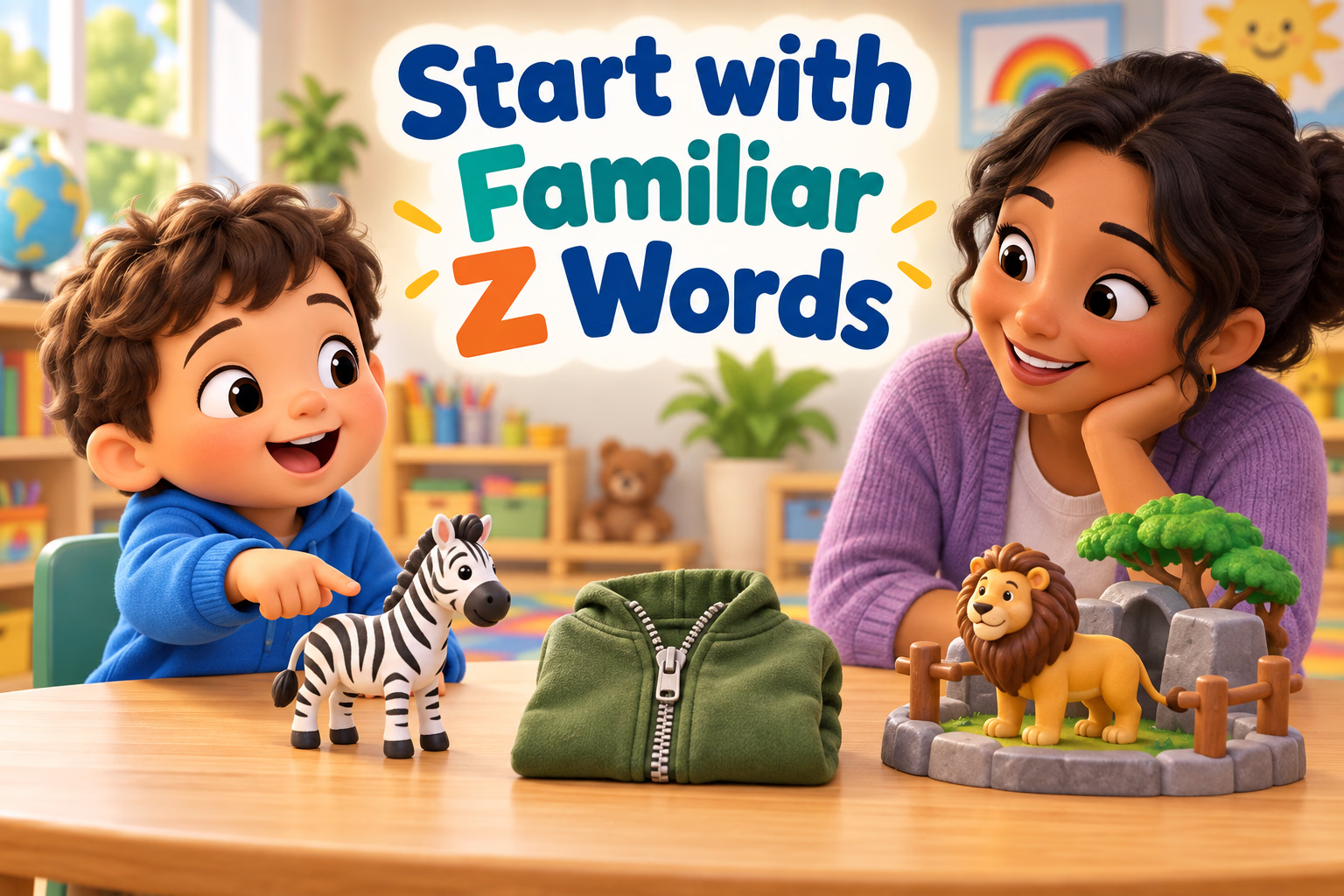
What are easy Z words for kids?
Easy Z words name familiar animals, places, objects, numbers, foods, or actions. Use a short meaning and one concrete sentence so a child can connect the word’s sound, print, and meaning.
| Word | Simple meaning | Example sentence |
|---|---|---|
| Zebra | A wild African animal with stripes. | The zebra has stripes. |
| Zoo | A place where people can see animals. | We saw a zebra at the zoo. |
| Zipper | A fastener that joins the sides of a coat or bag. | I pulled up my zipper. |
| Zip | To close something with a zipper, or to move quickly. | I can zip my jacket. |
| Zero | The number 0; none. | There are zero blocks in the box. |
| Zigzag | A line or path with sharp turns like the letter Z. | Draw a zigzag on the page. |
| Zoom | To move very quickly. | The toy car can zoom. |
| Zucchini | A long squash, often green or yellow. | We sliced a zucchini for dinner. |
| Zany | Very silly or unusual in a funny way. | The puppet wore a zany hat. |
| Zest | The colorful outer peel of citrus fruit; it can also mean energy or enthusiasm. | We added lemon zest to the muffins. |
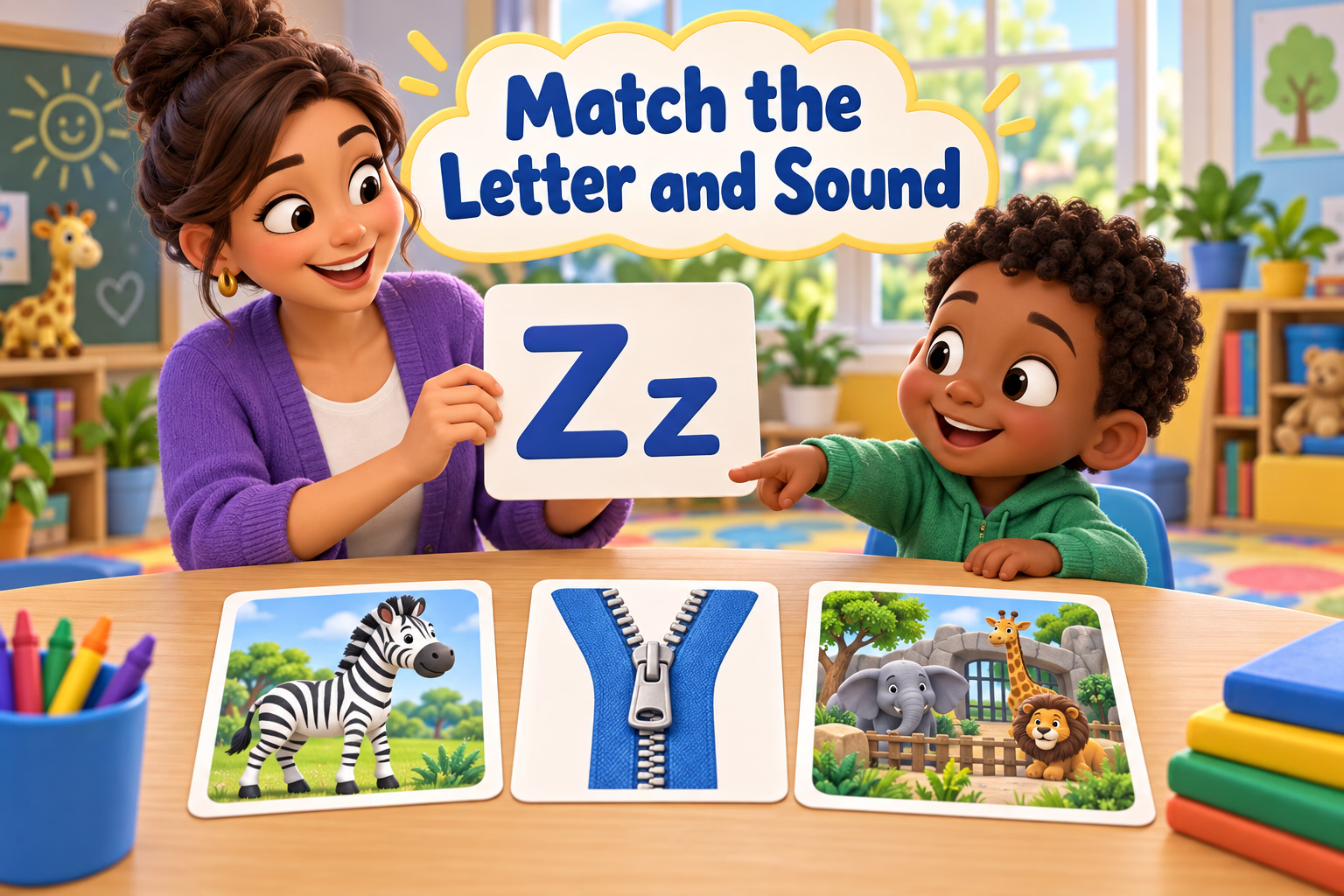
Zebra, zoo, and zipper are especially useful first examples because many children can picture them. Zero and zigzag bring in number and shape ideas; zucchini adds a food word. The British word zip is also commonly used for the fastener called a zipper in American English.
What sound does the letter Z make?
At the start of common words such as zebra, zip, and zero, Z represents the voiced /z/ sound. The letter name—“zee” or “zed”—is different from the sound a child says while sounding out a word.
| What the child sees or hears | Example | How to explain it |
|---|---|---|
| Letter name | Z is “zee” (US) or “zed” (UK). | This is how we name the letter. |
| Beginning sound | zebra begins with /z/. | Stretch the first sound gently: “zzzzebra.” |
| Word meaning | A zebra is a striped animal. | The sound and letters belong to a real word with meaning. |
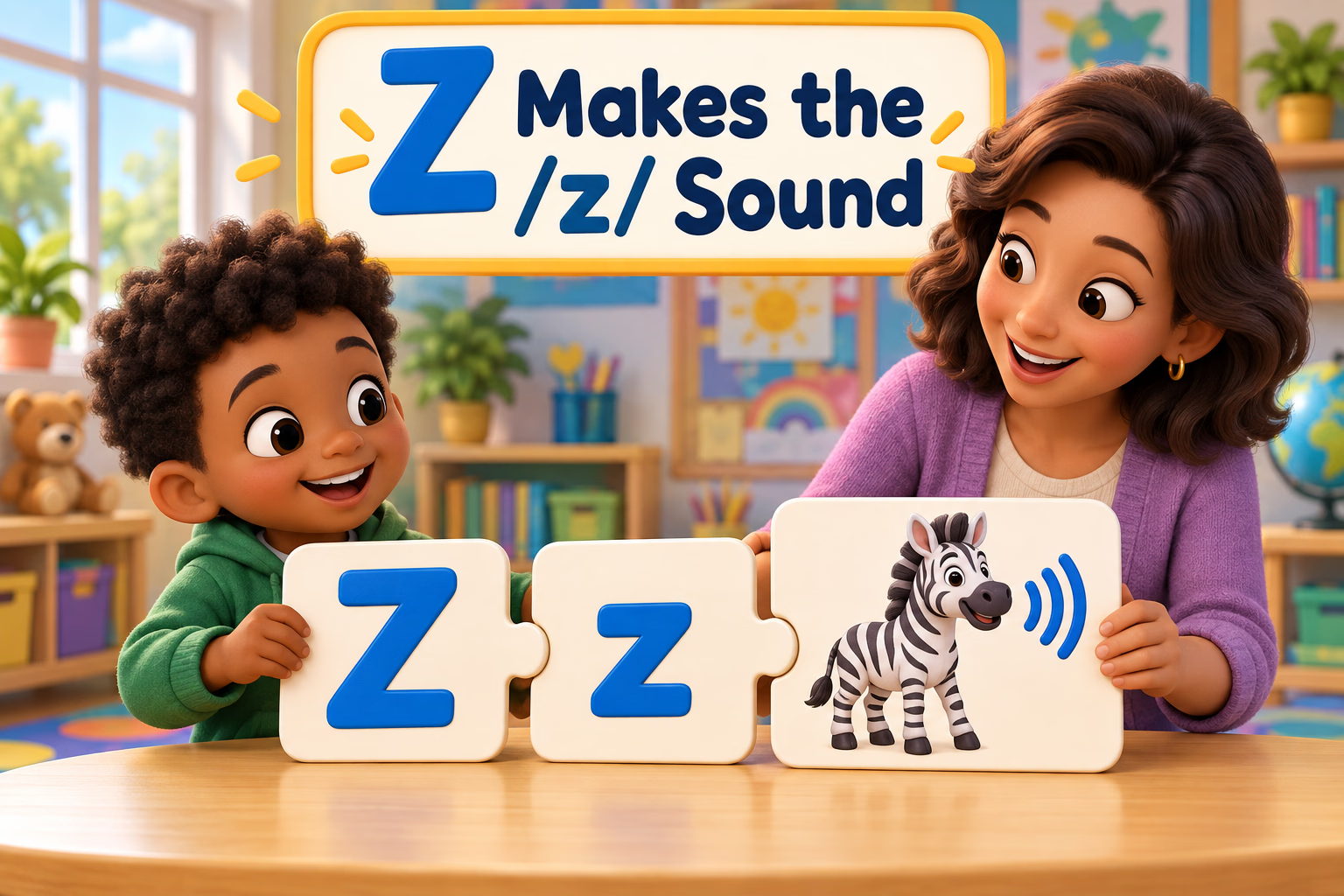
Try the “buzz” cue: ask the child to make a gentle /z/ sound and notice the vibration in the throat, then say zoo or zip. Do not make the child hold the sound for long; one clear sound at the beginning is enough. A word can start with the same sound but a different letter—xylophone starts with /z/ for many English speakers but is written with X—so focus this activity on words that begin with the letter Z.
Reading Rockets recommends listening for and comparing initial sounds, including using picture cards and saying the words in sentences. Keep the activity short and playful: the goal is to notice the sound and connect it to print, not to memorize a long list in one sitting.
How can you teach Z words through play?
Children can practice Z words with a five-minute sound hunt, a letter trace, and one spoken sentence. Use picture cards if a room has few objects that begin with Z.
- Choose three pictures: use a zebra, zipper, and zoo card; add one picture whose name starts with another sound.
- Say each name: stretch the first sound once and ask which pictures begin with the same /z/ sound.
- Match Z and z: show uppercase and lowercase letters, then trace a zigzag in the air or on paper.
- Use a word in a sentence: “The zipper closes my bag.” Ask the child to point to the zipper or act out the sentence.
- Review another day: bring back the same cards before adding a few new words.
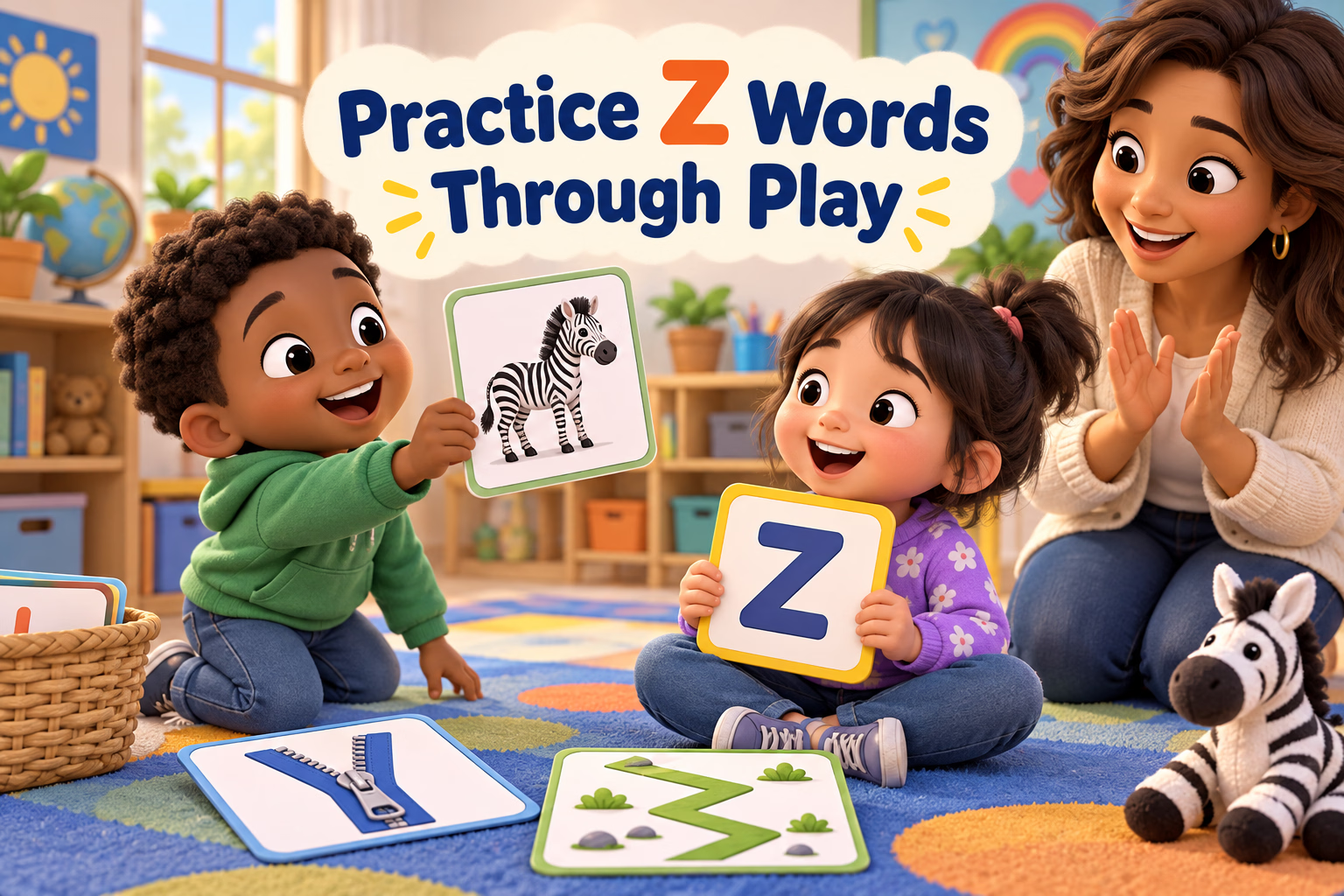
For a picture sort, place two or three Z pictures beside two non-Z pictures, say every name aloud, and let the child group the matching first sounds. Then ask for one sentence about a chosen picture. This keeps sound practice connected to vocabulary and meaning, as recommended in early-literacy activities.
Which Z words are best for preschool and kindergarten?
Start with concrete words a child already recognizes, then introduce longer or less familiar words as enrichment. A scientific word is still a real Z word, but a preschooler does not need to learn it before everyday vocabulary.
- Preschool starters: zebra, zoo, zip, zipper, zero, and zigzag.
- Kindergarten practice: zoom, zucchini, zany, and zest, with an example or picture for each.
- Enrichment: zebu (a type of cattle), zephyr (a light wind), zoetrope (an early animation device), and zoology (the study of animals).
- Older science vocabulary: zygote and zoonosis are specialized biology terms; introduce them only when they fit the child’s lesson.
Vocabulary lists are not age tests. If a child cannot explain zephyr, return to a word they can see, touch, draw, or use in a familiar sentence.
Frequently Asked Questions About Z Words for Kids
What are some four-letter words that start with Z?
Examples include zero, zest, zing, zone, and zebu. For young children, begin with zero and a concrete example, such as “zero blocks,” because zest and zone have meanings that may need more context. Zebu is an animal name for an older learner.
What animal starts with Z?
A zebra is the most familiar animal name that starts with Z. A zebu is another real animal: a type of cattle with a hump on its back. Use a zebra picture for first-sound practice, then offer zebu as an optional animal-vocabulary extension.
Does Z always sound like /z/?
In common starter words such as zebra, zipper, and zero, the first letter Z represents /z/. The letter name is “zee” or “zed.” English spellings are not always one-letter/one-sound, so teach the familiar examples first and handle unusual spellings separately.
Is zucchini an easy word for children?
Zucchini is a useful food word, but it is longer than zoo or zip. Show the vegetable, say the word naturally, and clap its syllables if that helps. In British English, the same vegetable is usually called a courgette.
How many Z words should a child learn at once?
There is no required number. For a short first lesson, choose three familiar picture words, repeat their names, and sort them against one or two non-Z words. Add more words after the child can recognize or say the first sound without turning practice into a memory test.
Conclusion: Start Z Words for Kids With Familiar Examples
Start Z words for kids with familiar examples such as zebra, zoo, zipper, zero, and zigzag. Pair each word with its /z/ sound, a clear meaning, and a playful sentence; save specialized terms for lessons where they add useful meaning.
Sources for Z word meanings and sound games
See Cambridge Dictionary’s entry for Z for its letter name and alphabet position; its entries for zebra, zero, zigzag, zipper, zucchini, and zest; and Reading Rockets’ guides to phonological awareness and initial-sound activities.
Earlier Z-word examples and activities
The previously published article is preserved below for completeness. Its longer science lists are best used as enrichment; the age-graded examples above provide the starter vocabulary and clarify the first /z/ sound.
Hey there! Are you looking for some fun and educational ways to teach your little ones about the letter “Z”? Well, you’ve come to the right place! In this article, I’ll be sharing a list of engaging and age-appropriate “Z” words that are perfect for preschool and kindergarten-aged children. From zebras to zippers, we’ll explore a whole world of words that start with the letter “Z”. So, let’s dive in and make learning the alphabet an exciting adventure for your little learners!
Why are Z Words Important for Kids?

As an experienced educator, I understand the importance of introducing young learners to a variety of words that start with the letter “Z.” Incorporating these words into their vocabulary can benefit them in several ways. Let me explain why z words are important for kids.
1. Expanding Vocabulary: Introducing words that start with the letter “Z” can help expand a child’s vocabulary. It allows them to learn new sounds and associate them with specific letters. This early exposure to a diverse range of words sets the foundation for language development.
2. Letter Recognition: Learning words that begin with the letter “Z” reinforces letter recognition skills. By associating the unique sound and shape of the letter “Z” with specific words, children become more familiar with its appearance and pronunciation.
3. Phonemic Awareness: Exploring “Z” words promotes phonemic awareness, which is crucial for developing reading and writing skills. Children learn to identify the phonemes within words, leading to improved decoding and spelling abilities.
4. Cognitive Development: Introducing “Z” words fosters cognitive development in children. By engaging with these words, they enhance their memory, concentration, and problem-solving skills. It encourages them to think and make connections between different words.
5. Language Exploration: Learning “Z” words provides an opportunity for children to explore the English language in a fun and interactive way. It sparks their curiosity, encourages communication, and helps them express their thoughts more effectively.
6. Confidence Building: Each new word a child learns boosts their confidence. As they successfully incorporate “Z” words into their vocabulary, they feel a sense of accomplishment, which motivates them to continue learning and exploring new words.
Preschool Words that Start with Z
| Word | Sentence for Kids |
|---|---|
| Zebra | Zebras have black and white stripes. |
| Zoo | Let’s visit the zoo and see the animals. |
| Zipper | Can you zip up your jacket? |
| Zigzag | Draw a zigzag line on your paper. |
| Zero | Zero means no or nothing. |
| Zucchini | Zucchinis are green vegetables. |
| Zest | Add some lemon zest for extra flavor. |
| Zany | Clown’s funny antics are always zany. |
| Zoom | The car zoomed down the race track. |
4 Letter Words for Toddlers that Start with Z
| Word | Fun Sentence for Kids |
|---|---|
| Zeal | Zoe showed great zeal when she chased her colorful kite. |
| Zest | Add a little zest to your fruit salad for a tasty treat. |
| Zero | There are zero cookies left in the cookie jar! |
| Zing | The lightning made a loud zing sound during the storm. |
| Zoom | Let’s go outside and watch the cars zoom down the street. |
| Zany | The clown at the circus was very zany and made us laugh. |
| Zone | The playground is a fun zone where you can play with friends. |
| Zips | The kangaroo’s baby, called a joey, zips around the zoo. |
| Zebu | Have you ever seen a zebu? It’s a type of humpbacked cow. |
| Zine | Mommy reads me a bedtime zine before I go to sleep. |
| Zoon | The zoo is full of different animals to learn about. |
Words That Start With Z For Kids

| Word | Fun Sentence for Kids |
|---|---|
| Zebra | The zebra has black and white stripes. |
| Zoo | Let’s visit the zoo to see lions and bears. |
| Zigzag | Draw a zigzag line like a lightning bolt. |
| Zest | Add a little zest to your lemonade for flavor. |
| Zero | There are zero apples left in the basket. |
| Zip | Zip up your jacket to stay warm in the cold. |
| Zucchini | Mom made delicious zucchini bread for breakfast. |
| Zany | The clown at the circus was very zany. |
| Zoom | Watch the rocket zoom into the sky. |
| Zipline | Riding the zipline through the forest was an adventure. |
| Zestful | The colorful playground is a zestful place to play. |
Science Words That Start With Z
| Word | Fun Sentence for Kids |
|---|---|
| Zoology | Zoology is the study of animals and their behaviors. |
| Zenith | The sun is at its zenith when it’s highest in the sky. |
| Zero gravity | Astronauts experience zero gravity in space. |
| Zooplankton | Tiny zooplankton are an important part of the ocean food chain. |
| Zygote | A zygote is formed when an egg cell and a sperm cell combine. |
| Zeppelin | The Zeppelin was an early type of airship. |
| Zircon | Scientists use zircon to study the Earth’s history. |
| Zoetrope | A zoetrope is a device that creates the illusion of motion from still images. |
| Zoonosis | Some diseases can pass from animals to humans; they are called zoonoses. |
| Zeolite | Zeolites are minerals used to purify water and air. |
| Z-axis | In 3D graphics, the Z-axis represents depth. |
School Words That Start With Z
| Word | Fun Sentence for Kids |
|---|---|
| Zoom | We use Zoom to have virtual classes with our teacher. |
| Zebra | I colored a zebra in my art class today. |
| Zipper | My backpack has a zipper to keep my books safe. |
| Zucchini | We learned about different vegetables like zucchini. |
| Zero | I got zero mistakes on my spelling test! |
| Zest | Add a little zest to your writing to make it exciting. |
| Zigzag | The line on the paper looked like a zigzag. |
| Zone | The library is a quiet zone for reading books. |
| Zany | Our teacher told a zany joke that made us laugh. |
| Zeppelin | We read a book about a Zeppelin in history class. |
| Zestful | I felt zestful when I solved the math problem. |
Cool Words That Start With Z For Kids
| Word | Fun Sentence for Kids |
|---|---|
| Zephyr | The gentle zephyr rustled the leaves in the trees. |
| Zenith | The sun reached its zenith, making it super bright. |
| Zest | I added a little zest to my pasta for extra flavor. |
| Zany | The zany clown made silly jokes that made us laugh. |
| Zipline | Riding a zipline through the forest is an adventure. |
| Zombie | Watch out for the spooky zombie in the Halloween game. |
| Zigzag | We made a zigzag path in the sand at the beach. |
| Zeppelin | The giant zeppelin floated gracefully in the sky. |
| Zodiac | Do you know which zodiac sign you belong to? |
| Zestful | We had a zestful time playing games at the party. |
| Zucchini | Mom cooked delicious zucchini bread for breakfast. |
Positive Words That Start With Z for Kids
| Word | Fun Sentence for Kids |
|---|---|
| Zeal | I tackled my school project with great zeal and enthusiasm. |
| Zest | Add some zest to your day by trying something new. |
| Zenith | Aim for the zenith of your potential in everything you do. |
| Zealot | Being a zealot for kindness means spreading joy and love. |
| Zippy | Our puppy is always so zippy, running around the yard. |
| Zeppelin | Imagine traveling in a huge zeppelin high in the sky. |
| Zestful | We had a zestful time playing games at the park. |
| Zest for life | Having a zest for life means enjoying every moment. |
| Zestful | Let’s approach our tasks with a zestful attitude. |
| Zing | The surprise party had a lot of zing and excitement. |
| Zen | Take a deep breath and find your inner zen. |
Benefits of Teaching Z Words to Kids

Enhances Vocabulary
Introducing young learners to words that start with the letter “Z” can have significant benefits for their vocabulary development. Vocabulary growth is crucial for effective communication and comprehension. By exposing children to a variety of words that begin with “Z,” they can expand their word bank and improve their understanding of different concepts. This exposure to new words not only helps children express themselves more effectively but also allows them to comprehend more complex texts as they progress in their education.
Improves Literacy Skills
Learning “Z” words can also have a positive impact on a child’s literacy skills. When children are exposed to words that start with the letter “Z,” they strengthen their letter recognition abilities. This helps them in reading and writing tasks, as they become more familiar with the alphabet and the sounds associated with each letter. Additionally, exploring “Z” words can reinforce phonemic awareness, which is the ability to identify and manipulate individual sounds in words. Phonemic awareness is a foundational skill for reading and spelling, and it plays a crucial role in overall literacy development.
Boosts Cognitive Development
The benefits of teaching “Z” words extend beyond vocabulary and literacy. Cognitive development, which encompasses thinking, problem-solving, and memory, can be enhanced through exposure to new words. Learning and using “Z” words prompts children to think critically, make connections, and expand their mental capacities. This cognitive stimulation encourages the development of important skills such as reasoning, concentration, and creativity. Moreover, this active engagement with language can improve memory retention, as children remember and retain new words in their growing mental lexicon.
As educators, it is essential to recognize the significance of introducing “Z” words to young learners. Enhancing vocabulary, improving literacy skills, and boosting cognitive development all contribute to a child’s overall language and cognitive growth. By incorporating “Z” words into educational activities and daily interactions, we can help children build a strong foundation for future academic success.
Fun and interactive ways to teach Z words to kids
Fun and Interactive Ways to Teach “Z” Words to Kids
Alphabet Games
One of the most engaging ways to teach “Z” words to kids is through alphabet games. These games combine learning with play, making it enjoyable for young learners. Here are some alphabet game ideas to introduce and reinforce “Z” words:
- Z is for Zoo: Create a zoo-themed game where kids have to find and match pictures of animals that start with the letter “Z.” For example, they can match a picture of a zebra, a zip-lining monkey, or a zesty zebra. This activity not only helps kids recognize the letter “Z” but also expands their animal vocabulary.
- Zap the Letter: In this game, write down a mix of random letters, including the letter “Z,” on cards or sticky notes. Place them on the floor or wall. Then, give the kids a fly swatter and ask them to zap the letter “Z” whenever you call it out. This game reinforces letter recognition, hand-eye coordination, and listening skills.
Storytime with “Z” Words
Storytime is an excellent opportunity to introduce “Z” words in a fun and interactive way. By incorporating “Z” words into stories, you can captivate the imagination of young learners and reinforce their understanding of the letter. Here are some ideas:
- Zany Adventures: Create a silly story featuring a character whose name starts with a “Z.” For example, introduce a character named Zack who embarks on zany adventures. As you read the story, emphasize the “Z” words, such as Zack zooming through a zebra-filled zoo or finding a treasure map with zigzag paths. This storytelling activity enhances vocabulary, listening skills, and comprehension.
- Word Cloud Tales: Use a word cloud generator to create a cloud of “Z” words related to a specific theme or topic. Choose a few key words and incorporate them into a story. For example, if the theme is “zoo,” include words like zebra, zookeeper, and zip line. As you read the story, emphasize and explain these “Z” words. This activity encourages word recognition and contextual understanding.
“Z” Word Scavenger Hunt
A “Z” word scavenger hunt is an exciting and active way to help kids discover and interact with “Z” words in their environment. Here’s how to organize it:
- Preparation: Create a list of “Z” words that are commonly found in everyday objects or surroundings, such as zipper, zero, and zucchini. Write each word on a separate index card.
- Hunt: Hide the index cards around the classroom or outdoor area. Provide kids with a basket or bag, and let them explore and collect the cards. Encourage them to say the word aloud when they find a “Z” word card. This activity promotes word recognition, observation skills, and physical activity.
By incorporating these fun and interactive activities into your teaching, you can enhance your students’ vocabulary, letter recognition, and overall language development. Allow them to explore and engage with “Z” words in a hands-on and enjoyable way, setting a solid foundation for their educational journey.
Z Words for Kids
When it comes to teaching young learners, incorporating interactive and engaging activities is essential. Today, I want to share some exciting “Z” words that you can introduce to your preschool and kindergarten students. These words will not only enhance their vocabulary but also help them strengthen their language skills in a fun and enjoyable way!

Zoo
Let’s start with everyone’s favorite “Z” word – Zoo! Taking kids to the zoo or organizing a virtual visit offers a fantastic opportunity to introduce them to different animals starting with the letter “Z.” As you guide them through the zoo, you can point out creatures like zebras, zebras, and even zookeepers! Encourage your students to say the words out loud and make connections between the letter “Z” and these fascinating zoo-related terms.
Zebra
One of the most recognizable and beloved animals starting with the letter “Z” is the zebra. With its distinctive black and white stripes, the zebra captivates young minds. To effectively teach this word, you can use picture cards or storybooks featuring zebras. Engage your students by asking questions such as “What sound does a zebra make?” or “Where do zebras live?” Encourage them to describe the zebra using adjectives like “striped” or “wild.”
Zigzag
Next up is the word “zigzag.” This word is not only fun to say, but it also introduces the concept of directional movement. You can help your students understand the meaning of “zigzag” by drawing zigzag lines on a whiteboard or using colorful tape on the floor. Encourage them to trace the lines with their fingers and say the word aloud. You can also incorporate the word “zigzag” into art activities, where students create drawings with zigzag patterns or cut out zigzag shapes from colored paper.
By incorporating these “Z” words into your teaching, you’ll not only expand the vocabulary of your preschool and kindergarten students but also make learning enjoyable and interactive. Whether it’s exploring the zoo, learning about zebras, or tracing zigzag lines, the possibilities for incorporating these words into your lessons are endless!
Keep the momentum going and continue to explore other “Z” words and activities that enhance language development in young learners. Stay tuned for more ideas and suggestions to make teaching unforgettable and engaging for your students.
Conclusion
By incorporating fun and interactive activities, we can successfully introduce and reinforce “Z” words to preschool and kindergarten kids. Alphabet games like “Z is for Zoo” and “Zap the Letter” engage children and make learning enjoyable. Storytime provides an excellent opportunity to incorporate “Z” words into stories, such as the adventures of Zack, a zany character. Moreover, organizing a “Z” word scavenger hunt encourages kids to actively explore their environment and interact with “Z” words.
Throughout this article, we have discussed specific “Z” words like “Zoo,” “Zebra,” and “Zigzag,” and provided ideas on how to teach and incorporate them into lessons. By expanding their vocabulary, we are fostering language development in young learners.
As you continue your journey of teaching “Z” words, remember to explore other exciting activities and words that can further enhance language skills in your students. By making learning fun and interactive, we can create a positive and engaging environment that encourages children to develop a love for language and literacy.