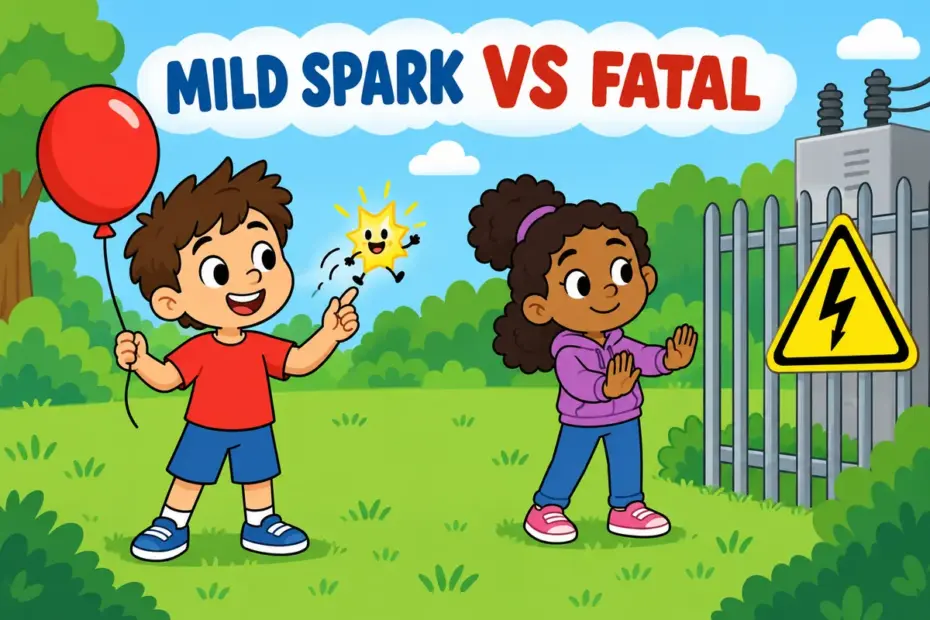
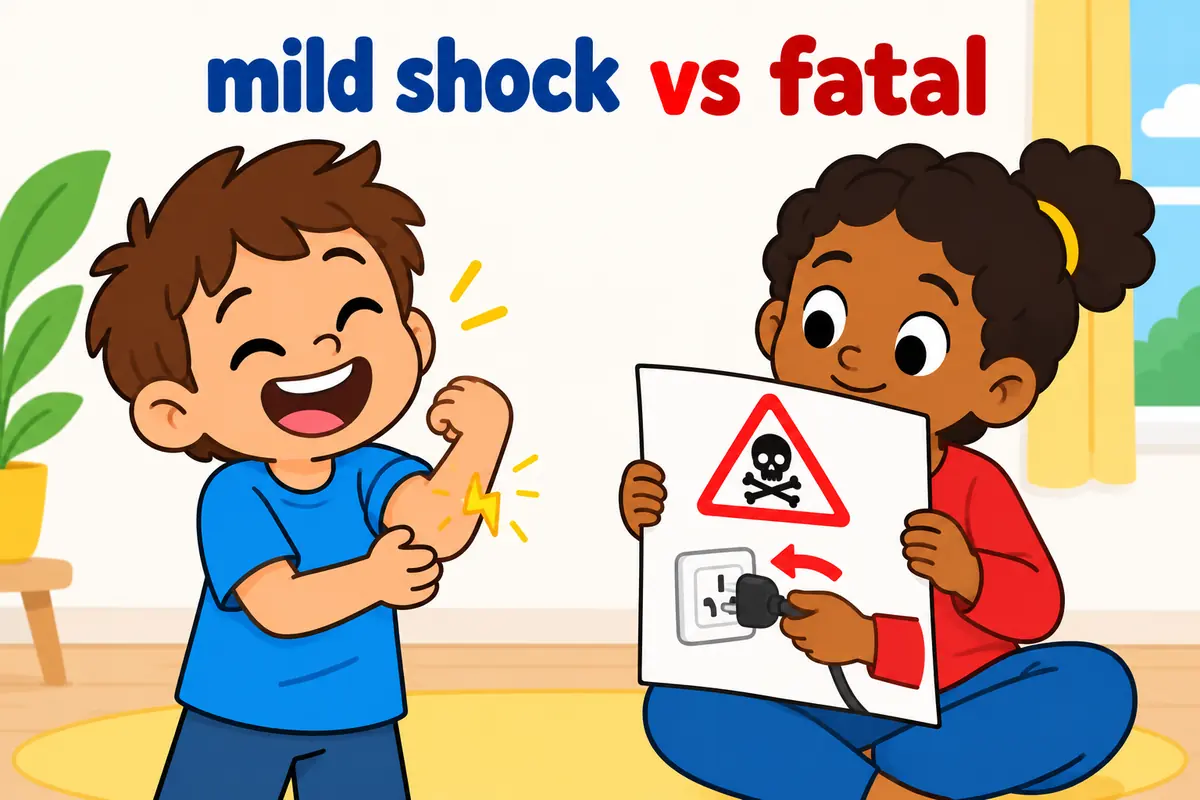
With zap vs electrocute, use electrocute when electricity kills or injures a person, and use zap for a mild shock or an informal hit of electricity. The choice turns on severity and register rather than current: a fence can zap a curious hand, while a faulty cable can electrocute a worker. When nobody is hurt, zap is the safer word.
Zap vs electrocute at a glance
- Zap is informal and can mean a small shock, a quick hit, a fast movement or a burst of energy.
- Electrocute means to kill a person with electricity, and loosely to injure one gravely.
- Zap works for people, animals, objects and games; electrocute applies to people.
- Zap can be transitive or intransitive; electrocute is transitive and takes a person.
- The commonest error is using electrocute for a harmless tingle.
What do zap and electrocute mean?
Zap is an informal verb meaning to give a sudden electric shock, and by extension to destroy, disable or move quickly. The Cambridge entry for zap lists the shock sense first and the informal damaging senses after it. Zap can stand alone as a verb in sentences such as the wire zaps, while electrocute always needs somebody or something to act on. The Cambridge entry for electrocute gives the core sense of killing a person by sending electricity through the body, while everyday speakers often stretch it to describe a grave injury.
| Word | Sense | Plain meaning | Example sentence |
|---|---|---|---|
| zap | Mild shock | Give a quick, usually harmless electric shock | The loose wire zapped my finger. |
| zap | Informal destroy | Disable or erase something quickly | One click zapped the whole file. |
| zap | Move quickly | Go fast, in casual speech | We zapped through the shopping. |
| electrocute | Fatal shock | Kill a person with electricity | A faulty drill electrocuted the builder. |
| electrocute | Grave injury | Injure badly with electricity, in looser use | The engineer was nearly electrocuted by the cable. |
One limitation belongs here. Neither word suits a static charge or a battery. When the current is harmless and the tone is neutral, shock or tingle is more accurate, because zap adds informality and electrocute claims that somebody was killed.
Zap vs electrocute: the deciding differences
The master table below weighs the two words against the criteria that settle most sentences. Read the severity row first, because it removes the largest group of errors, and the register row second, because it decides tone even when nothing is at stake.
| Criterion | zap | electrocute |
|---|---|---|
| Severity | Often mild; can destroy an object | Fatal, or at least grave |
| Register | Informal, playful, technical slang | Neutral to formal, serious |
| Usual target | A person, an animal, an object or a game figure | A person only |
| Outcome | A shock, a hit, a fast action or a burst of energy | Death or severe injury |
| Typical settings | Homes, games, gadgets, comics, casual talk | Safety reports, news, courts, workplaces |
| Grammar | Transitive or intransitive | Transitive; a person is the object |
| Tone risk | Trivialising a serious event | Overstating a minor shock |
| Frequency in speech | Common and casual | Rare, and often used loosely |
Verdict: keep electrocute for death and grave injury, and keep zap for everything smaller, lighter and faster.
How do you use zap and electrocute in a sentence?
Give zap a target and it stays transitive, or leave the target out and it becomes intransitive. Give electrocute a person, because an object cannot be electrocuted. The table sets the main patterns side by side.
| Pattern | Example | Which word |
|---|---|---|
| zap + object | The fence zapped the dog. | zap, transitive |
| zap + through or past | We zapped through the chores. | zap, informal movement |
| zap (no object) | Do not touch it; it zaps. | zap, intransitive |
| electrocute + person | Faulty wiring electrocuted two workers. | electrocute, transitive |
| be electrocuted by | He was electrocuted by a live rail. | electrocute, passive |
| electrocution | Electrocution is a leading cause of site deaths. | electrocute, noun form |
A single sharp pulse is often described as a jolt rather than a zap. For a device ruined by current, fry is the informal verb many writers pick.
Zap vs electrocute in a sentence: examples across contexts
The two words rarely appear in the same setting, and the table shows why. Each row names the context, the sentence and the reason that particular word fits.
| Context | Example sentence | Why this works |
|---|---|---|
| Home safety | The toaster zapped me when I touched the plug. | A small, survivable shock is exactly what zap covers. |
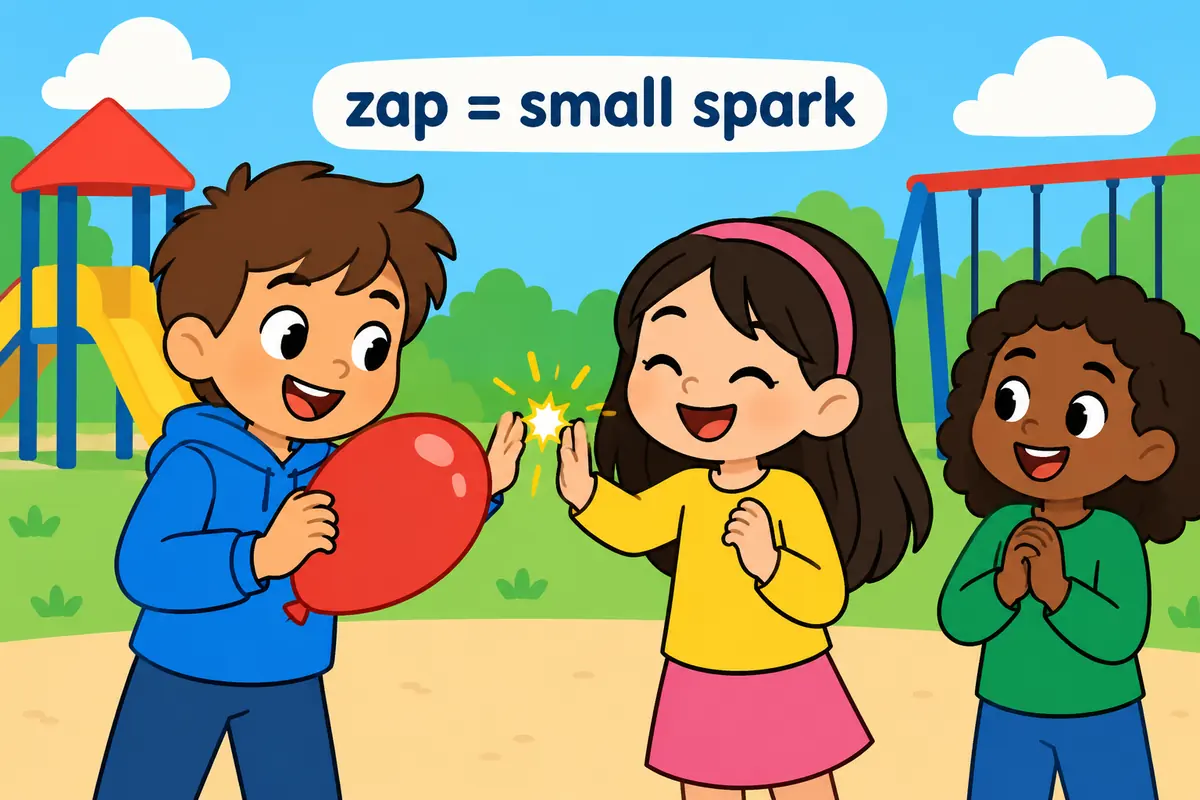
| Science class | A balloon can zap your hair with static. | Harmless static suits the informal verb. |
| Video game | The alien zapped three players in a row. | The informal destroy sense fits fast-paced play. |
| Conversation | Let us zap through the emails before lunch. | Uses the speed sense, which has nothing to do with danger. |
| Workplace safety | The notice warns that untagged cables can electrocute staff. | Formal warning plus a fatal risk calls for the serious verb. |
| News report | A farm worker was electrocuted by an irrigation pump. | Reporting a death requires the precise verb. |
| Legal writing | The court found the firm liable after the apprentice was electrocuted. | The grave outcome supports the formal term. |
| First aid | Switch off the current before touching anyone it has electrocuted. | The context assumes a life-threatening current. |
| Sports report | The winger zapped past two defenders. | Informal speed, with no electricity in sight. |
| Children’s writing | The wizard’s wand zapped the puddle into steam. | Playful magic suits the light verb rather than the fatal one. |
| Technical report | Contact with the overhead line can kill or injure, so never describe the cable as harmless. | A neutral report prefers kill or injure to either colourful word. |
Which should you use?
Match the word to the outcome, not to the current. These five situations cover the decisions readers face most often.
- A friend gets a small shock from a car door: write zap, because the shock is harmless and the tone is friendly.
- A safety notice warns about a live rail: write electrocute or kill, because the risk is death and the register is formal.
- A game character loses health to a lightning bolt: write zap, because nothing real is injured.
- A news story reports a fatal workplace accident: write electrocute, because the outcome is known and the register is serious.
- A neutral technical report about a survivor: write electric shock or injury, because electrocute would overstate what happened.
The dividing line is simple: if the sentence could appear above a hospital report, avoid zap, and if it could appear in a group chat, avoid electrocute.
Word forms and grammar of zap and electrocute
Both verbs inflect regularly, and electrocute also forms a common noun. The table gives the forms learners need, and two related nouns cause most of the spillover: electricity is the invisible force, while an electrician is the person trained to work with it safely.
| Form | Word | Part of speech | Example |
|---|---|---|---|
| zap | zap | verb, base form | The collar zaps the dog gently. |
| zaps | zap | verb, third person singular | A spark zaps the sensor. |
| zapped | zap | verb, past and past participle | The surge zapped the router. |
| zapping | zap | verb, present participle | We heard a zapping sound. |
| electrocute | electrocute | verb, base form | Live rails electrocute without warning. |
| electrocuted | electrocute | verb, past and past participle | The worker was electrocuted instantly. |
| electrocution | electrocute | noun | Electrocution is a leading cause of site deaths. |
| electric | electric | adjective | Take care with electric tools. |
Common mistakes with zap and electrocute
- Incorrect:
The toy electrocuted my hand and it tingled.Correct: The toy zapped my hand and it tingled. Rule: Electrocute means death or grave injury, so a tingle is a zap or a shock. - Incorrect:
He was zapped by the live rail and died.Correct: He was electrocuted by the live rail. Rule: A fatal current needs the precise verb. - Incorrect:
The lightning electrocuted the old tree.Correct: The lightning zapped the old tree. Rule: Electrocute applies to people, not objects. - Incorrect:
She electrocuted from the socket.Correct: She was electrocuted by the socket. Rule: Electrocute is transitive and takes by, never from. - Incorrect:
The fly was electrocuted by the zapper, then flew off.Correct: The fly was zapped by the zapper, then flew off. Rule: If the subject survives, zap is the only word that fits.
Practice using zap and electrocute
Work through the seven items, then check the reasoning rather than only the answer.
- Fill the gap: The static from the door handle ______ my elbow.
- Choose the better word: Two linesmen were (zapped / electrocuted) when the cable fell.
- Correct the error: The faulty lamp electrocuted my finger, but it was fine.
- Build a sentence: use electrocute about a workplace safety warning.
- Spot the register: which belongs in a safety leaflet — the rail can zap you, or the rail can electrocute you?
- Rewrite neutrally: A survivor was electrocuted. Keep the meaning but avoid overstating.
- Use the speed sense: describe crossing a busy street quickly with zap.
Answers
- zapped — static is harmless, so the informal word fits.
- electrocuted — the sentence reports a fatal accident, which needs the serious verb.
- The faulty lamp zapped my finger, but it was fine — a surviving finger cannot be electrocuted.
- Model answer: The warning states that the overhead line can electrocute anyone who climbs the mast.
- The rail can electrocute you — a safety leaflet is formal and about death.
- Model answer: The worker survived an electric shock.
- Model answer: We zapped across the road before the lights changed.
The bottom line
Decide zap vs electrocute by asking whether the current killed or injured somebody and how formal the sentence is. The two nuances that decide most cases are these: electrocute needs a person and a grave outcome, while zap covers the mild shock, the quick hit and the fast movement in an informal tone. When a survivor is involved and the register is neutral, electric shock says exactly what happened.
Frequently asked questions about zap and electrocute
Is zap a real word?
Yes, zap is a standard verb, though it belongs to informal and technical registers rather than to formal prose. Dictionaries list the electric-shock sense alongside the senses of moving fast and destroying something. In a safety report, shock or injure is the safer choice, but in everyday writing zap is perfectly clear.
Can electrocute mean to injure?
Strictly, electrocute means to kill by electric shock, and that is the sense dictionaries lead with. In everyday use many people say electrocuted when the victim survived, and readers usually understand it from context. Careful writers keep the fatal sense and use electric shock or injury for a survivor.
What is the noun form of electrocute?
The noun is electrocution, as in the inquest recorded a death by electrocution. The noun keeps the fatal sense of the verb, so it suits formal and legal writing. There is no everyday noun from zap, which is why a sentence needing a name for a small shock usually writes shock or static instead.
Is zap only about electricity?
No, zap has spread well beyond electricity. It can mean to destroy or erase something quickly, as in zap a file, to move fast, as in zap across town, or to heat food in a microwave. The electric-shock sense remains the core, but context decides which meaning a sentence carries.