Skip to content
A diverse group of young adults shares music and conversation beneath the words “Hippie or Hippy?”

Hippie vs Hippy: Spelling, Meaning & Use

    Hey there! Are you often confused about whether it’s “hippie” or “hippy”? Well, you’re not alone! In this text, I’ll guide you on how to use these terms appropriately, so you can confidently express yourself without any doubt.
    We’ll start by exploring the origins and meanings of both “hippie” and “hippy” to understand their subtle differences. Then, I’ll share some handy tips on when to use each t
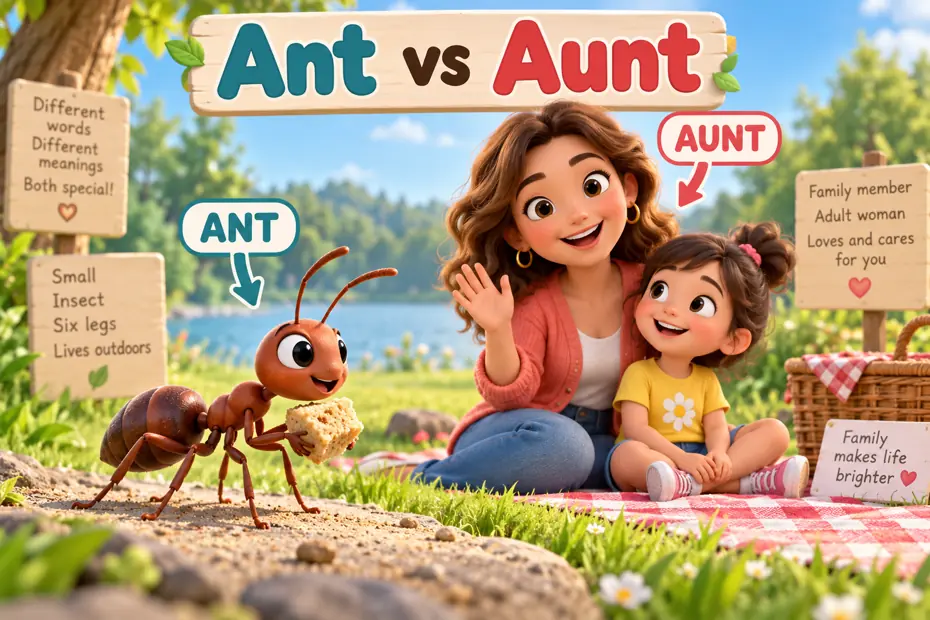
    Ant insect and aunt family member in a picnic scene

    Mastering the Difference Between Ant and Aunt: Tips for Using Them Appropriately

      Have you ever found yourself confused between the words “ant” and “aunt”? I know I have! These two words may sound similar, but their meanings couldn’t be more different. In this text, I’ll guide you through the proper usage of “ant” and “aunt” so you can confidently choose the right word in any situation.
      First, let’s clarify the difference between an “ant” and an “aunt.” An “ant” refers to a sma

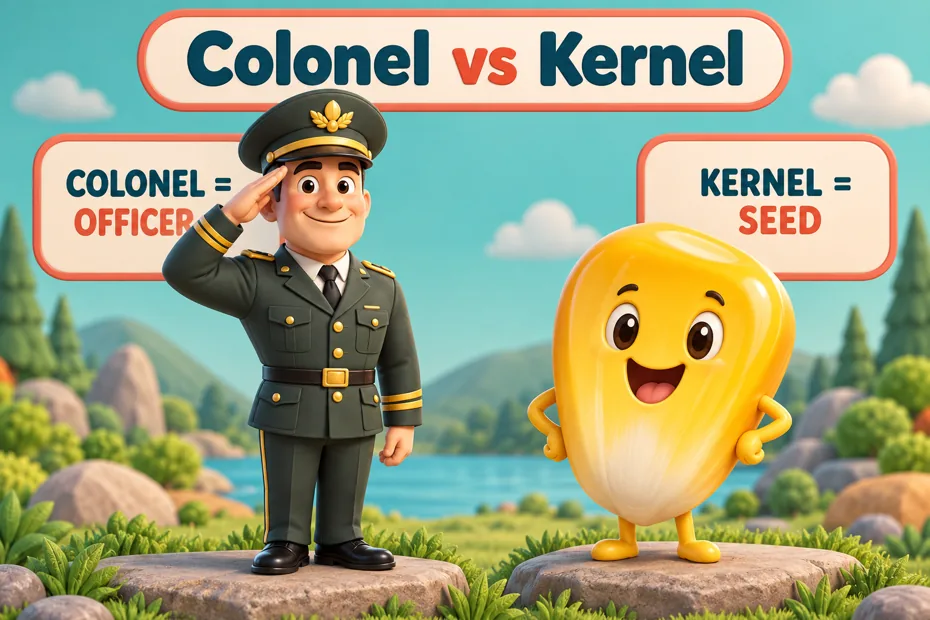
      Military colonel and corn kernel showing officer and seed meanings

      Understanding the Difference: Colonel vs Kernel and Using Them Appropriately

        Colonel vs kernel: a colonel is a military officer or, in some contexts, the holder of an honorary title. A kernel is a seed or an inner, essential part, including a computer operating system’s core component. Both words normally sound like “KER-nuhl,” so meaning determines the correct spelling. Colonel names a rank or title; kernel… Read More »Understanding the Difference: Colonel vs Kernel and Using Them Appropriately

        Book mascot presents Gas, gassed and gassing spelling cards.

        Gased vs Gassed vs Gast: Understanding and Using Appropriately in English Language Writing

          Gased vs Gassed vs Gast: the Correct Modern Usage Quick answer: Write gassed for the past tense or past participle of gas, and gassing for its -ing form. Gased is not the usual modern spelling. Gast is a separate, obsolete verb meaning “scare”; it is not a replacement for gassed in contemporary writing. Correction to… Read More »Gased vs Gassed vs Gast: Understanding and Using Appropriately in English Language Writing

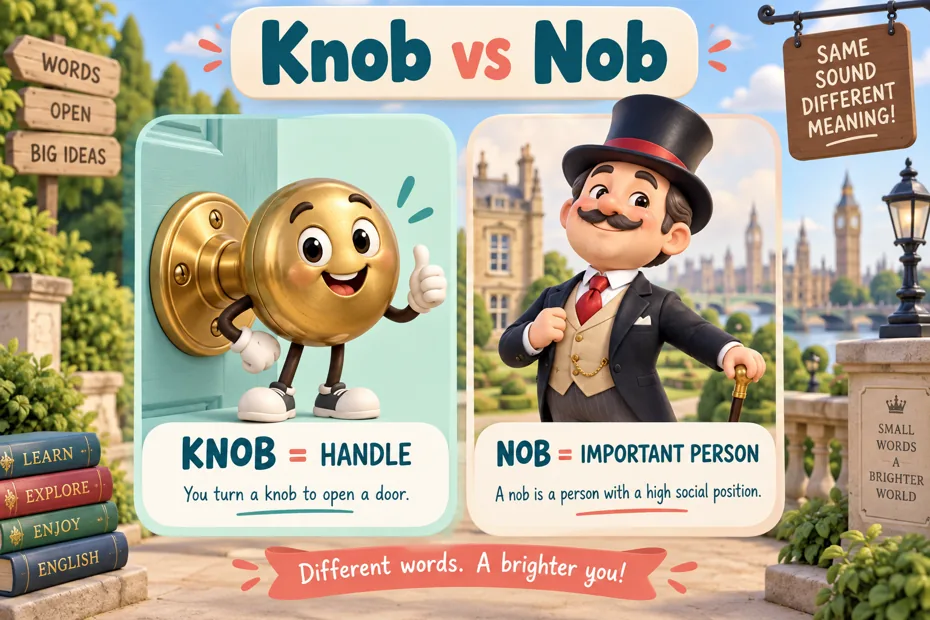
          Brass knob and high-status person illustrating knob and nob

          Mastering the Distinction: Properly Utilizing “Knob” vs “Nob” in Various Contexts

            Knob vs nob: a knob is usually a rounded handle, control or lump. A nob can mean an important or high-status person in chiefly British informal usage, a head in slang, or a particular scoring jack in cribbage. The silent k makes the words sound alike, but context determines spelling. Write knob for a door… Read More »Mastering the Distinction: Properly Utilizing “Knob” vs “Nob” in Various Contexts

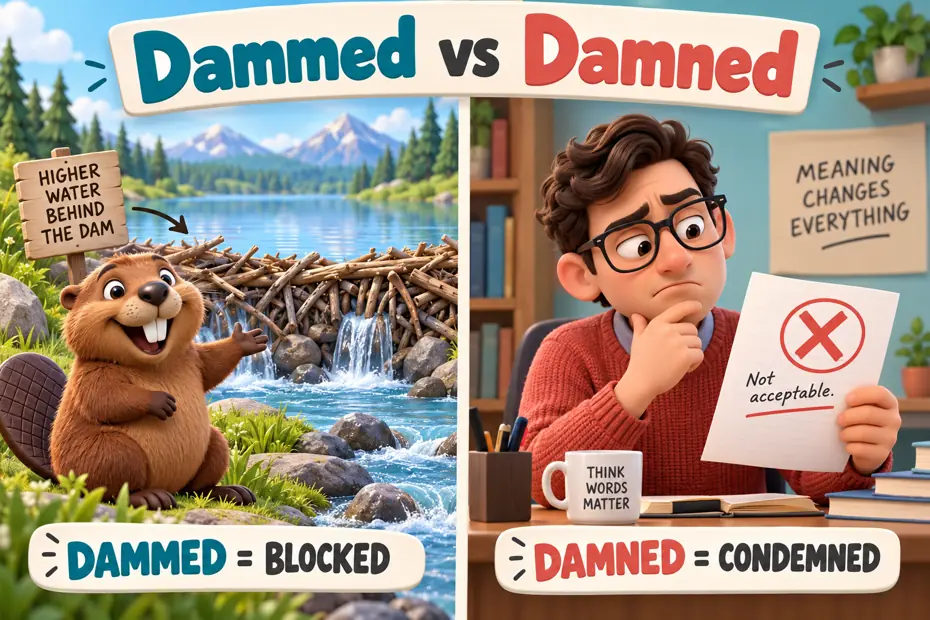
            Beaver dam and critical reviewer showing blocked and condemned meanings

            The Proper Usage of Dammed vs Damned: Mastering the Art of Appropriately Choosing the Right Word

              Have you ever been in a situation where you weren’t sure whether to say “dammed” or “damned”? It can be confusing, but fear not, because I’m here to shed some light on this linguistic dilemma. In this text, I’ll jump into the differences between “dammed” and “damned” and show you how to use them appropriately. Whether you’re a language enthusiast or just someone looking to improve their writing sk

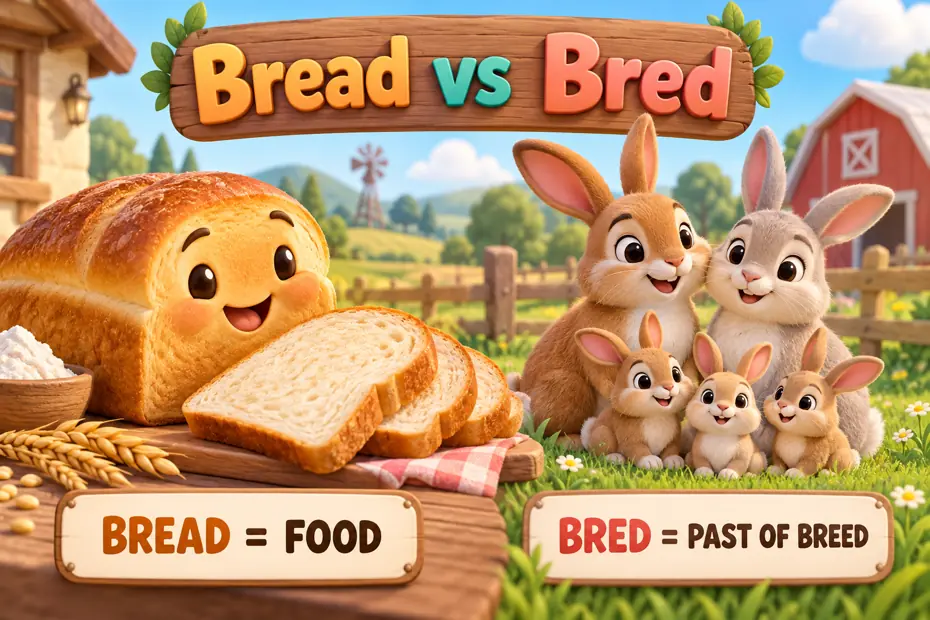
              Loaf and rabbit family illustrating food and breed past tense

              Mastering the Art of Using “Bread” and “Bred” Appropriately: An In-Depth Comparison and Guide

                Have you ever found yourself confused between “bread” and “bred”? Don’t worry, you’re not alone. As a language enthusiast, I’ve often come across this common mix-up. In this text, I’ll shed light on the differences between these two words and provide you with some helpful tips on how to use them appropriately. So, let’s immerse and unravel the mystery of “bread” versus “bred”.
                When it comes to bre

                Reader, adviser, wetland reeds and musical reed

                Mastering the Differences: Proper Usage of ‘Read,’ ‘Rede,’ and ‘Reed’ for Effective Communication

                  Read vs rede vs reed: read usually means to understand written words; rede is an archaic word for advice or for advising and interpreting; reed names a plant or a vibrating musical component. Present-tense read sounds like reed, but past-tense read sounds like red. Read vs rede vs reed at a glance Use read for… Read More »Mastering the Differences: Proper Usage of ‘Read,’ ‘Rede,’ and ‘Reed’ for Effective Communication

                  Poet singing and door secured by a bar

                  Understanding the Difference Between Bard and Barred: How to Use Them Appropriately

                    Are you ever baffled by the difference between “bard” and “barred”? Don’t worry, you’re not alone. As a language enthusiast, I have often found myself pondering over the correct usage of these two words. In this text, I’ll shed some light on the appropriate contexts for each, helping you avoid any confusion in the future. So, let’s immerse and unravel the mysteries of “bard” and “barred” together.

                    Technical blueprint and a magnified dust speck

                    Understanding the Difference between “Spec” and “Speck” for Precise and Accurate Writing

                      As an expert in the field, I’ve seen firsthand the confusion that can arise when it comes to the terms “spec” and “speck.” These two words may sound similar, but they have distinct meanings that are often misused. In this text, I’ll shed light on the differences between “spec” and “speck” and provide you with the knowledge you need to use them appropriately.
                      First, let’s clarify what each term act

                      Person wading in shallow water and a parcel on a scale

                      Wade vs Weighed: Using Appropriately to Avoid Confusion and Improve Communication

                        Have you ever found yourself confused between the words “wade” and “weighed”? Don’t worry, you’re not alone. In this text, I’ll guide you through the correct usage of these two commonly misused words. Understanding the difference between “wade” and “weighed” is essential for clear and effective communication. Whether you’re writing an email, a report, or simply having a conversation, using these w

                        Mountain summit, quick look, Pekingese dog and curious reader

                        Mastering the Differences: Proper Usage of Peak, Peek, Peke, and Pique

                          Have you ever found yourself confused about when to use “peak,” “peek,” “peke,” or “pique”? Well, you’re not alone. These words may sound similar, but they have distinct meanings and uses. In this text, I’ll guide you through the proper usage of each word, so you can confidently navigate your way through the English language.
                          First, let’s tackle “peak.” It refers to the highest point or the summit

                          Cymbal vs Symbol: Understanding the Difference and Using Them Appropriately

                            Key Takeaways Understanding the Difference Between Cymbal and Symbol When it comes to the English language, there are many words that sound alike but have completely different meanings. Two such words that often cause confusion are “cymbal” and “symbol”. In this section, I’ll explain the key differences between these two words and provide you with… Read More »Cymbal vs Symbol: Understanding the Difference and Using Them Appropriately

                            Understanding the Difference between Gaol and Jail: Proper Usage and Regional Variations

                              Have you ever wondered about the difference between “gaol” and “jail”? As a language enthusiast, I find it fascinating how certain words can vary in spelling and usage across different English-speaking countries. In this text, I’ll jump into the nuances of these two words and help you understand when to use each one appropriately.
                              First, let’s clarify the basics. “Gaol” and “jail” are both nouns t

                              Mastering the Art of Whoo vs Woo: Using Them Appropriately in Communication

                                Key Takeaways What is the difference between “whoo” and “woo”? When it comes to the usage of “whoo” and “woo,” understanding the subtle differences is important. Many people often confuse these words due to their similar pronunciation and context. But, there are distinct differences that set them apart. Let’s investigate into the definition of each… Read More »Mastering the Art of Whoo vs Woo: Using Them Appropriately in Communication