Skip to content
A choir holds open songbooks beside a conductor.

Him vs Hymn: Meaning, Grammar, and Examples

    Have you ever found yourself confused between “him” and “hymn”? It’s a common mistake that many people make, but fear not, I’m here to shed some light on the difference and help you use these words appropriately. In this text, I’ll guide you through the correct usage of “him” and “hymn” and provide you with some helpful tips to avoid mixing them up. Whether you’re a native English speaker or learn
    A baker kneads bread dough at a kitchen worktop.

    Do vs Doe vs Dough: Pronunciation and Meanings

      Have you ever found yourself confused between “do,” “doe,” and “dough”? Don’t worry, you’re not alone. These three words can be easily mixed up, but fear not, I’m here to help you use them appropriately. In this text, I’ll break down the differences and provide simple tips to ensure you never mix them up again.
      First, let’s tackle “do.” It’s a versatile verb that can be used to express actions, ob

      A quiet stone chapel stands beside a garden path.

      Holy vs Wholly: Sacred or Completely?

        Holy vs Wholly: Sacred or Completely? Holy is an adjective describing something sacred or connected with religion; wholly is an adverb meaning entirely or completely. The words sound alike in many accents, but they answer different questions. A holy place has religious significance, while a wholly different plan is completely different from the earlier one.… Read More »Holy vs Wholly: Sacred or Completely?

        A cleared footpath passes between rocks in a forest.

        Passable vs Passible: Two Different Adjectives

          Have you ever wondered about the difference between “passable” and “passible”? Well, I’ll shed some light on these two words and how to use them appropriately. While they may sound similar, there are distinct meanings and contexts for each. In this text, I’ll investigate into the nuances of “passable” and “passible” and provide examples to help you understand when to use each one correctly. Whethe

          A fluffy cat rests near a window overlooking fir trees.

          Firry vs Furry: Trees or Fur?

            Have you ever wondered about the difference between “firry” and “furry”? As an expert in the field, I’ll shed some light on this often-confused topic. In this text, I’ll guide you through the appropriate usage of these terms, ensuring that you never mix them up again. From their origins to their meanings, we’ll explore the nuances that make “firry” and “furry” unique. Whether you’re a language ent

            A bell tower stands above a village square.

            Pealed vs Peeled: Sound or Removing a Layer?

              Have you ever wondered if you should use “pealed” or “peeled” in your writing? It’s a common dilemma, but fear not! In this text, I’ll clarify the difference between these two words and provide you with some tips on how to use them appropriately.
              When it comes to “pealed,” it refers to the act of ringing a bell or producing a loud sound. On the other hand, “peeled” is used to describe the action o

              Sunlight falls across a breakfast table beside a window.

              Mvsning vs Mourning: Correcting the Word Choice

                Have you ever found yourself confused about when to use “mvsning” and when to use “mourning”? As an expert blogger with years of experience, I’ll shed some light on this common language dilemma. In this text, I’ll guide you through the appropriate usage of these two words, helping you avoid any embarrassing mix-ups.
                Understanding the difference between “mvsning” and “mourning” is crucial for effec

                A desk calendar with seven blank boxes rests beside a pencil.

                Weak vs Week: Strength or Seven Days?

                  Have you ever struggled with the difference between “weak” and “week”? It’s a common mistake that even the most seasoned writers can make. In this text, I’ll guide you through the proper usage of these two words and provide you with some helpful tips to ensure you never mix them up again. Understanding the distinction between “weak” and “week” is crucial for effective communication, whether you’re

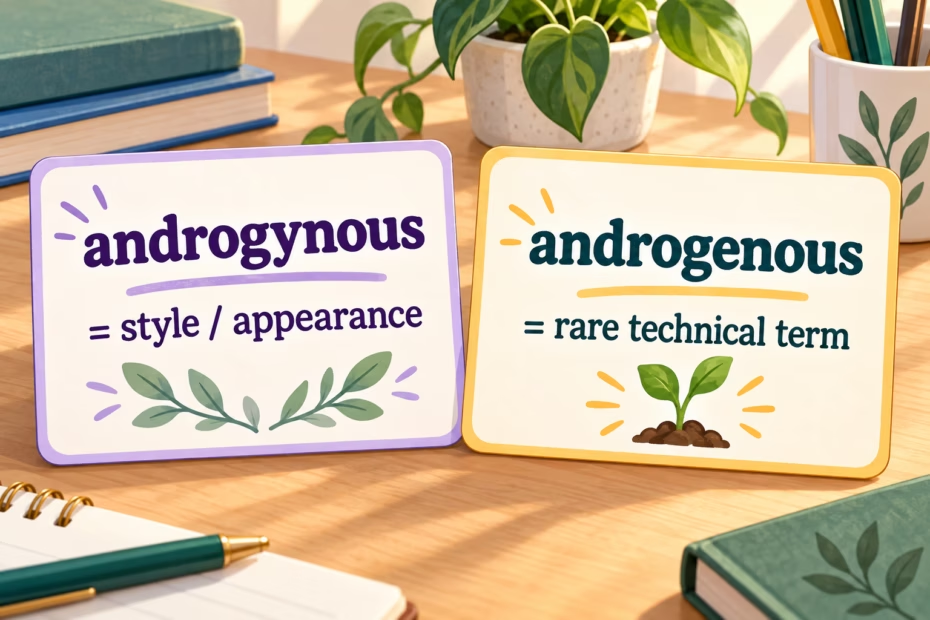
                  Two dictionary cards contrast androgynous, a style or appearance word, with androgenous, a rare technical term.

                  Androgenous vs. Androgynous: Meaning, Difference & Examples

                    When it comes to gender identity and expression, the terms “androgenous” and “androgynous” are often used interchangeably. But, it’s important to understand the subtle differences between the two and use them appropriately. In this text, I’ll investigate into the meanings and usage of “androgenous” and “androgynous,” shedding light on their distinct definitions and how they relate to gender and st

                    A hand presses a doorbell button beside a doorway.

                    Ring vs Wring: Meaning and Verb Forms

                      Have you ever found yourself in a dilemma when it comes to using the words “ring” and “wring” correctly? As an expert language enthusiast, I’ve encountered countless individuals struggling with these two words, often using them interchangeably. In this text, I’ll shed light on the key differences between “ring” and “wring” and provide you with practical tips on how to use them appropriately. By th

                      Cooked sliced meat rests on a plate.

                      Meat vs Meet: Food and Coming Together

                        Have you ever found yourself confused between “meat” and “meet”? Don’t worry, you’re not alone. As a language enthusiast, I’ve come across this common mistake countless times. In this text, I’ll guide you through the proper usage of these two words and help you avoid embarrassing mix-ups. Whether you’re a native English speaker or learning the language, understanding the difference between “meat”