Square away means to put something in order or settle unfinished business, and it appears in everyday sentences about tidying, paperwork and preparation. The phrasal verb is separable, so a pronoun slides between the two words: “Square it away before Friday.” That single detail is what most learners get wrong.
Square away at a glance
- Square away is a separable phrasal verb made from the verb square and the particle away.
- Its two main senses are putting things into order and settling something outstanding.
- The usual objects are rooms, desks, paperwork, accounts, tasks and travel plans.
- With a pronoun object the two words must split: square it away, never square away it.
- The adjective squared away, as in everything is squared away, describes a finished state.
What does square away mean?
Square away is a phrasal verb meaning to put things into good order or to finish and settle something that is outstanding. The Cambridge entry for square away covers both the arranging sense and the ready-for-something sense. Where the point is only money you owe, settle the accounts is the plainer choice, because square away keeps the idea of tidying up loose ends as well as closing them.
| Sense | Plain meaning | Example sentence |
|---|---|---|
| Tidy and arrange | Put a space, a set of things or a task into good order | She squared away the stockroom before closing. |
| Settle and finish | Complete something outstanding such as a bill or a job | He squared away the last invoices on Friday. |
| Get ready | Put yourself or a plan into a prepared state | The crew squared away for the inspection. |
One limitation belongs here. Square away suits tasks, spaces and accounts; it is the wrong verb for repairing a damaged object and for repairing a friendship. A cracked chair gets fixed, and two friends who have quarrelled make up. Using square away for either sounds like a translated phrase rather than a natural one.
How do you use square away in a sentence?
Square away works like other separable phrasal verbs: the object may follow the particle or move in front of it, but a pronoun must sit in the middle. The pattern you choose changes the emphasis, not the meaning, so the five rows below can all describe the same afternoon of work. If you would rather sound neutral and formal, arrange the schedule and finish are safe substitutes.
| Pattern | Example | What it signals |
|---|---|---|
| square away + noun | She squared away the stockroom before closing. | The object follows the particle; the most neutral order. |
| square + noun + away | He squared the invoices away in the folder. | Moving the object forward stresses what was organised. |
| square + pronoun + away | Square it away before lunch. | A pronoun cannot follow away; it must split the verb. |
| get + noun + squared away | Get the paperwork squared away today. | Causative and very common in speech and email. |
| be + squared away | The accounts are squared away. | A result state: the job is already finished. |
Native speakers reach for the get it squared away pattern when they mean the whole job, and for square it away when they mean one specific thing. The passive is squared away is the quietest of the five, which is why it turns up in status updates.
Square away in a sentence: examples across contexts
Square away keeps the same meaning as it moves between registers. The nine sentences below shift from a classroom to a harbour deck, and each names the loose end that gets closed.
| Context | Example sentence | Why this works |
|---|---|---|
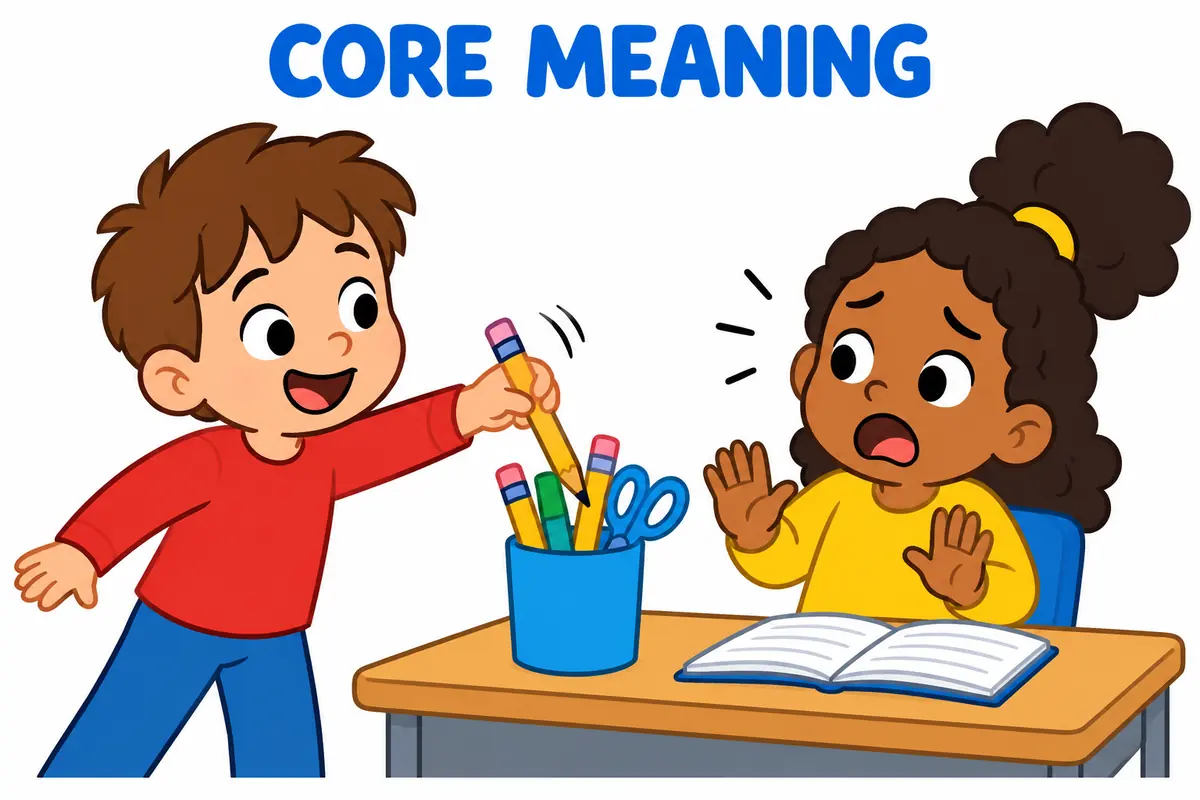
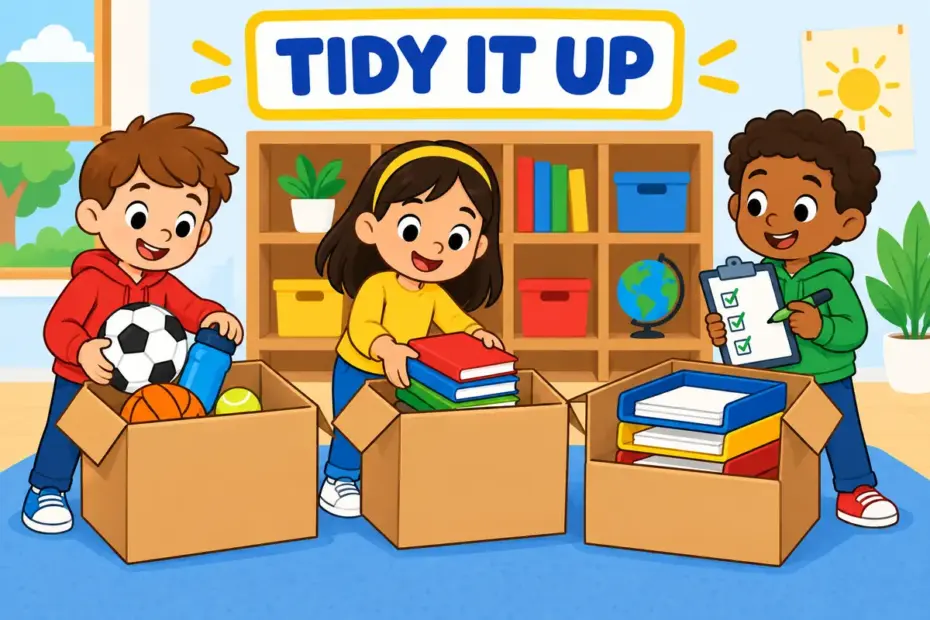
| Classroom | Maya squared away the art supplies before the bell rang. | A concrete set of objects makes the tidying easy to picture. |
| Workplace email | Please square away the vendor contracts before the audit. | The request is brisk, neutral and safe for a manager to send. |
| Home | I squared away the garage over the weekend. | The first person is normal because this is speech, not a report. |
| News report | Crews squared away the last of the storm debris by dawn. | A plural subject doing practical work reads like a news line. |
| Nautical | The deck was squared away before the captain inspected it. | The passive suits an inspection, where the state matters most. |
| Accounting | The bookkeeper squared away the outstanding invoices in one afternoon. | The object is financial, showing the settle sense. |
| Travel | She squared away her receipts before submitting the claim. | Names the small task that unlocks the next step. |
| Conversation | Give me ten minutes to square things away, then we can leave. | Things is the vague object speakers use when the list is obvious. |
| Coaching | The coach squared away the defensive drills before the final. | Sports writing borrows the verb to mean prepared and organised. |
Notice that the pronoun pattern, square things away, appears only in the spoken example. Writers who quote speech keep it; writers producing a report almost always let the object follow away.
Square away vs sort out
Square away and sort out overlap wherever a task is finished, and they diverge over people and conflict. To sort out the mess suggests untangling something confused, often a dispute, while to square away a task suggests bringing it to a clean close. To square up a debt is to pay it, which is a third and narrower job again.
| Attribute | square away | sort out |
|---|---|---|
| Core job | Finish and put into order | Resolve confusion or a problem |
| Typical object | Rooms, accounts, tasks, gear | Problems, disputes, messes, people |
| Register | Neutral to informal, common in email | Informal, especially in British English |
| Separability | Separable: square it away | Separable: sort it out |
| Implied tone | Brisk, tidy, complete | Patient untangling of something tangled |
Verdict: choose square away when a task or space is brought to order, sort out when something confused or disputed has to be untangled, and square up when the only issue is money owed.
Word forms and grammar of square away
Square away inflects through the base verb, and the same two words also serve as an informal adjective. The related pages on everything squared away and on square off against a rival show how far the family spreads, because square builds several unrelated phrasal verbs.
| Form | Part of speech | Example |
|---|---|---|
| square away | phrasal verb, base form | I need to square away the loft. |
| squares away | phrasal verb, third person singular | She squares away her desk every Friday. |
| squared away | phrasal verb, past and past participle | They squared away the delivery earlier. |
| squaring away | phrasal verb, present participle | He is squaring away the final returns. |
| squared away | adjective, informal | Everything is squared away for the move. |
| square away it | non-standard word order | Correct order: square it away. |
The adjective and the past participle look identical, so read the surrounding words: after is or everything, squared away describes a state, while after a time such as yesterday it reports an action.
Common mistakes with square away
- Incorrect:
Please square away it before you leave.Correct: Please square it away before you leave. Rule: A pronoun object must sit between square and away. - Incorrect:
He squared away the broken chair.Correct: He fixed the broken chair. Rule: Square away means organise or finish, never repair something damaged. - Incorrect:
She squared away the files and then square away the inbox.Correct: She squared away the files and then squared away the inbox. Rule: Keep the tense consistent across the two actions. - Incorrect:
I must square away my rent this week.Correct: I must square up my rent this week. Rule: Square up means pay what you owe; square away means arrange or complete. - Incorrect:
They squared away from the argument.Correct: They squared away their differences. Rule: The verb takes a direct object and is not used with from.
Practice using square away
Work through the six items, then read the reasoning rather than only the answer, because the reason is the part that transfers to your own writing.
- Fill the gap: Please ______ the supplies before the lesson starts.
- Choose the better word: I must (square away / square up) the money I owe the club.
- Correct the error: Can you square away it this afternoon?
- Build a sentence: use get … squared away about tidying a classroom cupboard.
- Spot the register: which fits a note to a teacher — Kindly square away the spare chairs, or Square the chairs away, yeah?
- Rewrite with a pronoun: Square away the forms. Use it in place of the forms.
Answers
- squared away — the supplies are the object, and the past tense matches the whole instruction.
- square up — money owed is exactly the square up sense.
- Can you square it away this afternoon? — a pronoun must split the verb.
- Model answer: Please get the cupboard squared away before parents arrive. The causative get puts the job as the goal.
- Kindly square away the spare chairs — a note to a teacher avoids yeah and keeps a polite, complete sentence.
- Square it away — the pronoun replaces the forms and sits between the two words.
The bottom line
Use square away in a sentence when a task, space or account is brought to a finished, ordered state, and remember that it is separable: a pronoun always splits it. The two details that decide most sentences are the object order and the neighbour word. Square away organises or completes, square up settles a debt, and each is the wrong choice for the other job.
Frequently asked questions about square away
Is square away one word or two?
The verb is always two words, square away, as in square away the desk. The adjective keeps the same two words, squared away, which describes a finished state. No single-word form of square away exists, so the spelling squareaway is never correct in standard writing.
Can you say square away it?
No. When the object is a pronoun such as it, them or things, it must sit between square and away, giving square it away. Putting the pronoun after away, as in square away it, breaks the pattern that every separable phrasal verb follows in standard English.
What is the difference between square away and square up?
Square away means to organise, tidy or finish something. Square up means to pay what you owe, and in another sense to prepare for a fight. A shopkeeper who settles a bill squares it up; the same shopkeeper who tidies the shelves squares them away.
Is square away formal enough for a work email?
Yes. Square away sits in the neutral middle range, so it is at home in a short email asking a colleague to finish a task. In a formal report or contract, finish, settle or complete reads slightly more restrained, and those plainer verbs are usually the safer choice.