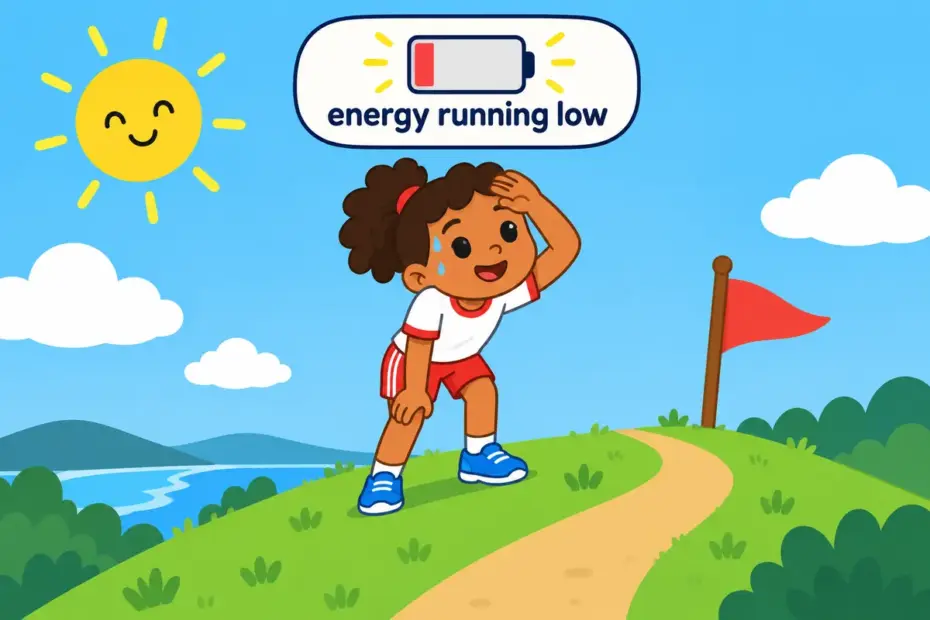
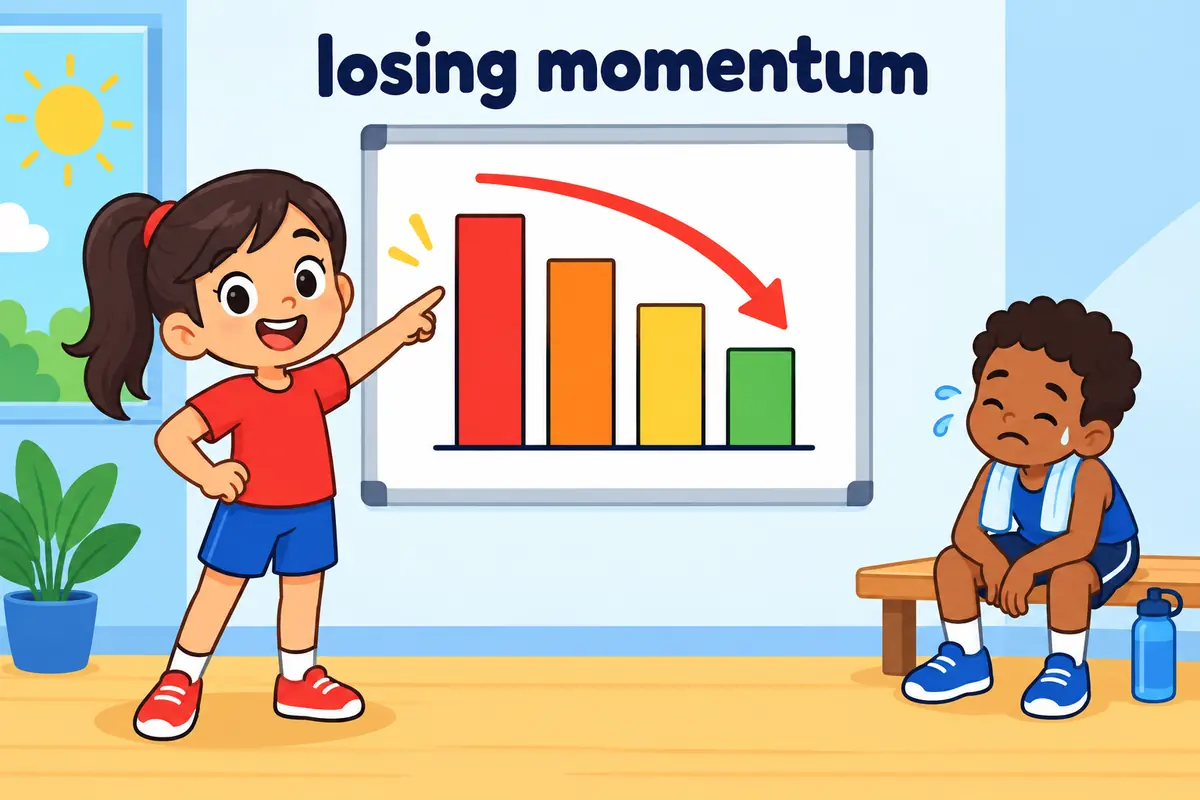
Flagging describes something that is losing energy, strength or momentum. Use flagging in a sentence when a person, team or trend is weakening rather than stopping: “The flagging runner slowed on the final hill.” The word works as an adjective and as the -ing form of the verb flag.
Flagging at a glance
- Flagging is the -ing form of flag, used mainly as an adjective.
- It means losing energy, strength or momentum.
- It describes people, teams, sales, demand and interest.
- The verb behind it is flag, with the forms flags, flagged and flagging.
- A separate sense of flag means to mark something for attention.
- Flagging often pairs with abstractions such as demand, sales and energy.
What does flagging mean?
Flagging is an adjective and a participle meaning losing energy, strength or momentum. The Cambridge entry for flagging records the weakening sense and its use before nouns such as demand and energy. Where the fall is steady and measurable, declining is the tighter choice, because flagging leans on the picture of energy running down. Because the word pictures energy draining away, it fits a gradual fall better than a sudden stop.
| Sense | Plain meaning | Example sentence |
|---|---|---|
| Fading energy | A person or team growing tired | The flagging team conceded twice late on. |
| Weakening trend | Activity, demand or interest slowing | Flagging demand pushed the price down. |
| Marking for attention | The action of flagging something | She is flagging the error for the editor. |
The third sense belongs to a different word in disguise: flagging an error marks a thing for attention, while a flagging effort is one that is running out of strength. Flagging is also not the same as failing, because a flagging effort can still recover, and a cause can be failing while its supporters stay energetic.
How do you use flagging in a sentence?
In the weakening sense, flagging sits before a noun or follows the verb be. In the marking sense, it takes a direct object, so the two patterns rarely overlap and the surrounding words usually settle the meaning.
| Pattern | Example | What it signals |
|---|---|---|
| flagging + noun | The flagging runner slowed on the hill. | Attributive adjective before the subject. |
| be + flagging | Interest in the club is flagging. | Continuous verb, something losing strength. |
| flagging + in + activity | He was flagging in the final lap. | Names where the energy drops. |
| a flagging + noun | A flagging economy worries voters. | Wider trend, not just a person. |
| flagging + object (marking sense) | She is flagging the passage for review. | A different meaning: marking for attention. |
Two details separate a natural sentence from an awkward one. The word pairs naturally with abstractions such as demand, sales, energy, enthusiasm and concentration. It sounds forced with concrete objects, so a flagging chair would puzzle a reader. In journalism the adjective also follows the verb, as in growth is flagging, which keeps the focus on the trend rather than on a single actor.
Flagging in a sentence: examples across contexts
Each example shows flagging applied to a different subject, and the subject shows whether the word points at a person, a number or a whole field of activity.
| Context | Example sentence | Why this works |
|---|---|---|
| Sports report | The flagging striker was replaced after seventy minutes. | A tired individual named clearly. |
| Business news | Flagging sales forced the chain to close two stores. | A measurable trend in decline. |
| Energy writing | He felt his flagging concentration slip after lunch. | The adjective describes a mental state. |
| Political comment | The campaign tried to revive flagging enthusiasm. | Abstract support beginning to fade. |
| Ecology article | Experts blame flagging rainfall for the shrinking lake. | Natural process losing force. |
| Health feature | Flagging energy is the first sign of overtraining. | Clinical but plain, before a noun. |
| Classroom | The flagging class perked up when the quiz began. | Groups, not just individuals. |
| Manufacturing | Flagging output was traced to a shortage of parts. | Technical, precise subject. |
| Conversation | Sorry, I am flagging a bit today. | First person, mild and honest. |
| Travel | By the last day our flagging legs made every step slow. | Vivid physical tiredness. |
| Fundraising | The charity ran an advert to lift flagging donations. | Money and giving as the subject. |
| Editorial | Flagging attention spans explain the shorter videos. | Wider cultural trend. |
Notice how the subject controls the feeling. When the subject is a person, flagging invites sympathy; when it is sales or rainfall, the word reads as a neutral measurement. The adjective never needs an adverb to work, so plain flagging is usually stronger than deeply flagging.
Flagging vs sluggish
Both words describe something slowing down, but they name different problems. Flagging is about energy and momentum; sluggish is about speed and responsiveness.
| Attribute | Flagging | Sluggish |
|---|---|---|
| Meaning | Losing energy or momentum | Moving or reacting slowly |
| What it measures | Strength and drive | Speed and rate |
| Typical subject | People, teams, demand, interest | Traffic, engine, market, response |
| Register | Neutral, common in journalism | Technical and everyday |
| Feeling it creates | Sympathy for fading effort | Frustration at delay |
| What it implies | A drop from a previous level | Flat, below-par performance |
Choose flagging when a thing that once had drive is losing it, and choose sluggish when the point is slow movement with no sense of previous energy. A tired speaker is flagging; a slow internet connection is sluggish. A person or project weak for a long stretch is languishing rather than flagging. The two words can even appear together, as in a flagging engine that turned sluggish, but each keeps its own job.
Word forms and grammar of flagging
Flagging is built from the verb flag, and the same spelling serves as a participle, an adjective and a gerund.
| Form | Part of speech | Example |
|---|---|---|
| flag | verb, base | Her energy began to flag after ten miles. |
| flags | verb, third person singular | His pace flags in the last mile. |
| flagged | verb, past tense | Attendance flagged once the term grew busy. |
| flagging | verb participle and adjective | The flagging effort still finished. |
| flagging | gerund, noun use | Flagging is a signal that the plan needs rest. |
When a quantity is shrinking toward nothing, dwindling is more exact than flagging, because dwindling measures the size of what remains. Flagging measures the strength left in the effort. The adverb form is rare, because writers usually let the participle carry the decline without extra modification.
Common mistakes with flagging
Most errors come from mixing the weakening sense with the marking sense, or from adding a word whose meaning the adjective already contains.
- Incorrect: The flagging runner was flagging behind. Correct: The flagging runner was lagging behind. Flagging describes the runner; lagging describes the position.
- Incorrect: The flagging of the error was tired. Correct: The flagging of the error was careful. In the marking sense, flagging is a noun and has nothing to do with fatigue.
- Incorrect: Her concentration is flagging down. Correct: Her concentration is flagging. Flagging already carries the idea of decline, so down is redundant.
- Incorrect: It was a very flagging economy. Correct: It was a deeply flagging economy, or better, the economy was flagging. Deeply fits the verb better than very.
- Incorrect: The team was flagging, so it failed. Correct: The team was flagging, so it risked failure. Flagging predicts weakness, not a guaranteed result.
- Incorrect: a tiring runner. Correct: a flagging runner. Tiring describes what drains others, while flagging describes who is drained. Tiring and flagging point in opposite directions.
Practice using flagging
The exercises mix the weakening sense with the marking sense, so check the subject before deciding which meaning is in play.
- Fill the blank: The ______ hikers stopped for a rest at the ridge.
- Choose the better word: After three hours the meeting grew ______ (flagging / sluggish) as people ran out of energy.
- Correct the error: Sales have been flagging down since spring.
- Build a sentence using a flagging plus a noun about a sports team.
- Spot the register: which sentence belongs in a health article, and which in a chat message? (a) My get-up-and-go has gone. (b) Flagging energy is an early sign of overtraining.
- Fill the blank with the base verb: Interest began to ______ after the first week.
- Choose the better word: The traffic was ______ (flagging / sluggish) all morning.
- Explain the difference: a flagging movement and a failing movement.
Answers
- flagging. The adjective sits before the noun and describes fading energy.
- flagging. The people are losing drive, which is the energy sense, not the speed sense.
- Sales have been flagging since spring. Flagging already means declining, so down is redundant.
- Sample: The flagging team needed a goal to lift it. The adjective directly modifies team.
- Sentence (b) belongs in a health article; sentence (a) belongs in a chat. Formal health writing keeps the descriptive term flagging.
- flag. The base verb follows the infinitive marker to.
- sluggish. Traffic moves slowly, and no sense of lost energy is involved.
- A flagging movement is losing energy but may recover; a failing movement is not succeeding and is closer to collapse. The first predicts weakness, the second predicts failure.
The bottom line
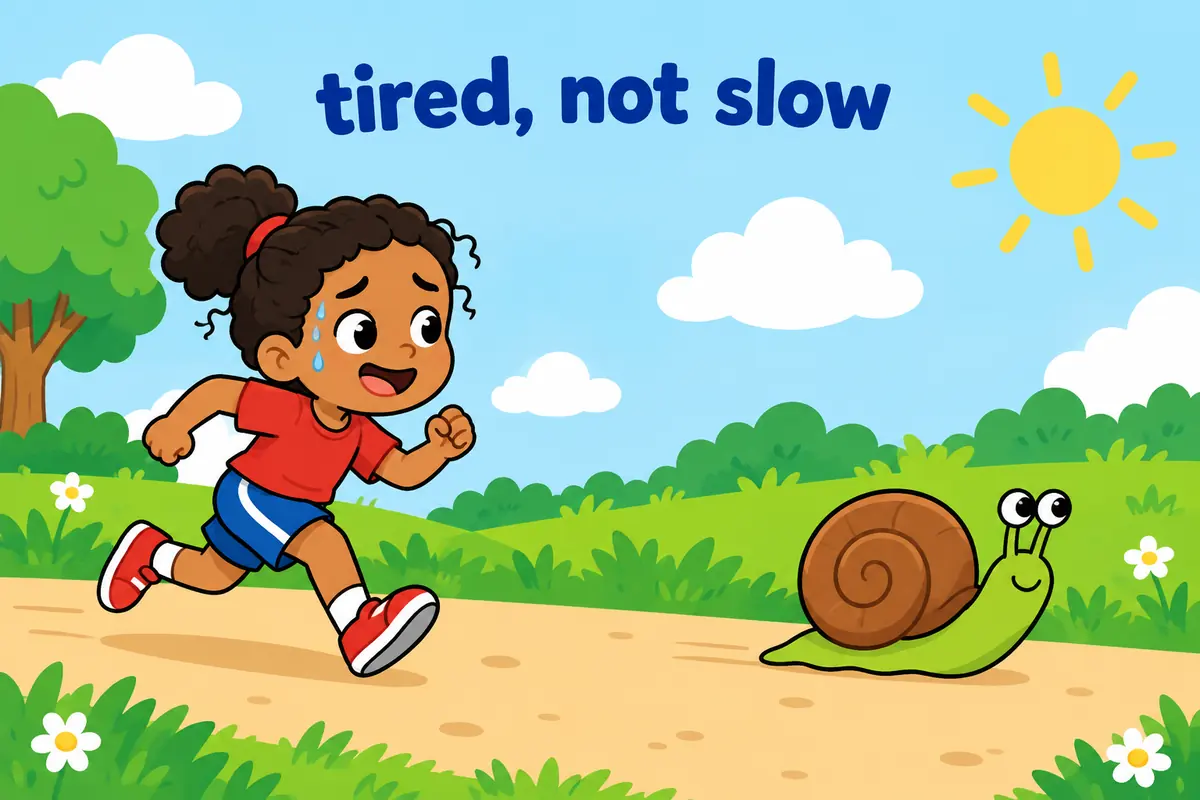
Flagging in a sentence describes something that is losing energy, strength or momentum, and it usually stands before a noun or follows the verb be. It is milder than failing, because a flagging effort can still recover, and it is different from sluggish, which measures speed rather than drive. Keep the marking sense separate: flagging an error is not the same as flagging energy.
Frequently asked questions about flagging
Is flagging an adjective or a verb?
Flagging is both. It is the present participle of the verb flag, so it can form the continuous tense, as in interest is flagging. It is also used as an adjective before a noun, as in a flagging effort. The same spelling covers both jobs, and the position in the sentence tells them apart.
What does a flagging economy mean?
A flagging economy is one that is losing momentum, with slowing growth, weaker demand or fading confidence. The phrase points at a drop from an earlier level rather than a fixed low. Because flagging is milder than failing, the term leaves room for a recovery later in the year.
How is flagging different from failing?
Flagging means losing energy or momentum, while failing means not succeeding. A flagging student is growing tired but may still pass; a failing student is not meeting the standard. The words sit on the same downward path, but failing names a result and flagging names the loss of drive that may lead to it.
Can flagging mean marking something for attention?
Yes. As the -ing form of flag, it can mean marking an item for review, as in she is flagging the passage for the editor. That sense has nothing to do with fatigue. Context separates the two, because the marking sense takes a direct object while the weakening sense does not.