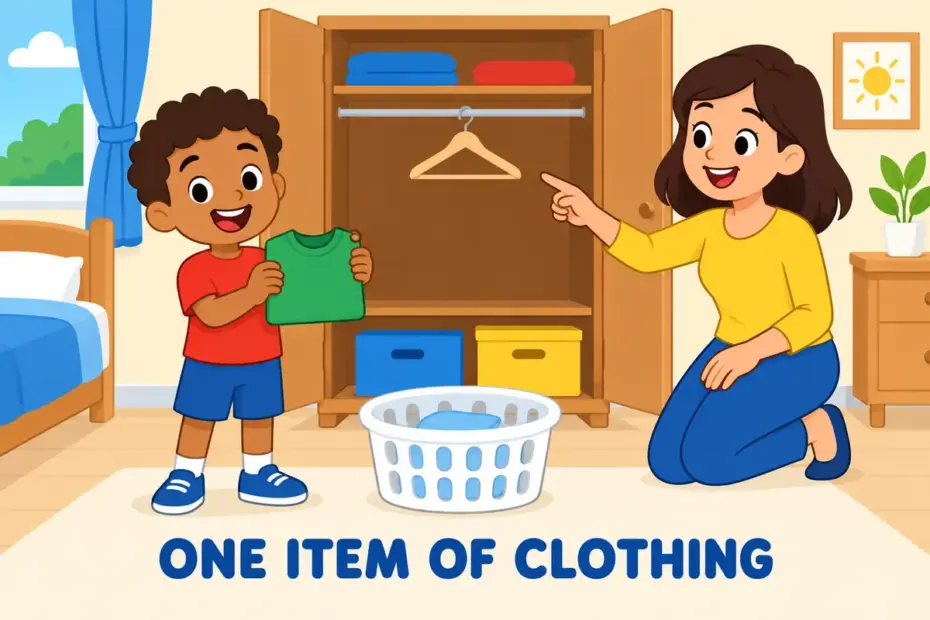
Garment means a single item of clothing, such as a shirt, coat or dress. To use garment in a sentence, treat it as a countable noun and give it a determiner: “She folded each garment carefully.” The word is common in retail, fashion writing and legal labels, and its plural, garments, names several items at once.
Garment at a glance
- Garment is a countable noun; its plural is garments.
- It means one piece of clothing, not a whole outfit.
- It usually takes a determiner: a garment, each garment, several garments.
- The word belongs to retail, manufacturing, fashion and legal writing.
- Its verb form, to garment, is rare and largely literary.
- The commonest error is treating garment like the mass noun clothing.
What does garment mean?
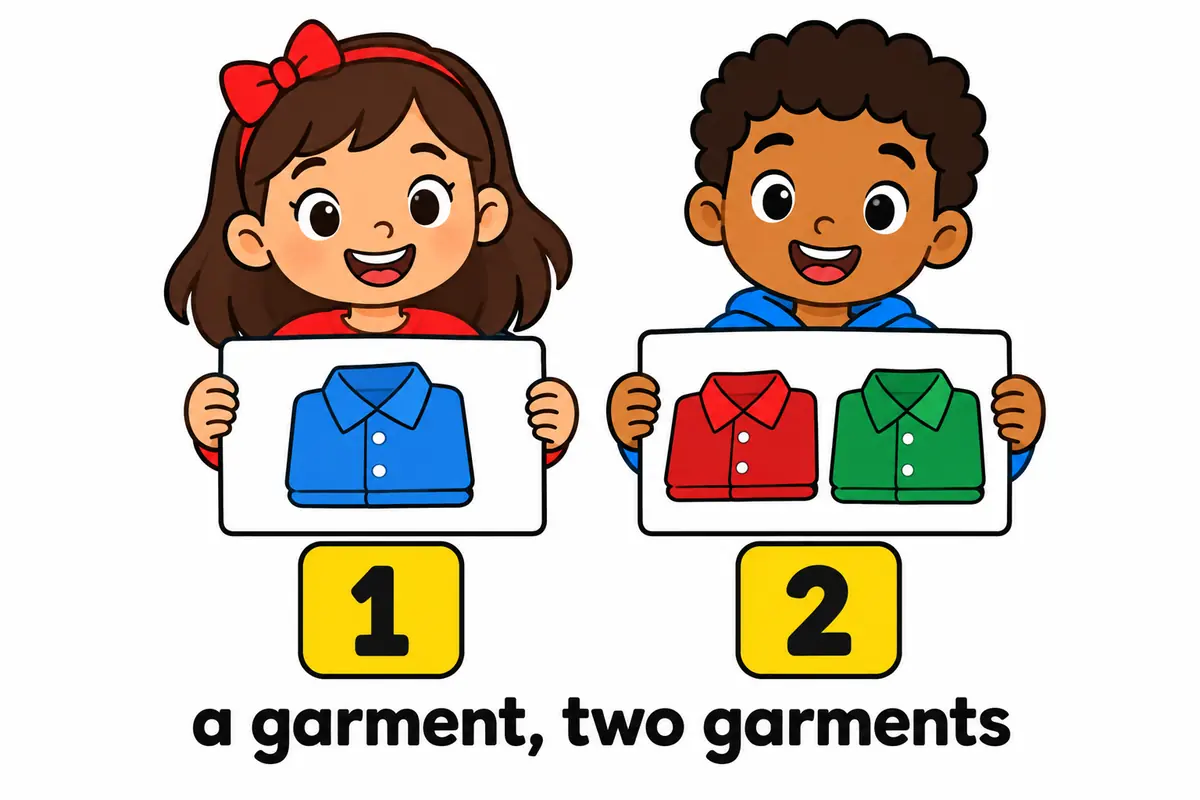
Garment is a countable noun meaning a single article of clothing worn on the body. The Cambridge entry for garment records this everyday sense and notes the formal tone. The word covers anything from a shirt to a coat, so one garment is one piece and two garments are two pieces. Some technical contexts widen the meaning: in manufacturing a garment can be any sewn product, including a protective cover, and the plural garments can describe a trader’s stock. When you simply mean clothes in general rather than counted items, clothing is the natural word, because clothing is a mass noun and never takes a plural.
| Sense | Plain meaning | Example sentence |
|---|---|---|
| Item of clothing | One piece worn on the body | Each garment was wrapped in tissue paper. |
| Stock or range | Clothing items sold together | The shop displays its garments by season. |
| Technical product | A sewn item in manufacturing | The factory ships finished garments overseas. |
| Literary verb | To clothe or cover, in older prose | The statue stands garmented in marble folds. |
One limitation is worth stating plainly: garment can sound clinical in everyday talk. A friend asks where you bought that top, not that garment.
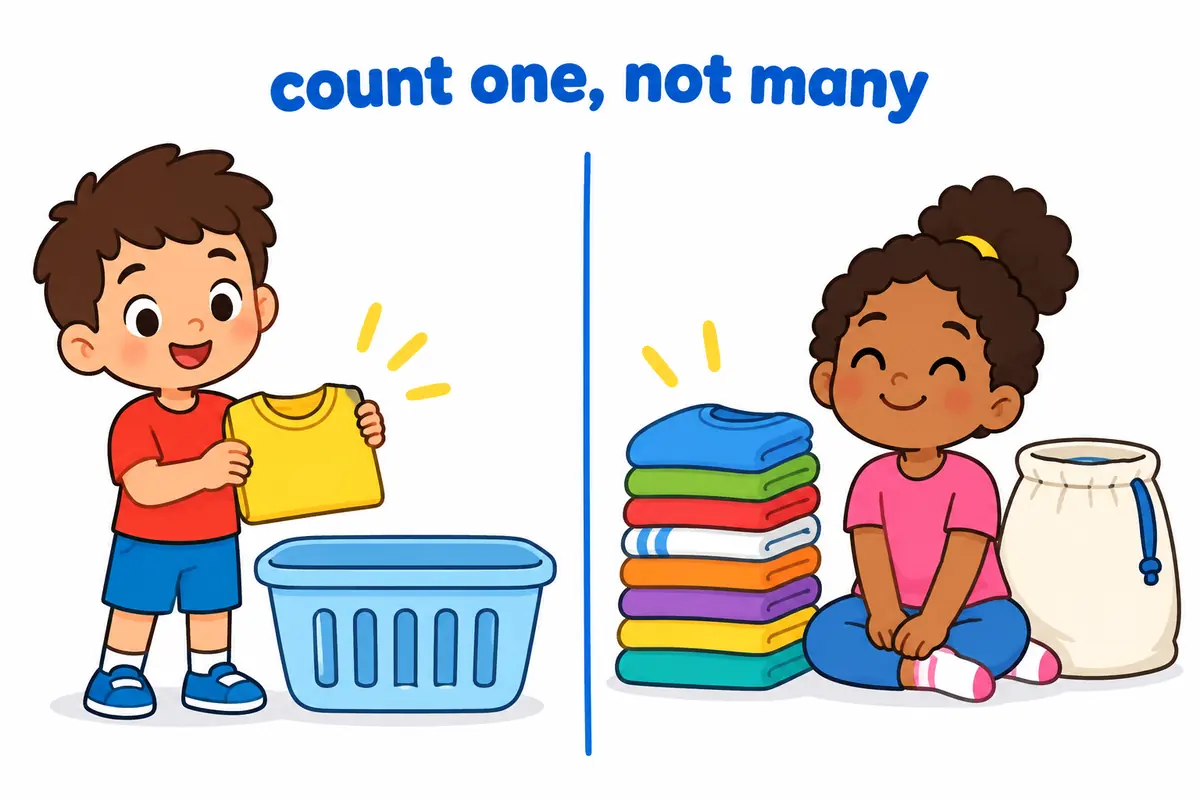
Two questions keep the senses apart. First, is the thing one piece or a set? If it is one piece, garment fits; if it is a set, use outfit. Second, is the writing general or counted? Clothing names the category, and garment names a member of it. A warehouse holds clothing in general but logs individual garments, and that shift from mass to count is the whole difference between the two nouns.
How do you use garment in a sentence?
Garment behaves like any other countable noun, so the grammar centres on determiners and plurals. The table shows the patterns that sound natural in ordinary and professional writing.
| Pattern | Example | What it signals |
|---|---|---|
| determiner + garment | She repaired a torn garment. | one counted item |
| number + garments | Three garments hung on the rail. | a counted group |
| each / every + singular | Wash each garment separately. | instruction over items |
| garment + of + material | A garment of heavy wool kept him warm. | the piece and its fabric |
| adjective + garment | The ceremonial garment shimmered gold. | a described item |
Notice how the singular rarely appears bare. English dislikes a lone countable noun, so a writer supplies a, the, each or this. The plural garments stands on its own far more easily, which is why stock lists and news reports favour it. If you cannot decide between the two forms, ask whether the sentence counts or categorises, because counting pushes toward garments and categorising pushes toward clothing.
Garment in a sentence: examples across contexts
| Context | Example sentence | Why this works |
|---|---|---|
| Classroom | Please hang each garment on its own hook. | Uses a singular noun with each. |
| Workplace email | The supplier confirmed that every garment passed inspection. | Shows a countable production item. |
| News report | Workers sew more than a thousand garments a day. | Gives a counted number. |
| Fashion writing | The designer cut the garment from a single length of silk. | Focuses on one crafted piece. |
| Legal label | Return the garment with its original tag attached. | Labels one specific item for a rule. |
| Conversation | I packed only two light garments for the trip. | Casual use with a number. |
| Technical writing | Each finished garment is tested for water resistance. | Manufacturing sense with a countable noun. |
| Academic writing | The study traced a single garment through the supply chain. | Tracks one item as a case. |
| Retail copy | This garment washes well and keeps its shape. | Speaks about the item on a label. |
| History | A woollen garment was found beside the burial site. | Describes one recovered object. |
| Environment | A durable garment outlasts three cheaper ones. | Compares counted items. |
Choosing the right context is part of using the word well. In fashion and retail a garment is the unit of sale, so copy mentions one garment and its care. In law and logistics the term grows precise, matching a product code and a printed label. In conversation the same word can feel distant, so a speaker names the item itself: a scarf, a jacket, a dress. The setting decides whether garment sounds exact or merely official.
Garment vs clothing
Clothing is the word learners most often swap for garment, and the difference is grammatical as much as it is stylistic.
| Attribute | Garment | Clothing |
|---|---|---|
| Countability | Countable: a garment, garments | Mass noun: some clothing, no plural |
| Meaning | One item worn on the body | Clothes in general |
| Register | Formal, retail and technical | Neutral, everyday |
| Typical use | Singles out an item and its care | Names the category as a whole |
| Plural | Garments is normal | Clothings is not a word |
Buy apparel for a business register, but choose garment when you count and clothing when you generalise, because only garment fits “three garments”. For the formal set a person wears on an occasion, attire covers the whole look rather than one piece. A complete set of garments together forms an outfit, so a shirt and trousers make an outfit while each of them is a garment.
Word forms and grammar of garment
| Form | Part of speech | Example |
|---|---|---|
| garment | noun, singular | The garment fits perfectly. |
| garments | noun, plural | Folded garments filled the shelf. |
| garmented | adjective, literary | A garmented figure stood at the gate. |
| garmenting | verb, -ing form, rare | Garmenting the mannequin took an hour. |
| garment bag | compound noun | She packed the suit in a garment bag. |
| under garment | compound, occasionally two words | An under garment is now written undergarment. |
The compound garment bag survives because it names one item, while undress is the verb that describes removing garments altogether. A robe is one named garment with a loose, long cut, a useful example of how specific the vocabulary becomes once a piece is named. A related noun, garb, is old-fashioned and now mainly literary, so modern writing favours the plainer garment.
Common mistakes with garment
Using it as a mass noun. Incorrect: She packed warm garment for the trip. Correct: She packed warm garments for the trip. Garment is countable, so it needs a plural or a determiner.
Dropping the determiner. Incorrect: Garment was stained with ink. Correct: The garment was stained with ink. A singular countable noun in English almost always needs a, the, each or this.
Misspelling the ending. Incorrect: The garmet needs mending. Correct: The garment needs mending. The ending is -ment, the same suffix as in document and ornament.
Using it for a whole outfit. Incorrect: He wore a colourful garment to the wedding, coat and all. Correct: He wore a colourful outfit to the wedding. A garment is one piece, while a complete set is an outfit.
Mixing it with clothing in the plural. Incorrect: The shop sells many clothings and garments. Correct: The shop sells much clothing and many garments. Clothing has no plural; garments does.
Using it as a verb in ordinary writing. Incorrect: She garment her child warmly. Correct: She dressed her child warmly. The old verb to garment is rare and poetic, so dress or clothe is the normal choice.
Practice using garment
- Fill in the blank: The tailor measured each ______ before cutting the cloth.
- Choose the better word: The charity collected warm (garments / clothings) for the winter.
- Correct the error: Please wash garment separately in cold water.
- Build a sentence: describe a shop that sells clothing of one kind, using garment in the plural.
- Spot the register: which sentence belongs on a care label, “Turn this garment inside out before washing.” or “Chuck this top in the wash, it’ll be grand.”
- Fill in the blank: Three ______ were hanging on the rail by the door.
- Choose the better word: The report studied (clothing / a garment) from factory to shop shelf.
- Correct the error: The museum displayed a garmented of red silk.
Answers
- garment — a singular noun follows each.
- garments — clothing is a mass noun and has no plural, so garments fits.
- Please wash the garment separately in cold water. — a singular countable noun needs a determiner.
- The shop sells sturdy garments for hikers. — the plural names several counted items.
- The first sentence belongs on a care label. — the second is too casual for a label.
- garments — the number three takes the plural.
- a garment — tracing one counted item through the chain needs the singular.
- The museum displayed a garment of red silk. — the noun form is garment, not garmented.
The bottom line
Garment is a countable noun for one item of clothing, and garment in a sentence always wants a determiner or a plural. Keep it apart from clothing, which is a mass noun, and from outfit, which names a complete set. The word reads as formal or technical, so plain clothes or item of clothing often suits everyday speech better.
Frequently asked questions about garment
Is garment a countable noun?
Yes. Garment is countable, so it takes a determiner or a plural: a garment, the garment, each garment, several garments. You cannot write warm garment without a word in front of it. This countability is exactly what separates garment from the mass noun clothing, which never takes a number.
What is the plural of garment?
The plural is garments, formed by adding -s. It is a regular plural, so there is no change of spelling as in some other nouns. You can use it after numbers and quantifiers: three garments, many garments, a rail of garments. The singular covers one item and the plural covers two or more.
Why do shops say garments instead of clothes?
Retail and manufacturing need to count individual items for pricing, care labels and stock, and garments lets them do that. Clothes is a plural mass word that cannot take a number, so a supplier tracks two hundred garments rather than two hundred clothes. The trade term also sounds precise and formal on a label.
Is garment formal?
It sits at the formal end of the register. Legal labels, fashion journalism and manufacturing use it freely, and it sounds neutral there. In relaxed conversation it can feel stiff or clinical, so a speaker normally says top, dress or item of clothing instead. Match the word to the setting rather than forcing it into small talk.