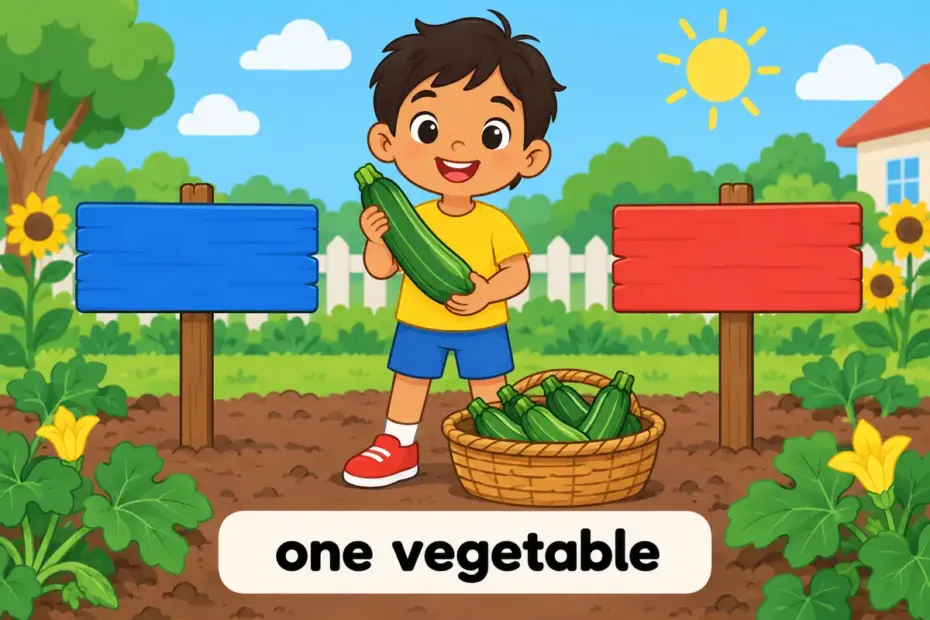
Zucchini vs courgette is a naming question, not a difference in the vegetable: use zucchini for North American and Australian readers, and courgette for British and Irish readers. Both words name the young green squash picked before its skin hardens, and a recipe that swaps them changes no ingredient. Choose the term your audience expects, then keep it consistent.
Zucchini vs courgette at a glance
- Zucchini and courgette are two names for the same vegetable, the immature fruit of Cucurbita pepo.
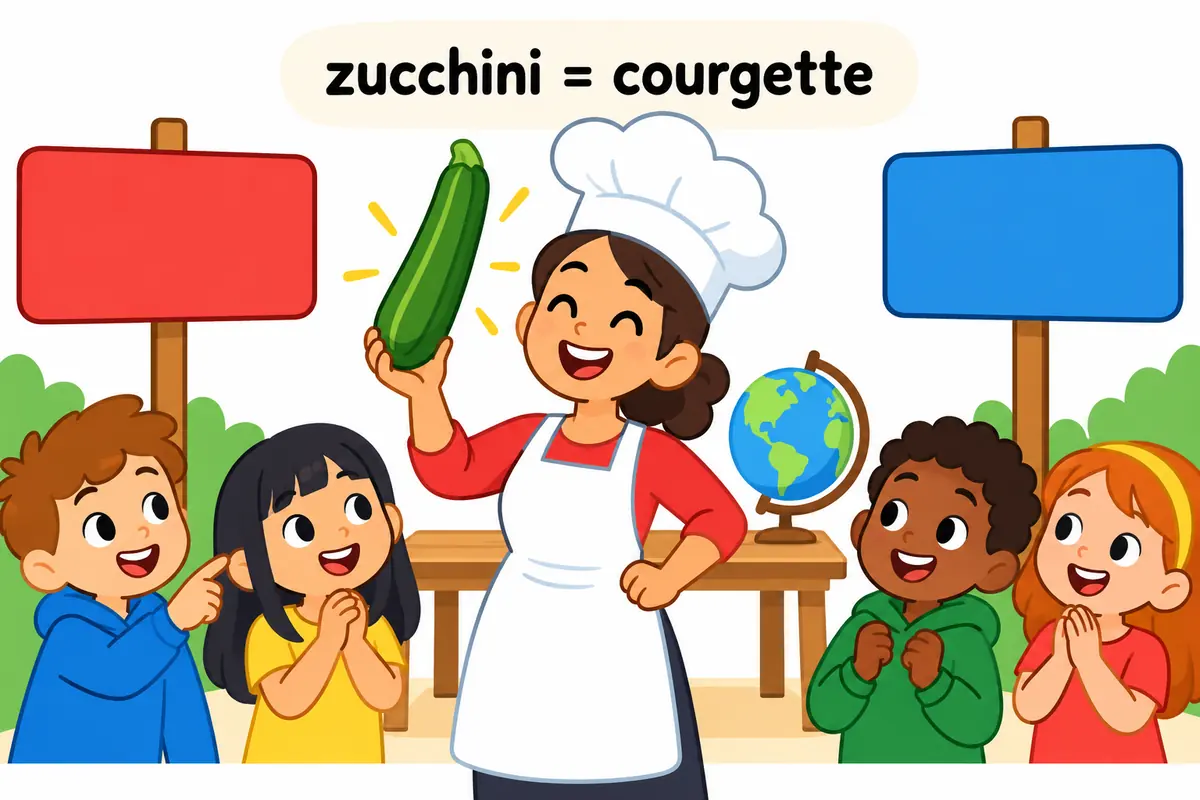
- Zucchini is standard in North American and Australian English; courgette is standard in British and Irish English.
- Courgette takes a regular plural, courgettes, while zucchini serves as both singular and plural.
- Neither word is more formal than the other, so register never decides the choice.
- The commonest error is mixing both names inside one recipe or menu.
What does zucchini vs courgette mean?
Zucchini and courgette both mean the same edible green vegetable, harvested while small and tender. The Cambridge entry for zucchini and the Cambridge entry for courgette give one definition each and then note the other name, which is the clearest sign that the pair is regional rather than botanical. The vegetable itself belongs to the squash family, alongside pumpkins, melons and many gourds.
| Word | Where it is standard | Example sentence |
|---|---|---|
| zucchini | North America, Australia, much of Asia | Grill the zucchini until the slices soften. |
| courgette | Britain, Ireland, South Africa, New Zealand | Add the sliced courgette to the pan. |
| marrow | Britain, for the mature fruit | A marrow grows large and its skin thickens. |
One limitation is worth stating plainly. Neither word describes a different vegetable, a different size or a different flavour, and courgette is not the upmarket name for a plain zucchini. The only real difference is the country the writer is writing for, so a sentence that calls one of them better has simply misplaced a regional preference.
Zucchini vs courgette: the decision table
The table below weights the criteria that actually change a writer’s choice, from the reader’s country to the label on a shop shelf. Every row ends in a practical recommendation rather than a preference.
| Criterion | zucchini | courgette | Which wins |
|---|---|---|---|
| Default region | US, Canada, Australia, Asia | UK, Ireland, South Africa, New Zealand | Match the reader’s country |
| Register | Neutral, everyday | Neutral, everyday | Neither; the tone is identical |
| Plural | zucchini or zucchinis | courgettes | Either, but keep it consistent |
| Shop labels | Common in North American stores | Common in British stores | Follow the local supermarket |
| Recipe titles | Usual in US cookbooks | Usual in British cookbooks | Match the book’s market |
| International audience | Familiar to most readers | Also widely recognised | Pick one and add the other once |
| Botanical accuracy | Same plant | Same plant | Neither; the plant is identical |
The criterion that decides most texts is the first one: where the reader lives. Everything else, including formality and popularity, is secondary and rarely worth arguing about.
How do you use zucchini and courgette in a sentence?
Both words are countable nouns, so each takes a determiner and a singular verb in the singular. The patterns are the same for the two terms, which is why a writer can switch name without rebuilding a single sentence.
| Pattern | Example | What it signals |
|---|---|---|
| a + zucchini / a + courgette | She bought a courgette and two onions. | Countable singular, the commonest pattern. |
| the + zucchini / the + courgette | The zucchini needs another week to grow. | Refers to one specific vegetable. |
| plural: courgettes / zucchini | Slice the courgettes thinly. | Countable plural, regular for courgette. |
| adjective + noun | Fry the grated zucchini in oil. | Uses the word as a modifier before another noun. |
| compound noun | She baked zucchini bread on Sunday. | Forms a fixed food name, common in the US. |
Because both are nouns, neither has a verb form. A learner who asks how to use zucchini vs courgette in a sentence really needs the countable patterns above, not a conjugation.
Zucchini and courgette in a sentence: examples across contexts
The same vegetable appears below in British, American and international contexts, and each row shows which name the setting expects and why. Notice how often the surrounding word, not the vegetable, signals the region.
| Context | Example sentence | Why this works |
|---|---|---|
| British recipe | Fold the grated courgette into the batter. | Uses the term a UK cookbook would print. |
| American recipe | Fold the grated zucchini into the batter. | The same sentence with the North American term. |
| Supermarket sign | Courgettes, £1.20 each, on the fresh produce aisle. | Matches the label a British shopper reads. |
| Restaurant menu | Charred zucchini with lemon and herbs. | Suits a menu aimed at North American diners. |
| Food blog | Zucchini, known as courgette in Britain, works in this loaf. | Names one term and glosses the other for a mixed audience. |
| Conversation | We grew too many courgettes again this summer. | Relaxed speech follows the speaker’s own variety. |
| Seed packet | Zucchini, black beauty, sow after the last frost. | Retails under the name the local market uses. |
| Food science writing | Zucchini and courgette are the same cultivar. | Uses both names once to remove all doubt. |
| Translation | The French courgette becomes zucchini in an American edition. | Shows the swap a translator makes for the target market. |
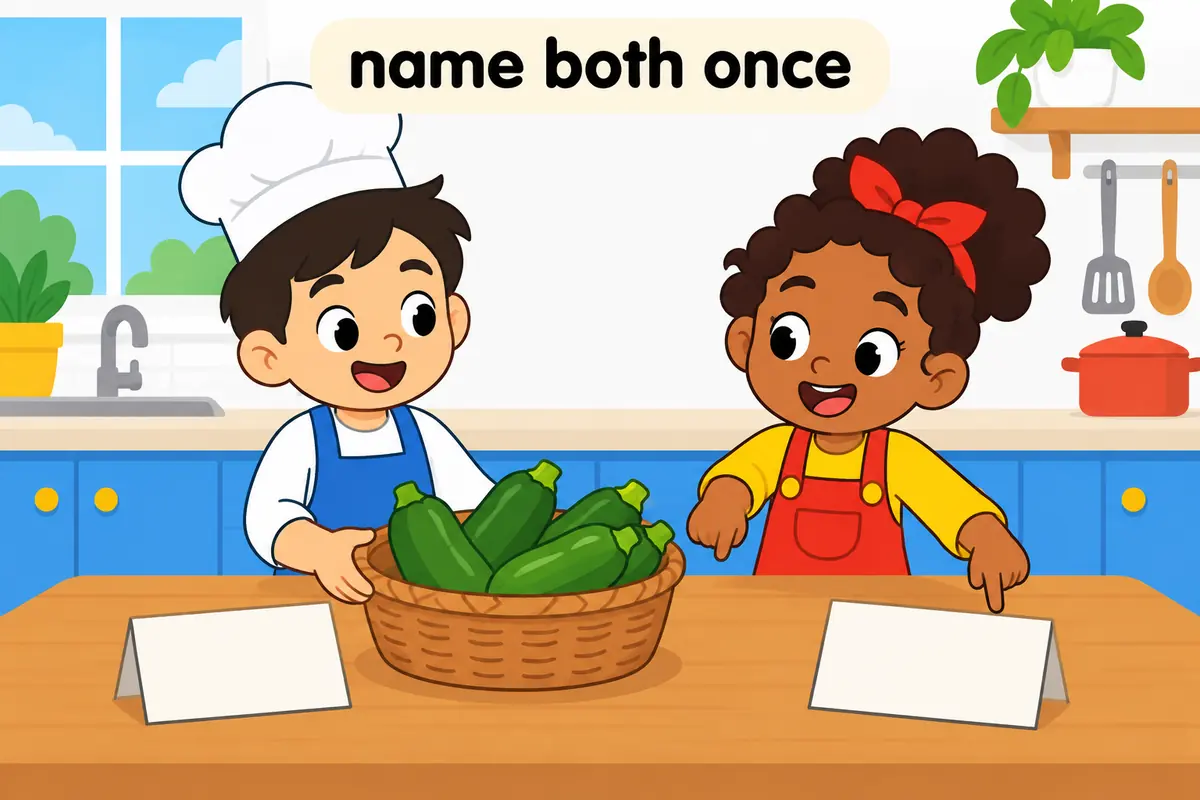
Two of the rows above mention both names in a single sentence. That is the safest solution for an international text, because it teaches the reader the synonym once and then frees the writer to use either term.
Which should you use?
Four reader situations cover almost every decision, and each has a firm answer.
| Situation | Use | Why |
|---|---|---|
| Writing for a US or Canadian audience | zucchini | It is the only term most readers use at the shop. |
| Writing for a UK or Irish audience | courgette | It is the standard term on labels and in cookbooks. |
| Writing for a mixed international audience | Pick one and gloss the other once | One sentence removes the ambiguity for good. |
| Writing a scientific or botanical text | Either, with the botanical name once | The species name carries the precision the audience wants. |
| Writing for an Australian or New Zealand audience | zucchini in Australia, courgette in New Zealand | Each country has its own settled preference. |
Whatever the setting, consistency matters more than the choice itself. A page that flips between the two names reads as though it were assembled from two different sources.
Word forms and grammar of zucchini and courgette
The two words behave in parallel, with one small difference in the plural. The related word cucumber is a different plant, which is a common mix-up, and the botanical point that the squash is technically a fruit surprises many readers.
| Form | Part of speech | Example |
|---|---|---|
| zucchini | noun, singular and plural | One zucchini / two zucchini. |
| zucchinis | noun, plural variant | Two zucchinis roasted side by side. |
| courgette | noun, singular | A courgette ripens quickly in summer. |
| courgettes | noun, plural | The courgettes are ready to pick. |
| zucchini bread | compound noun | Zucchini bread freezes well. |
| marrow | noun, mature stage | A marrow is the full-grown squash. |
Keep the spelling fixed within one document. Zucchini takes a double c and a single n, courgette takes a double t, and both are unchanged by the sentence around them.
Common mistakes with zucchini vs courgette
- Incorrect:
Add two courgettes and one zucchini to the pot.Correct: Add three courgettes to the pot. Rule: Never switch names inside one recipe; readers may think you mean two vegetables. - Incorrect:
Courgette is the French word for a large marrow.Correct: Courgette names the young squash, while marrow names the mature one. Rule: The two English words are not stages of growth. - Incorrect:
The courgette is a kind of cucumber.Correct: The courgette is a kind of squash that resembles a cucumber. Rule: The plants are related but belong to different species. - Incorrect:
The zuchini are in the basket.Correct: The zucchini are in the basket. Rule: The word takes a double c and a single n. - Incorrect:
A zucchini are green and long.Correct: A zucchini is green and long. Rule: The singular noun takes a singular verb.
Practice using zucchini and courgette
Work through the six items, then check the reasoning rather than only the answers.
- Fill the gap: A British recipe would ask for one ______, while a US recipe prints zucchini.
- Choose the better word: The London menu lists charred (zucchini / courgette).
- Correct the error: She bought three zucchinis and one courgette for the same dish.
- Build a sentence: write one line for an international blog that names both terms.
- Spot the register: which belongs in a UK supermarket flyer — fresh courgettes, or our zucchinis are here?
- Rewrite for a US audience: Add the courgette to the pan. Use zucchini.
Answers
- courgette — British recipes use the term their readers buy by.
- courgette — a London menu should match the British name.
- She bought three zucchini and one courgette is still mixed; correct to She bought four courgettes — keep one name throughout.
- Model answer: Zucchini, called courgette in Britain, is the same green squash.
- Fresh courgettes — a UK flyer avoids the North American term and the possessive hype.
- Add the zucchini to the pan — only the noun changes.
The bottom line
Zucchini vs courgette comes down to the reader’s country, not to meaning, quality or formality, because the two words name the same young squash. The two nuances that decide most texts are these: zucchini is standard in North America and Australia while courgette is standard in Britain, Ireland, South Africa and New Zealand, and whichever you choose, you should keep it consistent and gloss the other term once for a mixed audience. The vegetable on the plate never changes.
Frequently asked questions about zucchini vs courgette
Do zucchini and courgette taste different?
No. Zucchini and courgette are the same vegetable, so they taste identical. Any difference a cook notices comes from size and freshness rather than from the name: a small, firm squash is sweeter and less watery than a large one whose seeds have begun to harden, and that is true under either name.
Is courgette British or American?
Courgette is the standard term in British and Irish English and is also common in New Zealand and South Africa. American and Canadian English normally use zucchini, as does Australian English. So the word is not American at all; it belongs to the audiences that adopted the French form.
What do Australians call zucchini?
Australians call the vegetable zucchini, following the Italian-derived term rather than the French one. A shopper in Sydney asks for zucchini, while a shopper in London asks for courgette. The vegetable in both baskets is the same young green squash, picked at the same stage.
What is the plural of zucchini?
Zucchini already works as a plural, because it came into English from an Italian plural, so two zucchini is correct. Many speakers also write two zucchinis, which dictionaries accept. Courgette is regular and simply adds an s, giving courgettes, with no second accepted form to worry about.