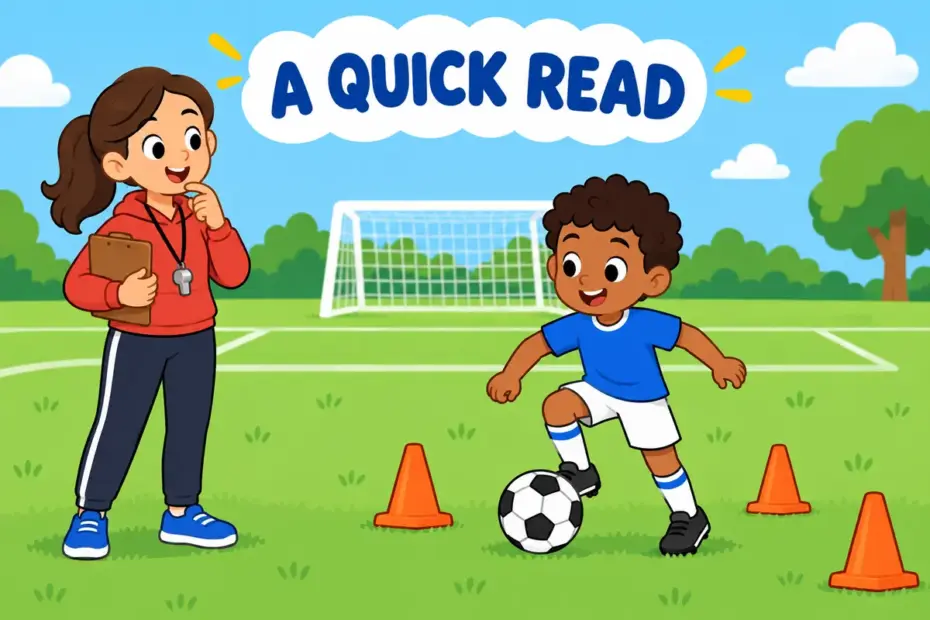
Size up means to examine someone or something carefully and form a judgement about them. To use size up in a sentence, name the person or situation first and keep the object close: “She sized up the opponent before the match.” The phrasal verb is informal but common in sport, work and everyday talk.
Size up at a glance
- Size up is a transitive phrasal verb: something or someone is always sized up.
- Its forms are size up, sizes up, sized up and sizing up.
- Pronouns must sit between the verb and the particle: size them up, never size up them.
- The usual objects are people, opponents, situations, risks and rooms.
- The commonest error is confusing it with measure up, which means to meet a standard.
What does size up mean?
Size up is a phrasal verb meaning to look at a person or situation and form a quick, careful opinion about it. The Cambridge entry for size up gives this assess sense, which grew out of the older idea of measuring something. The table separates the two situations the verb most often describes.
| Sense | Plain meaning | Example sentence |
|---|---|---|
| Judge a person (main) | Read someone s character or strength at a glance | The scout sized up the young striker in one training session. |
| Assess a situation | Take in the facts before deciding how to act | She sized up the crowded room before choosing a seat. |
One limitation is worth stating. Size up suggests a fast, often instinctive judgement, so it can sound too casual for a formal appraisal. Where the assessment is slow, documented and careful, evaluate the evidence is the better choice, and where it is about danger, assess the risk is more precise.
How do you use size up in a sentence?
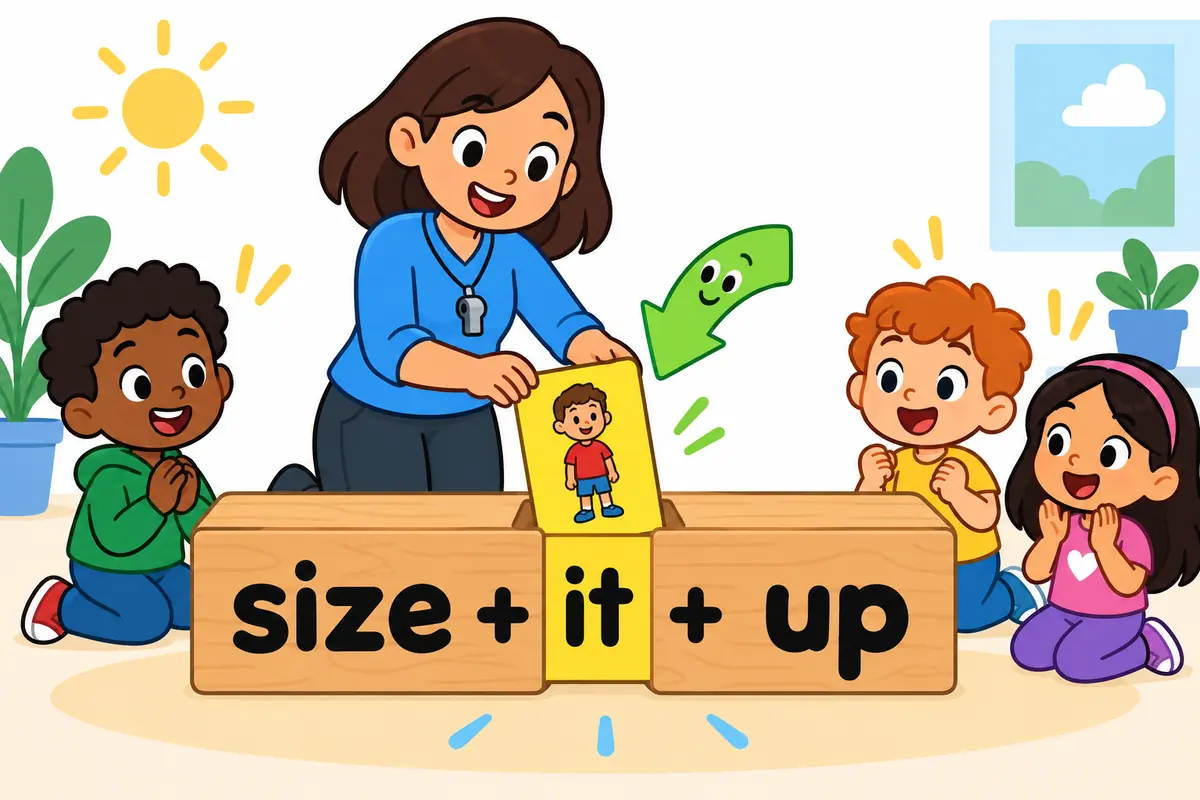
Size up is separable, so the object can follow the particle or sit between the verb and it. Pronoun objects must separate, which is the rule most learners break. Four patterns cover almost every real sentence, and the particle can also drift to the end of a clause, so the same idea appears as the situation was hard to size up.
| Pattern | Example | What it signals |
|---|---|---|
| size up + noun | The detective sized up the suspect. | The object follows the particle, the most common order. |
| size + noun + up | The detective sized the suspect up. | The same meaning with the object in the middle. |
| size + pronoun + up | The detective sized him up. | A pronoun must separate the verb and the particle. |
| size up + situation | We sized up the traffic before setting off. | The object is a state of affairs, not a person. |
Where the judgement is about meeting a standard rather than reading a situation, English uses a different particle: measure up to expectations means to be good enough, which size up never does.
Size up in a sentence: examples across contexts
Size up stays informal even as its setting turns formal. The sentences below keep the same verb while moving from a playground to a news desk, and each one shows what is being read.
| Context | Example sentence | Why this works |
|---|---|---|
| Sport | The boxer sized up his opponent during the first round. | The classic use, with a person as the object. |
| Job interview | Both sides size each other up in the first five minutes. | Uses the reciprocal object each other, which must separate. |
| Business meeting | Before the pitch, she sized up the room and changed her opening. | A situation is the object, and the result follows. |
| News report | Officials sized up the damage hours before the first estimate. | Keeps the verb but names a formal object. |
| Travel writing | We sized up the mountain path and chose the longer route. | Shows judgement leading straight to a decision. |
| Teaching | A good tutor sizes up what a learner already knows. | The object is a clause-like noun phrase, not a person. |
| Security work | Guards size up every visitor before opening the gate. | Neutral, procedural, and still informal in flavour. |
| Everyday conversation | I sized him up and decided not to lend the money. | The pronoun sits between verb and particle, as the rule requires. |
| Military memoir | The sergeant sized up the terrain before giving the order. | An inanimate object keeps the tone serious. |
| Recruitment | Interviewers size up a candidate long before the first question. | Shows the speed the verb quietly implies. |
| Market trading | Traders size up the mood before the opening bell. | An abstract object in a fast setting. |
| Hospital triage | The triage nurse sizes up each patient at the door. | A judgement that must be quick and safe. |
The register barely shifts, which is why size up can slip into a news sentence without sounding out of place.
Different settings pull in nearby verbs. Guards assess the risk, scouts judge the mood of a crowd, and auditors scrutinize the details that a quick glance would miss. Size up keeps the sense of speed that those more formal verbs leave out.
Size up vs sum up
Size up and sum up both describe forming an opinion, and writers often reach for the wrong one, so the distinction is worth fixing.
| Attribute | size up | sum up |
|---|---|---|
| Core meaning | Judge a person or situation quickly | State the main points in short |
| Typical object | A person, opponent or risk | An argument, a speech or a day |
| Time frame | Before acting, often at a glance | After the event, as a conclusion |
| Register | Informal to neutral | Neutral to formal |
| Separable | Yes; size them up | Yes; sum it up |
| Wrong swap | Sum up the opponent is wrong | Size up the speech is odd |
Verdict: choose size up when you are reading a person or a situation before acting, and sum up when you are compressing something already understood.
Phrasal verb grammar of size up
Size up is separable and transitive. Ready for the object to move, and a pronoun must go between the verb and the particle. The particle can also strand at the end of a clause, as in the opponent was hard to size up.
| Form | Part of speech | Example |
|---|---|---|
| size up | base form | We size up each candidate the same way. |
| sizes up | third person singular | She sizes up a room in seconds. |
| sized up | past and past participle | They sized up the risk before dawn. |
| sizing up | present participle | He was sizing up the new manager. |
| size-up | hyphenated noun, informal | Give the plan a quick size-up first. |
Other phrasal verbs with up are not all separable. add the figures up follows the same rule, but some verbs with up keep their object in one fixed place.
A useful test: if you can add at a glance after the verb, size up fits; if the judgement needs reading everything first, sum up or evaluate is the honest choice. That single question separates a first impression from a finished conclusion.
Common mistakes with size up
- Incorrect:
She sized up them before the meeting.Correct: She sized them up before the meeting. Rule: A pronoun object goes between the verb and the particle. - Incorrect:
He sized up that the deal was risky.Correct: He sized up the deal and found it risky. Rule: Size up takes a noun phrase, never a that-clause. - Incorrect:
The new hire did not size up to the role.Correct: The new hire did not measure up to the role. Rule: Meeting a standard is measure up, not size up. - Incorrect:
We size up about the market.Correct: We size up the market. Rule: The verb is transitive and takes no preposition before its object. - Incorrect:
Sizing up, the plan was good.Correct: Sizing up the plan, she approved it. Rule: A participle phrase needs to keep its stated object.
Practice using size up
Work through the six items, then check the reasoning rather than only the answer.
- Fill the gap: The captain ______ the opposition before kick-off.
- Choose the better word: After the trip, please (size up / sum up) the week in one paragraph.
- Correct the error: The guard sized up him at the door.
- Build a sentence: use size up with the pronoun it about a risky plan.
- Spot the register: which suits a match report – the keeper sized up the striker, or the keeper performed a size-up assessment?
- Rewrite with a that-clause removed: He sized up that the room was crowded. Fix it.
Answers
- sized up – the opponent is the object and the verb is in the past.
- sum up – compressing a finished week is summing up, not sizing up.
- The guard sized him up at the door – the pronoun must separate verb and particle.
- Model answer: The team sized it up and decided the plan was too risky.
- The keeper sized up the striker – it is natural and informal, while the second sounds bureaucratic.
- He sized up the crowded room – replace the that-clause with a noun phrase.
The bottom line
Use size up in a sentence when someone reads a person or a situation quickly and forms a judgement. The two nuances that decide most sentences are these: it is separable, so a pronoun belongs between size and up, and it means to assess, not to meet a standard. For the last meaning, measure up is the verb you want.
Frequently asked questions about size up
Is size up formal or informal?
Size up is informal to neutral. It is natural in conversation, sport and journalism, and it can appear in a business sentence without jarring. In a formal appraisal, however, assess, evaluate or appraise would carry the same idea with more weight, and those words also avoid the slight suggestion of a snap judgement.
Is size up separable?
Yes. Size up is separable, so you can write size up the plan or size the plan up. When the object is a pronoun, it must sit between the verb and the particle, giving size it up. The order size up it is not idiomatic and is the mistake to watch for.
What is the difference between size up and measure up?
Size up means to judge or assess a person or situation. Measure up means to reach a required standard, as in the candidate measured up to expectations. The particle up is the same, but the verbs differ in meaning, so swapping them turns an assessment into a comparison.
Can you size up a situation rather than a person?
Yes. Size up takes situations, risks, rooms and markets as readily as people. The detective sizes up a suspect and the same detective sizes up a crime scene. The core idea is a quick, careful reading before acting, so any object that can be judged fits the verb.