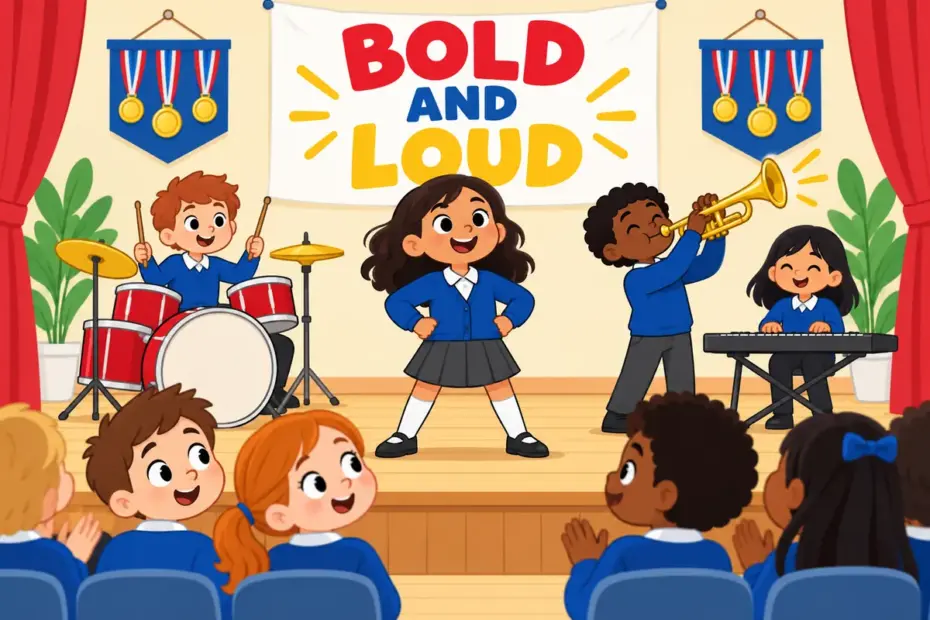
Brassy describes a person who is boldly impudent, or a sound that is loud and harsh like brass. To use brassy in a sentence, decide which sense you mean: “a brassy young reporter” praises nerve, while “a brassy trumpet” describes tone. The adjective carries a note of showiness in every sense.
Brassy at a glance
- Brassy is an adjective; its comparative and superlative are brassier and brassiest.
- It has three senses: bold and impudent, loud and harsh, and yellowish like brass.
- The person sense is usually disapproving, while the sound sense is neutral or even admiring.
- Common collocations are a brassy voice, a brassy laugh, brassy hair and brassy nerve.
- Brassy is pronounced /ˈbrɑː.si/, so it sounds like classy rather than like brass.
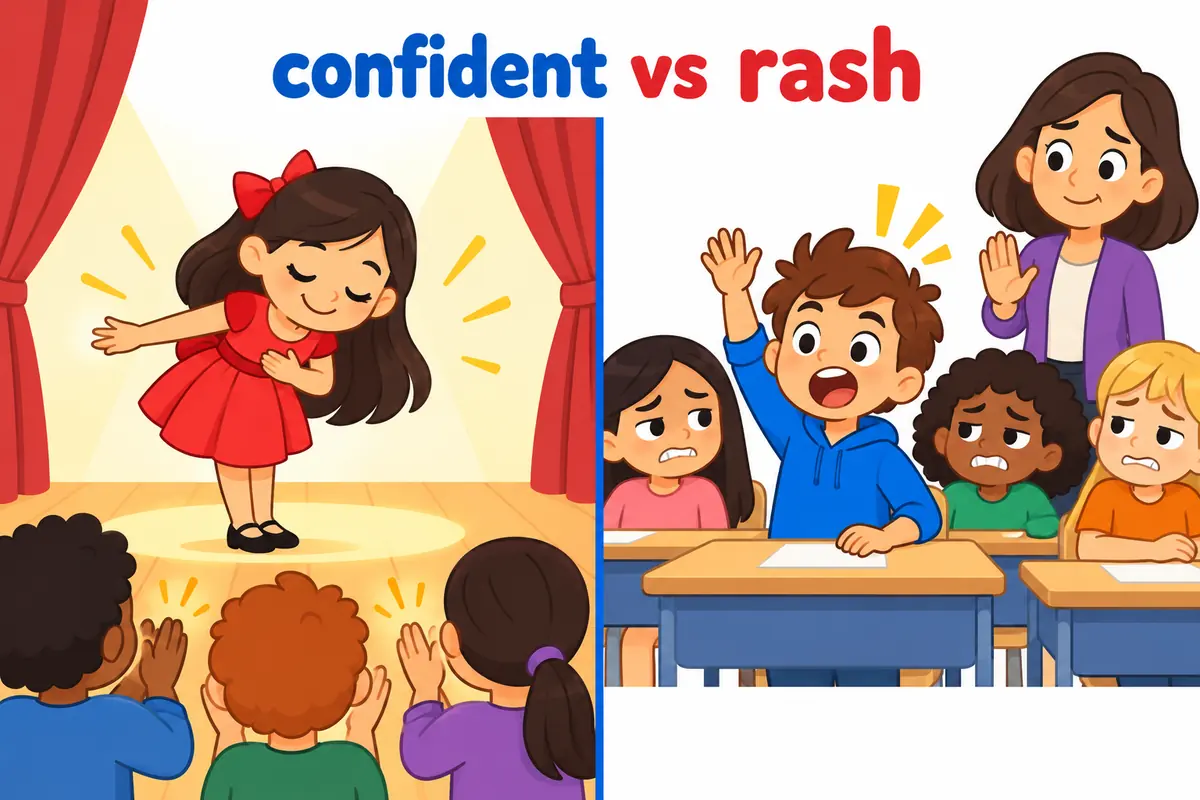
- The commonest error is confusing brassy with brash, which means hasty and tactless.
What does brassy mean?
Brassy is an adjective meaning boldly impudent, harsh and loud in sound, or yellow like brass in colour. The Cambridge entry for brassy joins the brazen manner to the metallic tone, so the two ideas reinforce each other. A bold choice may be brave, but a brassy one also attracts attention the room can hear.
| Sense | Plain meaning | Example sentence |
|---|---|---|
| Bold and impudent | Confidently forward, with nerve | The brassy intern asked for a raise in week one. |
| Loud and harsh | Strident, like a brass instrument | A brassy laugh rolled across the canteen. |
| Yellow like brass | Metallic yellow, often cheap-looking | The dye left her hair a brassy orange. |
The three senses are linked by a shared idea of shine and volume. A brassy shade is not a gentle gold but a harsh, obvious yellow, and a display of gaudy colours has the same overdone quality. When the tone is merely warm and rich, brassy is the wrong word, because it always hints that the effect is a little too much. Because the senses overlap, one sentence can carry two at once, since a brassy voice may be both literally loud and figuratively bold.
How do you use brassy in a sentence?
Brassy works both before a noun and after the verb be. Five patterns cover almost every real sentence, and the choice between them depends on whether you are labelling the thing or judging it directly.
| Pattern | Example | What it signals |
|---|---|---|
| brassy + person noun | A brassy trader shouted across the floor. | Labels a bold, pushy person. |
| brassy + sound noun | The band had a brassy tone all night. | Describes a loud, metallic quality. |
| be + brassy | His reply was brassy and unapologetic. | Judges the manner directly after the verb. |
| brassy + colour noun | The curtains were a brassy yellow. | Names a harsh, showy shade. |
| too brassy for + noun | The joke was too brassy for a school assembly. | Sets a limit against the wrong setting. |
Speakers often soften brassy with a modifier such as rather or a little, because the bare adjective sounds like a fixed judgement. In writing, the same softening appears as a careful context such as too brassy for a quiet ceremony.
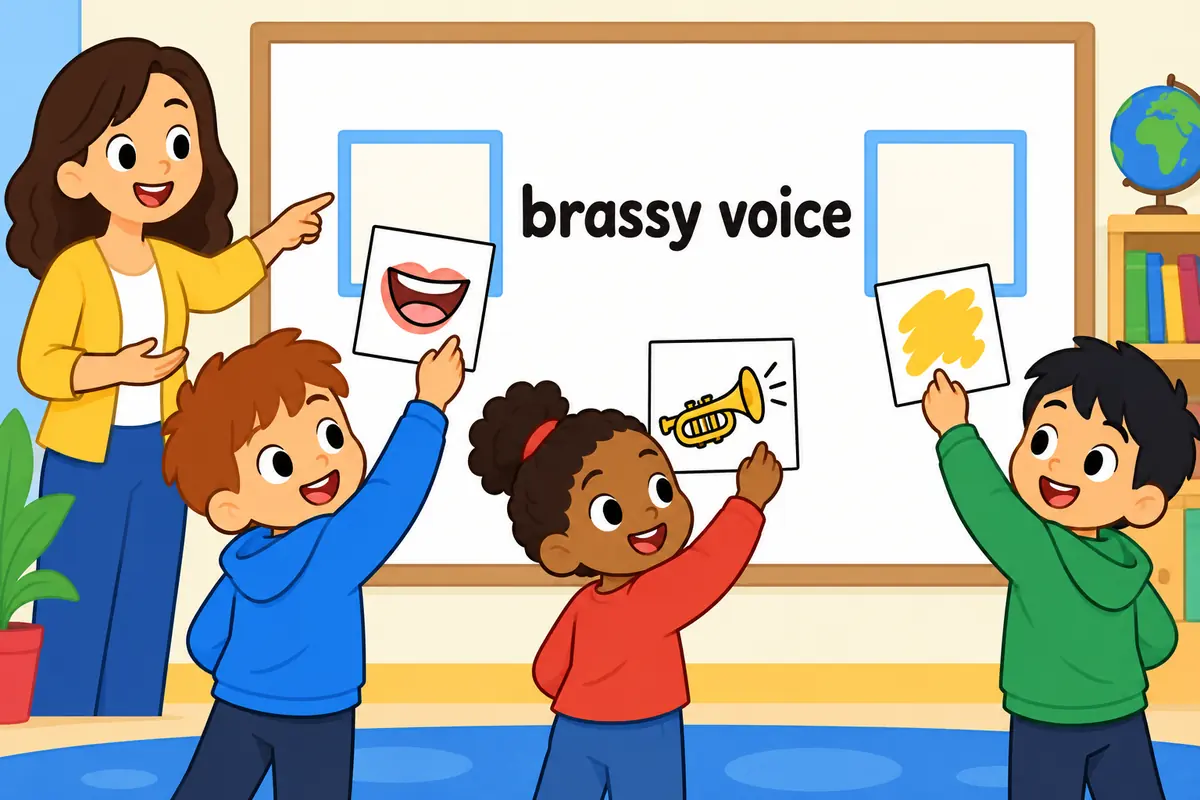
Brassy in a sentence: examples across contexts
Brassy changes job rather than tone as it moves between people, sound and colour. The ten sentences below show each sense in a setting where it is easy to judge.
| Context | Example sentence | Why this works |
|---|---|---|
| Classroom | A brassy pupil talked straight over the visiting head teacher. | The person sense is clear from the action. |
| Workplace | The brassy pitch won the account on nerve alone. | Links boldness to a concrete result. |
| Music review | The finale was brassy and gloriously loud. | Uses the sound sense admiringly. |
| Fashion note | The jacket’s brassy lining cheapened the whole look. | Shows the colour sense judging quality. |
| News report | The mayor’s brassy denial satisfied nobody. | Marks a manner as shameless in public. |
| Sport | Her brassy celebration annoyed the away supporters. | Shows showy confidence that provokes. |
| Film review | A brassy saxophone carries the opening scene. | The sound sense sets a mood. |
| Beauty column | Rinse the dye out before it turns brassy. | The colour sense names an unwanted shift. |
| Literature | He answered with a brassy smile that hid his fear. | Pairs surface nerve with private doubt. |
| Conversation | That was a brassy thing to say to your boss. | Everyday judgement of nerve and risk. |
| Restaurant review | The brassy lighting made the dining room feel cheap. | Uses the colour sense to judge an atmosphere. |
| Interview | Her brassy opening line set the tone for the whole chat. | Shows bold nerve shaping an encounter. |
| Theatre notice | The lead’s brassy delivery filled the back row. | Combines the sound and person senses at once. |
Brassy vs brash
Brassy and brash both describe someone who speaks without much caution, and the difference is judgement. A brash remark is hasty and likely to cause offence, while a brassy manner is confident and deliberately attention-seeking.
| Attribute | brassy | brash |
|---|---|---|
| Core quality | Bold, showy nerve | Rash, tactless haste |
| Sound sense | Yes, loud and metallic | No |
| Colour sense | Yes, harsh yellow | No |
| When it works | Confident self-promotion | Rarely; it usually backfires |
| Tone of the speaker | Often wry or admiring | Often critical |
Verdict: choose brassy for confident, showy nerve that might even succeed, and brash for speed without thought, which rarely does. Where the daring is original rather than loud, an audacious proposal is the better phrase, because it praises the idea rather than the volume. The words also sit on different scales: brash describes how a person acts on impulse, while brassy describes how a person presents themselves, so a quiet person can behave brashly yet is rarely called brassy.
Word forms and grammar of brassy
Brassy doubles its s in the comparative and builds a small family from the noun brass. The table also lists the words learners mix up with it.
| Form | Part of speech | Example |
|---|---|---|
| brassy | adjective | She had a brassy delivery. |
| brassier | comparative adjective | This shade is brassier than the last. |
| brassiest | superlative adjective | That is the brassiest trumpet in the section. |
| brassiness | noun | The brassiness of the dye surprised no one. |
| brass | noun | The band was all brass and drums. |
| brassey | non-standard spelling | Write brassy with two s’s. |
The comparative forms matter in reviews, where a critic ranks one tone against another, so brassier and brassiest appear often in music and fashion writing. The noun brassiness is the abstract version, useful when the quality itself, rather than any one thing, is the subject.
Common mistakes with brassy
- Incorrect:
His brassy decision to quit within a week was reckless.Correct: His brash decision to quit within a week was reckless. Rule: Brash means rash and hasty; brassy means boldly showy, not impulsive. - Incorrect:
She met the challenge with brassy confidence.Correct: She met the challenge with brazen confidence. Rule: Brazen stresses shamelessness, an idea of guilt ignored; brassy stresses showy boldness. - Incorrect:
The jewellery was luxurious and brassy.Correct: The jewellery was luxurious and golden. Rule: Brassy yellow suggests something cheap; it cannot praise fine metal. - Incorrect:
The players were brass after the match.Correct: The players were brassy after the match. Rule: Brass is the metal or a section of a band; the adjective is brassy. - Incorrect:
He was brassy and apologised at once.Correct: He was brash and apologised at once. Rule: Brassy nerve does not rush to apologise; a hasty, regretful action is brash.
Practice using brassy
Work through the six items, then read the reason beside each answer.
- Fill the gap: The dye had faded to a ______ yellow after two washes.
- Choose the better word: His (brassy / brash) interruption ruined the quiet ceremony.
- Correct the error: The student was brazen enough to ask for extra marks, and it worked.
- Build a sentence: use a brassy voice about a singer in a hall.
- Spot the register: which suits a music review — the horns were brassy and thrilling, or the horns were loud, like, a lot?
- Rewrite without the word: The curtains were too brassy. Use gaudy instead.
- Replace the adjective: The band sounded brassy in the small room. Use a plainer phrase for the sound.
Answers
- brassy — a harsh yellow shade after fading is exactly the colour sense.
- brash — a thoughtless interruption that ruins an event is rash, so brash fits.
- The student was brassy enough to ask for extra marks — brassy captures bold nerve, while brazen adds a note of shame.
- Model answer: A brassy voice filled the hall without a microphone.
- The horns were brassy and thrilling — a review wants the technical adjective, not filler.
- The curtains were too gaudy for the room — gaudy names the overdone showiness directly.
- Model answer: The band sounded loud and metallic in the small room — the paraphrase keeps the sense without the judgement.
The bottom line
Use brassy in a sentence to describe bold, showy nerve, a loud metallic sound, or a harsh yellow shade, and let the noun settle which sense you mean. The two details that decide most sentences are that the person sense is usually disapproving, and that the colour sense implies cheapness rather than luxury. When the boldness is shameful rather than showy, brazen confidence is the sharper choice, and when it is reckless, brash. In reviews and character sketches, brassy usually signals that the writer is impressed and slightly wary at the same time.
Frequently asked questions about brassy
Is brassy a compliment or an insult?
It depends on the sense. Describing a sound as brassy is usually neutral or admiring, as in a brassy brass section. Describing a person as brassy often carries disapproval, suggesting showy nerve rather than genuine confidence. The colour sense is almost always negative, since it hints at cheap, fading yellow.
What does brassy hair mean?
Brassy hair has turned a harsh orange or yellow, usually after dyeing or lightening. The term is a complaint, because the colour reads as cheap rather than a soft, natural blonde. A stylist who says the tone has gone brassy means it needs correcting, not that it looks golden.
Is brassy the same as loud?
Not quite. Loud describes volume alone, while brassy adds a metallic, strident quality that hints at brass instruments. A brassy laugh is both loud and harsh, with a ring to it. A loud shirt is simply vivid, without the metallic edge that brassy carries.
Can brassy describe a colour?
Yes, brassy describes a yellow that resembles brass, and the word almost always criticises it. In decorating and hairdressing, a brassy tone is one that has turned too yellow or orange. For a warm colour you actually like, choose golden, rich or warm instead of brassy.