
Derogate is a formal verb meaning to take away from the value, importance or authority of something, and it usually appears as derogate from. To use derogate in a sentence, name the weakened thing after from: “The new ruling derogates from the earlier agreement.” The everyday adjective is derogatory.
Derogate at a glance
- Derogate is a regular verb; its forms are derogates, derogated and derogating, with the noun derogation.
- It usually appears intransitively as derogate from + thing.
- The common meaning is to detract from or lessen the value of something.
- In law it means to weaken, restrict or partly repeal a rule, right or treaty.
- The commonest error is using the verb where the adjective derogatory belongs.
What does derogate mean?
Derogate is a verb meaning to take away from the value, standing or force of something, and it normally appears in the frame derogate from. The Cambridge entry for derogate records the sense of lessening something and the legal sense of weakening a rule, and the two overlap more than they differ. A third, rarer use is transitive: to speak of a person as inferior. The everyday verb detract from covers the same idea, and it is the phrase most writers reach for instead.
| Sense | Plain meaning | Example sentence |
|---|---|---|
| Detract from | Lessen the value or reputation of something | Those remarks derogate from her long service. |
| Weaken a rule, in law | Take away part of a law’s or treaty’s force | The amendment derogates from the original act. |
| Disparage, rare and transitive | Speak of someone as inferior | A leader should not derogate a colleague in public. |
One limitation is worth stating plainly. Derogate is stiff and mostly legal or diplomatic, and it sounds wrong in a friendly note. In ordinary writing, detract from does the same work with less ceremony, and in speech the adjective derogatory is far more common. To belittle someone is to make them seem small, which is the personal version of the same lowering act, and it is usually the clearer choice.
How do you use derogate in a sentence?
Put the verb in front of from and let the following noun name whatever loses value, because derogate almost never stands alone. Five patterns cover almost every real sentence, and the choice between them decides whether the writing sounds like a contract, a ruling or a complaint.
| Pattern | Example | What it signals |
|---|---|---|
| derogate from + thing | The ruling derogates from the earlier agreement. | The dominant pattern; from names what is weakened. |
| derogate from + right or standard | Nothing here derogates from your right to appeal. | Legal boilerplate that protects a right. |
| derogate from + reputation | Such claims derogate from his reputation. | Detracting from a person’s good name. |
| nothing/no clause derogates from | The scheme derogates from no existing protection. | The negative form common in contracts. |
| derogate + object, rare | Do not derogate a colleague before the team. | The transitive disparage sense, formal and uncommon. |
The preposition is not optional in the usual senses. Drop from and the sentence sounds unfinished to a lawyer, because the verb needs its object of value to be named. Only the rare transitive disparage sense takes a direct object without from.
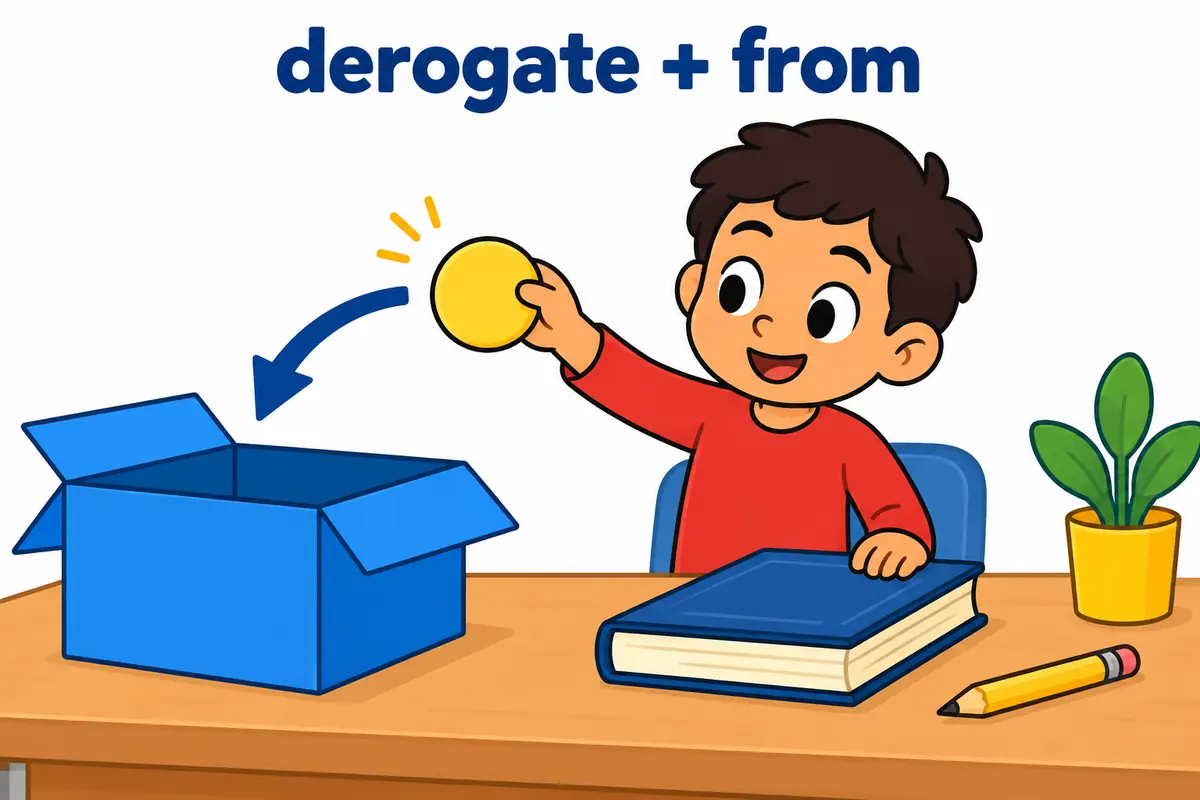
Derogate in a sentence: examples across contexts
Derogate belongs where rules, rights and reputations are weighed, so the same verb serves a treaty, a tribunal and a news report. The ten sentences below show the value being taken away, and each one names the thing that loses part of its force.
| Context | Example sentence | Why this works |
|---|---|---|
| Legal writing | The clause does not derogate from any statutory right of the tenant. | Uses the protective negative form standard in contracts. |
| Contract clause | Nothing in this agreement derogates from the parties’ duty of good faith. | Common boilerplate that preserves an existing duty. |
| Tribunal ruling | The new regulation arguably derogates from the parent act. | Applies the weaken-a-rule sense with a hedge. |
| Diplomatic note | Either side may withdraw if the terms derogate from the treaty. | Treats a treaty as the object losing force. |
| News report | Critics say the changes derogate from decades of environmental protection. | Reports an argument about lost protection. |
| Parliamentary debate | The member argued that the bill derogates from local control. | Frames a political claim as a loss of authority. |
| Academic writing | The author holds that such exceptions derogate from the principle itself. | Makes a philosophical claim about a principle. |
| Workplace email | No review should derogate from an employee’s contractual notice. | Keeps a formal tone while protecting a right. |
| Historical account | Later statutes gradually derogated from the ancient charter. | Shows the verb in a gradual legal erosion. |
| Conversation | Nobody says derogate at lunch, but the new rules do take something away. | Contrasts the technical verb with plain speech. |
Notice that the conversational sentence names the verb only to avoid it. That distance between the legal register of derogate and the plain phrase take something away is the surest guide to where the verb belongs.
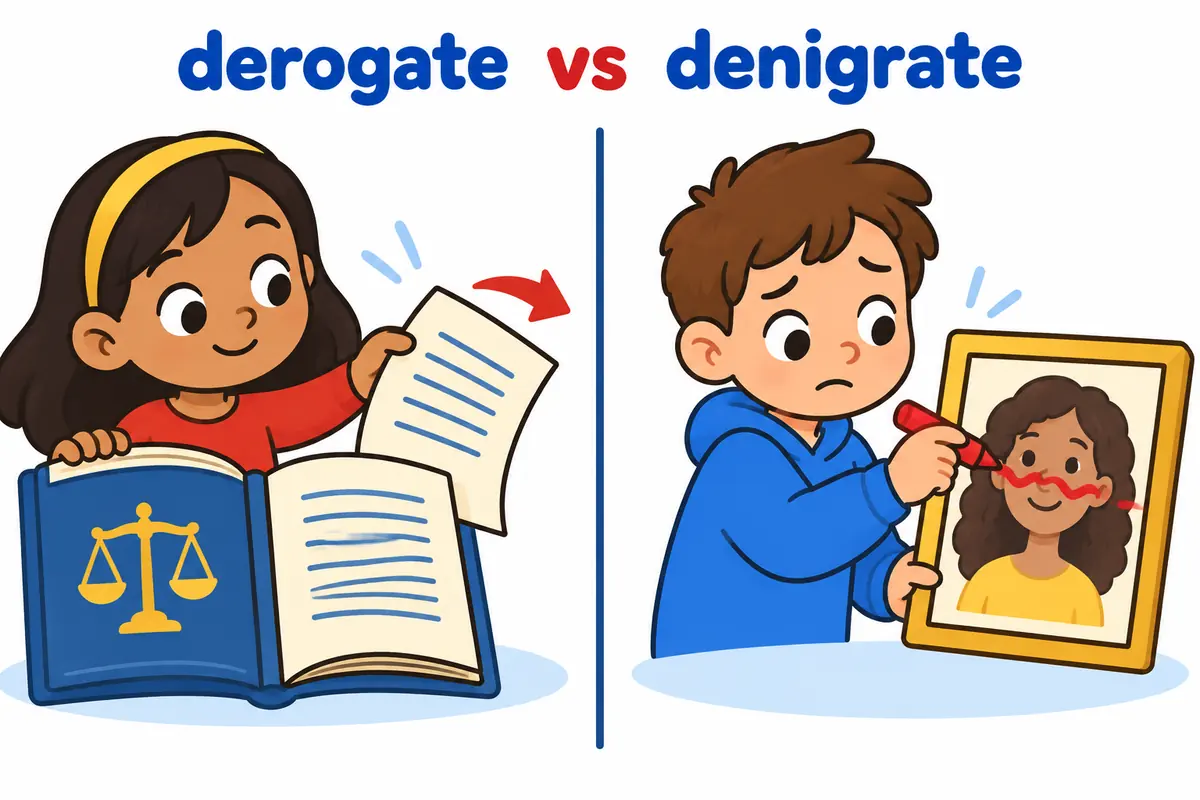
Derogate vs denigrate
Denigrate is the verb learners most often swap for derogate, and the difference is the target. Where the target is a person rather than a rule, denigrate is the transitive verb modern writing prefers. Denigrate attacks a reputation, while derogate from takes value away from a right, rule or standing. Disparage is slightly softer than denigrate and often describes a quiet public criticism, and demean shifts the focus to lowering a person’s dignity, which derogate never quite does.
| Attribute | derogate | denigrate |
|---|---|---|
| Verb pattern | Intransitive, usually with from | Transitive, takes a direct object |
| Core meaning | Detract from or weaken something | Attack the reputation of a person or group |
| Typical target | A right, rule, treaty or reputation | A person, group or achievement |
| Frequency | Formal and mostly legal | Common in journalism and speech |
| Typical pattern | derogate from + thing | denigrate + person |
| Related noun | derogation | denigration |
| Connotation | Neutral and technical | Openly hostile |
Verdict: use denigrate to attack a person’s reputation, and derogate from to take value away from a rule, right or agreement, since the first is transitive and personal while the second is technical and impersonal.
Word forms and grammar of derogate
Derogate builds a full family of forms, and the adjective learners expect is not the one that exists. Its adjective relative derogative is rare, and the common adjective is derogatory instead. The table also shows the noun, which appears often in legal writing as the name for the act itself.
| Form | Part of speech | Example |
|---|---|---|
| derogate | verb, base form | No clause may derogate from this guarantee. |
| derogates | verb, third person singular | The rule derogates from an older protection. |
| derogated | verb, past and past participle | The amendment derogated from the charter. |
| derogating | verb, present participle | Measures derogating from the treaty must be notified. |
| derogation | noun | The state applied for a temporary derogation. |
| derogatory | adjective, the common one | A derogatory remark damaged the talks. |
| derogative | adjective, rare | Prefer derogatory in almost every sentence. |
Common mistakes with derogate
- Incorrect:
The law derogates the treaty.Correct: The law derogates from the treaty. Rule: the weaken-a-rule sense is intransitive and needs from. - Incorrect:
He derogated her achievements in front of the team.Correct: He denigrated her achievements in front of the team. Rule: modern writing uses the transitive denigrate for a person. - Incorrect:
a derogate remark about the planCorrect: a derogatory remark about the plan Rule: derogatory is the adjective, and derogate is the verb. - Incorrect:
The clause will derogate your rights.Correct: The clause will derogate from your rights. Rule: the right is the object of from, not of the verb directly. - Incorrect:
Parliament voted to derogate the old law entirely.Correct: Parliament voted to repeal the old law entirely. Rule: repeal cancels a law, while derogate only takes part of its force away. - Incorrect:
She asked a colleague to derogate the report.Correct: She asked a colleague to delegate the report. Rule: delegate means hand a task on; the near-twin delegate has nothing to do with value.
Practice using derogate
Work through the seven items, then check the reasoning rather than only the answer.
- Fill the gap: The new policy must not ______ from anyone’s legal rights.
- Choose the better word: The article (derogated from / denigrated) the young player’s reputation.
- Correct the error: The amendment derogates the original agreement.
- Build a sentence: use derogate from about a temporary rule that weakens a standing protection.
- Spot the register: which belongs in a contract — nothing in this clause derogates from the tenant’s rights, or the clause doesn’t take away the tenant’s rights?
- Rewrite with the noun: The minister complained that the rule weakened her powers. Use derogation instead.
- Choose the adjective: An insulting joke is (derogate / derogatory).
Answers
- derogate — the frame derogate from names the right that loses part of its force.
- denigrated — the target is a person’s reputation, which takes the transitive verb.
- The amendment derogates from the original agreement — the weaken-a-rule sense needs from.
- Model answer: The emergency order derogates from a protection older than the statute itself.
- Nothing in this clause derogates from the tenant’s rights — a contract keeps the formal verb and the from.
- The minister described the rule as a derogation from her powers — the noun names the act of weakening.
- derogatory — the adjective describes the joke, while derogate is the verb.
The bottom line
Use derogate in a sentence when something loses part of its value, force or standing, and keep the frame derogate from unless you are using the rare transitive sense. The two points that decide most sentences are these: the verb is technical and impersonal, and from names the rule, right or reputation that is weakened. For a plainer effect, detract from or the personal verb belittle does the same work with far less ceremony.
Frequently asked questions about derogate
Is it derogate or denigrate?
Both exist, but they work differently. Derogate is usually intransitive and takes from, as in the rule derogates from an old protection. Denigrate is transitive and takes a direct object, as in the article denigrated the player. Use denigrate for people and derogate from for rules, rights and agreements.
Does derogate always take from?
In its two common senses, yes. Both the detracting sense and the legal weaken-a-rule sense need from to name what loses value or force. A rarer transitive use, meaning to speak of someone as inferior, drops the preposition, but it is formal and uncommon, so learners should keep from in almost every sentence.
What does derogate mean in law?
In law, derogate means to take away part of the force of a statute, right or treaty without cancelling it entirely. A later act may derogate from an earlier one, and a treaty may permit temporary derogation in an emergency. The key point is partial weakening rather than full repeal.
Is derogate the same as repeal?
No. Repeal cancels a law or provision completely, so nothing of it remains in force. Derogate only takes away part of its effect, leaving the rest standing. A statute that is repealed disappears, while a statute that is derogated from continues to operate in the areas the later rule has not touched.