
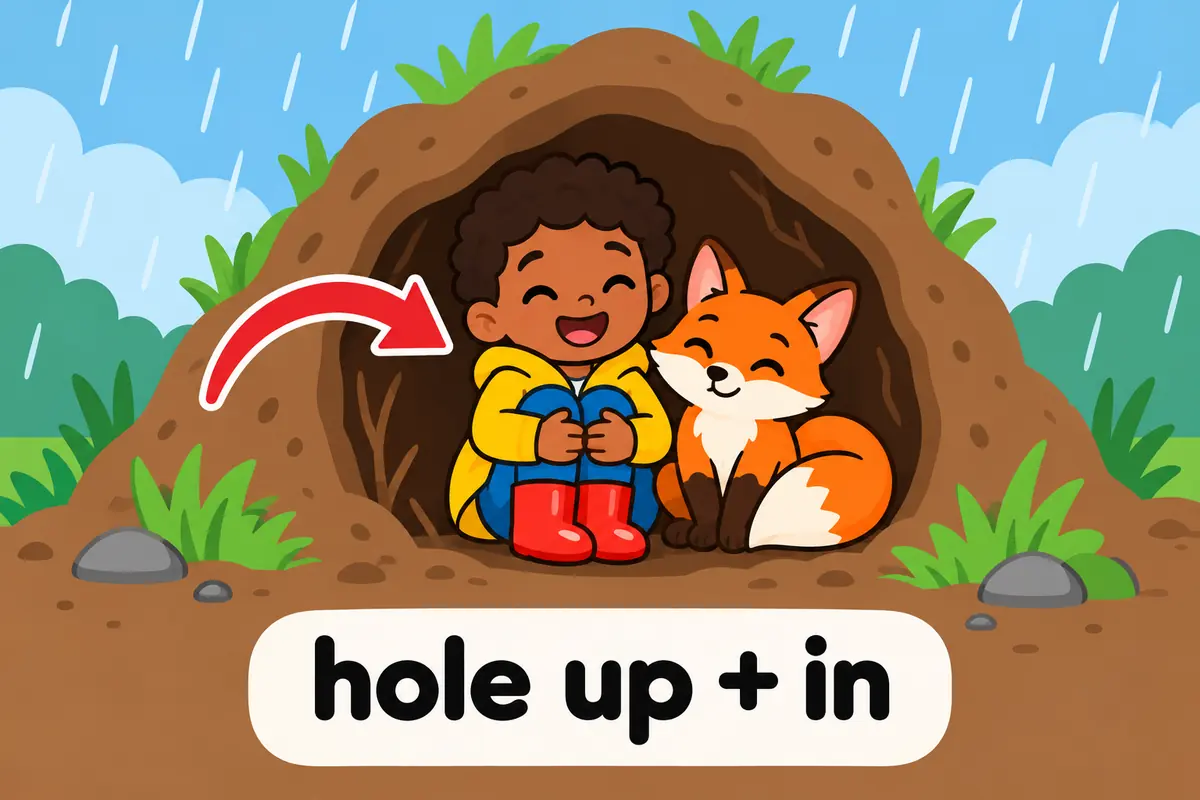
Hole up means to hide or take shelter somewhere, often staying put for a while. To use hole up in a sentence, keep the phrasal verb intransitive and let in name the place: the scouts holed up in a cave. The two words stay together, and the situation usually involves weather, danger or a need to be left alone.
Hole Up at a glance
- Hole up is an intransitive phrasal verb; no object follows it directly.
- The particle is fixed, so hole up is never split by a pronoun.
- The main sense is to hide or shelter, usually for a period.
- The place normally comes after in, and the reason after from, during or until.
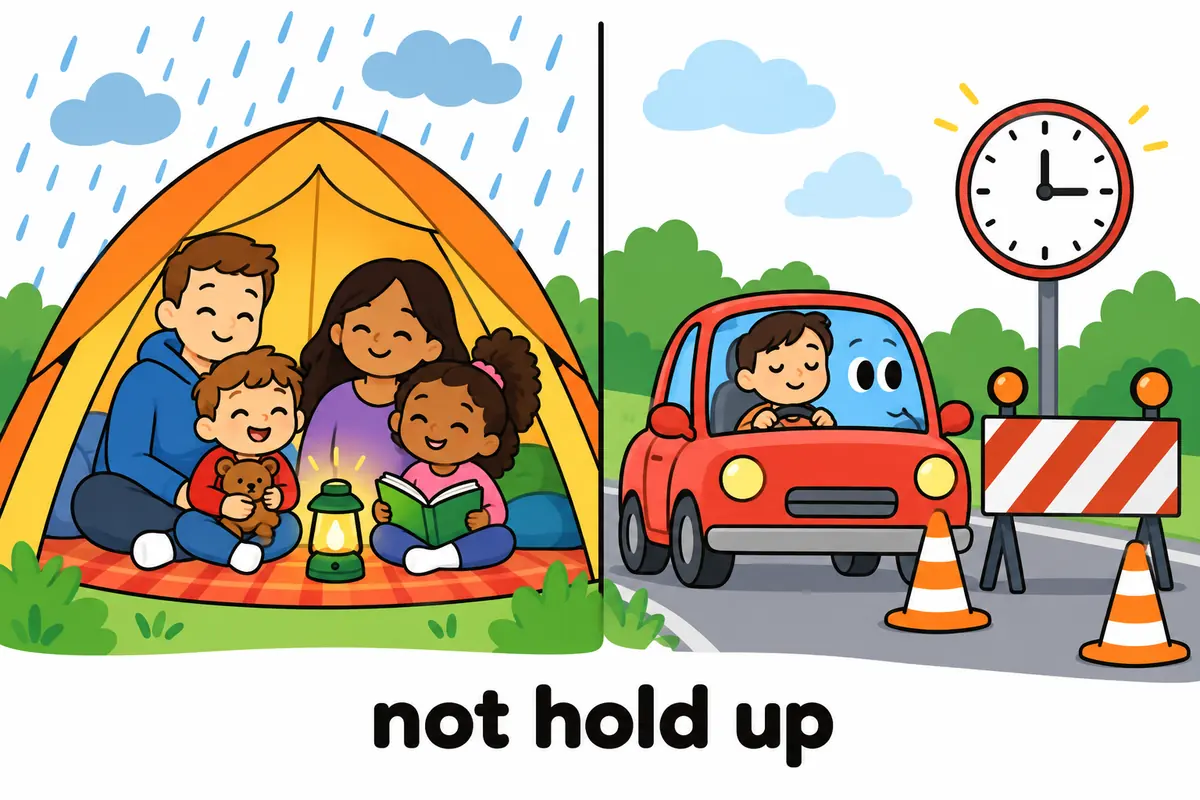
- The commonest error is confusing hole up with hold up, which means delay or rob.
What does hole up mean?
Hole up is a phrasal verb meaning to hide, shelter or stay in a safe place for a time. The Cambridge entry for hole up records the hiding sense and notes that it is often used of animals as well as people. The word pictures something going into a hole and staying there until the danger or the weather passes, which is why camera crews and small animals alike hole up.
| Sense | Plain meaning | Example sentence |
|---|---|---|
| Hide from danger | Stay out of sight until it is safe | The hikers holed up in a hut during the storm. |
| Shelter from weather | Take cover and wait | We holed up in a cafe until the rain eased. |
| Keep out of the way | Stay quietly in one place | He holed up at home with a good book. |
| Overwinter (animals) | Pass the cold months in a den | The tortoise holes up under the shed each winter. |
One limitation is worth stating plainly. Hole up suggests a temporary stay rather than a permanent home, and it often carries a hint of trouble or secrecy. It would sound odd for a planned family holiday, so it pictures a safe place rather than a planned retreat to a cabin. The hiding can also be innocent, as when children conceal a gift until the right moment, but the verb still implies staying out of sight.
How do you use hole up in a sentence?
Hole up is intransitive and inseparable. The particle up stays welded to the verb, so you can never say hole it up or hole up it; a pronoun would have nowhere to go because there is no object at all. The place it happens in follows the preposition in, and the reason follows from, during or until.
| Pattern | Example | What it signals |
|---|---|---|
| hole up | The foxes holed up for the winter. | No object; the hiding itself is the point. |
| hole up in + place | The travellers holed up in a mountain inn. | In names where the shelter is. |
| holed up (adjective) | The reporters stayed holed up for three days. | The participle describes a state. |
| hole up until + time | We holed up until the wind dropped. | Until sets the end of the stay. |
| hole up from + threat | They holed up from the storm in a barn. | From names what is escaped. |
Because the verb can never take an object, a sentence such as hole up the tent is impossible; the place must follow in. The same rule explains why the participle holed up appears so often in news writing, where it describes a family or a crew without naming any action.
Hole Up in a sentence: examples across contexts
Hole up appears in weather stories, adventure tales and everyday plans to stay in. The sentences below move from a school trip to a news report, and each one names a place with in or a reason with from. Where a place feels exposed rather than safe, writers may choose to shelter from the rain instead.
| Context | Example sentence | Why this works |
|---|---|---|
| Classroom | On the wet school trip, the class holed up in a small museum. | Names the shelter after in. |
| Home | We holed up in the living room all weekend with films and cocoa. | Everyday sense of staying put comfortably. |
| News report | Residents holed up in their homes as the river rose. | Suggests danger and a temporary stay. |
| Travel writing | The climbers holed up in a refuge for two stormy days. | In names the mountain shelter. |
| Nature writing | The badger holes up in its sett through the coldest weeks. | Uses the animal sense naturally. |
| Detective story | The suspect had holed up in a seaside guesthouse. | Hints that the stay avoids being found. |
| Sports report | The team holed up in a quiet hotel before the final. | Shows a deliberate, calm retreat. |
| Diary entry | I holed up with a jigsaw while the rain hammered the roof. | First person suits a cosy, harmless stay. |
| Local news | The family holed up from the flooding in a village hall. | From names what is escaped. |
| Adventure story | They holed up until the searchlights moved away. | Until marks the end of the hiding. |
| Birdwatching note | The owls hole up in the barn loft by day. | A daytime shelter, not a permanent home. |
Hole Up vs hide
Hole up and hide a secret share the idea of being out of sight, but they describe different shapes of hiding. Hole up is about staying in a particular place for a stretch of time; hide is the general verb for keeping something or someone from being seen.
| Attribute | hole up | hide |
|---|---|---|
| Focus | Staying in a safe place | Keeping out of sight |
| Object | Takes no object | Takes an object or none |
| Duration | Usually a period of time | Any length, often brief |
| Usual cause | Weather, danger or tiredness | Fear, play or secrecy |
| Typical place | A den, hut, hotel or home | Anywhere |
Verdict: use hole up for a stay in a safe place, and hide when the point is simply not being seen. For a deliberate withdrawal from other people, the formal verb is to seclude oneself, which sounds more permanent than hole up.
Word forms and grammar of hole up
Hole up inflects on hole, and the past participle holed up works as an adjective, which is how it appears most often in news writing.
| Form | Part of speech | Example |
|---|---|---|
| hole up | base and present | The rabbits hole up before the frost. |
| holes up | third person singular | The cat holes up under the bed when it thunders. |
| holed up | past and past participle | The travellers holed up in a roadside cafe. |
| holed up | adjective | The witnesses remained holed up for a week. |
| holing up | present participle | The crew are holing up until the tide turns. |
| hole up in | fixed phrase | The place always follows the preposition in. |
Writing hoed up or holded up is a common slip; the only past form is holed up, and it never splits into hole it up or hole up it.
Common mistakes with hole up
- Incorrect:
The scouts holed up the cave during the storm.Correct: The scouts holed up in the cave during the storm. Rule: Hole up is intransitive, so the place follows in rather than sitting straight after the verb. - Incorrect:
The village was held up by the snow for two days.Correct: The village was holed up by the snow for two days. Rule: Hold up means to delay or rob, while hole up means to shelter, so the weather sentence needs holed up. - Incorrect:
We holed up the tent and waited.Correct: We holed up in the tent and waited. Rule: The verb cannot take an object, so add in before the place. - Incorrect:
He has holed up the money in a drawer.Correct: He has hidden the money in a drawer. Rule: Hole up applies to people or animals taking shelter, not to hiding objects; use hide or conceal for things. - Incorrect:
The birds emerged from the shed where they had held up.Correct: The birds emerged from the shed where they had holed up. Rule: Held up would mean delayed; the sheltering sense is holed up.
Practice using hole up
Work through the six items, then read the reason beside each answer rather than only the key.
- Fill the gap: During the thunderstorm the puppy ______ up behind the sofa.
- Choose the better word: Roadworks (holed up / held up) traffic for an hour this morning.
- Correct the error: We holed up the beach hut until the rain stopped.
- Build a sentence: use hole up in about a class waiting out a storm.
- Spot the register: which fits a news report — residents holed up as the floods rose, or the whole town went into hiding, like, immediately?
- Change the form: The foxes hide in their den each winter. Rewrite with the present participle holing up.
Answers
- holed — the past tense of hole up is holed up.
- held up — the roadworks caused a delay, and hold up is the verb for delaying.
- We holed up in the beach hut until the rain stopped — the place needs in before it.
- Model answer: The class holed up in the library until the storm passed.
- Residents holed up as the floods rose — a news report keeps a measured register.
- The foxes are holing up in their den each winter — holing up is the present participle.
The bottom line
Use hole up in a sentence when people or animals stay in a safe place for a while, and remember that the verb takes no object. Two details decide most sentences: the shelter follows in and the reason follows from or until, and the past participle holed up doubles as a description of the stay. When the danger passes, the same creatures emerge later, and a curious neighbour may expose the hiding place; neither verb needs an object either.
Frequently asked questions about hole up
Is it hole up or hold up?
They are different phrasal verbs. Hole up means to hide or shelter somewhere for a period. Hold up means to delay something or to rob a place. One letter separates them, so check the vowel: hole up shelters, while hold up delays or steals.
Is hole up one word or two?
As a verb it is always two words, hole up, and the particle is never joined to the verb. The past participle is written as two words too, though it often appears hyphenated before a noun, as in a holed-up family in a news headline.
Can hole up take an object?
No. Hole up is intransitive, so no object follows it directly. The place goes after in, as in hole up in a hut, and the reason goes after from or until. Writing hole up the hut is the commonest mistake learners make.
Is hole up informal?
Hole up is neutral to slightly informal and suits news features, adventure writing and everyday speech. It carries a hint of trouble or bad weather, so it is rare in formal or cheerful contexts, where stay in or shelter often reads better.