
Disfigure means to spoil the appearance of something, usually by damage or marks. To use disfigure in a sentence, make the thing that is spoiled the object: graffiti disfigures the wall. The verb is transitive, it often appears in the passive, and it suggests visible harm rather than a small smudge.
Disfigure at a glance
- Disfigure is a regular verb; its forms are disfigures, disfigured, disfiguring and the noun disfigurement.
- It is transitive, so the thing spoiled comes straight after it.
- The passive is common: a face, building or landscape is disfigured by something.
- Usual subjects are scars, graffiti, rust, storms and careless building work.
- The commonest error is using disfigure for ordinary wear, which is far too mild.
What does disfigure mean?
Disfigure is a verb meaning to spoil the appearance or shape of something. The Cambridge entry for disfigure centres on visible damage that makes a thing less attractive or less whole, and it applies to faces, buildings and landscapes alike. The harm is to how something looks, not usually to whether it still works.
| Sense | Plain meaning | Example sentence |
|---|---|---|
| Spoil a surface | Mark or scar something visible | Graffiti disfigured the station wall. |
| Mar a face | Damage someone’s features | The accident disfigured his cheek. |
| Ruin a scene | Make a place less attractive | Power lines disfigure the valley. |
| Damage a work | Spoil the appearance of a text or object | Water disfigured the old manuscript. |
One limitation is worth stating plainly. Disfigure is stronger than scratch or stain, so it is the wrong word for light wear. A faint stain merely blemishes the paint, but a deep scratch across a carved face disfigures it. The word implies damage that is obvious and lasting, and it is often used where beauty has been lost.
How do you use disfigure in a sentence?
Disfigure is transitive, and the thing it spoils is the object. The damaging force, whether a scar, rust or a storm, is usually the subject, and the passive puts the ruined thing first for emphasis.
| Pattern | Example | What it signals |
|---|---|---|
| subject + disfigure + object | Mud and rain disfigured the new path. | The cause is the subject; the spoiled thing is the object. |
| be disfigured by | The statue was disfigured by years of grime. | Passive with by names the cause. |
| disfigured + noun | The disfigured wall faced the road. | The participle works as an adjective. |
| disfigure + object + with + noun | Someone had disfigured the poster with ink. | With names the marks that were added. |
| leave + object + disfigured | The storm left the coast badly disfigured. | A result phrase, common in news writing. |
Because the verb needs an object, a sentence such as the wall disfigured has no meaning until the reader knows what was spoiled. The passive solves the same problem from the other direction, which is why reports so often begin with the ruined thing rather than the cause.
Disfigure collocates with causes rather than with people acting deliberately: scars, damp, rust, graffiti and storms disfigure, while a person usually disfigures something by accident or vandalism. The adverb badly is a frequent companion, as in badly disfigured, which is how a report signals serious harm without inventing a measurement.
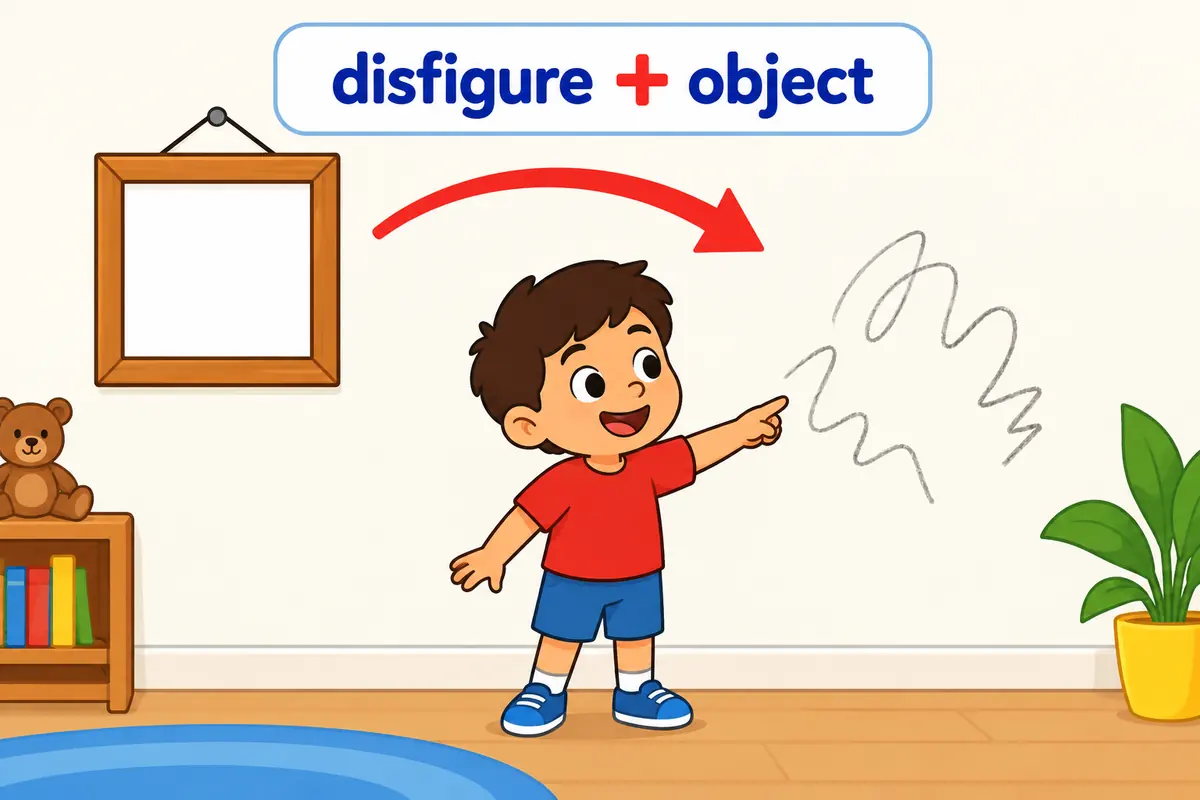
Disfigure in a sentence: examples across contexts
Disfigure suits reports of visible, lasting harm, from a vandalised wall to a scarred landscape. The sentences below move from a classroom to a news report, and each one names both the damage and the thing it spoils. For ordinary wear, the milder damage a wall is a better fit.
| Context | Example sentence | Why this works |
|---|---|---|
| Classroom | Someone disfigured the class mural with thick black pen. | Names the marks and the ruined artwork. |
| Home | Damp had disfigured the bedroom ceiling. | Shows slow damage by a natural cause. |
| News report | Vandals disfigured the war memorial overnight. | Uses the transitive form a report favours. |
| Legal writing | The charge was damaging property, not merely disfiguring it. | Contrasts disfigure with the broader offence. |
| Travel writing | Wind farms disfigure the ridge, according to some residents. | Applies the verb to a landscape view. |
| Environmental report | Oil disfigured miles of shoreline. | Pairs a substance with the place it spoils. |
| Sports report | A clash of heads disfigured the forward’s brow. | Uses the physical sense for a face. |
| Art history | Later repainting disfigured the original portrait. | Refers to damage done by poor restoration. |
| Conversation | The sticker disfigured my laptop lid, so I peeled it off. | An everyday, mildly dramatic use. |
| Local news | A fallen tree disfigured the neat town square. | A natural cause and a public place. |
| Planning letter | New signs would disfigure the protected view. | A formal objection to visual harm. |
| Museum label | Earlier cleaning had disfigured the fresco. | Shows harm caused by well-meant work. |
Disfigure vs deform
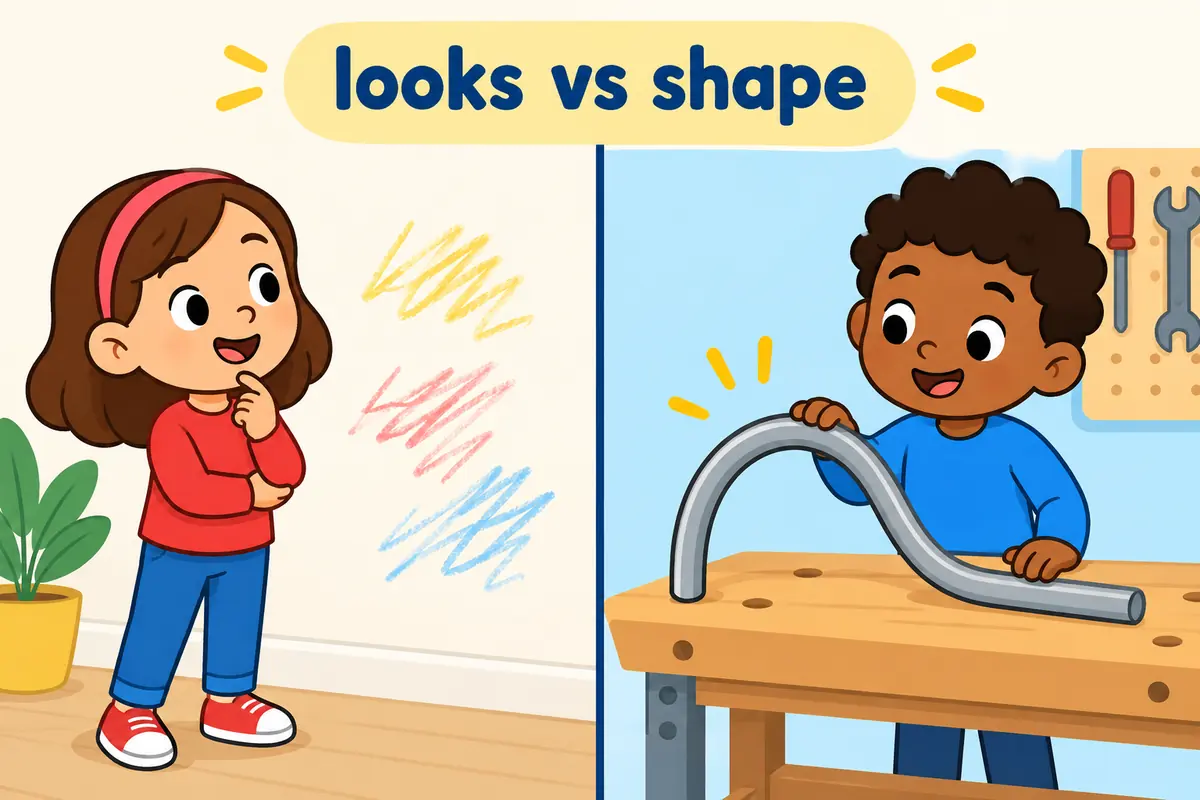
Disfigure and deform a shape both describe spoiled appearance, and the difference is what is spoiled. Disfigure is about looks and surfaces; deform is about shape and structure, and it can happen without any surface damage at all.
| Attribute | disfigure | deform |
|---|---|---|
| What changes | Appearance | Shape or structure |
| Typical cause | Scars, marks, graffiti, rust | Pressure, heat, disease, force |
| Purely visual? | Yes | No, the shape really changes |
| Usual objects | Walls, faces, landscapes, texts | Metal, plastic, limbs, landforms |
| Register | Neutral and descriptive | Technical, medical and industrial |
Verdict: choose disfigure when appearance is damaged, and deform when the shape itself is changed. Where something is simply made ugly rather than broken, writers may prefer the gentler mar the finish, which stops short of lasting damage.
Word forms and grammar of disfigure
Disfigure follows the regular verb pattern, and its noun disfigurement names both the damage and the state of being damaged.
| Form | Part of speech | Example |
|---|---|---|
| disfigure | verb, base form | Bright signs disfigure the old street. |
| disfigures | verb, third person singular | Rust disfigures the railings each winter. |
| disfigured | verb, past and past participle | The coin was disfigured by heat. |
| disfiguring | verb, present participle and adjective | A disfiguring crack ran across the statue. |
| disfigurement | noun | The disfigurement was visible from the road. |
| disfiguration | noun, rare | The disfiguration of the panel was repaired. |
There is no accepted verb disfigurate; the correct verb is simply disfigure, and the everyday noun is disfigurement.
Where disfigure appears: register and collocations
Disfigure lives in reports, objections and art history, where appearance is a value worth defending. It is rare in casual conversation, and it nearly always pairs with a cause that is impersonal or accidental, from damp and rust to graffiti and storms.
| Register | Typical sentence | What it signals |
|---|---|---|
| News report | The monument was disfigured by paint. | Neutral reporting of public damage. |
| Planning objection | These signs would disfigure the skyline. | A formal claim about visual harm. |
| Art history | Poor varnish disfigured the canvas. | Damage caused by earlier treatment. |
| Medical writing | The scar disfigured the lower face. | A clinical description of appearance. |
| Everyday speech | The sticker disfigured my laptop. | Light, half-joking overstatement. |
The adverb badly is the standard hedge, as in badly disfigured, and it lets a writer say the harm is serious without guessing at a measurement. That restraint is part of why the word suits formal complaints so well.
Common mistakes with disfigure
- Incorrect:
The cat disfigured the sofa with its claws.Correct: The cat scratched the sofa with its claws. Rule: Disfigure means serious visible damage, so light scratching is too mild for it. - Incorrect:
The injury disfigured to his hand.Correct: The injury disfigured his hand. Rule: Disfigure is transitive and takes the object directly, so to is not needed. - Incorrect:
Rust disfigured the statue’s strength.Correct: Rust disfigured the statue’s surface. Rule: Disfigure concerns appearance, not strength; use weakened for the structural sense. - Incorrect:
The editor disfigured the manuscript into a shorter book.Correct: The editor mutilated the manuscript into a shorter book. Rule: Editing changes content, not appearance, so mutilate a text is the closer word for clumsy cutting. - Incorrect:
The old barn was disfigured by age and quite beautiful.Correct: The old barn was weathered by age and quite beautiful. Rule: Disfigure implies lost beauty, so it clashes with the praise.
Practice using disfigure
Work through the six items, then read the reason beside each answer rather than only the key.
- Fill the gap: Heavy rain had ______ the chalk drawing on the playground.
- Choose the better word: A small scuff (disfigured / scratched) the table top.
- Correct the error: The spider disfigured the corner with a small web.
- Build a sentence: use be disfigured by about a statue in a park.
- Spot the register: which fits a news report — the memorial was disfigured by vandals, or the memorial got totally wrecked?
- Change the form: The scar made his face look spoiled. Rewrite with the noun disfigurement.
Answers
- disfigured — the rain caused obvious damage to the drawing.
- scratched — a small scuff is light damage, too mild for disfigure.
- The spider decorated the corner with a small web — a web is not damage, so disfigure is wrong.
- Model answer: The bronze statue in the park was disfigured by thick layers of graffiti.
- The memorial was disfigured by vandals — a news report stays formal and precise.
- The scar caused a visible disfigurement on his face — disfigurement is the noun for the damage.
The bottom line
Use disfigure in a sentence when damage makes something visibly less attractive or less whole, and put that thing as the object of the verb. Two details decide most sentences: the word implies obvious, lasting harm rather than light wear, and it concerns appearance rather than strength or function. When the harm is repaired, craftsmen may restore an old painting or even beautify a garden that the damage had spoilt.
Frequently asked questions about disfigure
What does disfigure mean?
Disfigure means to spoil the appearance of something through damage or marks, as when graffiti disfigures a wall or a scar disfigures a face. The harm is visible and usually lasting, and the word applies to buildings, landscapes and texts as well as to people.
What is the difference between disfigure and deform?
Disfigure damages how something looks, while deform changes its actual shape or structure. A stained wall is disfigured but not deformed; a bar bent out of true is deformed. Disfigure concerns appearance and deform concerns form, so they are rarely interchangeable.
Is disfigure always about people?
No. Disfigure applies to any visible thing, from a face to a building, a coastline or a manuscript. It is common in planning disputes and news reports about vandalism or weather damage, where the point is that a valued appearance has been spoiled.
What is the noun of disfigure?
The noun is disfigurement, naming both the damage and the resulting state. A scar may cause a disfigurement, and a vandalised statue may be called a disfigurement of the square. There is no verb form disfigurate; the correct verb is simply disfigure.