Get to is a phrasal verb meaning to reach a place, to gain a chance to do something, or, informally, to irritate someone. To use get to in a sentence, put the destination or the activity after to: “We got to the station” and “I got to meet her”. The pair never splits.
Get to at a glance
- Get to is a phrasal verb; its forms are get to, gets to, got to and getting to.
- The particle to is a preposition, so the object always follows it.
- The reach sense takes a place, the opportunity sense takes a verb.
- The informal annoy sense usually has a pronoun object and a continuous form.
- The commonest error is confusing get to with the semi-modal have got to.
What does get to mean?
Get to is a phrasal verb with three working senses: to reach a place, to have the chance to do something, and, informally, to upset or irritate someone. The Cambridge entry for get to records the reach and opportunity uses, while the annoyance sense lives mostly in speech, as in the noise is starting to get to me. A fourth, flattering sense appears in the fixed phrase get to know, meaning to become acquainted.
| Sense | Plain meaning | Example sentence |
|---|---|---|
| Reach a place | Arrive at a destination | The ferry got to the island before noon. |
| Have a chance | Be given the opportunity to do something | I got to ask the author a question. |
| Annoy or affect | Upset or wear someone down | The heat was beginning to get to the crew. |
| Become acquainted | In get to know, come to know a person | We got to know the neighbours over the summer. |
One limitation matters. Get to is informal in its opportunity and annoyance senses, so a formal report says the team was able to present rather than got to present. It also does not mean to own or to receive; a gift is not something you get to, and the reach sense needs a place, not a person, as its object.
How do you use get to in a sentence?
To is a preposition here, so the phrase is inseparable and the object always follows it. Four patterns cover almost every sentence, and the object decides which sense is active.
| Pattern | Example | What it signals |
|---|---|---|
| get to + place | We got to the office late. | The reach sense, with a place as object. |
| get to + verb | She got to choose the music. | The opportunity sense, with an activity after to. |
| get to + pronoun | All that noise gets to me. | The annoyance sense, almost always continuous or habitual. |
| get to + know someone | They got to know the team quickly. | A fixed phrase meaning to become acquainted. |
Keep get to apart from have got to, which is a different structure meaning must: you have got to leave is an obligation, not an arrival. The plain verbs reach and arrive overlap with the first sense but are slightly more formal, and the annoyance sense has cooler neighbours in bother and annoy.
Get to in a sentence: examples across contexts
The verb keeps one shape while its object changes the meaning. The nine sentences below move from a bus stop to a workplace, and each one shows which of the senses is at work.
| Context | Example sentence | Why this works |
|---|---|---|
| Travel | We got to the harbour just as the gates closed. | A place after to makes the reach sense unmistakable. |
| School | The class got to present their projects first. | A verb after to signals the chance to do something. |
| Workplace email | I got to review the draft before it went out. | A modest way to state an opportunity in a message. |
| Conversation | That dripping tap is really getting to me. | The continuous form carries the annoyance sense. |
| News report | Relief teams got to the village by late afternoon. | A formal context still allows the plain reach sense. |
| Fiction | By evening the cold had got to everyone. | Past perfect shows affect building over time. |
| Sports writing | The runners got to the final bend together. | A place as object keeps the race reporting literal. |
| Charity writing | Volunteers got to see the new classroom open. | The opportunity sense emphasises a valued experience. |
| Diary or memoir | We got to know the island over many visits. | The fixed phrase shows gradual acquaintance. |
| Airport | Our flight got to the gate as boarding began. | A place after to keeps the travelling sense literal. |
| Deadlines | She finally got to the report at the weekend. | The reach sense extends to tasks as well as places. |
Several of these sentences use a place or a task after to. The rest show the opportunity, annoyance or acquaintance sense, which is why the object is the surest guide to meaning. In a chance sentence start or begin can often replace get to with a slight loss of warmth, while in a distance sentence reach fits better.
A small contrast helps separate two similar phrases. Get to means to reach or be allowed, while get around to means to finally do something after putting it off. I got to the accounts means I reached them; I got around to the accounts means I had delayed them for a while. Keeping the two apart stops a common slip.
Get to vs arrive at
In the reach sense, get to and arrive at mean nearly the same thing, and the difference is formality.
| Attribute | get to | arrive at |
|---|---|---|
| Core meaning | Reach a place, plainly | Reach a place, more formally |
| Register | Neutral to informal | Neutral and slightly formal |
| Usual object | A town, a party, a meeting | A decision, a conclusion, a station |
| Other senses | Opportunity, annoyance, acquaintance | Reaching a conclusion only |
| Split by an object | Never, because to is a preposition | Never |
Verdict: use get to for everyday talk about reaching a place or being given a chance, and arrive at for formal writing or for reaching a conclusion. Only get to carries the opportunity sense, so the two are not fully interchangeable.
Word forms and grammar of get to
Get to inflects like any regular verb, and to never leaves its place. The table also separates the phrase from the unrelated have got to, which means must.
| Form | Part of speech | Example |
|---|---|---|
| get to | phrasal verb, base form | We get to the coast in an hour. |
| gets to | verb, third person singular | She gets to work from home. |
| got to | verb, past and past participle | They got to the hall early. |
| getting to | verb, present participle | The delay is getting to everyone. |
| have got to | semi-modal, different meaning | I have got to finish this tonight. |
| get to know | fixed phrase | We got to know the city slowly. |
The semi-modal have got to means must and is grammatically separate, so do not read it as a form of get to. The standard past form is got, though gotten appears in some varieties; keep to the form your readers expect and the meaning stays clear.
Common mistakes with get to
- Incorrect:
We got the hotel to at midnight.Correct: We got to the hotel at midnight. Rule: To is a preposition, so the object follows it and never precedes it. - Incorrect:
She got to the prize.Correct: She won the prize. Rule: Get to means reach or be allowed; it does not mean to receive. - Incorrect:
I get to tired after work.Correct: I get tired after work. Rule: Get to is not the plain verb get; no to belongs before an adjective. - Incorrect:
The noise gets on to me.Correct: The noise gets to me. Rule: The annoyance sense uses get to, not get on to. - Incorrect:
We got to know about the rules yesterday.Correct: We learned about the rules yesterday. Rule: Get to know takes a person or place, not facts or rules.
Practice using get to
Work through the six items, then read the reasoning with each answer so the senses stay distinct.
- Fill the gap: We ______ the campsite before the rain started.
- Choose the better word: After the auditions, Priya (got to / reached) sing the solo.
- Correct the error: The long wait really got on to the passengers.
- Build a sentence: use get to about a child who is allowed to feed the rabbits.
- Spot the register: which belongs in a formal report — the team got to the summit, or the team reached the summit?
- Rewrite with a pronoun: The constant drilling got to the neighbours. Use them instead of the neighbours.
Answers
- got to — a place follows to in the reach sense.
- got to — the sentence is about being allowed, not physically reaching.
- The long wait really got to the passengers — the annoyance sense uses get to, not get on to.
- Model answer: Ravi got to feed the rabbits before breakfast.
- The team reached the summit — a formal report prefers reach to the informal get to.
- The constant drilling got to them — the pronoun object still follows to.
The bottom line
Use get to in a sentence for reaching a place, being allowed to do something, or, informally, being worn down by something, and let the object after to show which sense you mean. The two nuances that decide most sentences are these: to is a preposition, so the phrase never splits, and the opportunity sense is the one a formal writer usually replaces. Keep have got to apart, because it means must.
Frequently asked questions about get to
What does get to mean?
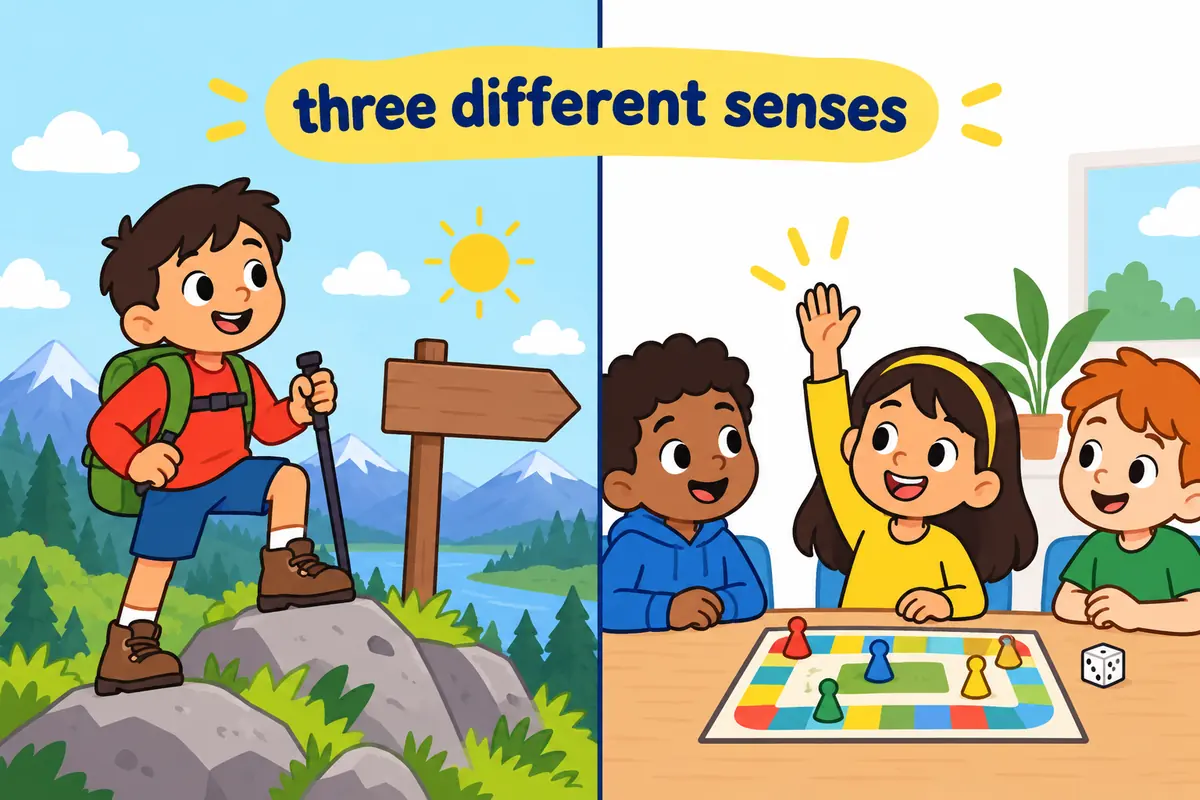
Get to has three main senses. It can mean to reach a place, as in we got to the station; to have an opportunity, as in I got to meet the author; or, informally, to annoy or wear someone down, as in the noise got to me. The object after to shows which one is meant.
Is get to informal?
The reach sense is neutral, and the annoyance sense is informal and mostly spoken. The opportunity sense sits in the middle: natural in conversation but often replaced in formal writing by was able to or had the chance to. Match the phrase to the register of the document you are writing.
Can you separate get and to?
No. To is a preposition here, not a movable particle, so the object always follows it. You say we got to the hotel, never we got the hotel to. The same fixed order applies to pronouns, which follow to as well, as in the noise got to them.
What is the difference between get to and have got to?
They look similar and behave very differently. Get to means reach, be allowed, or annoy. Have got to is a separate structure meaning must, as in I have got to go. One describes an action or an opportunity; the other states an obligation, so they are never interchangeable.