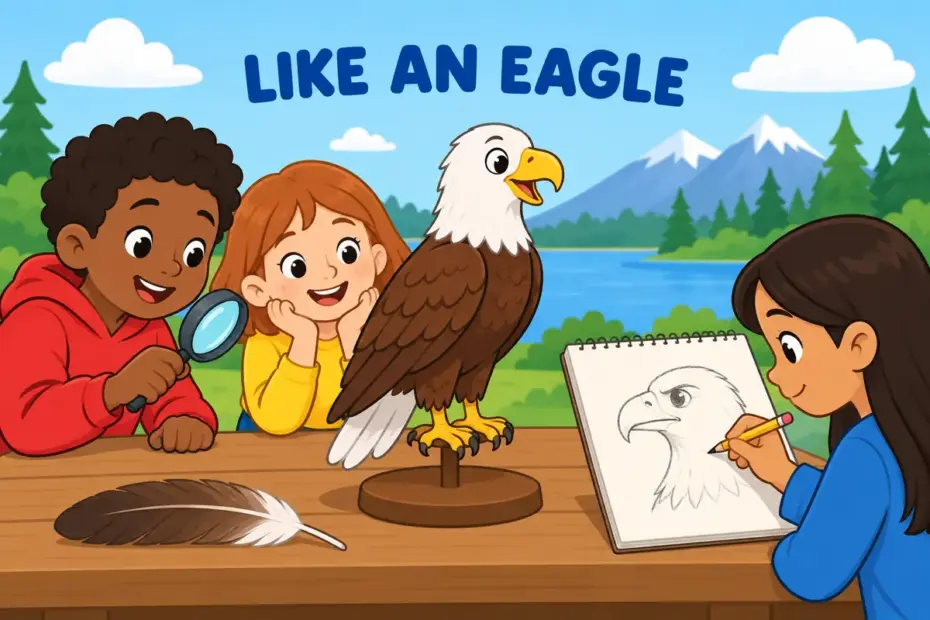
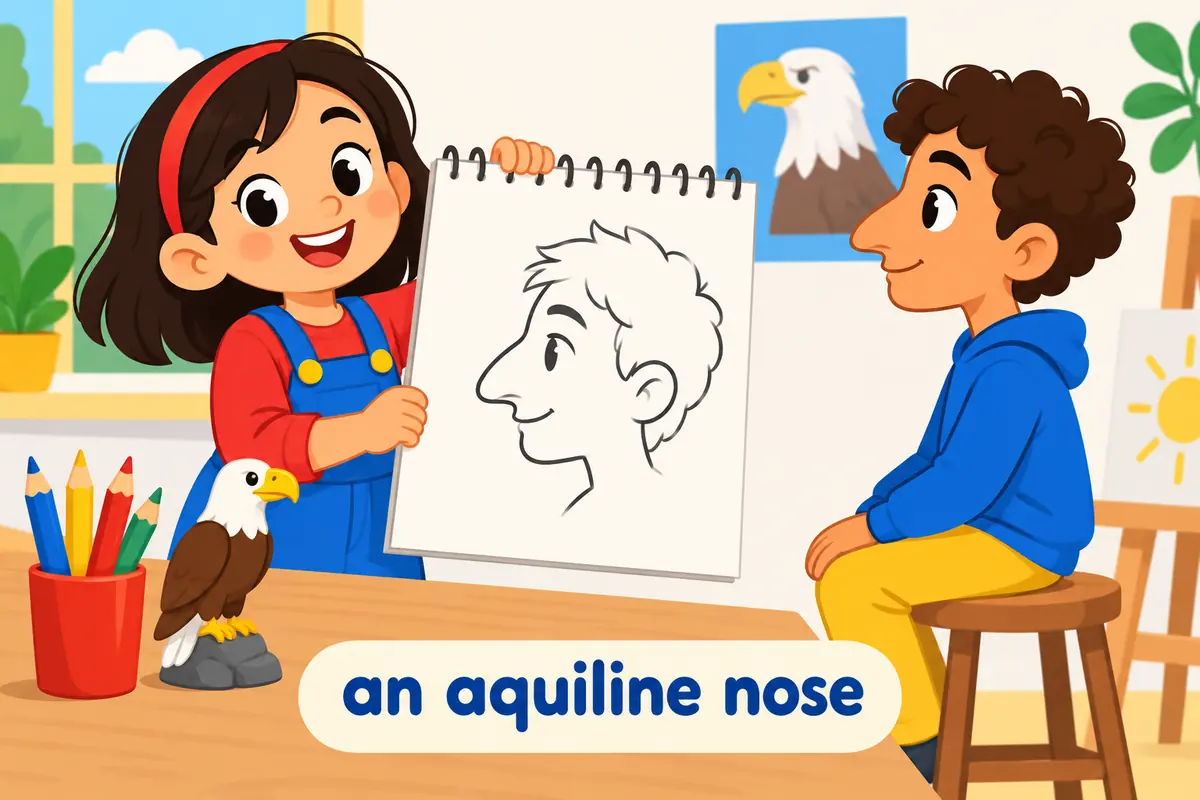
Aquiline means shaped like an eagle, and in modern English it almost always describes a nose with a high bridge and a gentle downward curve. To use aquiline in a sentence, place it before the feature it describes: “The portrait shows a woman with an aquiline nose.” The adjective is literary, and it praises a shape.
Aquiline at a glance
- Aquiline is an adjective taken from the Latin word for eagle.
- It means eagle-like, and in practice it describes a curved, high-bridged nose.
- The fixed collocation is aquiline nose, and the word rarely describes anything else.
- Aquiline belongs to literary, historical and portrait writing rather than everyday description.
- The commonest error is treating aquiline as a synonym for hooked, which sounds far less flattering.
What does aquiline mean?
Aquiline is an adjective meaning eagle-like, and in practice it describes a curved, high-bridged nose or profile. The Cambridge entry for aquiline gives the eagle sense, and the word borrows its shape from an eagle and its beak. It is narrower than most adjectives: outside the phrase aquiline nose it can sound affected, and it almost never describes everyday objects.
| Sense | Plain meaning | Example sentence |
|---|---|---|
| Eagle-like | Resembling an eagle or its features | The general had a stern, aquiline look. |
| Curved nose | A nose with a high bridge and a downward curve | Her aquiline profile suited the old coin. |
| Keen, sharp | Eagle-like in sharpness, in literary use | He fixed her with an aquiline stare. |
One limitation is worth stating plainly. Aquiline carries approval, so the same shape called a hooked nose can sound like a complaint while aquiline sounds like praise. Choose it for portraits and description, not for a medical note, and remember that it judges a shape rather than measuring it.
How do you use aquiline in a sentence?
Five patterns cover almost every real sentence, and the first is by far the most common: the adjective sits before nose or profile, and everything else is an extension. The word rarely needs a modifier, because aquiline already carries the sense of a distinct and striking curve.
| Pattern | Example | What it signals |
|---|---|---|
| aquiline + nose | She had an aquiline nose. | The fixed collocation, with the adjective before the noun. |
| aquiline + profile / features | The coin shows an aquiline profile. | Extends the shape from the nose to a whole face. |
| be + aquiline | His features were aquiline. | Links the adjective to a person or a face. |
| aquiline + look / stare | He gave her an aquiline stare. | Rare and literary, transferring the eagle to manner. |
| less / strongly + aquiline | The later portrait is less aquiline. | Grades the degree of the curve. |
Aquiline in a sentence: examples across contexts
The word keeps its meaning but shifts its company. An art catalogue extends it to a whole face, a novel uses it to signal character, and poetry pairs it with bird imagery. The eleven sentences below show those shifts.
| Context | Example sentence | Why this works |
|---|---|---|
| Art catalogue | The sitter turns her aquiline profile toward the light. | Uses the word for a whole face, the usual art-writing extension. |
| Historical novel | A stranger with an aquiline nose demanded a room for the night. | Signals a striking, often aristocratic appearance. |
| Portrait sitting | The painter exaggerated the aquiline curve to suggest nobility. | Shows the word doing character work rather than measurement. |
| Biography | Photographs show the same aquiline features in old age. | Tracks a physical trait across a whole life. |
| Fashion writing | The model’s aquiline face suited the severe black gown. | Applies the word to an overall look in a modern register. |
| Film description | The villain is given an aquiline stare and a quiet voice. | Transfers the eagle image to manner, a rarer use. |
| Coin or medal | The profile stamped on the coin is sharply aquiline. | Describes a likeness on a small, formal object. |
| Conversation | She has her father’s aquiline nose. | The everyday use, always about a nose. |
| Travel memoir | The guide’s aquiline face belonged on an old banknote. | Uses a comparison to make the shape vivid. |
| Poetry | An aquiline brow, a falcon’s patience. | Pairs the word with bird imagery, its natural home. |
| Heraldry | The family crest repeats an aquiline head. | Shows the literal eagle sense surviving in formal contexts. |
| Novel of manners | The heroine was said to have inherited her mother’s aquiline features. | Links the word to appearance passed down through a family. |
| Auction note | A marble bust with a strongly aquiline profile led the sale. | Applies the adjective to a sculpted likeness. |
Notice how the word does character work as often as it does description. That is why it survives in portrait writing and almost nowhere else. Writers use aquiline far more often to imply confidence, age or nobility than to record an exact measurement.
Aquiline vs hooked
Aquiline and a hooked nose describe a similar bend, but only one of them flatters. The table sets out the contrast.
| Attribute | aquiline | hooked |
|---|---|---|
| Core meaning | Eagle-like, with a high bridge and a gentle curve | Bent sharply downward |
| Tone | Admiring and classical | Often critical or plain |
| Register | Literary and formal | Neutral and everyday |
| Typical use | Portraits, history, description | Everyday description |
| What it implies | Distinction and a striking profile | A pronounced bend |
| Grammar | Usually before nose or profile | Before nose or used after be |
Prominent features catch the eye, a a sharp profile often means the same high bridge, and the rare sense of keen belongs to the eagle’s eye rather than to the nose. A a straight nose is the usual opposite.
Verdict: choose aquiline for an admiring, literary description of a curved nose or profile, and hooked when the tone should stay neutral or plainly critical. In practice the choice is about tone rather than anatomy, since the physical shape is the same and only the writer’s attitude toward it changes.
Word forms and grammar of aquiline
Aquiline has almost no family: one rare noun and one fixed phrase. The table lists what exists and marks the words that merely look similar.
| Form | Part of speech | Example |
|---|---|---|
| aquiline | adjective | The portrait shows an aquiline profile. |
| aquiline nose | fixed phrase | An aquiline nose runs in the family. |
| aquilinity | noun, rare | The aquilinity of his features was unmistakable. |
| hooked | adjective — different word | The mask had a hooked beak. |
| equine | adjective — different word | A long equine face looked over the gate. |
The rare noun aquilinity appears occasionally in literary description, but most sentences simply use the adjective before nose or profile. Because the word is so narrow, a single well-chosen use does more work than repeating it, and most descriptions of a face mention the aquiline nose only once. Do not confuse aquiline with equine, which means horse-like.
Common mistakes with aquiline
- Incorrect:
He had an aquiline smile.Correct: He had a warm smile. Rule: Aquiline describes an eagle-like shape, almost always a nose or profile, not an expression. - Incorrect:
Her nose was very aquiline indeed.Correct: Her profile was strongly aquiline. Rule: The word prefers strongly or sharply over very, and profile is the natural noun. - Incorrect:
The room had an aquiline ceiling.Correct: The room had a vaulted ceiling. Rule: Aquiline is reserved for features shaped like an eagle’s beak, not for architecture. - Incorrect:
She is an aquiline.Correct: She has aquiline features. Rule: Aquiline is an adjective, not a noun for a person. - Incorrect:
His aquiline nose was hooked and ugly.Correct: His aquiline nose gave him a striking profile. Rule: Aquiline carries approval, so pairing it with ugly contradicts the tone.
Practice using aquiline
Work through the six items, then check the reasoning rather than only the answer.
- Fill the gap: The old coin shows a king in profile with a strongly ______ nose.
- Choose the better word: The mask had a long (aquiline / hooked) beak that looked almost cruel.
- Correct the error: She is a very aquiline woman.
- Build a sentence: use an aquiline nose about a character in a historical story.
- Spot the register: which belongs in an art catalogue — the sitter turns an aquiline profile to the light, or the sitter has a really pointy nose?
- Rewrite with the noun: Her features were aquiline. Use aquilinity instead.
Answers
- aquiline — the coin profile describes an eagle-like curve, the word’s usual use.
- hooked — the cruel, everyday beak calls for the plainer adjective rather than the admiring one.
- She has aquiline features — the word is an adjective, so it modifies features, not the person directly.
- Model answer: The general in the story had an aquiline nose and a quiet, commanding voice.
- The sitter turns an aquiline profile to the light — an art catalogue keeps the formal, admiring register.
- The aquilinity of her features was unmistakable — the rare noun takes an article and of.
The bottom line
Use aquiline in a sentence when you want an admiring, literary word for an eagle-like shape, and in practice that means a nose or a profile. The two nuances that decide most sentences are these: it is a narrow word that sounds affected outside that collocation, and it carries approval, so it clashes with hooked when the same shape is meant as a criticism.
Frequently asked questions about aquiline
What does an aquiline nose look like?
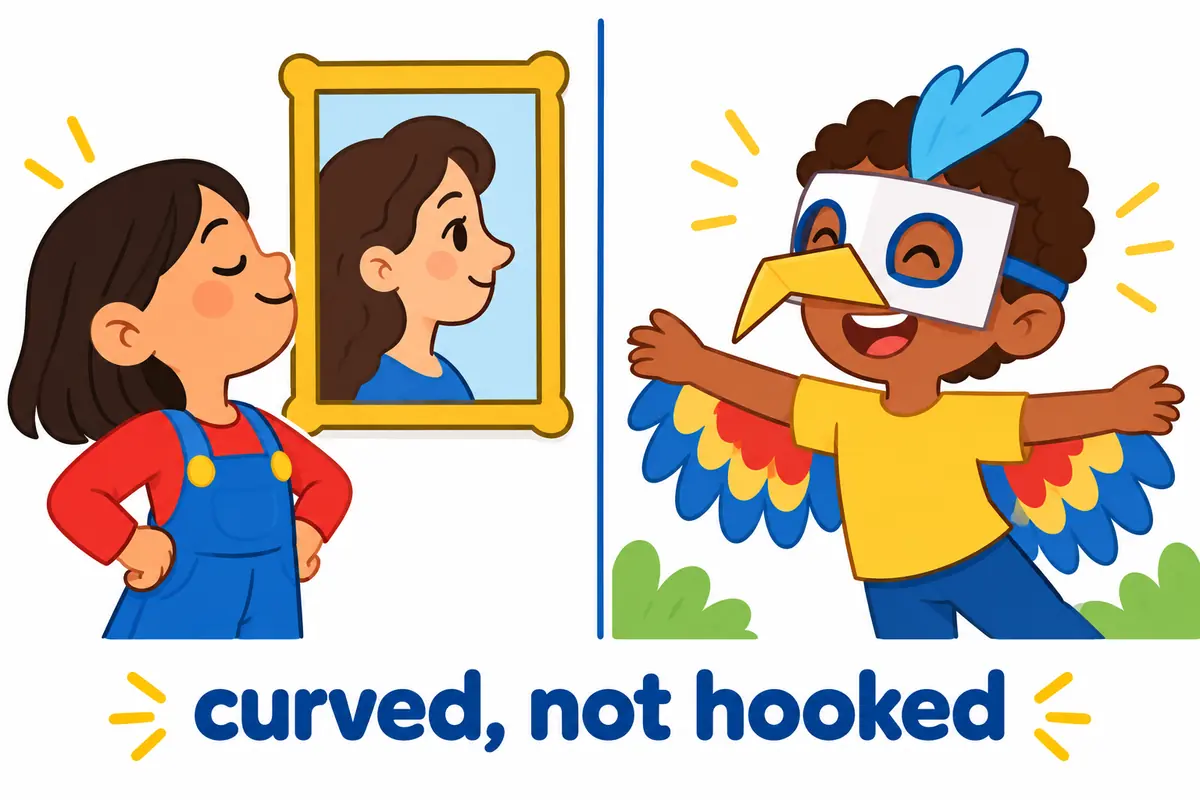
An aquiline nose has a high bridge and a gentle downward curve toward the tip, a shape said to resemble an eagle’s beak. The curve is smooth rather than sharply bent, which is what separates it from a hooked nose. The word comes from the Latin for eagle and carries a classical, admiring tone.
Is aquiline a compliment?
Aquiline usually works as a compliment. It suggests a striking, classical profile and appears in descriptions of statues, coins and portraits. The same shape called hooked can sound like a complaint, because hooked is neutral and everyday while aquiline is literary and admiring. Tone, then, depends almost entirely on which of the two words you choose.
Can aquiline describe things other than a nose?
Aquiline occasionally describes a whole profile or a set of features, and rarely a look or stare, when a writer wants to borrow the eagle’s keenness. It does not describe rooms, furniture or weather. Outside a nose, a profile or features, the word tends to sound affected, which is why the fixed collocation dominates.
What is the opposite of aquiline?
The natural opposite is a flat or straight nose, one with a low bridge and no downward curve. The brief candidates flat and straight describe that shape directly. There is no single formal antonym for aquiline, so writers pair it with flat, straight or snub according to the exact shape they mean.