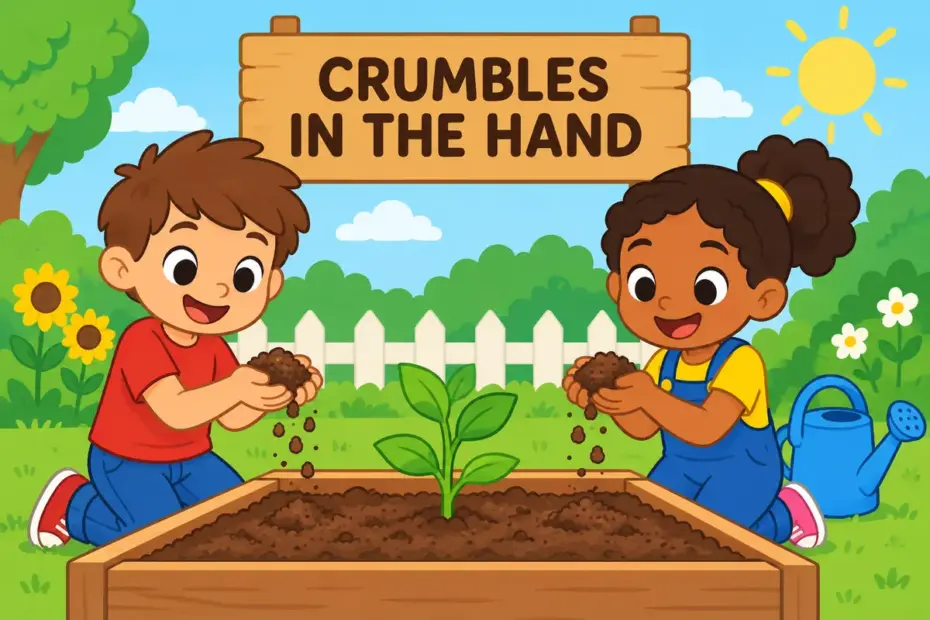
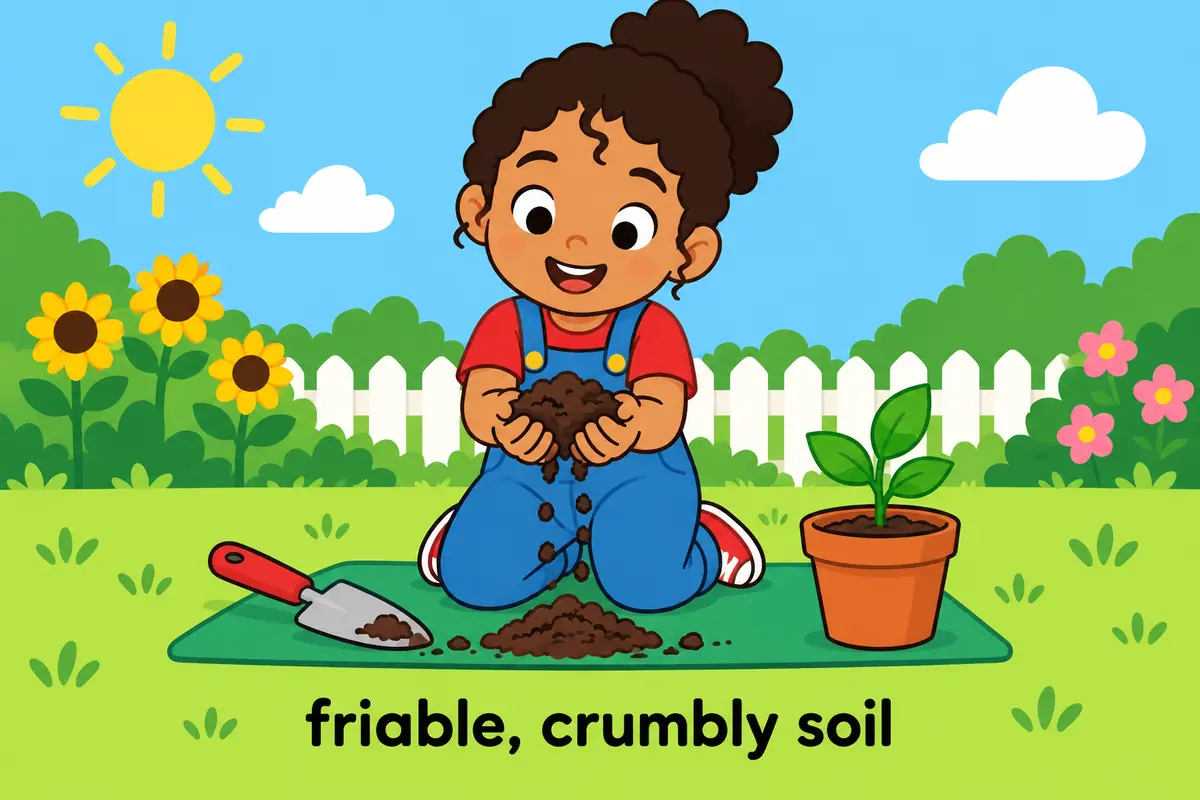
Friable describes a solid that crumbles into small pieces or powder under light pressure. To use friable in a sentence, place it directly before the material it describes: “The dry, friable soil broke apart between her fingers.” The word is a technical adjective, at home in soil science, geology and conservation reports rather than in casual talk.
Friable at a glance
- Friable is an adjective; its noun is friability and its adverb friably is rare.
- It describes a material that crumbles into small pieces or powder under light pressure.
- The usual collocates are soil, rock, plaster, sandstone, paper, tissue and ash.
- Friable belongs to technical writing: soil science, geology, medicine and conservation.
- The commonest error is using friable for anything that merely breaks, such as glass.
What does friable mean?
Friable is an adjective meaning easily crumbled or reduced to small pieces or powder. The Cambridge entry for friable records this crumbly sense, and the word almost always names a material rather than a mood: soil that breaks in the hand, sandstone that falls into grit, or tissue that tears at a touch. One honest limitation matters from the start. Friable does not mean simply breakable, and it does not mean fragile. A pane of glass is fragile; it does not crumble into crumbs, so friable is the wrong word for it.
| Sense | Plain meaning | Example sentence |
|---|---|---|
| Soil | Dry, crumbly earth that breaks apart in the hand | The friable topsoil crumbled between her fingers. |
| Rock and mineral | Stone that breaks into fragments instead of shearing cleanly | Friable sandstone eroded into soft, rounded ledges. |
| Technical and medical | Material or tissue that tears or bleeds easily | The conservator avoided the friable edge of the map. |
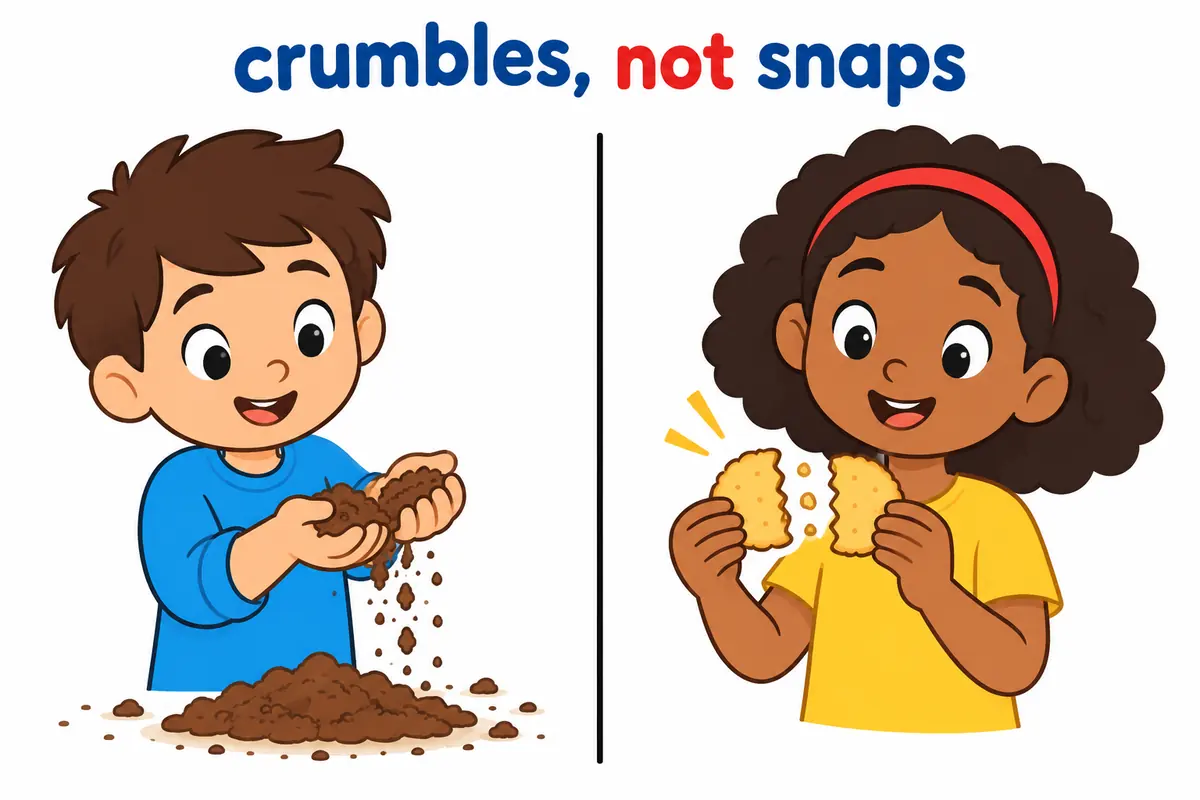
Each sense keeps the same core idea, that the material gives way into small fragments rather than holding its form. A gardener uses the soil sense, a geologist the rock sense, and a conservator or surgeon the technical sense for material that will not bear handling. The related adjective brittle material is harder and snaps, which is a different kind of failure.
How do you use friable in a sentence?
Friable behaves like a normal descriptive adjective: it sits before a noun or after the verbs be, seem and become. Because it names a property rather than an action, it never takes an object. Five patterns cover almost every real sentence.
| Pattern | Example | What it signals |
|---|---|---|
| friable + material noun | Friable plaster fell from the ceiling. | Names the material first, the way reports do. |
| be + friable | The subsoil is friable and easy to dig. | States a condition without naming an action. |
| become + friable | The surface becomes friable after a dry spell. | Shows the condition developing over time. |
| friable + enough to + verb | The rock was friable enough to shape by hand. | Sets a threshold for crumbling. |
| too friable to + verb | The parchment was too friable to unroll. | Explains why handling is limited. |
Friable in a sentence: examples across contexts
Friable keeps its meaning while its company changes from a soil survey to a kitchen. The twelve sentences below move across registers, and each one names the material and the reason the property matters.
| Context | Example sentence | Why this works |
|---|---|---|
| Soil science | The friable loam drained well and let the roots spread. | Names a soil type and the property that matters to it. |
| Geology | Friable sandstone crumbled at the first touch of the hammer. | Uses a specific rock rather than a general material. |
| Construction | The old friable plaster had to be sealed before painting. | Puts the word inside a real repair decision. |
| Medicine | The surgeon worked carefully around the friable tissue. | Keeps the technical sense calm and clinical. |
| Conservation | The friable manuscript could not be handled without support. | Links the word to damage prevention. |
| Gardening | A friable soil is easy to dig and quick to warm in spring. | Explains why a gardener wants this condition. |
| Archaeology | The friable ash layer dissolved in the first heavy rain. | Shows a fragile material vanishing quickly. |
| Cooking | The friable cheese crumbled over the salad in soft flakes. | Uses the everyday crumbly sense of the word. |
| Mining | Friable ore broke apart in the cart before it reached the mill. | Applies the word to handling and transport. |
| Environmental report | Wind lifted dust from the friable surface of the spoil heap. | Connects crumbly ground to a wider consequence. |
| Paper records | Decades of damp left the ledger paper dry and friable. | Shows a familiar object turning crumbly with age. |
| Laboratory note | The friable sample had to be stored in a sealed jar. | Treats the property as a practical constraint. |
Notice that every example keeps a physical material as its subject. Friable rarely describes people or ideas, and when it does the writer means that something is falling apart. That restriction is the clearest signal of where the word lives, and it is why a sentence such as a friable discussion sounds wrong to a careful reader.
Friable vs brittle
Friable and brittle both describe material that fails, but they fail in different ways. The table sets out the differences that decide which word fits.
| Attribute | friable | brittle |
|---|---|---|
| Core meaning | Crumbles into small pieces or powder | Snaps or shatters with little bending |
| How it fails | Slowly, under light pressure | Suddenly, with a sharp break |
| Typical materials | Soil, plaster, old paper, soft rock | Glass, cast iron, dry biscuit, hard plastic |
| Register | Technical and descriptive | General and technical |
| What it implies | Low cohesion and dryness | Hardness and sudden fracture |
| Opposite | Firm or solid | Ductile or tough |
Verdict: choose friable when the material crumbles into crumbs or grit, and choose brittle when it snaps with a sudden break. Where an object shatters rather than crumbles, fragile objects is the plainer description, and a material that resists both failure modes is what engineers call durable surfaces. A bed of solid rock is the direct opposite of a friable one, because it holds together under the same pressure.
Word forms and grammar of friable
Friable inflects only through comparison, and its derived noun is the form most technical writers actually use. The table lists the real forms and marks the two that belong to a different word.
| Form | Part of speech | Example |
|---|---|---|
| friable | adjective | Friable soil is easy to work. |
| friability | noun | The friability of the rock made tunnelling risky. |
| more friable | comparative phrase | The lower bed is more friable than the upper. |
| friably | adverb, rare | The sample friably broke apart in transit. |
| friableness | noun, rare | The friableness of the chalk was noted in the survey. |
| fragile | adjective — different word | The vase is fragile, not friable. |
The root noun a foible looks similar but has nothing to do with crumbling, and pliable materials bend instead of breaking, so neither belongs in this family. Keeping friable, fragile and brittle apart is the single most useful habit with this word, because all three describe weakness but only one describes crumbs.
Common mistakes with friable
- Incorrect:
The window glass is friable.Correct: The window glass is fragile. Rule: Friable material crumbles into crumbs; glass shatters, so the plainer word is fragile. - Incorrect:
The concrete was friable and hard as a millstone.Correct: The concrete was friable and crumbled at a touch. Rule: Friable and hardness contradict each other, because crumbly material is loose and low in cohesion. - Incorrect:
She friably removed the panel.Correct: The friable panel broke apart easily. Rule: The adverb is rare and stiff; the adjective usually does the work. - Incorrect:
The soil has friable after rain.Correct: The soil is friable after rain. Rule: Friable is an adjective, so it follows be or become and never has on its own. - Incorrect:
The friable discussion went on all night.Correct: The lively discussion went on all night. Rule: Friable describes physical material that crumbles, not the mood of a conversation.
Practice using friable
Work through the six items, then check the reasoning rather than only the answer.
- Fill the gap: The dry ______ topsoil broke apart at the first touch of the trowel.
- Choose the better word: The rock was too (friable / pliable) to hold a sharp edge.
- Correct the error: The steel floor was friable and resisted every drill.
- Build a sentence: use friable about the soil in a school garden.
- Spot the register: which belongs in a soil report — the top layer is friable and free-draining, or the top layer is super crumbly stuff?
- Rewrite with the noun: The rock crumbles easily. Use friability instead.
Answers
- friable — the topsoil breaks into crumbs, which is exactly what the adjective describes.
- friable — a material that crumbles cannot hold an edge; pliable would mean it bends without breaking.
- The steel floor was solid and resisted every drill — steel does not crumble, so friable is the wrong property.
- Model answer: After we turned in the compost, the school garden soil was dark and friable.
- The top layer is friable and free-draining — a technical report keeps the precise adjective and avoids the informal phrase super crumbly.
- The rock has a high friability — the noun names the property, so the sentence needs a verb such as has or shows.
The bottom line
Use friable in a sentence when you mean a material that crumbles into small pieces, and keep it for the technical description of soil, rock, plaster or tissue. The two nuances that decide most sentences are these: friable means crumbles, not merely breaks, and it is an adjective that accepts no direct object. Where a hard object snaps instead, brittle or fragile is the more accurate choice.
Frequently asked questions about friable
What does friable soil mean?
Friable soil is dry, crumbly earth that breaks apart easily in the hand instead of forming hard clods. Gardeners and agronomists value the condition because air and roots move freely through it. The word describes a texture, so a soil can become friable after digging or a dry spell and lose that quality again when it is waterlogged.
Is friable the same as fragile?
No. Friable material crumbles into small pieces or powder under light pressure, while fragile material breaks or shatters when it is damaged. A dry biscuit is friable, a thin glass is fragile. The two words overlap only in the general idea that something is easily harmed, and they are not interchangeable in technical writing.
What is the noun form of friable?
The noun is friability, which names the property of crumbling easily. A survey might report the friability of a rock layer, and a laboratory might test the friability of a tablet. The adverb friably exists but is rare, and most writers let the adjective or the noun carry the meaning instead.
Can friable describe food?
Yes, in the plain sense of crumbly. A friable cheese or a friable biscuit breaks into soft flakes rather than bending or snapping. Outside technical writing, crumbly is the more natural everyday word, so friable usually appears in tasting notes, product descriptions and formal food writing rather than in conversation.