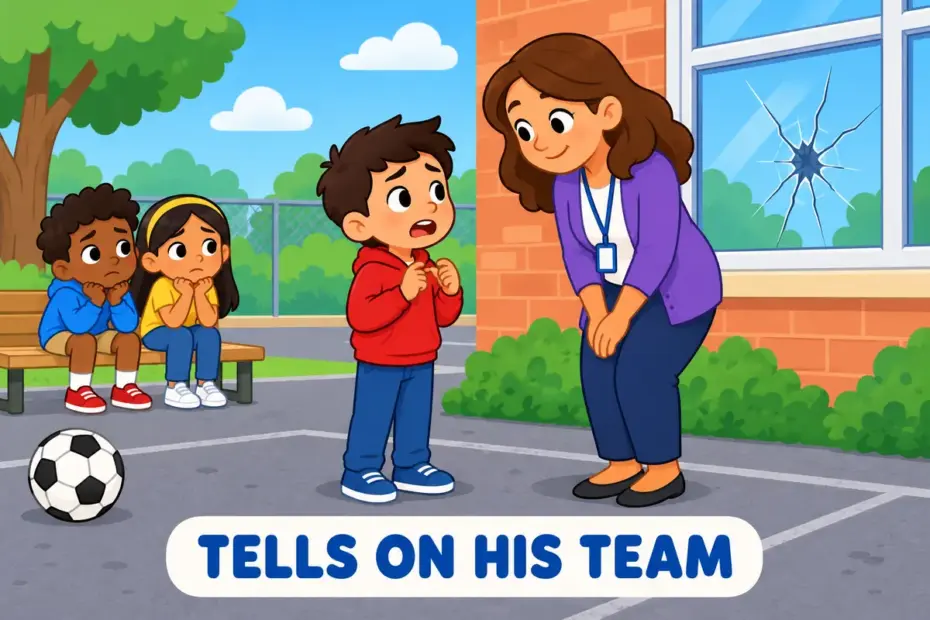
Rat on means to inform on someone, usually to an authority, and it carries a tone of disapproval. To use rat on in a sentence, keep the two words together: “He ratted on his friends.” The verb is transitive but inseparable, so the person informed on follows on and never slips between rat and on.
Rat on at a glance
- Rat on is an inseparable phrasal verb; its forms are rats on, ratted on and ratting on.
- It means to inform on somebody to a person in authority, and it signals disapproval.
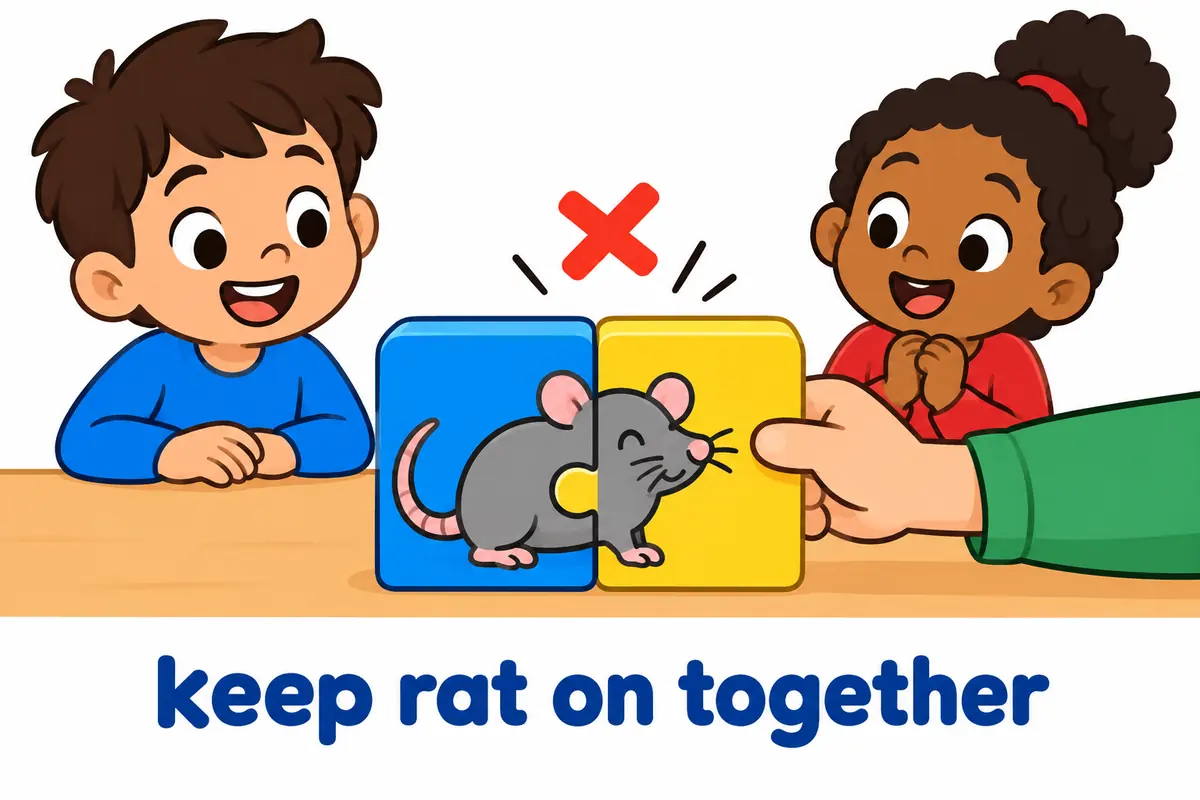
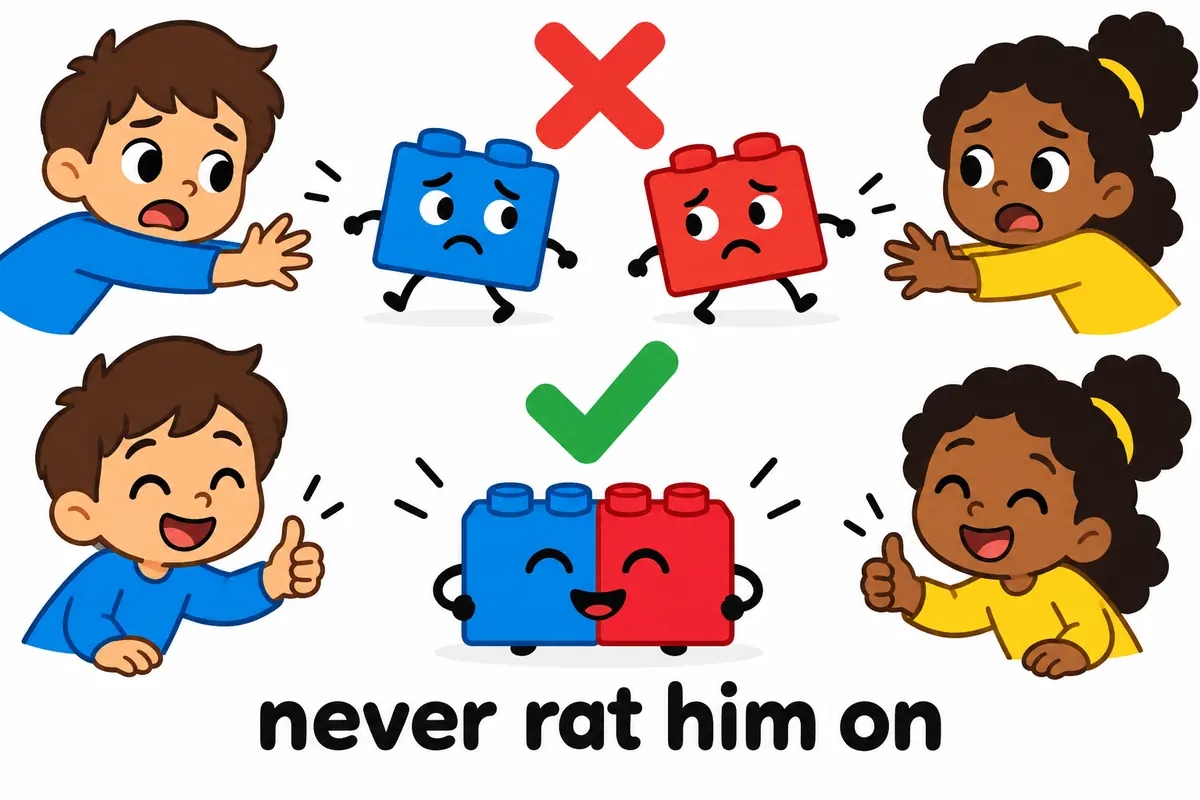
- The verb is transitive: rat on somebody, never rat somebody on.
- A second, rarer sense means to break a promise or abandon an agreement.
- The commonest error is splitting the verb, as in he ratted his friends on.
What does rat on mean?
Rat on is a phrasal verb meaning to give information about somebody to an authority, especially when that information gets the person into trouble. The Cambridge entry for rat on records this informing sense. A second, much rarer sense describes failing to keep an agreement, as when a supplier rats on a deal. Both senses share the idea of letting someone down.
| Sense | Plain meaning | Example sentence |
|---|---|---|
| Inform on a person | Tell an authority what somebody did | She ratted on the boy who broke the window. |
| Break an agreement | Fail to honour a deal or promise | The company ratted on the sponsorship deal. |
| Tell tales | Report a minor wrongdoing, often at school | He ratted on his sister for skipping homework. |
One limitation is worth stating plainly. Rat on is not neutral reporting. Where inform the police simply states a fact, rat on adds that the speaker disapproves of the informing, so a news report would usually avoid it.
How do you use rat on in a sentence?
The pattern is fixed: the informer is the subject, rat on is the verb unit, and the person is the object. Five shapes cover almost every sentence, including the one mistake learners make most.
| Pattern | Example | What it signals |
|---|---|---|
| subject + rat on + person | Tom ratted on his teammate. | The standard pattern; the object follows on. |
| subject + rat on + person + to + authority | She ratted on him to the manager. | Names who received the information. |
| never split | Tom ratted on his teammate, not Tom ratted his teammate on. | The particle stays attached in every form. |
| pronoun after on | He ratted on me, not He ratted me on. | A pronoun object must follow on. |
| rat on + a deal (rare) | They ratted on the agreement at the last minute. | The secondary sense of breaking a promise. |
Rat on in a sentence: examples across contexts
Rat on moves easily between playground talk and crime reporting, and the register shifts with it. The nine sentences below show where the verb sounds natural and what changes around it.
| Context | Example sentence | Why this works |
|---|---|---|
| Classroom | Mia ratted on her group when she told the teacher who copied. | A childhood setting shows the disapproving tone. |
| Conversation | I would never rat on a friend, even to save myself trouble. | Spoken register; the first person works with this verb. |
| Workplace email | Someone ratted on the team to the regional manager. | Shows the to plus authority pattern. |
| News report | The driver ratted on the gang in exchange for a lighter sentence. | Reports informing as a deliberate choice. |
| Novels | He ratted on his own brother and never forgave himself. | The betrayal sense suits narrative. |
| Police procedural | A cellmate ratted on the man awaiting trial. | Common in crime writing with an authority implied. |
| School notice | Pupils who rat on each other make the class tense. | Uses the verb to discuss its social effect. |
| Sports column | The leaked messages showed a player had ratted on the squad. | Betrayal of a group is a common sporting angle. |
| Historical account | Informers ratted on neighbours for a reward. | Formal narration of the informing sense. |
| Diplomacy | A junior official ratted on the delegation to the press. | Shows the to plus authority pattern in politics. |
| Film dialogue | He ratted on the crew the moment the police arrived. | The betrayal sense drives a plot. |
| Legal thriller | A witness ratted on the syndicate to avoid charges. | Names the authority and the motive. |
The verb rarely appears in the passive. A sentence such as he was ratted on is possible but awkward, because the focus of rat on is the person doing the telling, not the person told upon. When the emphasis falls on broken trust rather than the telling, betray a friend is the stronger verb, and a witness who simply gives facts may reveal the names to an inquiry without any disapproval at all.
Register decides the verb’s companions as much as its grammar. Rat on pairs naturally with words such as gang, crew, squad and cellmate, because it imagines a closed group betrayed from inside. It rarely appears with neutral nouns such as colleague or citizen, where inform sounds more natural. Choosing the group noun is what makes the sentence sound native rather than translated.
Rat on vs snitch on
Rat on and snitch on mean almost the same thing, and the choice is mainly about tone and where you are writing.
| Attribute | rat on | snitch on |
|---|---|---|
| Tone | Strongly disapproving, hints at betrayal | Disapproving and slangy |
| Register | Informal but common in journalism | Very informal, mainly American |
| Typical authority | Police, a manager, a school | Police or a teacher |
| Usual object | A person or a group | A person |
| What it implies | An insider letting down their own side | Informing, often for a reward |
| Can it take a deal? | Yes, in the rarer break-a-promise sense | No |
Verdict: choose rat on for a slightly broader, more journalistic tone, and snitch on when the writing is deliberately slangy. Both stay informal, so neither belongs in a formal police report.
Word forms and grammar of rat on
The phrasal verb inflects on its first word only, and every form keeps on attached. The related verb rat out is a chiefly American variant that means the same thing.
| Form | Part of speech | Example |
|---|---|---|
| rat on | base phrasal verb | Do not rat on your friends. |
| rats on | third-person singular | He never rats on anyone. |
| ratted on | past and past participle | She ratted on the whole crew. |
| ratting on | present participle | Ratting on a colleague damages trust. |
| ratter | noun, informal and rare | Nobody wants to be called a ratter. |
| rat out | phrasal variant, chiefly American | He ratted out his partner. |
Because rat on is inseparable, the noun tattle in the comparison below is a reminder that other telling verbs behave differently: tell on and tattle on share the same order. The same particle appears in call on, where a teacher calls on a pupil for an answer rather than for information.
Common mistakes with rat on
- Incorrect:
He ratted his brother on.Correct: He ratted on his brother. Rule: An inseparable phrasal verb keeps the particle straight after the verb. - Incorrect:
She ratted on to the teacher about the note.Correct: She ratted on him to the teacher. Rule: Rat on needs a person as its object before the authority phrase. - Incorrect:
I ratted him to the boss.Correct: I ratted on him to the boss. Rule: The on cannot be dropped before the object. - Incorrect:
The company ratted on with the deal.Correct: The company ratted on the deal. Rule: In the break-a-promise sense, on still precedes the thing abandoned. - Incorrect:
He is always ratting his teammates on.Correct: He is always ratting on his teammates. Rule: The participle keeps the same inseparable order.
Practice using rat on
Work through the six items, then check the reasoning rather than only the answer.
- Fill the gap: Nobody wants to ______ the person who helped them.
- Choose the better word: The informer (ratted on / ratted) two dealers to the police.
- Correct the error: She ratted him on to her boss.
- Build a sentence: use rat on somebody to an authority about a pupil who tells the head teacher.
- Spot the register: which fits a crime report — the driver ratted on the gang, or the driver snitched on the crew?
- Rewrite with a pronoun object: He ratted on his cousin. Use him as the object.
Answers
- rat on — the object follows the whole phrasal verb, not just rat.
- ratted on — the particle is required before the people informed on.
- She ratted on him to her boss — the two words must stay together before the object.
- Model answer: A pupil ratted on the boy who set off the alarm to the head teacher.
- The driver ratted on the gang — rat on reads as a shade more neutral in a report than snitch on.
- He ratted on him — a pronoun object still follows on, never splits the verb.
The bottom line
Use rat on in a sentence when somebody informs on another person and the speaker disapproves, and always keep the two words together before the object. The two nuances that settle most sentences are these: rat on is inseparable, so it is rat on him and never rat him on, and it carries a judgement that inform does not. Where the sense is loyalty rather than betrayal, defend is the natural opposite.
Frequently asked questions about rat on
Is rat on a phrasal verb?
Yes. Rat on is an inseparable phrasal verb made of the verb rat and the particle on. The particle never separates from the verb, so the person informed on always follows the full phrase. It inflects on rat alone, giving rats on, ratted on and ratting on.
Is rat on formal or informal?
Rat on is informal and carries clear disapproval, so it suits conversation, fiction and some journalism rather than formal reports. A formal document would use inform on or report instead. The disapproval is the key difference: rat on says the speaker thinks the informing was a betrayal.
Can rat on mean breaking a promise?
Yes, though far less often. In this secondary sense, rat on means to abandon an agreement, as in the supplier ratted on the deal. The grammar is unchanged, with on still attached and the abandoned thing as the object. The informing sense remains much more common in everyday use.
Does rat on need an object?
Yes. Rat on is transitive, so it needs a person, a group or, in the rarer sense, a deal as its object. You cannot simply say he ratted on; the sentence feels unfinished. The object answers the question whom or what, as in he ratted on his team.